
Best Natural Nootropics for Focus and Memory in 2026: The Evidence-Based Guide
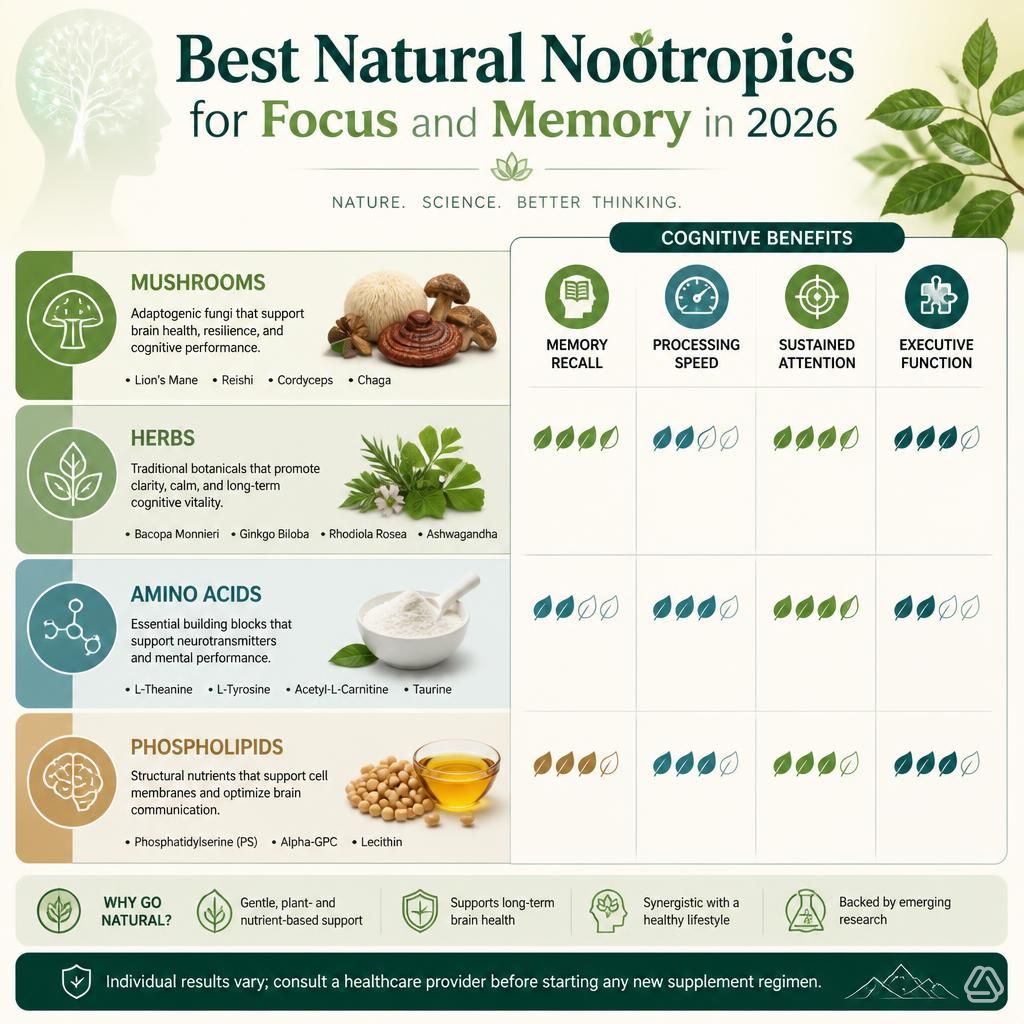
Natural nootropic supplements — ranked by actual human clinical evidence, not marketing claims.
If you’ve spent any time researching brain supplements, you already know the problem: the nootropics market is flooded with products making extraordinary claims. “Unlock your full mental potential.” “10× your focus in 30 days.” “The supplement Harvard scientists don’t want you to know about.” It’s almost impossible to separate what actually works from what’s clever packaging and a convincing influencer partnership.
Here’s what makes this guide different: every nootropic covered here is backed by actual human clinical trials. Not rat studies. Not manufacturer-funded testimonials. Not traditional use alone. Real, peer-reviewed, randomized controlled trials involving human participants measuring real cognitive outcomes — memory recall, processing speed, sustained attention, and executive function.
A natural nootropic is a plant-based, food-derived, or naturally occurring compound — mushrooms, herbs, amino acids, phospholipids — that supports cognitive function without the dependency, side effects, or legal complications of synthetic smart drugs. They’re generally safer, more accessible, and — when chosen wisely — genuinely effective.
That said, an important caveat before we go further: individual results vary significantly. Your baseline nutrition, sleep quality, stress levels, genetics, and age all influence how any nootropic affects you. This guide is educational in nature, and you should always consult a qualified healthcare provider before starting any new supplement regimen — particularly if you take medications or have an existing health condition.
Ready to cut through the noise? Let’s get into it. Why Sleep Is Your #1 Nootropic
📋 Table of Contents
- What Makes a Nootropic Legitimate? (The Evidence Standard)
- The Top 10 Natural Nootropics Ranked by Evidence
- Lion’s Mane Mushroom — Tier 1
- Bacopa Monnieri — Tier 1
- L-Theanine + Caffeine Stack — Tier 1
- Rhodiola Rosea — Tier 1
- Phosphatidylserine — Tier 1
- Omega-3 Fatty Acids (DHA + EPA) — Tier 1
- Ginkgo Biloba — Tier 1/2
- Ashwagandha — Tier 1
- Citicoline (CDP-Choline) — Tier 1/2
- Magnesium L-Threonate — Tier 2
- The Best Natural Nootropic Stacks — What to Combine
- What to Look for When Buying Nootropic Supplements
- Natural Nootropics vs. Smart Drugs — What’s the Difference?
- Frequently Asked Questions
- A Note on Realistic Expectations
- Conclusion + Brain Clarity Consultation CTA
What Makes a Nootropic Legitimate? (The Evidence Standard)
Before diving into specific compounds, it’s worth understanding how to evaluate a nootropic’s evidence base — because not all research is created equal, and supplement companies often cite studies in misleading ways.
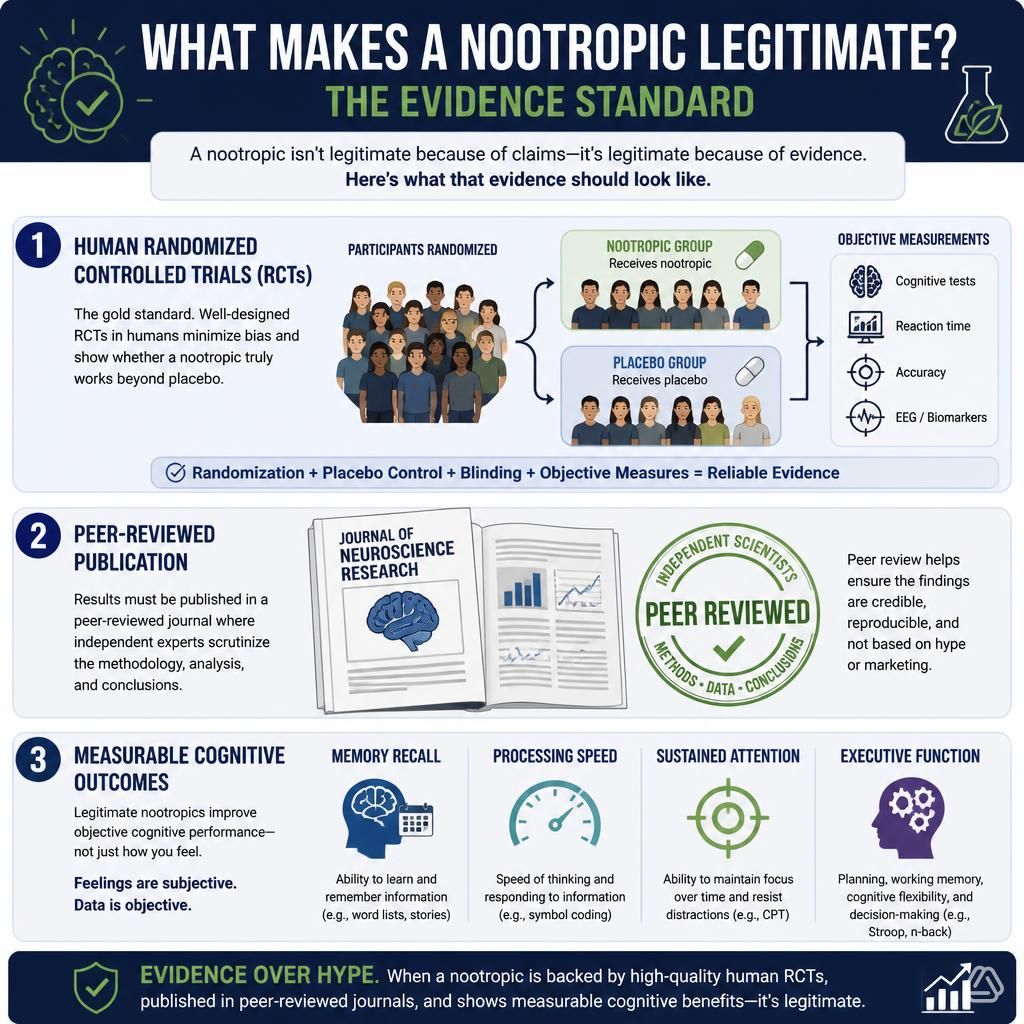
For a nootropic to be considered “evidence-backed” in this guide, it must meet at least one of the following criteria:
- Human randomized controlled trials (RCTs): The gold standard. A group of real humans takes the compound; another group takes a placebo. Neither participants nor researchers know who got what. Results are measured objectively.
- Peer-reviewed publication: The study has been reviewed and validated by independent scientists before publication in a credible journal.
- Measurable cognitive outcomes: Improvements in memory recall, processing speed, sustained attention, or executive function — not just self-reported “I feel better.”
To organize this clearly, we use a simple three-tier evidence framework:
| Evidence Tier | Definition | Included in This Guide? |
|---|---|---|
| Tier 1 — Strong Human Evidence | Multiple peer-reviewed human RCTs with consistent, replicated cognitive outcomes | ✅ Yes — fully covered |
| Tier 2 — Promising Preliminary Evidence | Early human trials with positive results; more research needed for full validation | ✅ Yes — noted as Tier 2 |
| Tier 3 — Theoretical / Traditional Use Only | Animal studies, in-vitro research, or traditional use without robust human trials | ❌ No — excluded from this guide |
This guide focuses exclusively on Tier 1 and Tier 2 compounds. Anything below that threshold — however popular on Reddit or Instagram — didn’t make the cut.[INTERNAL LINK: How to Read a Supplement Study (Without a PhD)]
The Top 10 Natural Nootropics for Focus and Memory — Ranked by Evidence
Here are the 10 best natural nootropics currently supported by clinical evidence. They’re ordered roughly by strength of evidence, starting with the most robustly studied compounds.H3
1. Lion’s Mane Mushroom (Hericium erinaceus) TIER 1
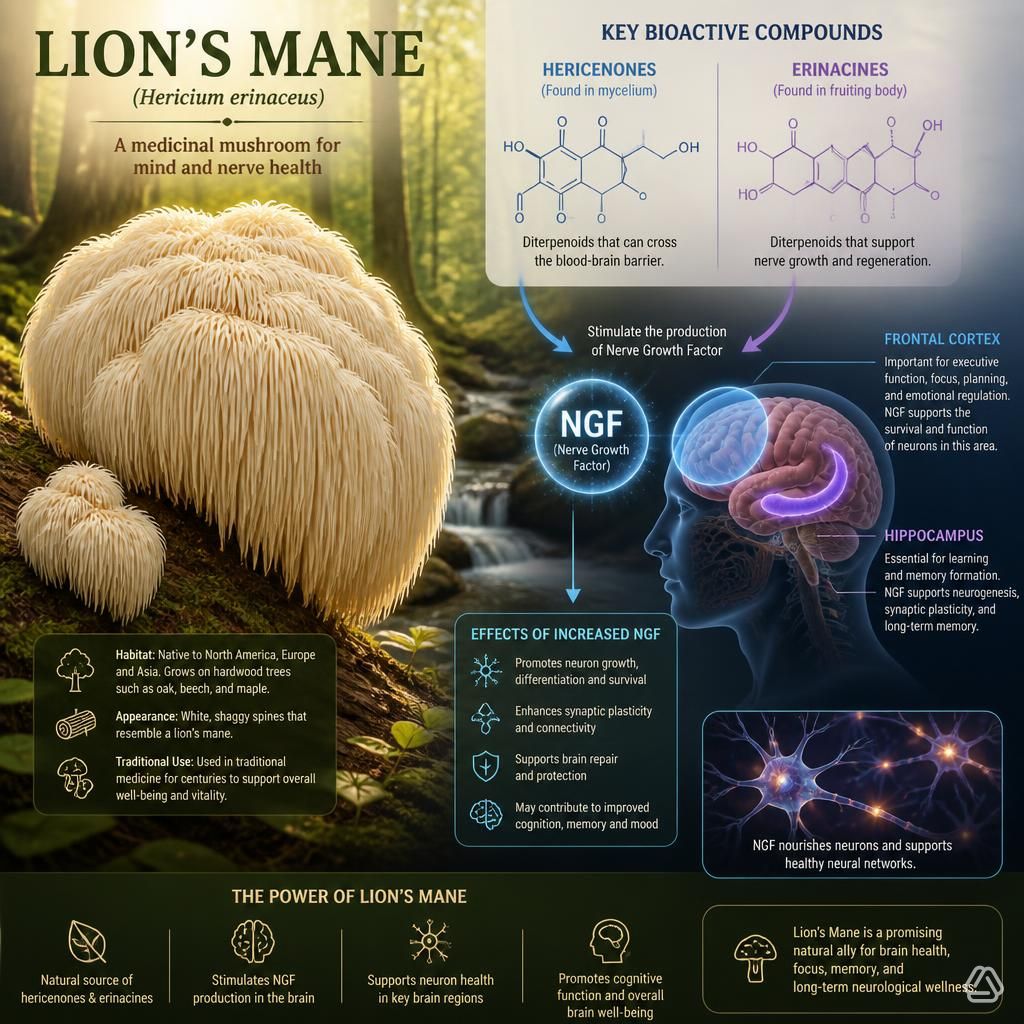
Lion’s Mane mushroom — one of the most compelling natural nootropics for long-term neuroplasticity and memory support.
Lion’s Mane is in a category of its own. While most nootropics improve cognitive performance by modulating neurotransmitters, Lion’s Mane works at a deeper level: it stimulates Nerve Growth Factor (NGF) synthesis — a protein critical for the growth, maintenance, and survival of neurons. In other words, it doesn’t just help your existing brain work better; it may actually support the physical health of your neurons.
The landmark evidence comes from a 2009 double-blind, placebo-controlled RCT by Mori et al. in Japan, which showed significant improvement in cognitive function scores in adults with mild cognitive impairment (MCI) after 16 weeks of supplementation — with cognitive scores declining again after the supplement was stopped, confirming it was the Lion’s Mane driving the improvement. More recent research supports its anxiolytic (anti-anxiety) effects and potential neuroprotective benefits against age-related neurodegeneration.
At a Glance
- Best for: Memory, neuroprotection, anxiety reduction, neurodegeneration prevention
- Dosage: 500–3,000mg/day of fruiting body extract (not mycelium)
- Timeline: 4–8 weeks for noticeable cognitive effects — not an acute stimulant
- Key buying tip: Look for “fruiting body” on the label. Mycelium-only products contain far less of the active hericenones and erinacines and are often padded with grain substrate.
- Stacking tip: Pairs exceptionally well with Bacopa for memory support; combine with caffeine + L-Theanine for a focus-forward daytime stack.
2. Bacopa Monnieri TIER 1
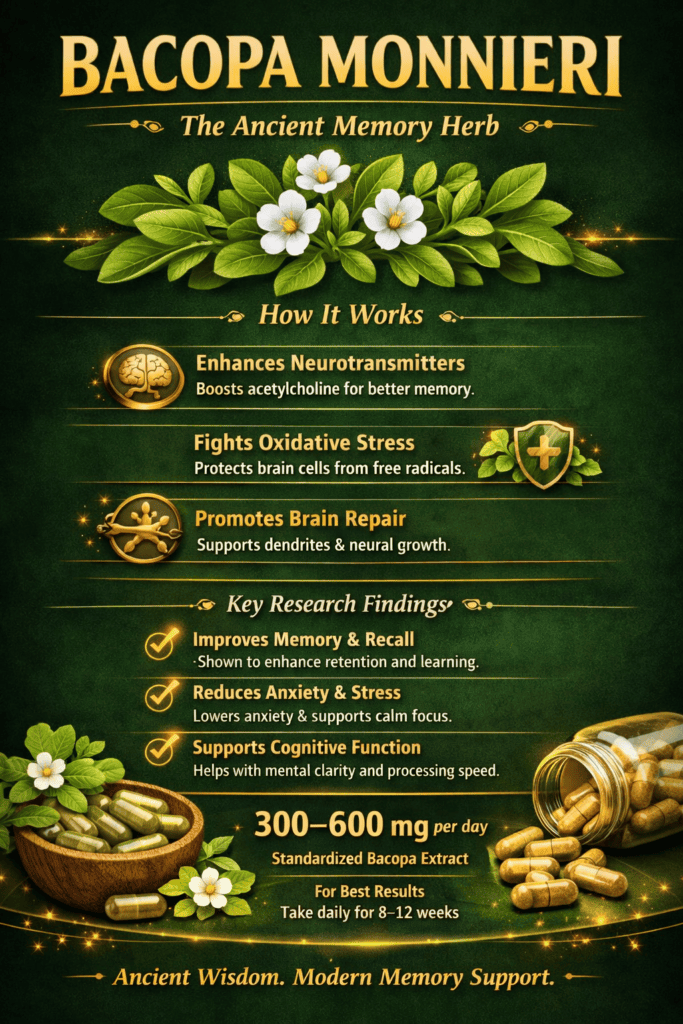
If Lion’s Mane is the neuroprotection champion, Bacopa Monnieri is the undisputed king of memory. This Ayurvedic herb has more high-quality human RCT data supporting memory enhancement than virtually any other natural compound — and the evidence is genuinely impressive.
Two foundational studies — Stough et al. (2001) and Roodenrys et al. (2002) — demonstrated significant improvement in verbal learning rate, delayed memory recall, and information processing speed in healthy adults after 8–12 weeks of daily supplementation. A 2012 meta-analysis by Pase et al. reviewing 12 RCTs confirmed Bacopa consistently outperforms placebo for cognitive processing speed and memory. Its mechanisms are multifaceted: Bacopa enhances synaptic communication, provides antioxidant protection to neurons, inhibits acetylcholinesterase (increasing acetylcholine availability), and reduces anxiety through adaptogenic pathways.
⏱ Patience Required: Bacopa’s effects are cumulative. Research consistently shows it takes 8–12 weeks of daily use to realize full cognitive benefit. Judging it after 2 weeks is like planting a tree and digging it up the next day to check the roots.
At a Glance
- Best for: Memory formation and recall, learning speed, anxiety reduction
- Dosage: 300–600mg/day of standardized extract (20–55% bacosides)
- Important: Bacopa is fat-soluble — always take with a meal containing fat for proper absorption
- Side effects: Mild GI upset possible (reduced by taking with food); some users report vivid dreams — generally benign
- Timeline: 8–12 weeks for full cognitive benefit
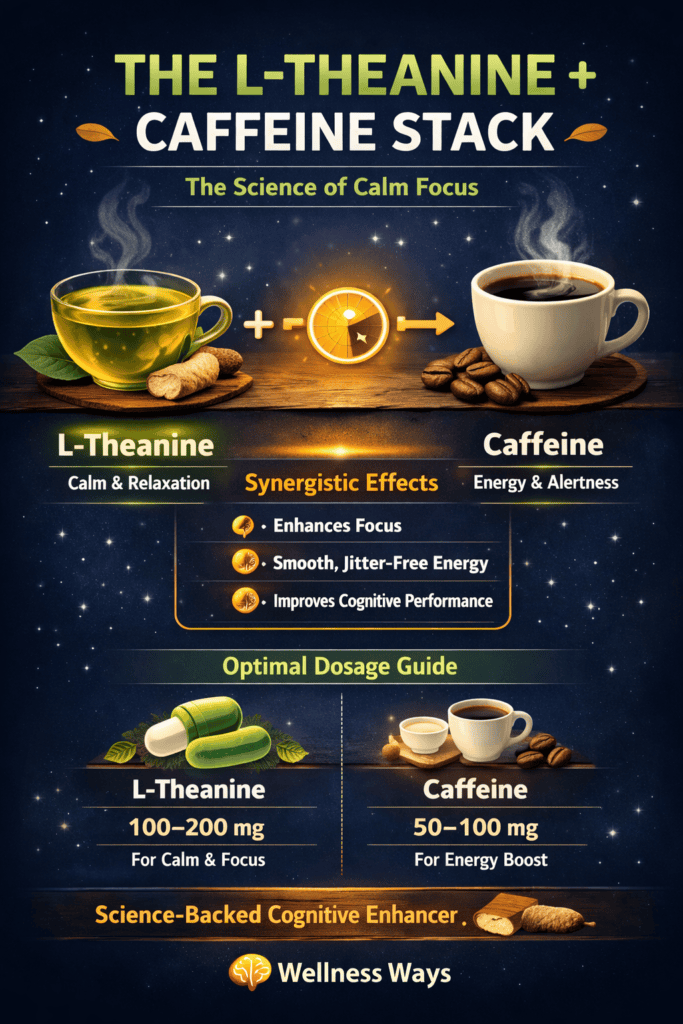
3. L-Theanine + Caffeine Stack TIER 1
If you want the single most immediately effective, best-studied natural cognitive stack, this is it. The combination of L-Theanine and caffeine has been replicated in multiple RCTs and consistently delivers measurable benefits within 30–60 minutes of consumption. It’s not theoretical — it’s one of the most reproducible cognitive findings in supplement science.
What makes the combination work so well? Caffeine sharpens alertness and reaction time but can produce jitteriness, anxiety, and a crash at higher doses. L-Theanine — an amino acid found naturally in green tea — smooths all of that out while amplifying the attention and focus effects. Studies show the stack produces improved sustained attention, faster reaction time, better working memory, and less caffeine-associated anxiety compared to either compound alone. Nature actually got there first: green tea is a natural source of both L-Theanine and caffeine together.
At a Glance
- Best for: Immediate focus, calm sustained energy, task performance, reaction time
- Dosage: 200mg L-Theanine : 100mg caffeine (2:1 ratio is optimal per research)
- Natural sources: High-quality green tea or matcha provides both naturally
- Timeline: Effects felt within 30–60 minutes
- Note: If you already drink coffee or tea, you may already be experiencing a version of this stack
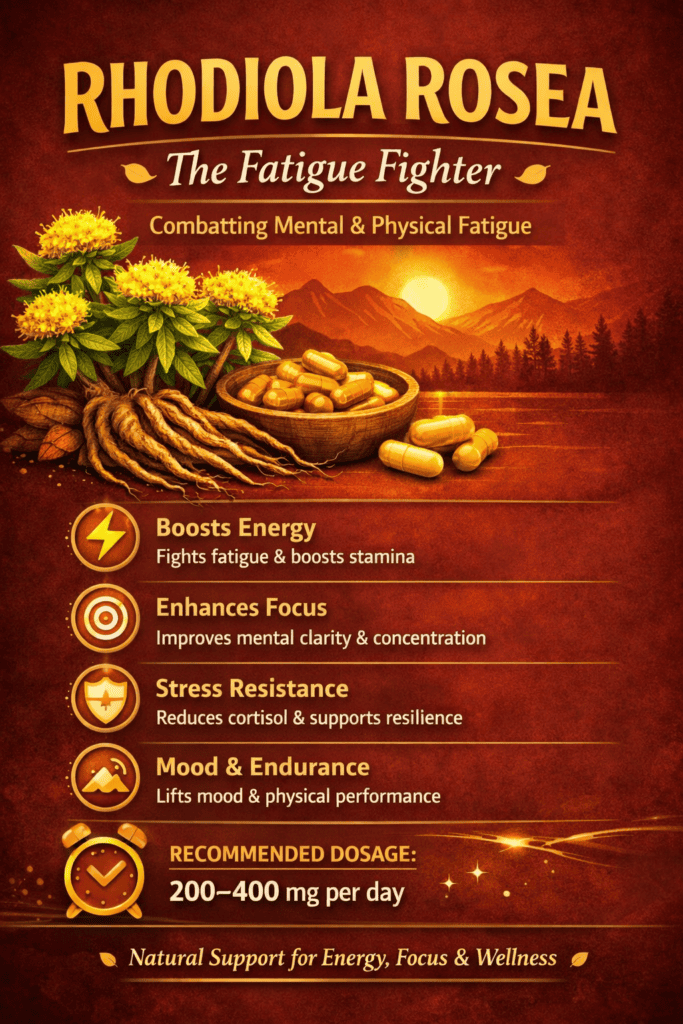
4. Rhodiola Rosea TIER 1
Rhodiola Rosea is the go-to nootropic for mental fatigue, burnout, and high-pressure cognitive performance. It’s an adaptogen — meaning it helps your body and brain adapt to stress — and its evidence base for reducing cognitive fatigue is among the strongest of any natural compound.
A compelling study by Shevtsov et al. (2003) tested Rhodiola on physicians working night shifts — an ideal real-world stress model. The results showed significant improvement in mental fatigue, cognitive speed, and accuracy over the placebo group. The European Medicines Agency (EMA) has even given Rhodiola an official positive opinion for use in “temporary mental fatigue” — a regulatory acknowledgment rare for natural supplements. Its active compounds, rosavins and salidrosides, modulate cortisol pathways and improve serotonin-dopamine receptor sensitivity.
At a Glance
- Best for: Mental fatigue, stress resilience, burnout recovery, focus under pressure
- Dosage: 200–600mg/day of standardized extract (3% rosavins, 1% salidroside)
- Timing: Morning or early afternoon — Rhodiola can be mildly stimulating and may disrupt sleep if taken late
- Cycling: Cycle on/off (6–8 weeks on, 2–4 weeks off) to maintain efficacy and prevent adaptation
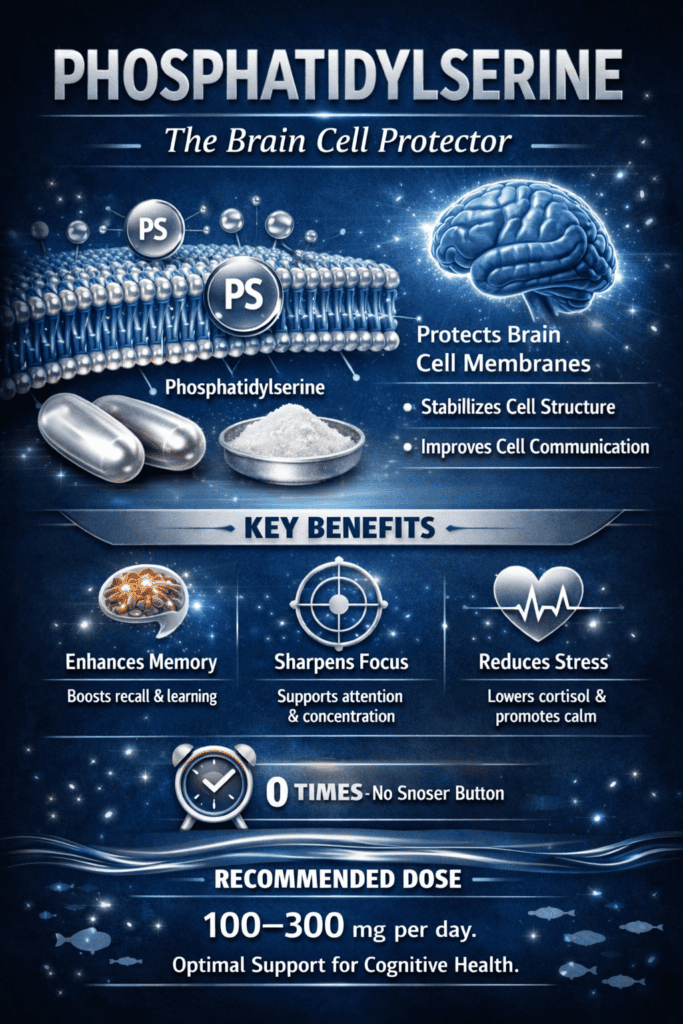
5. Phosphatidylserine TIER 1
Phosphatidylserine carries a distinction no other nootropic in this guide can claim: it’s the only natural cognitive supplement with an FDA-qualified health claim for cognitive function. That’s a meaningful signal in a field filled with unregulated claims.
This phospholipid makes up approximately 15% of total brain fat and plays a critical structural and functional role in neuronal membranes. It directly supports acetylcholine and dopamine neurotransmitter signaling pathways, both essential for attention and memory. Multiple RCTs show meaningful improvements in memory, attention, and cognitive function — particularly in middle-aged and older adults. A bonus effect: phosphatidylserine has been shown to reduce the cortisol spike in response to exercise stress, making it useful for athletes dealing with overtraining cognitive fog.
At a Glance
- Best for: Memory, attention, cortisol regulation, age-related cognitive support
- Dosage: 100–300mg/day (typically 100mg taken 3× daily with meals)
- Source note: Historically derived from bovine brain (more bioavailable); modern supplements use sunflower or soy lecithin (vegan-friendly) — both are effective
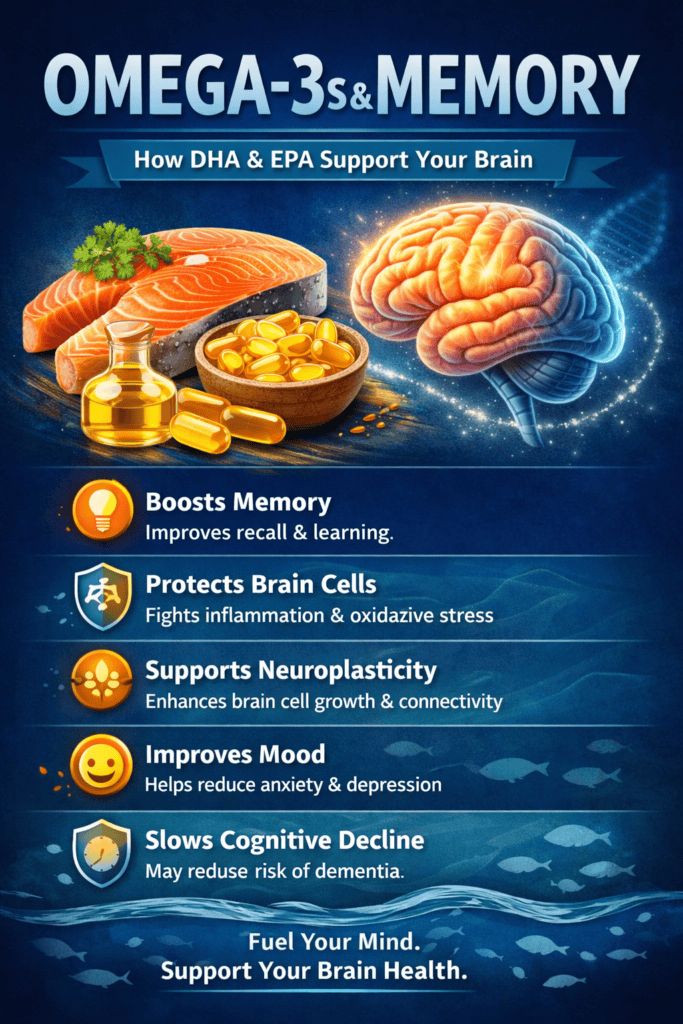
6. Omega-3 Fatty Acids (DHA + EPA) TIER 1
Omega-3s are arguably the most important foundational brain supplement on this list — not because they’re the most dramatically noticeable in the short term, but because the consequences of deficiency are profound and widespread. DHA (docosahexaenoic acid) constitutes approximately 25% of the total fat in your brain and is essential for neuronal membrane integrity, plasticity, and neurotransmitter signaling efficiency.
Multiple large-scale studies link higher omega-3 intake with better cognitive performance, slower cognitive aging, and significantly reduced risk of depression and neuroinflammation. EPA (eicosapentaenoic acid) is the anti-inflammatory powerhouse — it reduces neuroinflammation at the source, which is increasingly recognized as a driver of cognitive decline. If you only take one supplement from this entire list, make it a high-quality omega-3.
At a Glance
- Best for: Long-term brain health, neuroinflammation reduction, mood, memory — the non-negotiable foundation
- Dosage: 1,000–3,000mg combined EPA+DHA daily; look for at least 500mg DHA specifically
- Quality tips:
- Buy from reputable brands with third-party testing for heavy metals (IFOS certified is ideal)
- Choose triglyceride form (not ethyl ester) for significantly better absorption
- Store in the fridge to prevent oxidation
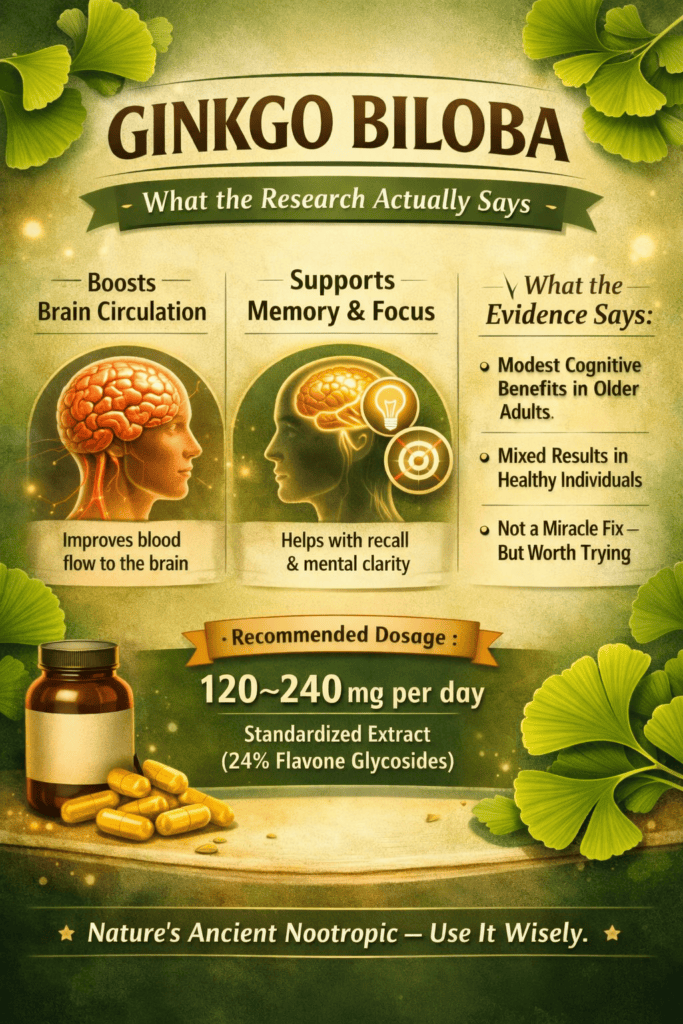
7. Ginkgo Biloba TIER 1/2
Ginkgo Biloba is one of the oldest and most studied herbal compounds in cognitive science, with a well-characterized mechanism: it increases cerebral blood flow and provides antioxidant and anti-inflammatory protection to neural tissue. More blood flow to the brain means more oxygen and glucose delivery — a simple but meaningful advantage for cognitive performance.
The evidence picture is nuanced. In healthy young adults, Ginkgo’s cognitive benefits are modest and inconsistent across studies. However, in older adults and those experiencing age-related cognitive decline, the evidence is considerably more consistent and positive — particularly for attention and processing speed. It lands in Tier 1/2 because of this age-dependent variability in efficacy.
⚠ Blood Thinning Caution: Ginkgo has mild anticoagulant properties. If you take blood thinners (warfarin, aspirin, etc.) or have surgery scheduled, consult your doctor before using Ginkgo Biloba.
At a Glance
- Best for: Circulation support, focus, age-related cognitive support, processing speed in older adults
- Dosage: 120–240mg/day of EGb 761 standardized extract (the specific form used in most successful trials)
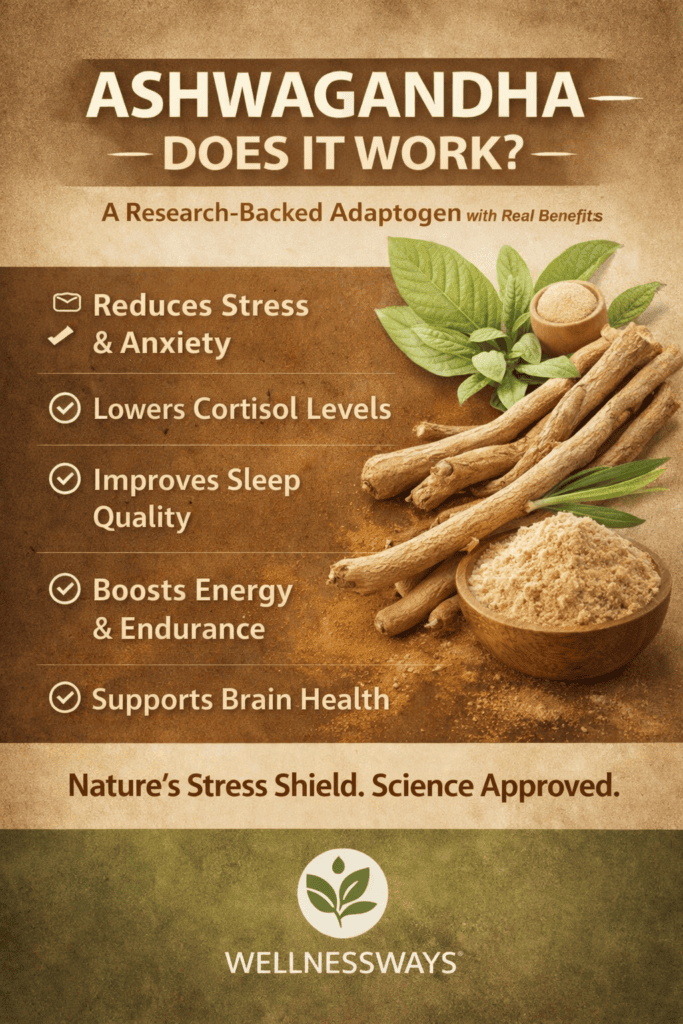
8. Ashwagandha (Withania somnifera) TIER 1
Ashwagandha’s primary reputation is as an adaptogen for stress and cortisol reduction — but its cognitive benefits are increasingly being validated in human trials, making it a legitimate nootropic in its own right. The cognitive connection makes sense: chronic stress elevates cortisol, which directly impairs hippocampal function and memory consolidation. By lowering cortisol, Ashwagandha effectively removes one of the biggest brakes on cognitive performance.
A 2017 study by Choudhary et al. demonstrated significant improvements in memory, attention, and information-processing speed in adults with mild cognitive impairment after 8 weeks of ashwagandha root extract supplementation. Multiple other RCTs confirm meaningful reductions in stress, anxiety, and cortisol levels, plus improvements in sleep quality — itself a massive cognitive performance driver.
At a Glance
- Best for: Stress-induced cognitive impairment, anxiety, cortisol reduction, sleep quality improvement
- Dosage: 300–600mg/day of KSM-66 or Sensoril standardized root extract (these are the validated branded forms used in research)
- Timing: Flexible — can be taken morning or evening. Some users find it relaxing and prefer it as a pre-sleep supplement
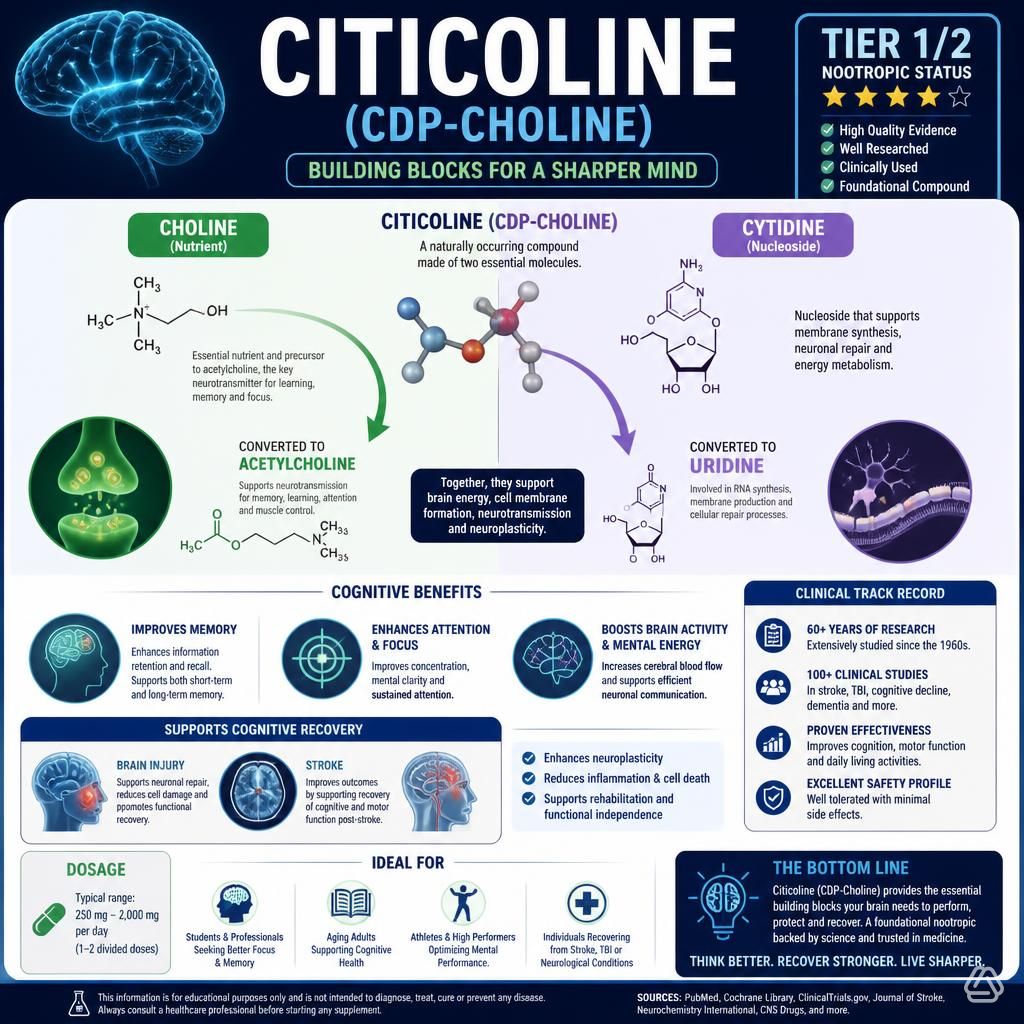
9. Citicoline (CDP-Choline) TIER 1/2
Citicoline is one of the most neurologically elegant compounds on this list. When you consume it, your body cleaves it into two highly valuable precursors: choline (which converts to acetylcholine, your primary memory and attention neurotransmitter) and cytidine (which converts to uridine, supporting neuronal membrane synthesis and dopamine receptor function). You’re essentially getting two cognitive-support compounds in one.
The evidence is strongest for cognitive recovery in brain injury and stroke contexts, where Citicoline has a substantial clinical track record. In healthy adults, emerging research shows improvements in attention and working memory — promising but still accumulating, which places it at Tier 1/2. It’s particularly compelling as part of a nootropic stack rather than a standalone.
At a Glance
- Best for: Memory, attention, neurological support, acetylcholine production
- Dosage: 250–500mg/day
- Stack note: Excellent foundation for anyone interested in exploring synthetic nootropics later — citicoline pairs naturally with racetams if you venture into that territory
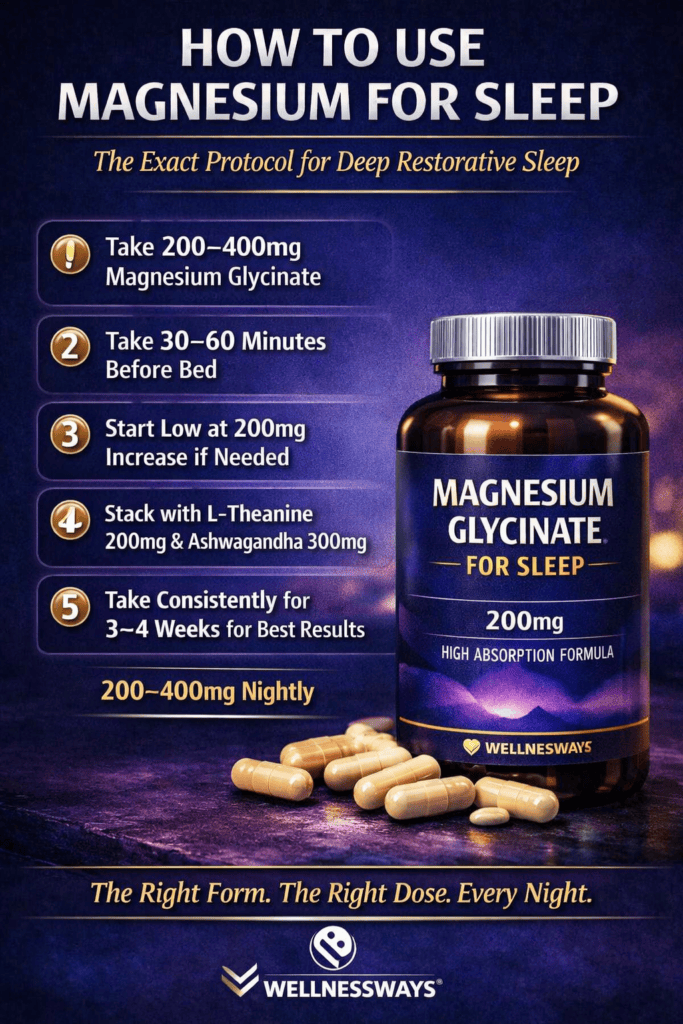
10. Magnesium L-Threonate TIER 2
Magnesium L-Threonate is the most exciting emerging nootropic on this list — and the most important one to watch in the coming years. It’s a novel form of magnesium developed specifically at MIT by Dr. Liu Guosong and colleagues with one key engineering goal: to cross the blood-brain barrier effectively, something conventional magnesium forms struggle to do.
Animal studies showed it increased synaptic density in the hippocampus — the brain’s memory hub — more effectively than other magnesium forms. Early human trials are now showing improvements in cognitive flexibility, working memory, and sleep quality, particularly in middle-aged and older adults. Given that an estimated 45–50% of Americans don’t meet the daily recommended magnesium intake, this is a compound where you may be correcting a deficiency and getting a cognitive boost simultaneously.
📊 Tier 2 Note: Magnesium L-Threonate is genuinely promising and mechanistically compelling — but human evidence is still emerging. It earns a spot here because the early data is encouraging and the safety profile is excellent. Keep an eye on it.
At a Glance
- Best for: Memory, cognitive flexibility, sleep quality, anxiety, magnesium deficiency
- Dosage: 1,500–2,000mg/day of the full compound (providing approximately 144mg elemental magnesium)
- Timing: Evening dosing recommended — the sleep quality benefits are a valuable secondary effect
The Best Natural Nootropic Stacks — What to Combine
A “nootropic stack” is simply the practice of combining multiple compounds that work through different mechanisms for synergistic effects. Think of it like a balanced diet: no single food gives you everything, but the right combination of foods creates a complete nutritional profile. The same principle applies to cognitive support.
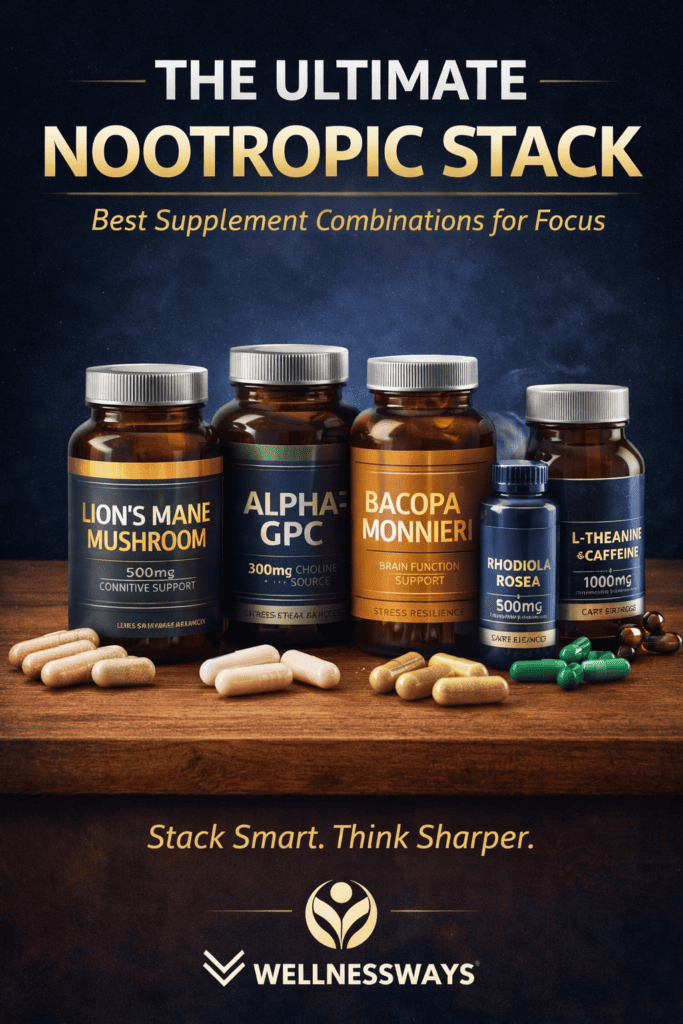
The key to smart stacking: combine compounds with complementary, non-overlapping mechanisms — one targeting memory consolidation, another targeting focus, another targeting neuroprotection. Below are three practical stacks organized by goal and experience level.
The Beginner’s Daily Stack — Start Here
The ideal entry point: safe, affordable, and all widely available. Excellent for general cognitive support, focus, and long-term brain health.
- Morning: L-Theanine (200mg) + Coffee or Caffeine (natural source, ~100mg)
- Daily with breakfast: Omega-3 (1–2g EPA+DHA combined) + Bacopa Monnieri (300mg — must take with fat)
- Optional daily add-on: Lion’s Mane (1,000mg with any meal)
Cost: Budget-friendly — all widely available from quality brands at accessible price points.
Timeline to assess: Give Bacopa and Lion’s Mane a full 8–12 weeks before evaluating. The L-Theanine + caffeine effect is immediate.
Best for: Anyone new to nootropics, general cognitive maintenance, students, professionals seeking daily mental supportH3
The Focus & Performance Stack
For high-demand work periods, mental fatigue, and situations requiring sustained focus under pressure — think deadlines, exams, or demanding professional environments.
- Morning: L-Theanine (200mg) + Caffeine (100mg)
- Morning (with food): Rhodiola Rosea (200–400mg)
- Daily with meals: Phosphatidylserine (100mg × 3 with meals)
- Evening option: Ashwagandha KSM-66 (300mg) — helps cortisol recovery and sleep quality
Best for: Professionals under high cognitive load, mental fatigue, burnout recovery, high-pressure situations
Note: Cycle Rhodiola (6–8 weeks on, 2–4 weeks off) to maintain effectiveness.H3
The Memory & Neuroprotection Stack
The long game — designed for those prioritizing lasting memory, healthy aging, and building a brain that performs well for decades. Requires patience and consistency.
- Daily core: Lion’s Mane Fruiting Body (1,500mg) + Bacopa Monnieri (300mg with fat) + Omega-3 (2g EPA+DHA)
- Optional add-ons: Citicoline (250mg) + Ginkgo Biloba EGb 761 (120mg)
- Evening optional: Magnesium L-Threonate (2,000mg)
Best for: Long-term memory support, age-related cognitive protection, individuals with family history of cognitive decline, 40+ adults prioritizing brain longevity
Timeline: Allow a full 8–12 weeks before assessing — this stack rewards consistency over time, not overnight results.[INTERNAL LINK: The Complete Guide to Nootropic Stacking for Beginners]
What to Look for When Buying Nootropic Supplements — The Quality Guide
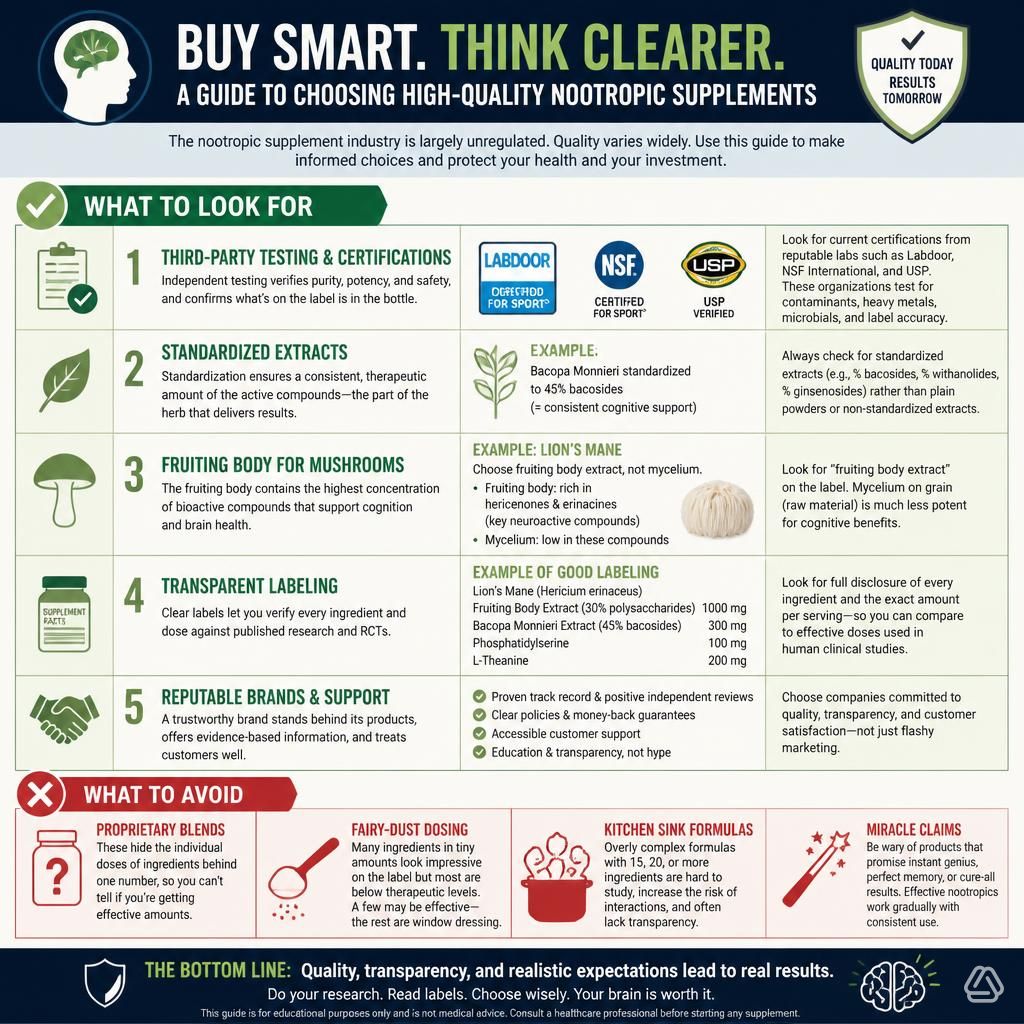
This section matters just as much as knowing which nootropics to take. The supplement industry is largely unregulated, and the gap between a high-quality nootropic and an ineffective one can be enormous — even when both products have the same ingredient name on the label. Here’s how to shop smart.
✅ What to Look For
- Third-party testing certifications: Look for products tested by independent labs including Labdoor, NSF International, USP (U.S. Pharmacopeia), or Informed Sport. These certifications confirm that the product contains what the label says — at the doses stated — and is free from contaminants. This is non-negotiable for quality assurance.
- Standardized extracts: A standardized extract guarantees a minimum percentage of the active compound in every batch. For example, “Bacopa Monnieri standardized to 45% bacosides” means you’re getting a consistent, therapeutically relevant dose of the active ingredient — not a random amount that varies batch to batch. Raw powders without standardization are a gamble.
- Fruiting body (for mushroom supplements): For Lion’s Mane and other functional mushrooms, the fruiting body contains the active cognitive compounds (hericenones, erinacines, beta-glucans). Many cheaper products use mycelium grown on grain substrate, which is mostly starch with minimal active compound. The label must say “fruiting body” — “full spectrum” or “whole mushroom” without that specification is often a red flag.
- Transparent labeling: Every ingredient and dose should be listed clearly. You should be able to look up each ingredient dose against published RCT doses and confirm you’re in the therapeutic range.
- Reputable, established brands with a track record, published certificates of analysis (COAs), and responsive customer support.
🚫 What to Avoid
- Proprietary blends: These list ingredients without individual doses, hiding behind a total blend weight. This makes it impossible to know if you’re getting a therapeutic dose of any individual compound — and companies use them to hide under-dosing of expensive ingredients.
- “Fairy-dust” dosing: A formula that includes 15–30 ingredients but a total capsule weight of 500mg mathematically cannot contain therapeutic doses of more than 1–2 of them. Everything else is marketing decoration.
- “Kitchen sink” formulas with too many ingredients and no transparency about what’s doing what — and at what dose.
- Miracle claims: Any supplement claiming to “unlock 100% of your brain” or produce immediate dramatic results is signaling a lack of scientific integrity. Effective nootropics work gradually and measurably — not miraculously.
💡 Pro Tip: Start with single-ingredient supplements from reputable brands. This lets you dial in doses, identify what’s working for you, and adjust individually. Once you understand your response to each compound, you can consolidate into stacks or multi-ingredient products with confidence.[INTERNAL LINK: How to Read a Supplement Label — A Plain-English Guide]
Natural Nootropics vs. Smart Drugs — What’s the Difference?
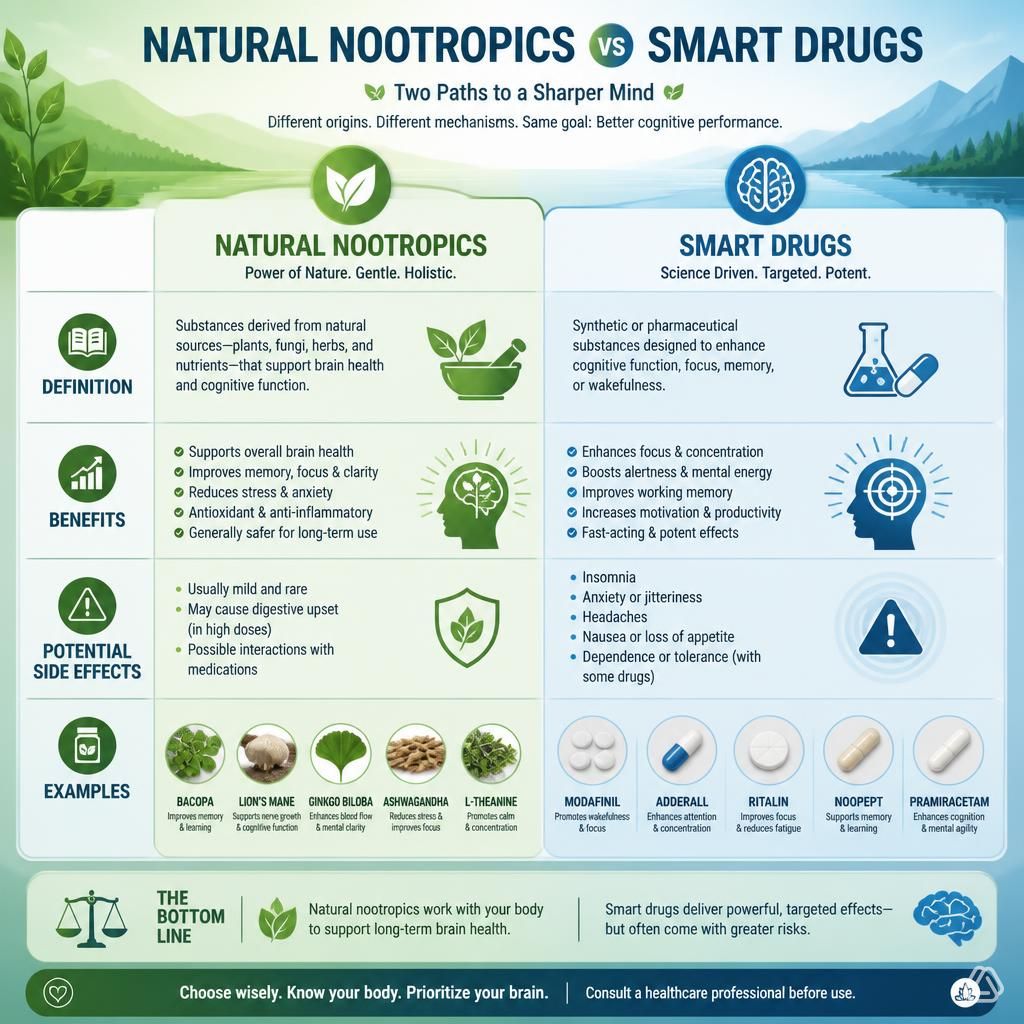
You’ve probably heard the terms “smart drugs,” “cognitive enhancers,” or seen references to Adderall, Modafinil, or racetams in nootropics discussions. It’s worth clearly distinguishing these from the natural nootropics covered in this guide.
| Feature | Natural Nootropics | Synthetic Smart Drugs |
|---|---|---|
| Examples | Lion’s Mane, Bacopa, L-Theanine, Rhodiola, Omega-3 | Modafinil, Adderall, Racetams (Piracetam), Noopept |
| Mechanism | Gentle modulation of neurotransmitters, NGF, neuroprotection, blood flow | Forceful modulation of dopamine, norepinephrine, acetylcholine systems |
| Timeline | Days to weeks for full effect (except caffeine stack) | Often immediate, dramatic effect |
| Side effects | Minimal; generally well-tolerated at recommended doses | Can include anxiety, insomnia, dependency, cardiovascular effects |
| Legal status (US) | Freely available as dietary supplements | Prescription-only (Adderall) or unscheduled gray area (racetams) |
| Long-term safety data | Strong — many with centuries of traditional use | Limited; long-term safety largely unknown |
WellnessWays.net’s philosophy is clear: natural nootropics represent the sustainable, accessible, and side-effect-minimal path to cognitive enhancement. Synthetic options may have their place in certain medical contexts — but that’s a conversation for you and your physician, not a supplement guide.
Our strong recommendation: before ever considering pharmaceutical cognitive enhancement, exhaust the natural toolkit first — especially sleep optimization, consistent exercise, whole-food nutrition, stress management, and social connection. These lifestyle factors produce cognitive improvements that dwarf anything in a pill bottle. Nootropics are amplifiers — they work best when you’ve already built a solid foundation.[INTERNAL LINK: The WellnessWays Brain Clarity Foundation Protocol]
— FAQ Section (Apply FAQPage Schema in WordPress)

Frequently Asked Questions About Natural Nootropics
Are natural nootropics safe?
For most healthy adults, the natural nootropics covered in this guide have excellent safety profiles at recommended doses. Many — like Bacopa, Ashwagandha, and Rhodiola — have centuries of traditional use in Ayurvedic and Chinese medicine, plus modern clinical safety data. That said, “natural” doesn’t automatically mean “safe for everyone.” Drug interactions exist (Ginkgo and blood thinners, for example), and individual responses vary. Always consult your healthcare provider before starting any supplement, especially if you take medications, are pregnant or nursing, or have a chronic health condition.
How long do natural nootropics take to work?
It depends significantly on the compound. L-Theanine + caffeine works within 30–60 minutes — you’ll feel it the same day. Rhodiola Rosea often produces noticeable effects within days to 1–2 weeks. Bacopa Monnieri and Lion’s Mane, however, require 8–12 weeks of consistent daily use before full cognitive benefits emerge — this is not a sign of failure, it’s how cumulative neuroplasticity-supporting compounds work. The key is consistency. Set a 90-day benchmark for slow-acting nootropics, and track your progress with a simple daily cognitive log.
Can you take multiple nootropics together?
Yes — in fact, strategic combination is often more effective than single compounds because different nootropics work through different pathways. The stacks outlined in this guide are designed with complementary mechanisms in mind. The golden rule: introduce one new supplement at a time, wait 1–2 weeks to assess your individual response, then add the next. This lets you identify what’s working, catch any adverse responses early, and fine-tune your stack with precision. Start with the Beginner’s Stack and build from there.
Do nootropics work for ADHD?
Some natural nootropics show promise for attention and focus that may benefit individuals with ADHD symptoms — particularly L-Theanine + caffeine, Phosphatidylserine, and Bacopa Monnieri. However, ADHD is a clinical diagnosis, and natural nootropics are not approved treatments for ADHD. They may serve as complementary support alongside a professionally managed treatment plan, but should never be positioned as replacements for clinical evaluation or prescribed medication. If you suspect ADHD, please work with a qualified healthcare professional — and mention any supplements you’re taking.
What is the single most effective natural nootropic?
For immediate, measurable cognitive enhancement: the L-Theanine + Caffeine stack wins on speed and replicability of evidence. For long-term memory support: Bacopa Monnieri has the deepest clinical evidence base. For neuroplasticity and neuroprotection: Lion’s Mane Mushroom is in a class of its own. The honest answer is that the “best” nootropic depends on your primary goal. If forced to pick one foundational supplement for overall brain health at any age, a strong case can be made for a high-quality Omega-3 (DHA+EPA) — because the brain literally needs it to function, and most people are deficient.H3
Can nootropics replace sleep?
Absolutely not. Sleep is the single most powerful cognitive enhancer known to science — bar nothing. During sleep, your brain consolidates memories, clears metabolic waste via the glymphatic system, repairs neural connections, and resets emotional regulation. No supplement can replicate this. In fact, many nootropics — like Bacopa and Lion’s Mane — work through sleep by supporting the memory consolidation processes that happen during deep sleep. If you’re sleeping 5–6 hours a night, nootropics will provide a tiny fraction of the benefit you’d get from simply sleeping 7–9 hours. Fix sleep first. Supplement second.

A Note on Realistic Expectations
Let’s be completely honest with each other for a moment — because you deserve more than supplement industry spin.
Natural nootropics are not magic pills. They are real, evidence-backed tools that can meaningfully support your cognitive performance — but they work best as the finishing layer on top of a solid lifestyle foundation, not as substitutes for one.
Consider two people taking Lion’s Mane daily:
- Person A sleeps 5 hours a night, eats mostly processed food, doesn’t exercise, and is chronically stressed
- Person B sleeps 8 hours, eats a whole-food diet rich in omega-3s and antioxidants, exercises 4× a week, and manages stress actively
Person B will see dramatically greater cognitive benefit from the same supplement — because the foundation amplifies the supplement, not the other way around. Meanwhile, Person A might not notice much at all, and may conclude “nootropics don’t work” — when really, the supplements never had a fighting chance.
Think of it this way: sleep is your brain’s nightly maintenance cycle. Nutrition is the raw material. Exercise is the most powerful natural neuroplasticity trigger known to science. Nootropics, at their best, optimize a system that’s already running well — they can’t fix a system that’s fundamentally under-resourced.
So before investing in any supplement stack: audit your sleep, your diet (especially omega-3 intake and sugar/ultra-processed food reduction), your hydration, your movement, and your stress management. Even modest improvements in these areas will produce measurable cognitive benefits. Then add your nootropic stack — and that’s when you’ll notice the difference most clearly.[INTERNAL LINK: The 5 Daily Vitality Habits That Actually Change Your Brain]
CONCLUSION

The Evidence Is Stronger Than You Think — Choose Wisely and Start Simple
Here’s the truth the nootropics industry doesn’t want you to sit with: most of what’s marketed as “cognitive enhancement” is hype. Underdosed blends with proprietary formulas. Rat-study ingredients dressed up as breakthroughs. Influencer endorsements masquerading as clinical evidence.
But the flip side of that truth is just as important: the evidence for the compounds covered in this guide is more robust than most people realize. Lion’s Mane stimulating nerve growth factor is not theoretical — it’s been demonstrated in peer-reviewed human trials. Bacopa’s memory-consolidation effects have been replicated across more than a dozen RCTs. L-Theanine and caffeine together is arguably the best-studied cognitive stack in nutritional science. The evidence is there. You just have to know where to look — and what standards to apply.
So here’s your clear, simple action plan:
- Start with the Beginner’s Stack. L-Theanine + natural caffeine in the morning. Omega-3 and Bacopa with breakfast. Optional Lion’s Mane any meal.
- Give it 8–12 weeks. Don’t judge a slow-acting neuroplasticity compound after two weeks. Track your focus, memory, and mood with simple daily notes.
- Optimize your foundation first. Sleep, nutrition, hydration, exercise, stress management. These are non-negotiables, not optional upgrades.
- Build intentionally. After your assessment period, add or adjust compounds based on your specific goals using the stacks in this guide.
Your brain is worth the investment — and the effort. You’ve got the science. Now go build the cognitive life you want.
⚠ EDITORIAL DISCLAIMER
This article is provided for educational and informational purposes only and does not constitute medical advice, diagnosis, or treatment. The information presented here is not intended to replace the advice of a qualified healthcare professional.
Always consult your doctor, pharmacist, or qualified healthcare provider before starting any new supplement regimen — particularly if you are taking medications, have an existing health condition, are pregnant or nursing, or are considering supplements for a child.
These statements have not been evaluated by the Food and Drug Administration (FDA). The supplements discussed in this article are not intended to diagnose, treat, cure, or prevent any disease.
WellnessWays.net may earn a commission on purchases made through affiliate links in this article. This does not affect our editorial standards, recommendations, or research methodology. We only recommend products we have independently evaluated for quality and evidence alignment.
Related Articles on WellnessWays.net
- [INTERNAL LINK: Pillar Post 1 — Sleep Optimization: The Science of a Brain-Restoring Night]
- [INTERNAL LINK: Pillar Post 2 — Daily Vitality Habits That Protect Your Brain Long-Term]
- [INTERNAL LINK: Deep Dive — Lion’s Mane Mushroom: Complete Evidence Review]
- [INTERNAL LINK: Deep Dive — Bacopa Monnieri: Memory, Dosage, and What the Research Actually Says]
- [INTERNAL LINK: The Anti-Neuroinflammation Diet: What to Eat for a Sharper Brain]
- [INTERNAL LINK: Exercise and the Brain: The Cognitive Case for Moving Your Body]
Not sure what’s causing your brain fog? Take our free 3-minute Root Cause Quiz and get your personalized action plan! → [Take The Quiz]