
All About, How to Sleep Better Naturally
Sleep is the single most powerful performance-enhancing tool available to every human being on the planet — and it’s completely free.
Yet somewhere along the way, we collectively decided that struggling to fall asleep, waking up exhausted, and running on 5–6 hours was just a normal part of modern life.
It isn’t. And the science proves it.
Poor sleep doesn’t just make you tired. It impairs memory consolidation, weakens immune function, disrupts hormone balance, accelerates brain aging, and dramatically increases the risk of anxiety, depression, and cognitive decline. After just 17 hours without sleep, your cognitive performance is equivalent to a blood alcohol level of 0.05%.
The good news? You don’t need sleeping pills, expensive gadgets, or radical lifestyle changes to sleep better. The evidence-based strategies in this guide work — and most of them are completely natural, free, and can be implemented tonight.
Let’s go.
Why So Many People Sleep Poorly — And Why It’s Not Your Fault
Before we get into solutions, it helps to understand why modern sleep is so broken.
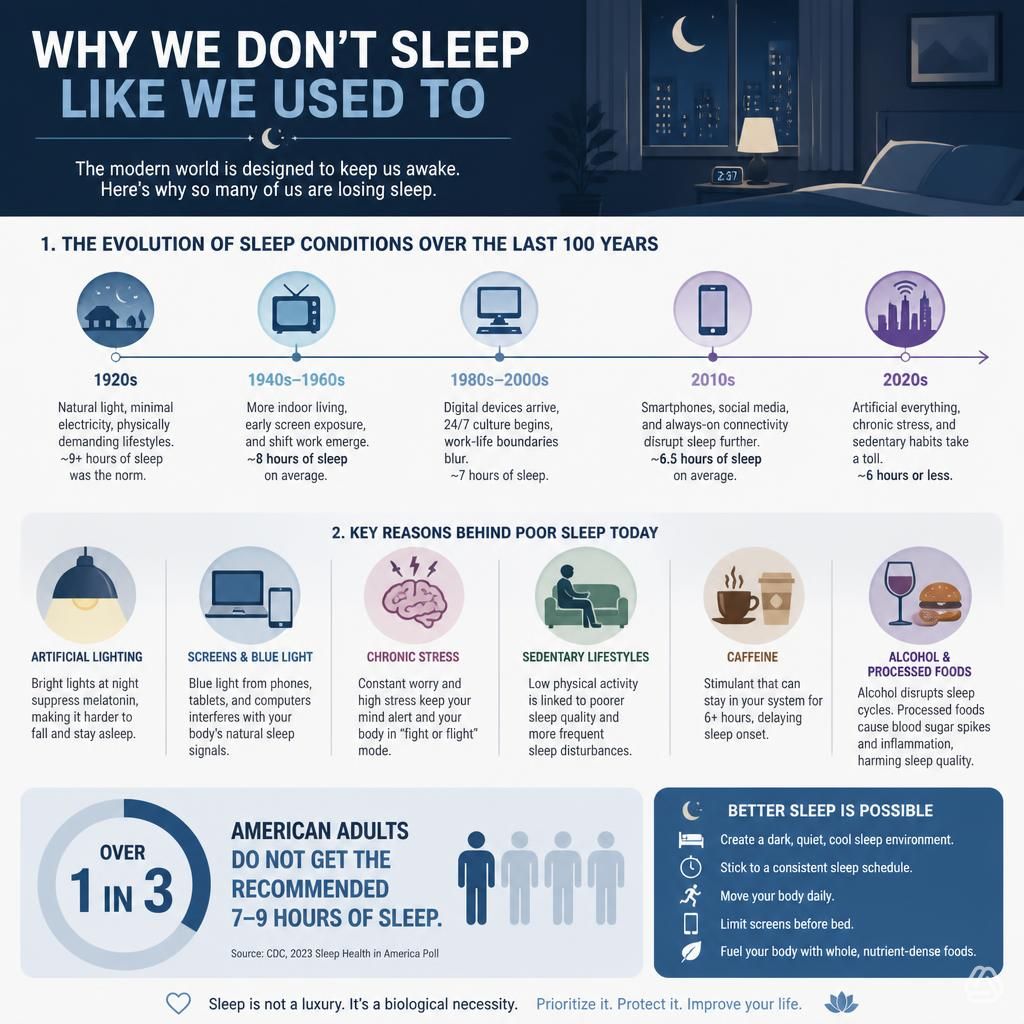
Human sleep was calibrated over hundreds of thousands of years for a specific set of environmental conditions: natural light during the day, darkness at night, physical activity, and minimal chronic stress.
In the last 100 years — a blink of evolutionary time — we’ve replaced almost every one of those conditions:
- Artificial lighting keeps our brains in “daytime mode” until midnight
- Screens emit blue light that directly suppresses melatonin production
- Chronic psychological stress keeps cortisol elevated when it should be declining
- Sedentary lifestyles remove the physical fatigue that naturally drives deep sleep
- Caffeine, alcohol, and processed foods directly disrupt sleep architecture
The result is a population-wide sleep crisis. According to the CDC, over 1 in 3 American adults don’t get the recommended 7–9 hours of sleep regularly.
Understanding this isn’t about blame — it’s about recognizing that your sleep environment and habits, not your biology, are almost always the primary problem. And environments and habits can be changed.
The Science of Sleep — What Actually Happens When You Sleep
Most people think of sleep as simply “being unconscious.” In reality, sleep is one of the most biologically active states your body experiences.
Every night, your brain cycles through 4–5 sleep cycles, each lasting approximately 90 minutes. Each cycle contains distinct stages:
Stage 1 (Light Sleep): Transition from wakefulness. Heart rate slows, muscles relax.
Stage 2 (Light Sleep): Body temperature drops, brain waves slow. Sleep spindles consolidate motor memories and procedural learning.
Stage 3 (Deep Sleep / Slow Wave Sleep): The most physically restorative phase. Growth hormone is released, tissues repair, immune function strengthens, and the glymphatic system activates — washing toxic waste proteins like beta-amyloid (linked to Alzheimer’s) from your brain.
REM Sleep (Rapid Eye Movement): Emotional processing, creativity, memory consolidation. Your brain replays and integrates the day’s experiences into long-term memory. Dreams occur here.
Each stage serves a unique and irreplaceable function. When you cut sleep short, you disproportionately lose REM sleep (which occurs most in the final hours of a sleep cycle) — which is why partial sleep deprivation so severely impairs mood, creativity, and memory.
This is also why brain fog is so often a sleep problem at its root.
The WellnessWays Natural Sleep Optimization Protocol
1. Fix Your Light Environment — Morning AND Evening
Light is the master controller of your circadian rhythm — and most people only think about evening light when they should be managing both ends.
Morning light (within 30 minutes of waking): Get outside for 5–10 minutes of natural light exposure. This triggers your Cortisol Awakening Response, which simultaneously energizes you in the morning AND sets your melatonin timer for approximately 12–16 hours later. Bright morning light is one of the most powerful sleep-onset aids available.
Evening light (2–3 hours before bed): As the sun goes down, your environment needs to match. Specifically:
- Dim overhead lights and switch to warm, amber-toned lighting (2700K or lower)
- Avoid bright white or blue-toned lighting after 8pm
- Use f.lux or Night Mode on all screens
- Consider blue-light blocking glasses in the evening — studies show they can increase melatonin production by up to 58% and improve sleep quality significantly
- Avoid screens for the final 60 minutes before bed — this single change can add 30–45 minutes of sleep onset speed for most people
2. Anchor Your Sleep Schedule
Your circadian rhythm is regulated by consistency more than anything else. Irregular sleep and wake times are one of the most disruptive things you can do to your sleep quality — even if your total sleep hours remain the same.
The single most important habit: Set a consistent wake time and stick to it — even on weekends.
Your wake time anchors your entire circadian rhythm. When your wake time is consistent, your body begins anticipating sleep onset automatically, making it progressively easier to fall asleep at the right time.
If you currently go to bed at wildly varying times, start by fixing the wake time first. Your sleep onset will naturally stabilize within 1–2 weeks.
Target: 7–9 hours for most adults (8–10 for teenagers, 7–8 for older adults).
3. Optimize Your Sleep Environment — The 4 Variables That Matter
Your bedroom environment has a dramatic impact on sleep depth and continuity. Four variables are critical:
Temperature: The most overlooked sleep variable. Your core body temperature needs to drop by 1–3°F to initiate and maintain deep sleep. The optimal bedroom temperature is 65–68°F (18–20°C) for most people. If you sleep hot, a cooling mattress pad or fan can make a significant difference.
Darkness: Your bedroom should be completely dark during sleep. Even small amounts of light — a phone charging LED, light under the door, streetlights through curtains — can suppress melatonin and reduce sleep quality. Use blackout curtains and remove all light-emitting devices from the bedroom.
Noise: Noise disrupts sleep continuity even when it doesn’t fully wake you. If you live in a noisy environment, white noise, pink noise, or brown noise (many free apps available) can mask disruptive sounds. Earplugs are highly effective for light sleepers.
Your bed is for sleep (and intimacy) only: Avoid working, watching TV, or scrolling in bed. Your brain learns through association — if you spend hours in bed with your phone, your brain stops associating the bed with sleep. Over time, this creates conditioned arousal — the opposite of what you want.
4. Build a Wind-Down Routine — The 60-Minute Protocol
Your nervous system cannot switch from high alert to deep sleep mode instantly — it needs a transition period. Think of it like slowing a car down before a stop sign.
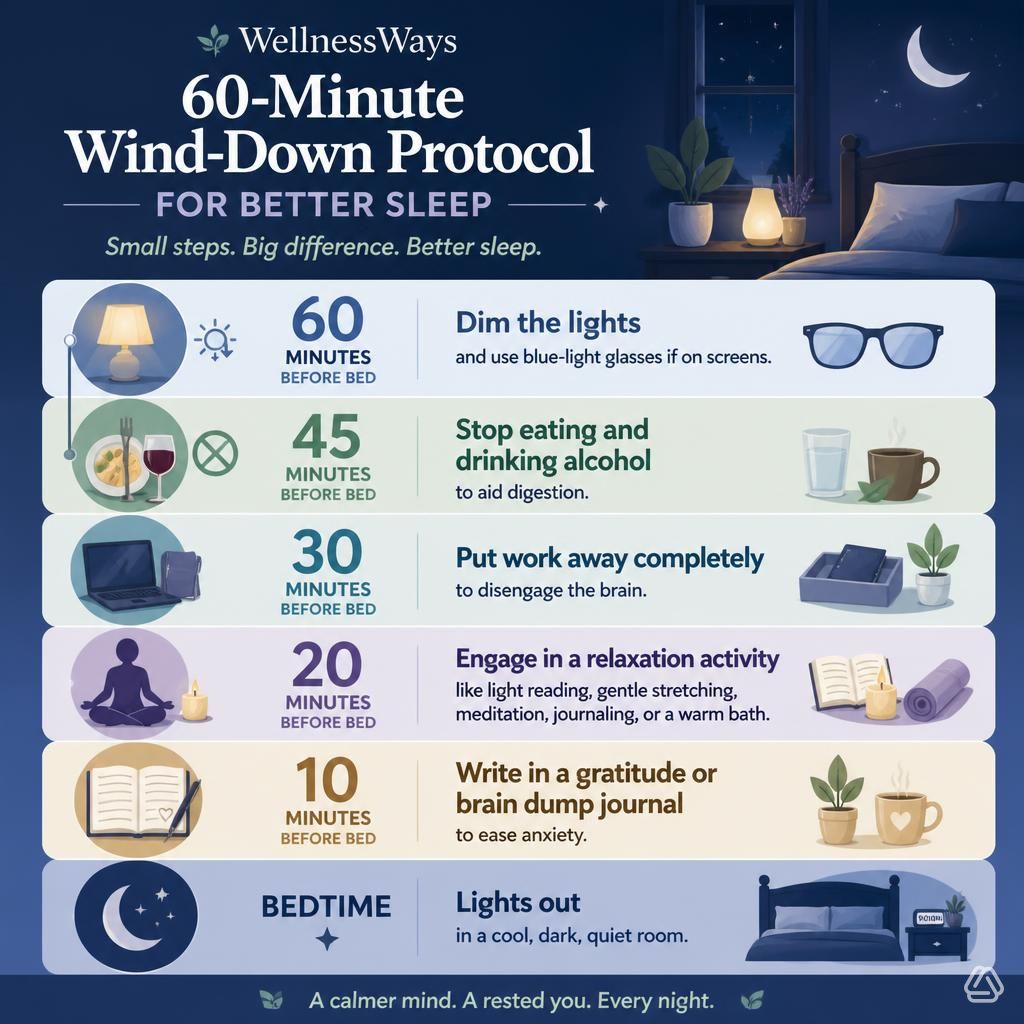
The WellnessWays 60-Minute Wind-Down Protocol:
60 minutes before bed — Dim the lights Switch off bright overheads. Put on blue-light glasses if using screens.
45 minutes before bed — Stop eating and drinking alcohol Food digestion elevates metabolism and body temperature — both counterproductive to sleep onset.
30 minutes before bed — Put work away completely No email, no problem-solving, no work-related content. Your brain needs to disengage from task-mode.
20 minutes before bed — Relaxation activity Choose one: light reading (physical book), gentle stretching, meditation, journaling, or a warm bath/shower. A warm bath or shower 1–2 hours before bed is particularly effective — it raises then rapidly drops your core temperature, powerfully triggering sleep onset.
10 minutes before bed — Gratitude or brain dump journal Write down 3 things you’re grateful for, or do a “brain dump” — writing out everything on your mind so your brain doesn’t feel compelled to keep processing it while you’re trying to sleep. This significantly reduces sleep-onset anxiety and rumination.
Bedtime — The same time every night Lights out. Cool, dark, quiet room.
5. Master Caffeine Timing
Caffeine has a half-life of 5–7 hours — meaning half of the caffeine from a 3pm coffee is still circulating in your system at 9pm. For people who metabolize caffeine slowly (a common genetic variation), this effect lasts even longer.
Evidence-based caffeine rules for better sleep:
- No caffeine after 1–2pm (for most people)
- If you’re a slow caffeine metabolizer, cut off by noon
- Be aware that green tea, matcha, pre-workouts, some medications, and even decaf coffee contain meaningful amounts of caffeine
- The afternoon energy slump you feel at 2–3pm is largely adenosine-driven — a 20-minute nap or a short walk is more effective than afternoon caffeine for restoring alertness without disrupting sleep
6. Manage Alcohol — It’s Not a Sleep Aid
This is one of the most widespread sleep misconceptions. Alcohol makes you fall asleep faster — but it severely degrades sleep quality throughout the night.
Here’s what alcohol actually does to your sleep:
- Suppresses REM sleep — the stage critical for memory consolidation and emotional processing
- Fragments deep sleep — causing more micro-awakenings (often unremembered)
- Disrupts breathing — worsening snoring and sleep apnea
- Increases night sweats and body temperature
- Causes rebound arousal in the second half of the night as alcohol is metabolized
Even one drink within 3 hours of bedtime measurably reduces sleep quality. If you drink, finishing at least 3–4 hours before bed significantly reduces the impact.
7. The Natural Sleep Supplement Toolkit
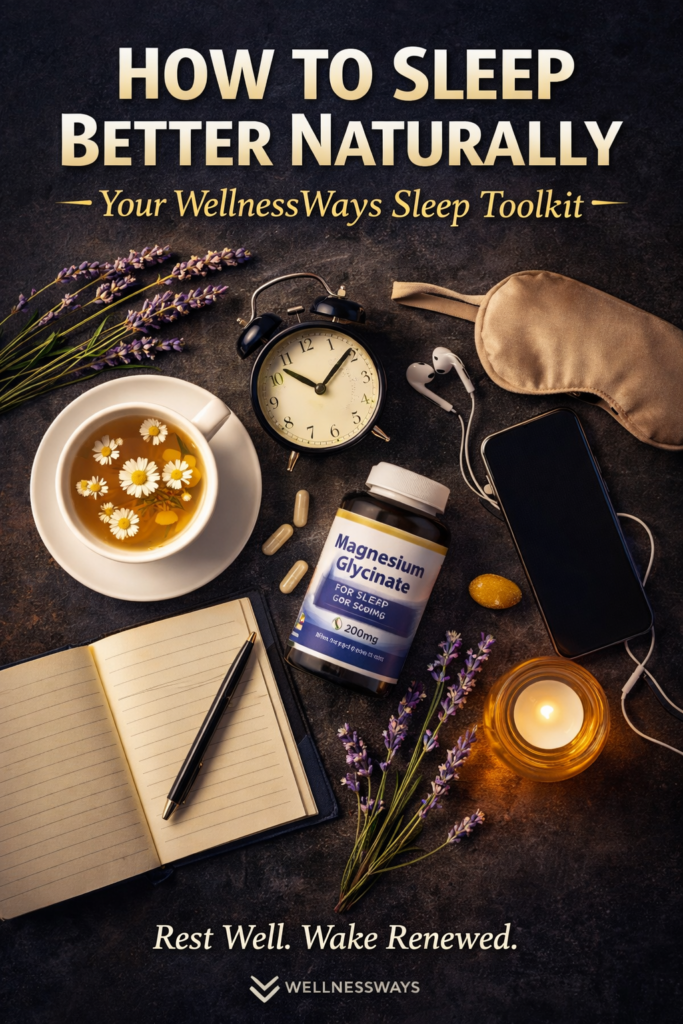
For nights when lifestyle adjustments aren’t enough, several evidence-based supplements can support natural sleep without dependency or next-day grogginess:
Magnesium Glycinate (200–400mg, 1 hour before bed) Magnesium is involved in over 300 enzymatic processes — including the regulation of GABA, the primary inhibitory neurotransmitter that creates the calm, quiet brain state needed for sleep. Glycinate is the most bioavailable and gentlest form. This is the first supplement most sleep experts recommend, and for good reason.
For a deeper dive into magnesium’s effects on brain function beyond sleep, check out our guide on how to improve brain clarity naturally.
L-Theanine (100–200mg, 30–60 minutes before bed) The amino acid found naturally in green tea. Promotes relaxation without sedation by increasing alpha brain waves — the same brain state associated with meditation. Pairs excellently with magnesium glycinate.
Melatonin (0.5–1mg, 30–60 minutes before bed) The most important word here is dosage. Most commercial melatonin supplements are wildly overdosed at 5–10mg. Research shows that 0.5–1mg is just as effective for sleep onset and produces fewer next-day effects. Use it to reset your sleep schedule or adjust to time zones — not as a nightly crutch.
Glycine (3g, 30 minutes before bed) An amino acid that lowers core body temperature through peripheral vasodilation — directly facilitating the temperature drop needed for sleep onset. Research shows it improves sleep quality scores and reduces daytime sleepiness.
Ashwagandha (300–600mg) An adaptogenic herb with solid clinical evidence for reducing cortisol and anxiety — two of the most common physiological barriers to falling asleep. Particularly effective for people whose poor sleep is stress-driven.
8. Exercise — The Right Way and at the Right Time
Regular physical exercise is one of the most powerful natural sleep aids known to science. Studies show it increases slow-wave deep sleep, reduces sleep onset time, and improves overall sleep quality.
Best practices:
- Morning or early afternoon exercise is ideal — it reinforces your cortisol curve and increases adenosine buildup, promoting stronger sleep pressure by bedtime
- Evening exercise (within 2–3 hours of bed) raises core temperature and cortisol temporarily — which can delay sleep for some people. If evening is your only option, stick to gentle yoga, stretching, or walking rather than high-intensity training
- Even 30 minutes of walking daily has been shown to improve sleep quality significantly — no gym required
9. Address Stress and Anxiety at the Root
Chronic psychological stress is perhaps the most common reason people lie awake at 2am with their mind racing. The stress-sleep relationship is bidirectional — stress disrupts sleep, and poor sleep amplifies stress sensitivity — creating a vicious cycle.
Evidence-based techniques for stress-related insomnia:
4-7-8 Breathing: Inhale for 4 counts, hold for 7, exhale for 8. This activates the parasympathetic nervous system and can reduce heart rate and anxiety within minutes.
Progressive Muscle Relaxation (PMR): Systematically tensing and releasing muscle groups from feet to head. Clinical studies show this reduces sleep onset time by an average of 30%.
Cognitive Shuffling: A technique developed by Dr. Luc Beaulieu-Prévost that involves randomly imagining unrelated images or words — essentially mimicking the hypnagogic imagery of natural sleep onset. Many people find it dramatically faster than traditional relaxation techniques.
Journaling: As mentioned in the wind-down protocol, a brain dump journal removes the cognitive load of unprocessed thoughts — one of the most common causes of racing mind at bedtime.
For people dealing with significant stress impacts on cognitive function, our guide on brain fog causes and how to fix it covers the cortisol-cognition relationship in detail.
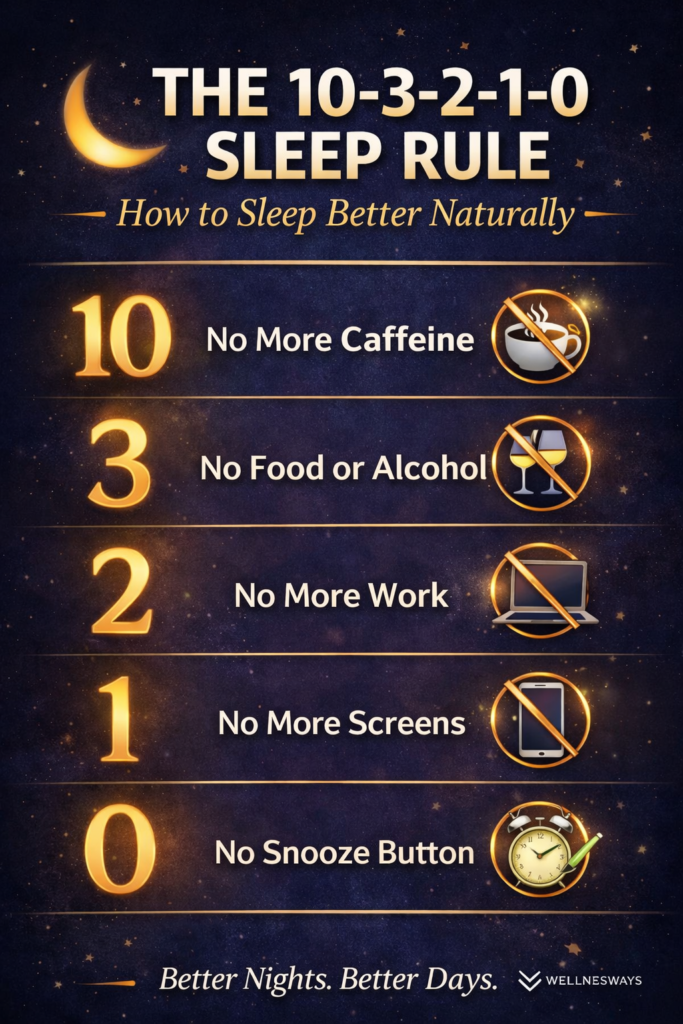
The 10-3-2-1-0 Sleep Rule — The Ultimate Framework
If you want one simple framework that integrates most of the above into an easy-to-remember system, this is it:
- 10 hours before bed: No more caffeine
- 3 hours before bed: No more food or alcohol
- 2 hours before bed: No more work
- 1 hour before bed: No more screens
- 0: Times you hit the snooze button in the morning
Simple, memorable, and remarkably effective.
When to Talk to a Doctor
While the strategies in this guide address the vast majority of sleep problems, some sleep issues require medical attention:
- Sleep apnea — loud snoring, gasping for air, waking with headaches, or excessive daytime sleepiness despite adequate time in bed
- Restless Legs Syndrome (RLS) — uncomfortable sensations in the legs at night
- Chronic insomnia — difficulty sleeping for 3+ nights per week for more than 3 months despite good sleep hygiene
- Narcolepsy — sudden, uncontrollable sleep attacks during the day
If any of these resonate, consult your healthcare provider. A sleep study (polysomnography) can identify issues that lifestyle changes alone cannot address.
Sleep Tracking — Is It Worth It?
In recent years, wearable sleep trackers have exploded in popularity — Oura Ring, WHOOP, Apple Watch, Garmin, Fitbit and dozens of others all promise detailed insights into your sleep architecture. But are they actually useful? And can they make you sleep worse?
What Sleep Trackers Can Tell You
Consumer wearables measure sleep primarily through actigraphy (movement detection) and heart rate variability (HRV). The better devices also incorporate skin temperature, blood oxygen (SpO2), and respiratory rate.
What they’re reasonably good at:
- Estimating total sleep duration
- Detecting broad sleep stages (light, deep, REM) — though with significant margin of error
- Tracking HRV trends over time — a useful indicator of recovery and nervous system status
- Identifying obvious disruptions like high resting heart rate, low SpO2, or significantly fragmented sleep
- Providing long-term trend data that can reveal patterns (e.g., alcohol’s effect on your HRV, or the impact of different bedtimes on your energy)
What they’re NOT reliable for:
- Precise sleep stage analysis — only a clinical polysomnography (sleep study) can accurately measure this
- Absolute accuracy on any single night — night-to-night variability in wearable data can be significant
- Diagnosing sleep disorders
The “Orthosomnia” Problem
Here’s the thing nobody mentions: for some people, sleep tracking makes sleep worse.
Researchers have coined the term “orthosomnia” — an anxiety about achieving perfect sleep metrics — to describe the phenomenon where people become so focused on their tracker data that the stress of monitoring actually impairs their sleep quality.
If you’re the type of person who checks your sleep score the moment you wake up and lets it determine how you feel about your day — sleep tracking may be doing you more harm than good.
The WellnessWays guideline on sleep tracking:
- Use trackers to identify long-term patterns and trends, not to judge individual nights
- If your tracker data is causing anxiety, turn off the sleep tracking feature or take a break for 2–4 weeks
- Your subjective morning energy rating (how rested you feel on a scale of 1–10) is often more actionable than your device’s algorithm
- Use HRV data as a recovery guide for exercise — it’s the most evidence-backed use of consumer wearable data
Bottom line: Sleep trackers can be genuinely useful tools for self-awareness — but they work best as one data point among many, not as the authoritative verdict on whether you slept well.
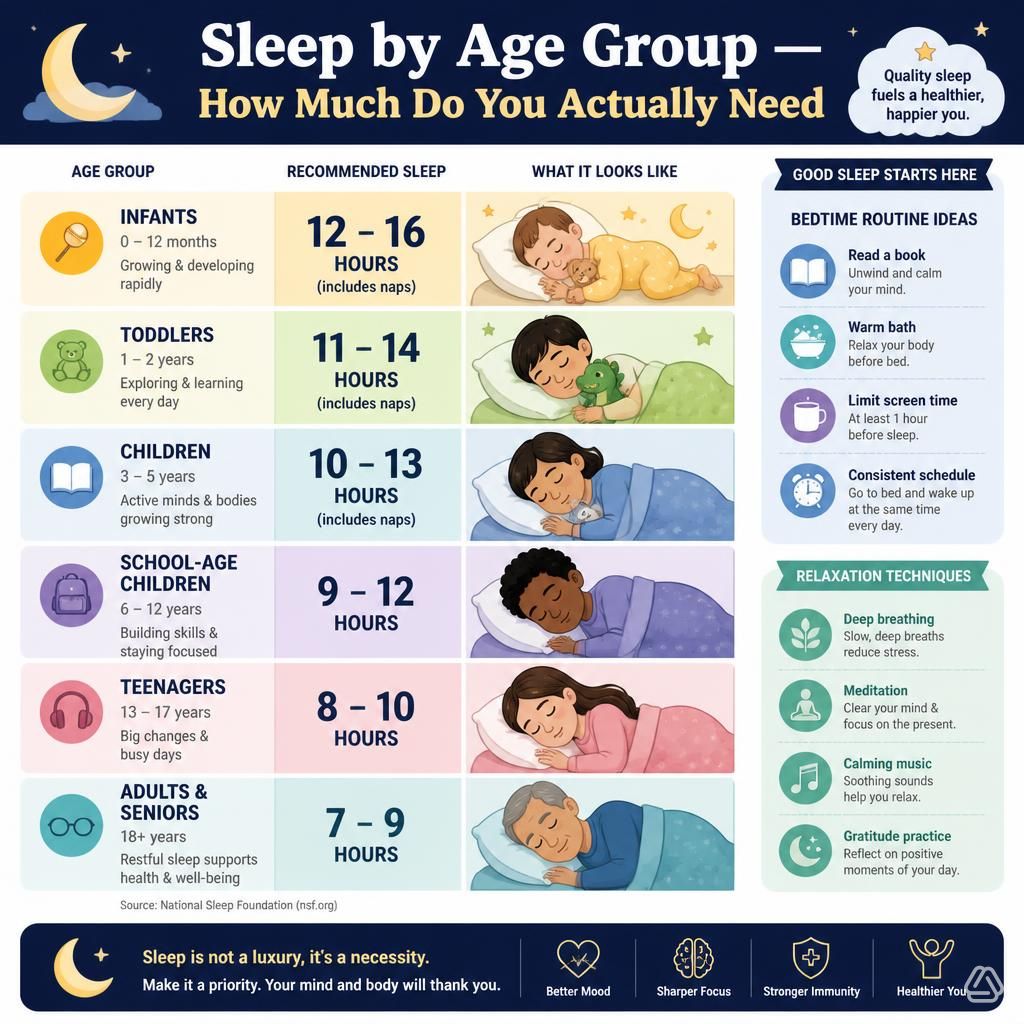
Sleep by Age Group — How Much Do You Actually Need?
One of the most common sources of sleep confusion is applying a one-size-fits-all standard to a highly variable biological need. Sleep requirements change significantly across the lifespan — here’s what the current science actually recommends:
🍼 Infants (0–12 months): 12–16 hours
Newborns sleep in fragmented cycles throughout the day and night, with REM sleep making up a much larger proportion than in adults. This is not dysfunction — it’s critical neurodevelopment. The brain essentially doubles in size in the first year of life, and sleep is the primary driver of that growth.
🧒 Toddlers (1–2 years): 11–14 hours
Including naps. Consolidated nighttime sleep begins to emerge, though naps remain essential for cognitive development and emotional regulation.
👧 Preschoolers (3–5 years): 10–13 hours
Most children naturally drop to one nap or none by age 4–5. Consistent bedtime routines are particularly important at this stage for sleep quality.
🎒 School-age Children (6–12 years): 9–12 hours
Children in this range are in a high-neuroplasticity window — sleep is critical for learning consolidation, memory, emotional regulation, and immune function. Screen time in the evening is particularly disruptive for this age group.
🎓 Teenagers (13–18 years): 8–10 hours
Teens are biologically wired to fall asleep later and wake up later — this is not laziness. A genuine circadian phase shift occurs during puberty that pushes the natural sleep window to approximately midnight–9am. Early school start times are a public health issue that directly impacts teen cognitive performance, mental health, and accident rates. If you have teenagers, this context matters enormously.
👩 Young Adults (18–25 years): 7–9 hours
The transition away from the teen circadian shift. Most young adults perform best at 8 hours, though individual variation is real — some genuinely thrive on 7 hours while others need 9.
🧑 Adults (26–64 years): 7–9 hours
The standard recommendation for most of the adult lifespan. Research consistently shows that below 7 hours is associated with significantly increased health risks including cardiovascular disease, metabolic dysfunction, immune impairment, and accelerated cognitive aging.
Important: “I feel fine on 6 hours” is one of the most dangerous sleep misconceptions. Studies show that chronically sleep-deprived people consistently underestimate their own cognitive impairment — the sleepier you are, the less accurately you perceive how impaired you are.
👴 Older Adults (65+): 7–8 hours
Sleep architecture changes significantly with age — deep sleep (Stage 3) decreases, sleep becomes lighter and more fragmented, and early morning waking becomes more common. This is partly biological but also significantly influenced by medication, health conditions, reduced physical activity, and reduced light exposure.
Key strategies for older adults:
- Morning light exposure becomes even more important as the circadian signal weakens with age
- Regular physical activity is the most effective natural intervention for improving sleep depth in older adults
- Midday napping (20–30 minutes) can be beneficial for older adults — unlike younger people, it doesn’t necessarily disrupt nighttime sleep
- Review medications with your doctor — many common medications for blood pressure, depression, allergies, and pain are significant sleep disruptors
A Note on “Short Sleepers”
You may have heard of people who “only need 6 hours” and function perfectly. True short sleepers — those with the rare DEC2 gene mutation — represent approximately 1–3% of the population. If you think you’re a natural short sleeper, the odds are strongly against it. The vast majority of people who believe this are simply chronically sleep-deprived and have lost accurate awareness of their own impairment.
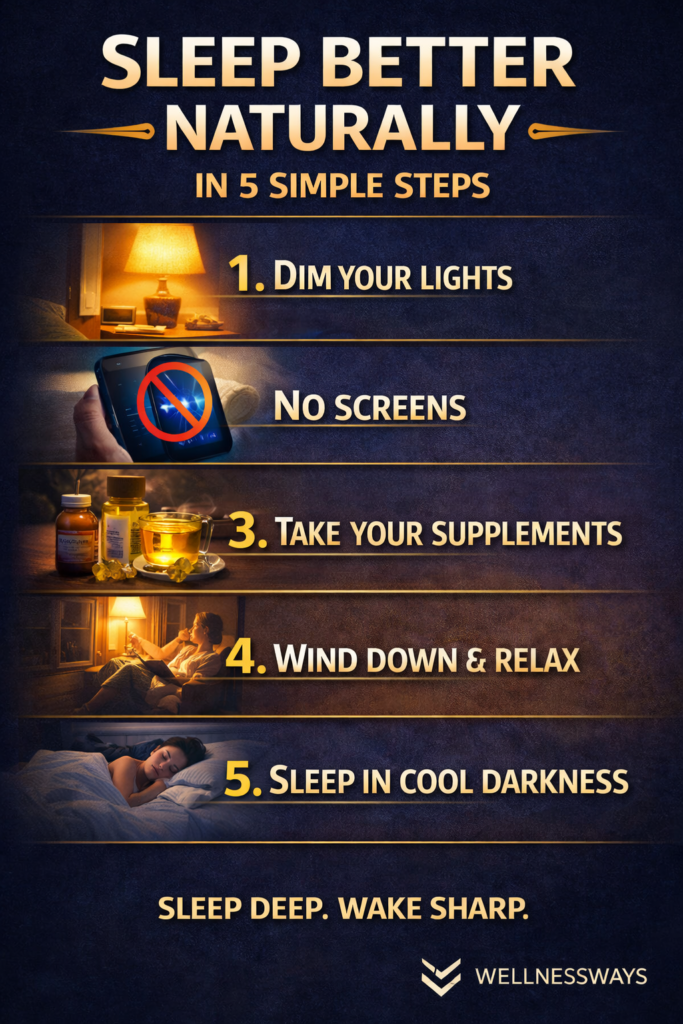
The 10-3-2-1-0 Sleep Rule — The Ultimate Framework
If you want one simple framework that integrates most of the above into an easy-to-remember system, this is it:
- 10 hours before bed: No more caffeine
- 3 hours before bed: No more food or alcohol
- 2 hours before bed: No more work
- 1 hour before bed: No more screens
- 0: Times you hit the snooze button in the morning
Simple, memorable, and remarkably effective.
When to Talk to a Doctor
While the strategies in this guide address the vast majority of sleep problems, some sleep issues require medical attention:
- Sleep apnea — loud snoring, gasping for air, waking with headaches, or excessive daytime sleepiness despite adequate time in bed
- Restless Legs Syndrome (RLS) — uncomfortable sensations in the legs at night
- Chronic insomnia — difficulty sleeping for 3+ nights per week for more than 3 months despite good sleep hygiene
- Narcolepsy — sudden, uncontrollable sleep attacks during the day
If any of these resonate, consult your healthcare provider. A sleep study (polysomnography) can identify issues that lifestyle changes alone cannot address
The Bottom Line — Sleep Is Not Negotiable
In a culture that glorifies busyness and treats sleep as laziness, choosing to prioritize 7–9 hours of quality sleep is genuinely one of the most powerful cognitive and health decisions you can make.
It’s not passive. It’s not a luxury. It’s the single nightly process that determines whether everything else you do for your health — exercise, nutrition, morning routine, supplementation, stress management — actually delivers results.
Better sleep is the foundation that everything else is built on. Start tonight.
Want to understand how poor sleep affects your brain at a deeper level? Read our complete guide on how to improve brain clarity naturally — and discover how optimizing your sleep is one of the fastest routes to lasting mental clarity.
Not sure what’s causing your brain fog? Take our free 3-minute Root Cause Quiz and get your personalized action plan! → [Take The Quiz]