
Introduction
Every night while you sleep, something remarkable happens inside your skull considered Glymphatic System Sleep.
A biological cleaning crew — one that scientists only discovered in 2013 — floods your brain with fluid, sweeps out toxic waste proteins, and resets your neurological system for the day ahead.
This system is called the glymphatic system. And its discovery is one of the most significant neuroscience breakthroughs of the last decade.
The implications are profound: sleep is not passive downtime. It is your brain’s active, essential maintenance window. Miss it — or compromise the quality of it — and the waste builds up. Year after year.
In this guide, we break down exactly how the glymphatic system works, what toxic proteins it removes, what happens when it fails to do its job, and the specific steps you can take starting tonight to activate it fully.
What Is the Glymphatic System?
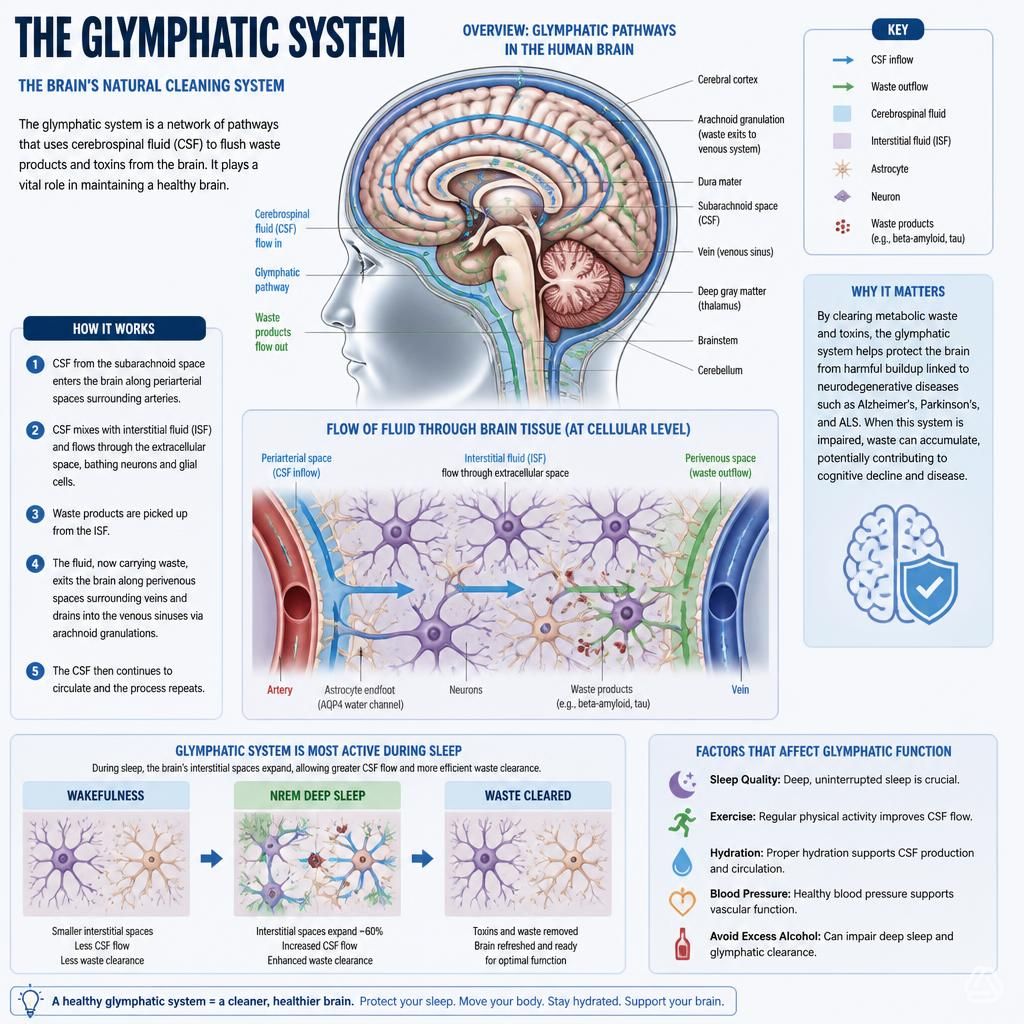
The glymphatic system is a waste-clearance network that runs throughout your brain and central nervous system. It was identified by Dr. Maiken Nedergaard and her team at the University of Rochester in a landmark 2013 study published in Science magazine.
The name combines “glial” — referring to the glial cells (specifically astrocytes) that make up the system — and “lymphatic” — because it functions similarly to the lymphatic system in the rest of your body, which is responsible for clearing cellular waste.
The lymphatic system, which handles waste removal for the rest of your body, does not extend into the brain. For centuries, scientists were puzzled about how the brain managed its own waste. The glymphatic system was the answer — and it was hiding in plain sight.
How the Glymphatic System Works — Step by Step
Understanding the glymphatic system requires a quick look at the fluid mechanics of your brain.
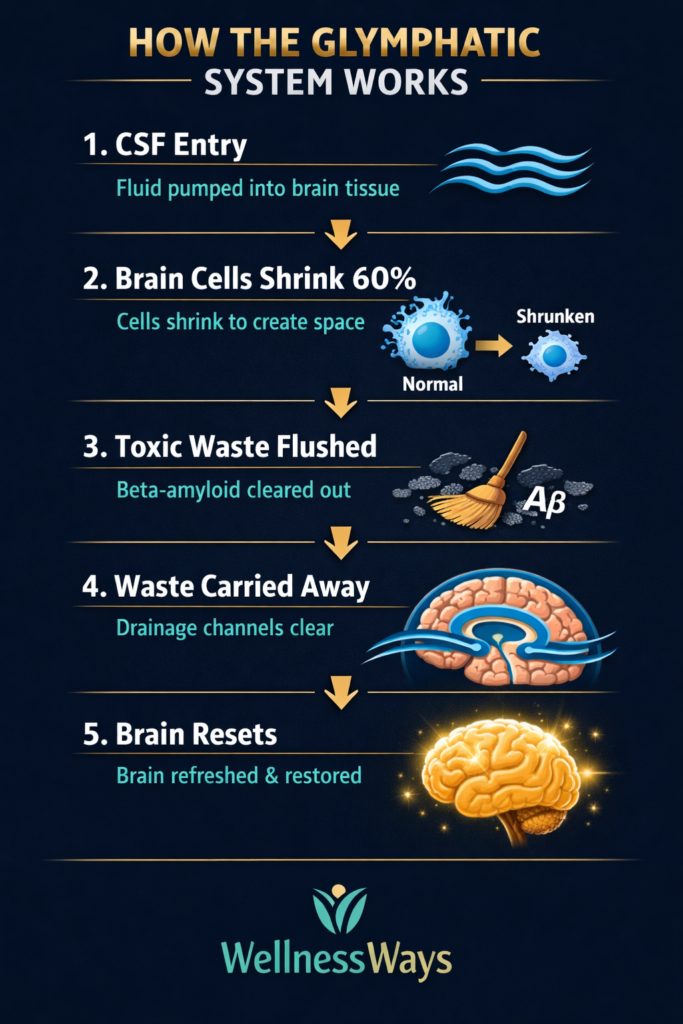
Step 1 — Cerebrospinal Fluid (CSF) Entry Your brain is surrounded and cushioned by cerebrospinal fluid (CSF). During deep sleep, this fluid is actively pumped into the brain tissue through channels that run alongside blood vessels.
Step 2 — Brain Cells Shrink This is the most astonishing part. During deep slow-wave sleep, your brain cells physically shrink by up to 60 percent of their waking size. This is not damage — it is a deliberate, coordinated process that opens the spaces between cells and allows CSF to flow freely through the tissue.
Step 3 — Toxic Waste Is Flushed As CSF flows through the expanded interstitial spaces, it picks up toxic metabolic waste products that have accumulated during your waking hours — most critically, beta-amyloid and tau proteins, the same compounds that form the plaques and tangles found in the brains of Alzheimer’s patients.
Step 4 — Waste Is Carried Away The CSF, now loaded with these waste proteins, drains out of the brain through specific channels and into the lymphatic system, where the waste is ultimately processed and eliminated by the body.
Step 5 — The Brain Resets With toxic proteins cleared and cellular debris removed, your brain wakes up in a cleaner, sharper, more functional state — ready to form new memories, make clear decisions, and operate at full cognitive capacity.
Why Is the Glymphatic System Only Active During Sleep?
The glymphatic system is ten times more active during sleep than during waking hours. This is not a design flaw — it is an intentional biological trade-off.
Running the glymphatic flush while you are awake would require enormous energy and would interfere with the complex neural activity needed for conscious thought, movement, and sensory processing. Your brain cannot efficiently do both at the same time.
This is why sleep is physiologically non-negotiable. No amount of rest, meditation, or relaxation while awake can replicate what the glymphatic system accomplishes during deep sleep.
What Happens When the Glymphatic System Fails?
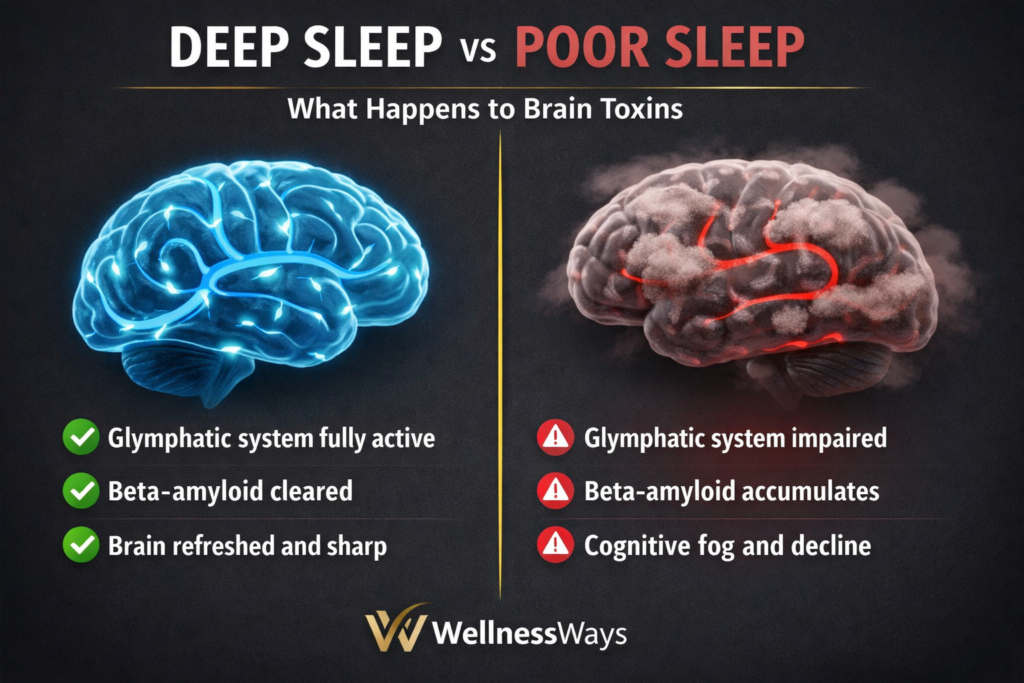
When you consistently get poor sleep — whether from too few hours, disrupted sleep stages, or poor sleep quality — the glymphatic system cannot complete its cleaning cycle. The consequences accumulate with each passing night.
Short-term effects of glymphatic disruption:
- Cognitive fog — the familiar morning “heaviness” in thinking
- Impaired memory consolidation — difficulty retaining what you learned the previous day
- Reduced decision-making capacity
- Elevated inflammatory markers in the brain
Long-term effects of chronic glymphatic failure: In a landmark 2017 study published in Nature Communications following over 500,000 participants, researchers found that people who consistently slept fewer than six hours per night had a 30 percent higher risk of developing dementia.
The mechanism is now well understood: without regular glymphatic clearing, beta-amyloid plaques accumulate in the brain over years and decades. These plaques interfere with neuronal communication and are directly associated with the progression of Alzheimer’s disease.
A 2017 study in JAMA Neurology found that even a single night of sleep deprivation caused measurable increases in beta-amyloid accumulation in the human brain — particularly in the thalamus and hippocampus.
The Role of Deep Sleep — Why Sleep Stage Matters
Not all sleep equally activates the glymphatic system. The system is most powerfully engaged during slow-wave sleep (SWS) — also known as deep sleep or Stage 3 NREM sleep.
During slow-wave sleep, your brain produces large, synchronized electrical waves — delta waves — that appear to drive the pulsing, rhythmic movement of CSF through the glymphatic channels. The more deep sleep you achieve, the more complete the nightly cleaning cycle.
This explains why people can sleep eight or nine hours and still wake up cognitively foggy — if the sleep is fragmented or light, they may be cycling through lighter stages without spending adequate time in the deep, slow-wave phase where glymphatic activity peaks.
What reduces deep sleep:
- Alcohol — even moderate amounts suppress slow-wave sleep significantly
- Sleeping pills (many types) — induce sedation but reduce natural sleep architecture
- Irregular sleep schedules — disrupting circadian rhythm reduces SWS duration
- Blue light exposure before bed — delays melatonin onset, cutting into early sleep stages
- Sleep apnea — fragments sleep continuously throughout the night
Sleep Position and the Glymphatic System
One of the more surprising findings in glymphatic research involves sleep position. A 2015 study published in the Journal of Neuroscience found that the glymphatic system operates most efficiently when sleeping on your side (lateral position) compared to sleeping on your back or stomach.
The side sleeping position appears to optimize CSF flow patterns and drainage pathways. This is consistent with observations that most mammals sleep on their sides — an evolutionary adaptation that may have developed, in part, to maximize glymphatic efficiency.
If you are a back or stomach sleeper, this does not mean your glymphatic system fails entirely — but side sleeping may represent a meaningful, zero-cost optimization.
How to Optimize Your Glymphatic System — The WellnessWays Protocol
Based on current research, here are the evidence-backed strategies for maximizing your nightly brain clean:
1. Prioritize 7 to 9 Hours of Sleep This is the non-negotiable foundation. The glymphatic system needs adequate time to complete its full cleaning cycle. Consistently sleeping fewer than seven hours is the single most significant modifiable risk factor for glymphatic dysfunction.
2. Protect Your Deep Sleep Avoid alcohol for at least three hours before bed. Establish a consistent sleep and wake time — your brain’s slow-wave sleep is most concentrated in the first half of the night. Going to bed at the same time each night maximizes the time available for early-night SWS.
3. Sleep on Your Side If comfortable, train yourself to sleep in the lateral position. Using a body pillow to support the lateral position can help if you tend to roll during the night.
4. Eliminate Blue Light After 9 PM Blue light from screens suppresses melatonin — the hormone that initiates sleep onset and supports the transition into deep sleep. Use blue-light blocking glasses or set all screens to night mode from 9 PM onward.
5. Keep Your Bedroom Cool Core body temperature drops during deep sleep. A room temperature between 60 and 67 degrees Fahrenheit (15.5 to 19.5°C) supports deeper sleep stages and therefore more effective glymphatic function.
6. Exercise Regularly — But Not Too Late Regular aerobic exercise significantly increases the duration of slow-wave sleep. However, intense exercise within two to three hours of bedtime can elevate core temperature and delay sleep onset.
7. Manage Stress Before Bed Elevated cortisol — your primary stress hormone — is directly antagonistic to deep sleep. Simple practices like ten minutes of journaling, gentle stretching, or a relaxation protocol before bed can meaningfully reduce cortisol and improve sleep architecture.
8. Consider Magnesium L-Threonate Of all the sleep-supporting supplements, magnesium L-threonate is uniquely valuable for glymphatic health. It is the only form of magnesium clinically shown to cross the blood-brain barrier, where it supports GABA activity — the neurotransmitter responsible for initiating and maintaining deep sleep. [See our Best Supplements for Mental Clarity guide for full dosing information.]
The Glymphatic System and Alzheimer’s — What the Research Tells Us
The connection between glymphatic dysfunction and Alzheimer’s disease is now one of the most active areas of neuroscience research. The evidence is compelling:
- Beta-amyloid, the primary component of Alzheimer’s plaques, is among the most abundant toxic proteins cleared by the glymphatic system during sleep
- Studies show that poor sleepers have significantly higher beta-amyloid burden in their brains than good sleepers of the same age
- Researchers at Washington University found that individuals who had already begun accumulating Alzheimer’s plaques reported worse sleep quality — creating a vicious cycle where the disease disrupts the very mechanism needed to clear it
- A 2023 study in Nature Aging identified that glymphatic function declines measurably with age — making proactive sleep hygiene increasingly important as you get older
The scientific consensus is clear: protecting your sleep quality is one of the most powerful things you can do to reduce your long-term Alzheimer’s risk.
Conclusion
The glymphatic system transforms our understanding of sleep. Sleep is not a passive state of rest — it is your brain’s most critical daily maintenance operation.
Every night of deep, quality sleep is a full brain detox. Every night of poor sleep is a missed cleaning cycle — and the waste accumulates and Digital Detox missed.
The good news is that you have significant control over how well your glymphatic system functions. Sleep duration, sleep quality, sleep position, evening routines, stress management — these are all levers you can pull starting tonight.
Your brain is worth protecting. And protecting it starts with the decision to make sleep your highest health priority.
Ready to take the next step? [Take our Brain Fog Root Cause Quiz to identify whether poor glymphatic function may be contributing to your cognitive symptoms →]
Disclaimer: This article is for informational purposes only and does not constitute medical advice. Consult a qualified healthcare professional before making changes to your health routine.