
The Best Magnesium Supplement for Sleep — What the Science Actually Says
If you’ve spent any time researching natural sleep solutions, you’ve almost certainly come across magnesium. It’s one of the most recommended supplements in the wellness world — but with over a dozen different forms available, most people have no idea which one actually works for sleep, which ones are a waste of money, and why the difference matters more than most people realize.
This is the complete, no-fluff guide to magnesium and sleep — what the science says, which form to take, and exactly how to use it.
Why Magnesium Matters for Sleep
Magnesium is the fourth most abundant mineral in the human body and is involved in over 300 enzymatic reactions — including several that are directly critical to sleep quality.
Here’s what magnesium does for sleep at the biological level:
It activates GABA receptors. GABA (gamma-aminobutyric acid) is your brain’s primary inhibitory neurotransmitter — the neurochemical “off switch” that quiets neural activity and allows your brain to transition into sleep. Magnesium binds to and activates GABA receptors, essentially helping your brain shift from “on” to “off” mode in the evening.
It regulates cortisol. Magnesium directly suppresses the HPA axis (your stress response system), reducing cortisol production. High evening cortisol is one of the most common reasons people lie awake with a racing mind — and magnesium helps bring it down.
It supports melatonin production. Magnesium is a required cofactor in the enzymatic pathway that converts serotonin into melatonin. Without adequate magnesium, melatonin synthesis is impaired — and poor melatonin production is a direct cause of difficulty falling asleep.
It relaxes muscles. Magnesium is the natural counterpart to calcium in muscle physiology — calcium triggers contraction, magnesium enables relaxation. Magnesium deficiency is strongly associated with muscle tension, cramps, and restless legs — all major sleep disruptors.
The bad news: an estimated 48–68% of Americans are deficient in magnesium, largely due to modern dietary patterns, soil depletion, and the fact that stress, alcohol, and caffeine all accelerate magnesium excretion. If you’re not sleeping well, magnesium deficiency may be a significant contributing factor.
The Problem With Most Magnesium Supplements
Walk into any pharmacy and you’ll find magnesium supplements for a few dollars per bottle. The problem? Most of these are magnesium oxide — a form with extremely poor bioavailability (only 4% is actually absorbed) that does essentially nothing for sleep and causes digestive upset in many people.
The form of magnesium matters enormously — it determines both how much is absorbed and which tissues and systems it reaches. Here’s the complete breakdown:
The Different Forms of Magnesium — Ranked for Sleep
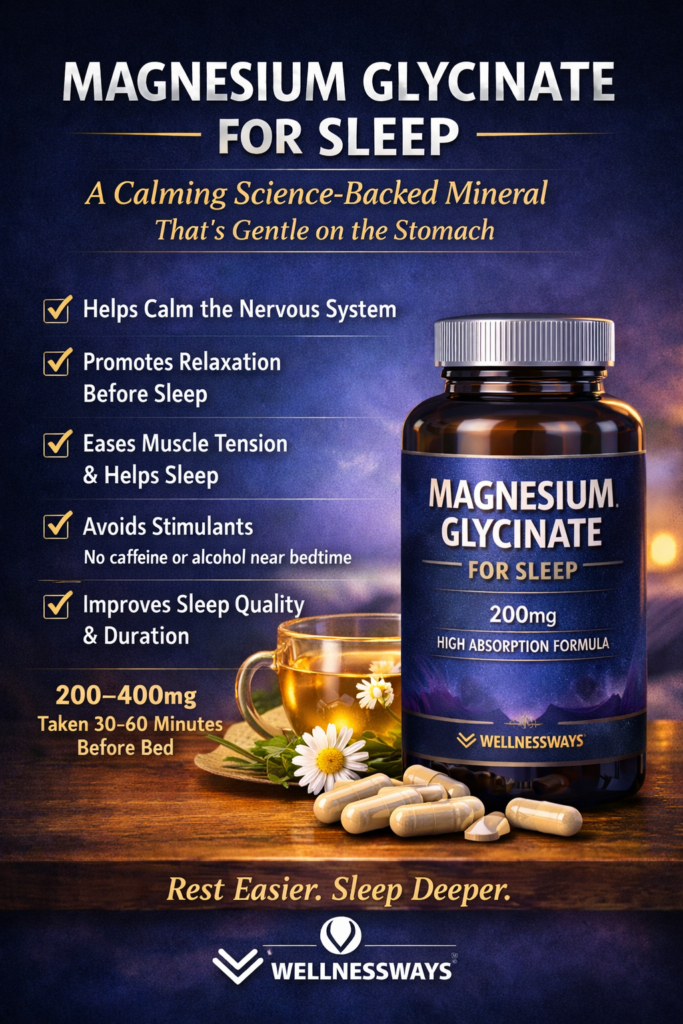
🥇 Magnesium Glycinate — The Gold Standard for Sleep
Bioavailability: Excellent | Sleep rating: ⭐⭐⭐⭐⭐
Magnesium glycinate is magnesium bound to glycine — an amino acid that is itself a calming, sleep-promoting compound. This is the clear winner for sleep for two reasons: first, it has excellent absorption with minimal digestive side effects. Second, the glycine component independently promotes sleep by lowering core body temperature, calming the nervous system, and improving sleep quality.
Multiple clinical studies confirm that magnesium glycinate reduces subjective stress, improves sleep onset, and enhances sleep quality. It’s gentle enough for daily use and does not cause the laxative effect associated with other forms.
Best for: Sleep quality, anxiety reduction, stress relief, daily maintenance. Dose: 200–400mg taken 30–60 minutes before bed.
🥈 Magnesium L-Threonate — The Brain-Specific Form
Bioavailability: Excellent (brain-specific) | Sleep rating: ⭐⭐⭐⭐⭐
Magnesium L-Threonate (sold under the brand name Magtein) is the only form of magnesium clinically shown to cross the blood-brain barrier effectively. A landmark MIT study showed it significantly raises brain magnesium levels — improving synaptic density, cognitive function, and notably, sleep quality and duration.
It’s more expensive than glycinate but worth it if cognitive enhancement alongside sleep improvement is the goal. For a deeper look at how this connects to overall brain performance, see our guide on how to improve brain clarity naturally.
Best for: Brain health, cognitive function, sleep quality, older adults. Dose: 1,500–2,000mg (providing ~140mg elemental magnesium) before bed.
🥉 Magnesium Taurate — Heart and Calm Focus
Bioavailability: Good | Sleep rating: ⭐⭐⭐⭐
Magnesium bound to taurine — an amino acid with calming and cardiovascular benefits. Good option if heart health is also a concern alongside sleep. Less researched specifically for sleep than glycinate but produces similar calming effects.
Best for: Cardiovascular health, general relaxation, sleep support. Dose: 200–400mg before bed.
⚠️ Magnesium Citrate — Better for Digestion Than Sleep
Bioavailability: Good | Sleep rating: ⭐⭐⭐
Magnesium citrate has good absorption and is effective for correcting deficiency. However, it has a moderate laxative effect at higher doses, which can disrupt sleep rather than improve it. Better used in lower doses for general magnesium replenishment rather than as a dedicated sleep supplement.
Best for: Constipation, general magnesium replenishment. Dose: 100–200mg if using for sleep (keep doses low).
❌ Magnesium Oxide — Avoid for Sleep
Bioavailability: Very poor (4%) | Sleep rating: ⭐
Cheap, widely available, and largely ineffective for sleep. The high dose required to deliver meaningful magnesium means significant digestive discomfort. Not recommended.
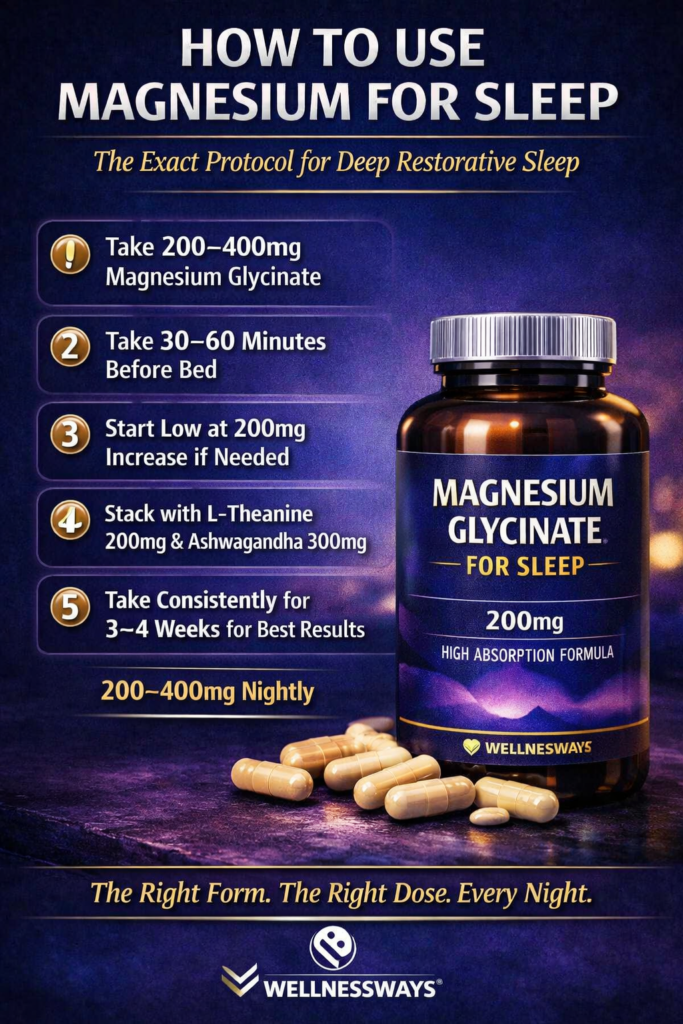
How to Use Magnesium for Sleep — The Protocol
When: 30–60 minutes before your target sleep time.
How much: Start at 200mg and increase to 400mg if needed after 1–2 weeks. More is not better — excessive magnesium causes loose stools and can actually be stimulating.
With what: Magnesium glycinate can be taken with or without food. Taking it with a small amount of food reduces the chance of nausea in sensitive individuals.
Stack it: Magnesium glycinate pairs exceptionally well with:
- L-Theanine (200mg) — amino acid from green tea that promotes alpha brain waves and relaxation without drowsiness
- Ashwagandha (300mg) — adaptogen that reduces cortisol and improves sleep quality
- Apigenin (50mg) — natural compound found in chamomile that directly binds GABA receptors
This combination — popularized by neuroscientist Dr. Andrew Huberman — is one of the most evidence-backed natural sleep stacks available.
Consistency: Like most supplements, magnesium builds up in body tissues over time. Many people notice improved sleep within 3–7 days but optimal effects typically emerge after 3–4 weeks of consistent use.
What the Research Actually Shows
A 2012 randomized controlled trial published in the Journal of Research in Medical Sciences found that elderly participants with insomnia who supplemented with magnesium experienced:
- Significant increase in sleep time
- Significant increase in sleep efficiency
- Significant reduction in early morning awakening
- Significant reduction in serum cortisol levels
A 2022 systematic review in BMC Complementary Medicine and Therapies examining multiple studies concluded that magnesium supplementation consistently improved subjective sleep quality in populations with deficiency or suboptimal levels.
The research is consistent: magnesium works — but only the right form, at the right dose, consistently.
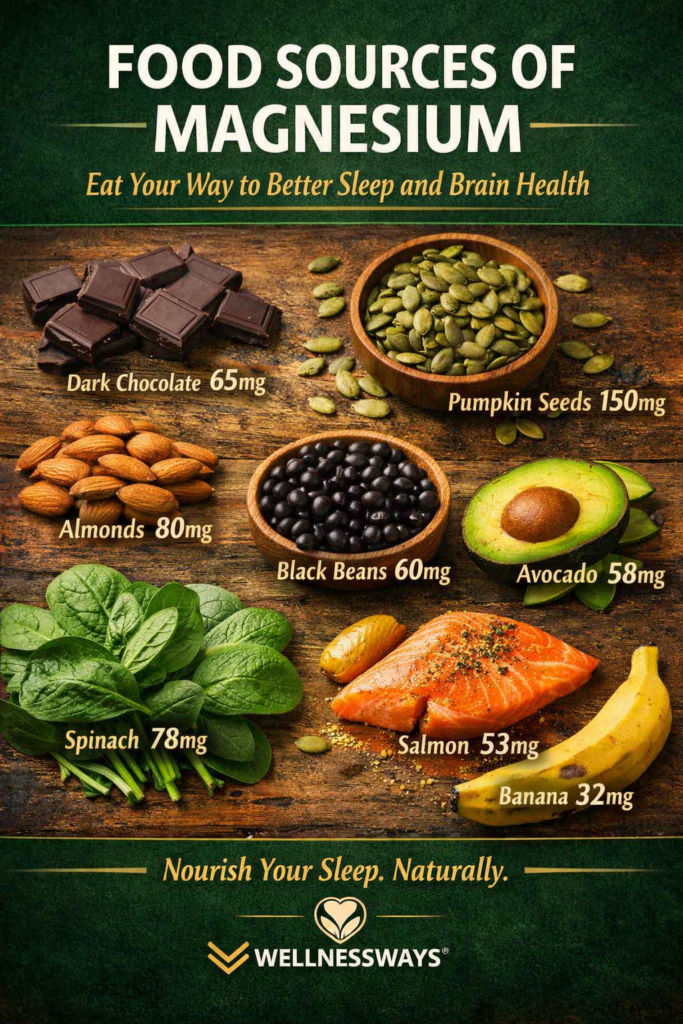
Beyond Supplementation — Food Sources of Magnesium
While supplementation is often necessary to correct deficiency, building a magnesium-rich diet is equally important for maintaining levels long-term. The best dietary sources:
| Food | Magnesium Content |
|---|---|
| Dark chocolate (70%+) | 65mg per 1oz |
| Pumpkin seeds | 150mg per 1oz |
| Almonds | 80mg per 1oz |
| Spinach (cooked) | 78mg per ½ cup |
| Black beans | 60mg per ½ cup |
| Avocado | 58mg per avocado |
| Salmon | 53mg per 3oz |
| Banana | 32mg per banana |
Eating these regularly — combined with magnesium glycinate supplementation — creates a comprehensive magnesium intake strategy that supports sleep quality, stress resilience, and long-term brain health.
The Bottom Line
If you’re going to try one supplement for sleep, make it magnesium glycinate. It’s the most well-researched, best-tolerated, and most effective form for sleep specifically — addressing the underlying neurochemical and physiological drivers of poor sleep rather than just forcing sedation.
Take 200–400mg, 30–60 minutes before bed, consistently every night. Give it 3–4 weeks. The improvement in sleep onset, sleep quality, and morning clarity is one of the most reliably positive supplement experiences available.
And remember — supplements enhance a solid foundation. For the complete sleep system, read our pillar guide on how to sleep better naturally.
Want to understand how your sleep is affecting your brain at a deeper level? Read our complete guide: The Science of Sleep and Brain Health
Not sure what’s causing your brain fog? Take our free 3-minute Root Cause Quiz and get your personalized action plan! → [Take The Quiz]