
Metabolism and Healthy Weight After 50 — The Complete WellnessWays Guide
Introduction
You are eating the same foods you always have. You are exercising regularly. You are doing everything you were told to do. And yet the scale is not moving — and the weight that is accumulating around your midsection seems to have a completely different agenda than the rest of your life.
If this sounds familiar, you are not imagining it. And more importantly — you are not failing.
What is happening is biology. Specifically, a set of well-documented, measurable physiological changes that occur in the human body from the age of 40 onward — changes that affect how efficiently your body burns calories, stores fat, regulates hormones, and processes food.
The frustrating truth is that most weight loss advice is designed for younger bodies. The calorie-deficit model, the high-intensity workout prescriptions, the low-fat dietary dogma — none of these adequately address the specific metabolic landscape of the adult body over 50.
This guide does.
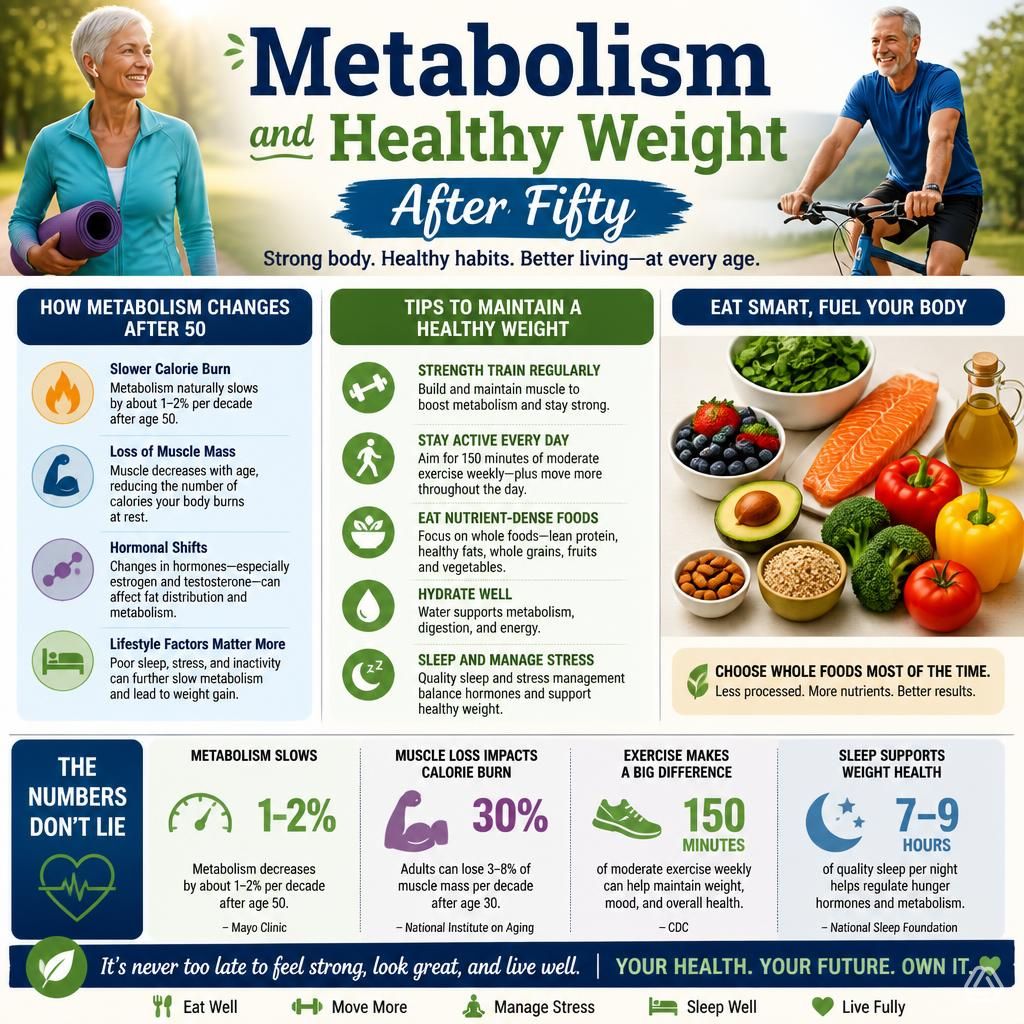
Here is the complete, evidence-based picture of what happens to metabolism after 50 — why it slows, what the real root causes are, and the specific, age-appropriate strategies that the science actually supports.
What Is Metabolism — Really?
Before we can talk about why metabolism changes after 50, it helps to understand what metabolism actually is — because the popular conception is often wrong.
Metabolism is not a single thing. It is a collection of chemical processes that convert food into energy. Your total daily energy expenditure (TDEE) has three primary components:
Basal Metabolic Rate (BMR) — the calories your body burns at complete rest just to sustain vital functions: breathing, circulation, temperature regulation, cellular repair. BMR accounts for approximately 60 to 70 percent of your total daily calorie burn. This is the component most significantly affected by age.
Thermic Effect of Food (TEF) — the energy used to digest, absorb, and process the food you eat. Protein has the highest TEF — approximately 20 to 30 percent of its calories are burned in digestion. This is why high-protein diets support weight management.
Physical Activity Energy Expenditure (PAEE) — the calories burned through deliberate exercise and non-exercise activity (walking, fidgeting, standing). This is the component most under your voluntary control.
When people say their metabolism has “slowed down,” they are typically referring to a declining BMR — and this is real, measurable, and begins earlier than most people realize.
Why Metabolism Slows After 50 — The 5 Key Factors
1. Sarcopenia — The Invisible Muscle Loss
Starting in your late 30s and accelerating through your 50s and 60s, the human body loses muscle mass at a rate of approximately one percent per year — a process called sarcopenia.
This matters for metabolism because muscle is metabolically expensive tissue. Even at rest, muscle tissue burns approximately six calories per pound per day — compared to roughly two calories per pound for fat tissue.
As you lose muscle mass, your body requires fewer calories to sustain itself at rest. Your BMR drops. The same food intake that maintained your weight at 35 becomes a surplus at 55 — not because you changed, but because your body’s energy requirements have decreased.
A 2011 study published in the American Journal of Clinical Nutrition estimated that sarcopenia accounts for a decline of approximately 150 to 200 calories per day in BMR between the ages of 50 and 70 in sedentary individuals.
One hundred fifty to two hundred extra calories per day — gained from doing nothing differently.
This is the metabolism gap that catches so many adults off guard.
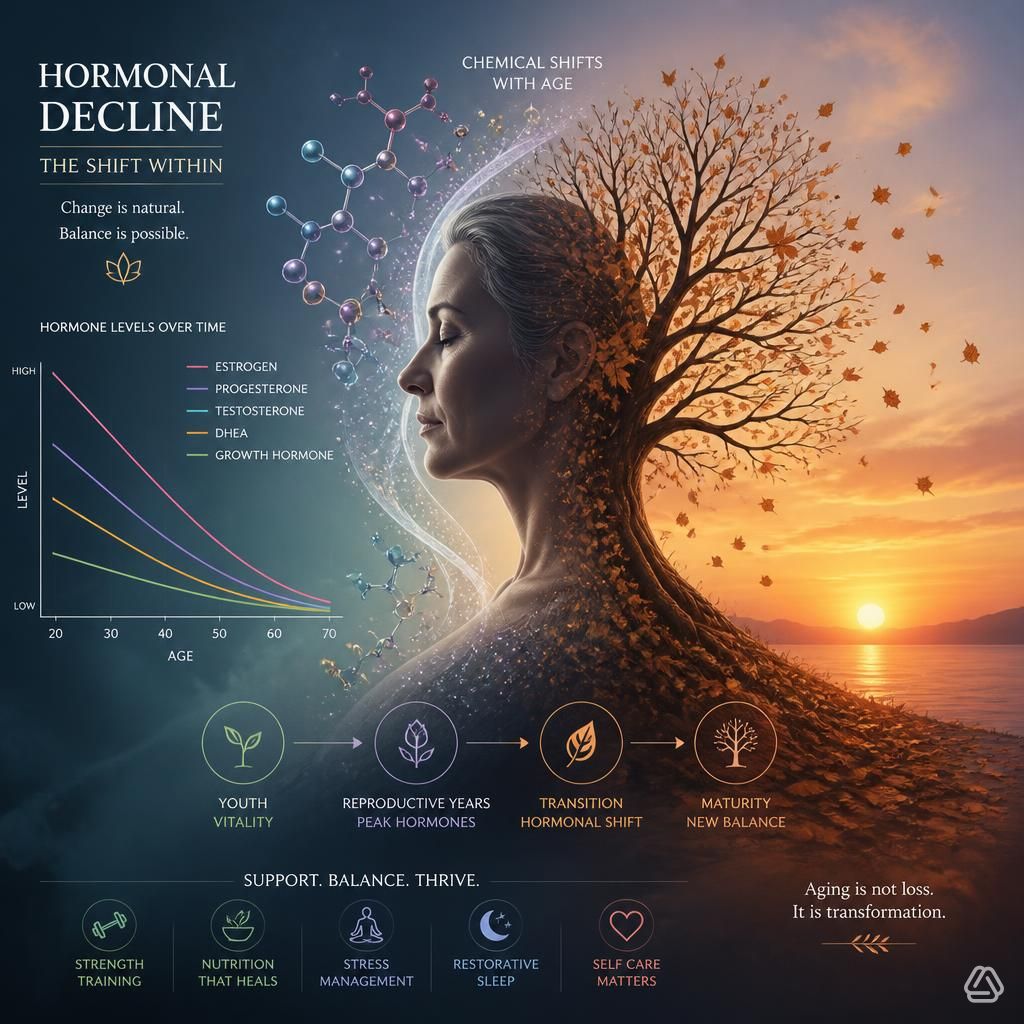
2. Hormonal Decline — The Chemical Shift
The hormonal changes that occur in both men and women after 50 have profound metabolic consequences:
In women: The decline in estrogen through perimenopause and menopause directly affects where the body stores fat — shifting from the hips and thighs to the abdomen — and reduces the body’s ability to use insulin efficiently. Menopause is associated with an average weight gain of two to five pounds and a significant shift in body composition toward higher fat mass even without changes in diet or exercise.
In men: Testosterone levels decline by approximately one percent per year after age 30. Testosterone is directly involved in muscle protein synthesis — the process of building and maintaining muscle mass. Lower testosterone means faster muscle loss, lower BMR, and increased fat storage — particularly in the visceral (abdominal) region.
In both sexes: Growth hormone production declines significantly with age. Growth hormone plays a critical role in fat metabolism — particularly during sleep, when the majority of growth hormone is secreted. Its decline contributes to both body composition changes and reduced recovery from exercise.
Thyroid function: Subclinical hypothyroidism becomes increasingly common after 50, particularly in women. Even mild thyroid underactivity can reduce BMR by 10 to 15 percent — producing weight gain, fatigue, and cold sensitivity that is often attributed to “just aging.”
3. Mitochondrial Decline
Your mitochondria are the energy-producing organelles inside every cell — the factories that convert glucose and fatty acids into ATP, the body’s usable energy currency. After 50, mitochondrial density, efficiency, and function decline measurably.
This means your cells become less efficient at burning fuel. The energy you consume is less completely metabolized, and more of it is shuttled toward storage. Research published in the Proceedings of the National Academy of Sciences found that mitochondrial dysfunction in aging muscle cells is directly linked to reduced metabolic rate and increased fat accumulation.
The good news: mitochondria respond powerfully to aerobic exercise. Regular cardiovascular activity stimulates mitochondrial biogenesis — literally growing new mitochondria — and is one of the most potent anti-aging metabolic interventions available.
4. Gut Microbiome Shift
The composition of your gut microbiome changes significantly with age — and these changes have direct metabolic consequences. Research has shown that aging is associated with reduced microbial diversity and a shift away from the bacterial strains most associated with efficient energy metabolism and healthy weight regulation.
Specifically, populations of Akkermansia muciniphila — a keystone species associated with metabolic health, lean body composition, and reduced intestinal permeability — tend to decline significantly with age.
A 2019 study in Nature Medicine found that supplementing with Akkermansia muciniphila in overweight individuals significantly improved insulin sensitivity, reduced visceral fat, and improved several cardiometabolic markers compared to placebo.
Your gut microbiome is not separate from your metabolism — it IS part of your metabolism.

5. Hypothalamic Resistance and Appetite Dysregulation
The hypothalamus is your brain’s metabolic control center. It integrates hormonal signals from throughout the body — including leptin (the satiety hormone from fat cells) and ghrelin (the hunger hormone from the stomach) — and uses them to regulate appetite, energy expenditure, and fat storage.
After 50, the hypothalamus becomes increasingly resistant to these signals — particularly leptin. When the brain cannot properly read leptin signals, it interprets the body as being in a state of energy deficit even when fat stores are adequate. The response is to increase hunger and reduce metabolic rate — the exact opposite of what someone trying to manage weight needs.
This leptin resistance is one of the primary reasons why calorie restriction alone becomes progressively less effective as a weight management strategy with age. Reducing calories triggers a survival response — the metabolism slows further to compensate.
The Root Cause Nobody Talks About — Ceramides and Visceral Fat
Beyond the five well-known factors above, emerging research has identified a particularly important contributor to age-related weight gain that receives almost no mainstream attention: ceramides.
Ceramides are a class of lipid compounds that accumulate in response to a diet high in processed foods, refined carbohydrates, and unhealthy fats. When ceramide levels rise, they trigger a cascade of metabolic disruption:
- Ceramides flood the bloodstream following meals and deposit fat around vital organs — particularly the liver and pancreas
- This visceral fat interferes with insulin signaling, creating insulin resistance in the organs that need to be most insulin-sensitive
- The metabolic rate of the liver — your body’s primary fat-burning organ — declines
- The body shifts into a fat-storage default, where even reasonable calorie intakes lead to accumulating fat rather than burning it
This explains a phenomenon many adults over 50 experience: weight gain that seems completely disproportionate to food intake. The ceramide-insulin resistance cycle creates a metabolic environment where the body preferentially stores rather than burns — regardless of how little you eat.
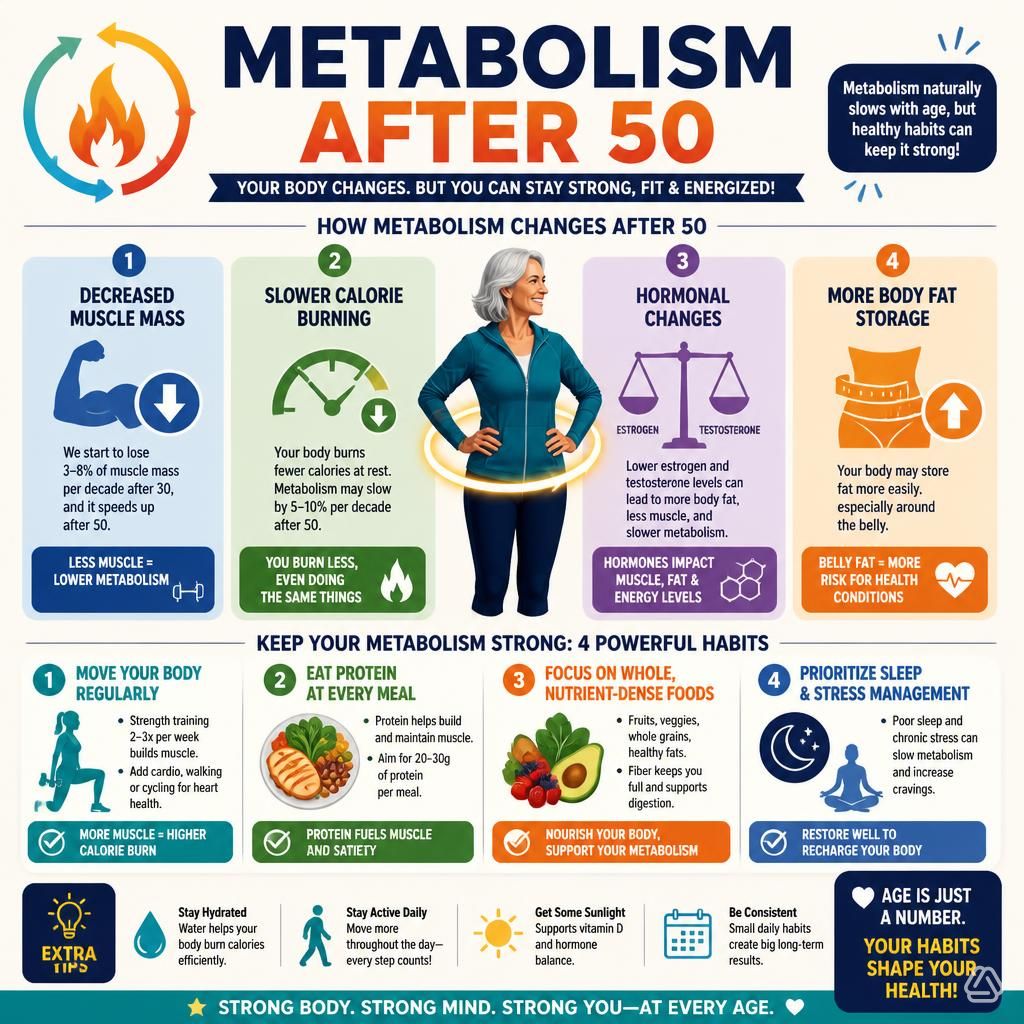
The WellnessWays Metabolism Reset Protocol — 6 Evidence-Based Pillars
Reversing age-related metabolic decline requires a multi-system approach. No single intervention addresses all five of the root causes identified above. The WellnessWays Metabolism Reset Protocol combines six evidence-based pillars that work synergistically:
Pillar 1 — Resistance Training: Rebuild the Engine
Resistance training is the single most important metabolic intervention for adults over 50. It is the only strategy that directly reverses sarcopenia — rebuilding the muscle mass that drives BMR.
A landmark meta-analysis in Sports Medicine found that progressive resistance training in older adults produced average increases in lean body mass of 1.1 kg and reductions in fat mass of 0.5 kg over 20 to 26 weeks — with corresponding increases in resting metabolic rate.
Protocol: Three sessions per week of compound movements — squats, deadlifts, rows, presses, and lunges. These multi-joint movements recruit the maximum amount of muscle tissue and produce the greatest hormonal response, including testosterone and growth hormone release.
You do not need to lift heavy. You need to lift progressively — increasing resistance or repetitions over time to continuously challenge the muscle tissue.
Pillar 2 — Protein Priority: Fuel the Rebuild
The Recommended Daily Allowance (RDA) for protein is 0.8 grams per kilogram of body weight. This recommendation was established as the minimum to prevent deficiency — not the optimum for muscle preservation and metabolic health in adults over 50.
Current research strongly supports a target of 1.2 to 1.6 grams per kilogram for adults engaged in resistance training — and some researchers advocate for up to 2 grams per kilogram for older adults due to age-related reductions in muscle protein synthesis efficiency.
In practical terms: a 165-pound (75 kg) adult needs approximately 90 to 120 grams of protein per day — distributed across multiple meals to maximize muscle protein synthesis.
Beyond muscle preservation, protein has the highest thermic effect of any macronutrient — up to 30 percent of its calories are burned in digestion — making it the most metabolically favorable macronutrient for weight management.

Pillar 3 — Deep Sleep: The Hormonal Reset
Growth hormone — critical for fat metabolism and muscle preservation — is secreted primarily during slow-wave (deep) sleep. Adults over 50 typically experience significant reductions in slow-wave sleep duration, directly reducing growth hormone output.
Additionally, sleep deprivation elevates ghrelin (hunger hormone) and reduces leptin (satiety hormone) — creating the physiological conditions for increased appetite and reduced metabolic rate simultaneously.
A study published in Annals of Internal Medicine found that adults on a calorie-restricted diet who slept 8.5 hours lost significantly more fat mass and preserved significantly more lean body mass compared to those sleeping 5.5 hours on the same diet — despite identical calorie restriction.
Sleep is not optional for weight management after 50. It is metabolically essential.
Pillar 4 — Gut Microbiome Support
Restoring microbiome diversity and specifically supporting species like Akkermansia muciniphila can meaningfully improve metabolic outcomes. Evidence-based strategies:
Prebiotic fiber: Garlic, onions, leeks, asparagus, chicory root, and oats feed the beneficial bacteria associated with metabolic health. Aim for 25 to 38 grams of total fiber daily.
Fermented foods: Greek yogurt, kefir, kimchi, sauerkraut, and kombucha provide live beneficial bacteria and have been shown in research to improve microbiome diversity within weeks.
Polyphenols: Blueberries, pomegranate, green tea, dark chocolate, and olive oil provide polyphenol compounds that selectively feed the most metabolically beneficial bacterial species.
Pillar 5 — Cortisol Management: Stop the Belly Fat Cycle
Cortisol — your primary stress hormone — directly promotes visceral fat accumulation. It does this through two mechanisms: it stimulates appetite (particularly for high-calorie, palatable foods) and it directs the body to store fat preferentially in the abdominal region.
Chronic elevation of cortisol is one of the most significant drivers of the middle-aged abdominal fat accumulation that so many adults struggle with — and it is entirely independent of calorie intake.
Evidence-based cortisol management strategies: consistent sleep timing, mindfulness meditation (shown to reduce cortisol by 23 to 31 percent in multiple studies), limiting caffeine after noon, reducing chronic psychological stressors where possible, and regular moderate-intensity aerobic exercise (which acutely reduces cortisol levels post-exercise).

Pillar 6 — Meal Timing: Intermittent Fasting for Metabolic Reset
Intermittent fasting — specifically the 16:8 pattern (16 hours fasted, 8-hour eating window) — has accumulated a strong evidence base for improving insulin sensitivity, reducing visceral fat, and supporting metabolic health in adults over 50.
A 2020 study in Cell Metabolism found that adults who practiced 16:8 intermittent fasting for 12 weeks showed significant reductions in visceral fat, blood pressure, and insulin resistance compared to controls — without any changes in diet composition.
The primary mechanism is insulin level reduction during the fasted state. Lower insulin unlocks fat stores for energy and allows the liver to switch into fat-burning mode — the metabolic environment that is suppressed in ceramide-driven insulin resistance.
The Role of GLP-1 in Metabolic Health After 50
One of the most significant recent developments in metabolic health research is the identification of GLP-1 (Glucagon-Like Peptide-1) as a central regulator of appetite, insulin response, and fat metabolism.
GLP-1 is a hormone naturally produced in the gut in response to food intake. It signals to the brain to reduce appetite, slows gastric emptying for prolonged satiety, optimizes insulin release from the pancreas, and promotes fat burning in the liver.
GLP-1 production and sensitivity both decline with age — contributing directly to the appetite dysregulation and insulin resistance that characterize metabolic aging.
Natural ways to support GLP-1 production include: high-fiber foods, fermented foods, protein-rich meals, regular exercise, and specific compounds found in certain herbal and marine ingredients.
Telehealth programs specializing in metabolic health and medical weight management increasingly use GLP-1-based interventions to support adults whose metabolic challenges have not responded adequately to lifestyle measures alone.
[Read our complete GLP-1 guide for a deeper look at this important metabolic hormone →]
Putting It All Together — Your 30-Day Starting Plan
| Week | Focus | Actions |
| Week 1 | Foundation | Start resistance training 3x/week. Set protein target. Implement 9 PM screen curfew for sleep quality. |
| Week 2 | Gut and cortisol | Add daily fermented food. Add prebiotic fiber. Begin 5-minute daily mindfulness practice. |
| Week 3 | Meal timing | Introduce 16:8 fasting window. Shift first meal to 10 AM. Last meal by 6 PM. |
| Week 4 | Optimize and assess | Review progress. Increase resistance training load. Add LISS cardio 2x/week for mitochondrial support. |
Conclusion
Metabolism after 50 is not a lost cause. It is a different terrain — one that requires different strategies than the approaches designed for younger bodies.
The five root causes of metabolic slowdown are real and measurable — but every single one of them responds to evidence-based intervention. Muscle loss reverses with resistance training. Hormonal decline can be mitigated through sleep optimization and specific nutritional strategies. Mitochondrial function improves with aerobic exercise. Gut microbiome diversity responds to dietary changes. Hypothalamic sensitivity improves with insulin management.
You are not fighting your body. You are learning to work with it.

[Take our metabolism-focused quiz to identify your primary driver →] | [Read our GLP-1 guide to understand the hormone that is changing the weight loss conversation →] | [Explore our Ceramides and Belly Fat article for a deep dive on the hidden root cause →]
Disclaimer: This article is for informational purposes only and does not constitute medical advice. Consult a qualified healthcare professional before making significant changes to your diet, exercise, or health routine.
Not sure what’s causing your brain fog? Take our free 3-minute Root Cause Quiz and get your personalized action plan! → [Take The Quiz]