
GLP-1 Weight Loss Hormone – The Weight Loss Hormone That Is Changing Everything
Introduction
Glucagon-Like Peptide-1. If you have been paying any attention to the weight loss conversation over the last two years, you have heard about it — probably under the names of the pharmaceutical interventions that work by mimicking it.
But GLP-1 is not a drug. It is a hormone your body produces naturally. And understanding how it works — and why its natural production and activity decline with age — is one of the most important insights in modern metabolic health.
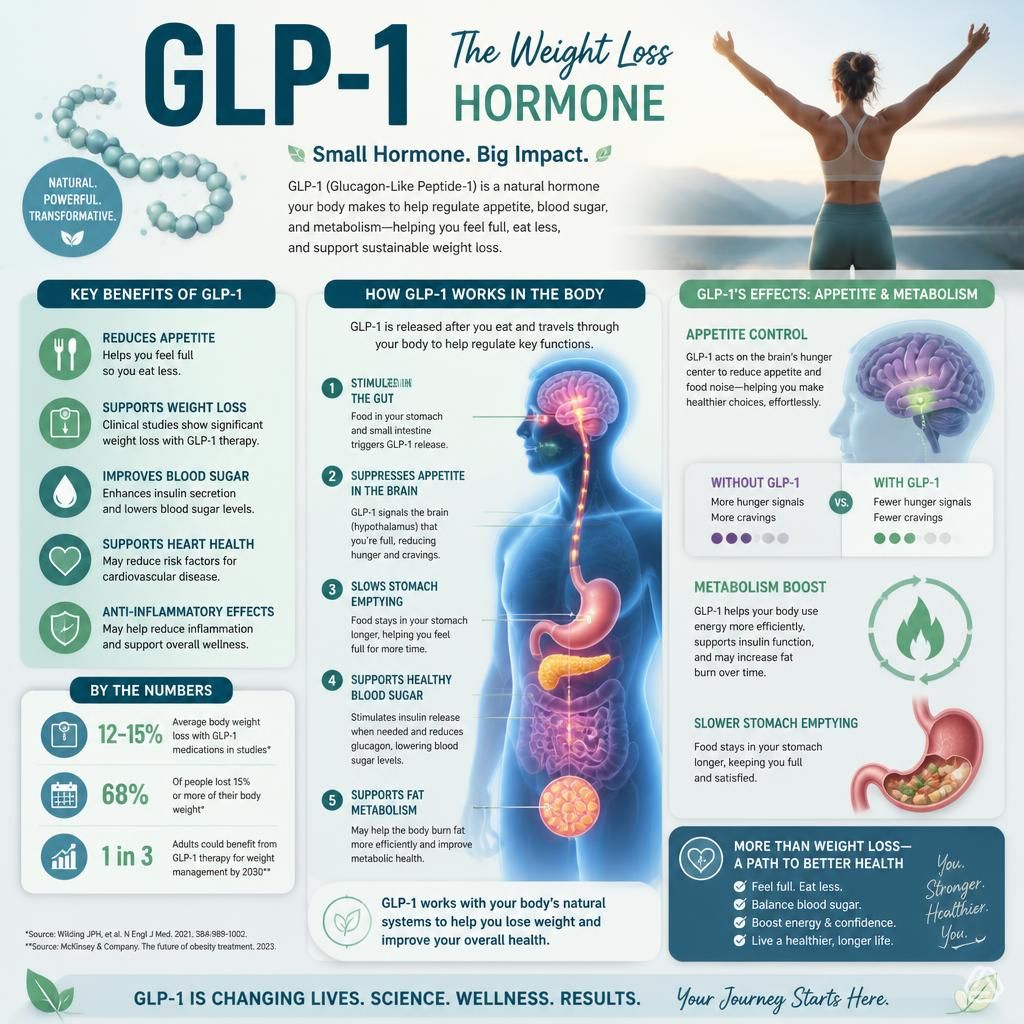
This guide covers exactly what GLP-1 is, the four specific ways it regulates weight and metabolism, why adults over 50 are particularly likely to have compromised GLP-1 function, and what the evidence says about supporting your body’s own GLP-1 system naturally.
What Is GLP-1?
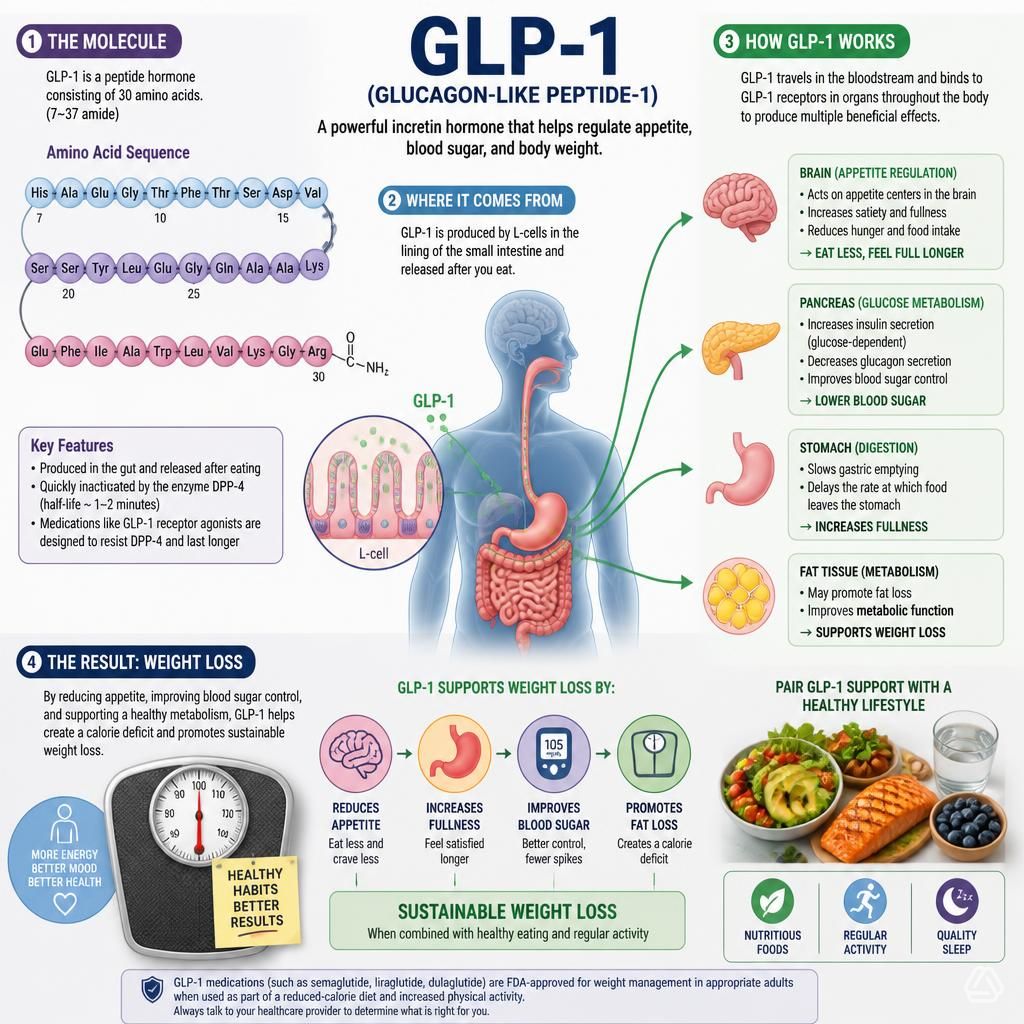
GLP-1 (Glucagon-Like Peptide-1) is an incretin hormone — a class of gut-derived hormones that are released in response to food intake and coordinate a complex metabolic response throughout the body.
It is produced primarily by L-cells in the small intestine and colon, with smaller amounts produced by neurons in the brainstem. When you eat, GLP-1 is released into the bloodstream and acts on receptors throughout the body — in the brain, pancreas, stomach, liver, and fat cells — to coordinate a sophisticated, multi-organ metabolic response.
GLP-1 was first identified in the 1980s, and its physiological role was progressively clarified through the 1990s and 2000s. The discovery that it could be pharmaceutically mimicked to produce dramatic weight loss effects set off one of the most significant developments in metabolic medicine in decades.
But the question that matters for most adults is not how to pharmaceutically mimic GLP-1 — it is how to support and optimize the GLP-1 system your body already has.
The 4 Ways GLP-1 Regulates Weight and Metabolism
1. Appetite Suppression — The Brain Connection
GLP-1 acts directly on the hypothalamus — the brain region that regulates appetite — to reduce hunger and increase satiety signals.
Specifically, GLP-1 activates receptors in the arcuate nucleus of the hypothalamus, suppressing the activity of appetite-stimulating neurons (NPY/AgRP) while activating satiety-promoting neurons (POMC/CART). The net effect is a meaningful reduction in caloric drive — eating less feels satisfying rather than depriving.

GLP-1 also acts on the reward and pleasure circuits of the brain — specifically reducing the rewarding value of high-calorie, palatable foods. This is why people with well-functioning GLP-1 systems tend to find it easier to stop eating at appropriate portion sizes without feeling compelled to overeat.
What compromises this: Chronic stress, poor sleep, and inflammatory diets all reduce hypothalamic GLP-1 receptor sensitivity — meaning the same amount of GLP-1 produces a weaker appetite-suppressing effect.
2. Slowed Gastric Emptying — Prolonged Satiety
GLP-1 slows the rate at which food moves from the stomach into the small intestine — a process called gastric emptying. This has two important consequences for weight management:
First, you feel full for longer after meals. The stomach remains physically distended for an extended period, maintaining the mechanical satiety signal.
Second, glucose enters the bloodstream more slowly from the digestive tract — preventing the rapid blood sugar spikes that drive insulin surges, energy crashes, and subsequent hunger. GLP-1 is one of your body’s most important blood glucose stabilizers.
Research has shown that impaired gastric emptying regulation — which occurs when GLP-1 function is compromised — is directly associated with greater post-meal caloric intake and difficulty maintaining appropriate portion sizes.
3. Insulin Optimization — The Pancreatic Effect
GLP-1 acts directly on beta cells in the pancreas to stimulate insulin secretion — but crucially, it does so in a glucose-dependent manner. GLP-1 only triggers insulin release when blood glucose is elevated. When blood glucose is normal or low, GLP-1’s insulin-stimulating effect is minimal.
This glucose-dependent insulin release is clinically significant because it prevents the hypoglycemia (dangerous blood sugar drops) that can occur with other insulin-stimulating mechanisms. It is part of why GLP-1-based interventions have a favorable safety profile.
Beyond stimulating insulin release, GLP-1 also suppresses glucagon — the hormone that signals the liver to release stored glucose into the blood. Appropriate glucagon suppression prevents unnecessary blood glucose elevation between meals.
The net effect: better blood glucose regulation, reduced insulin resistance over time, and a metabolic environment more favorable to fat burning rather than fat storage.
4. Direct Fat Metabolism Effects
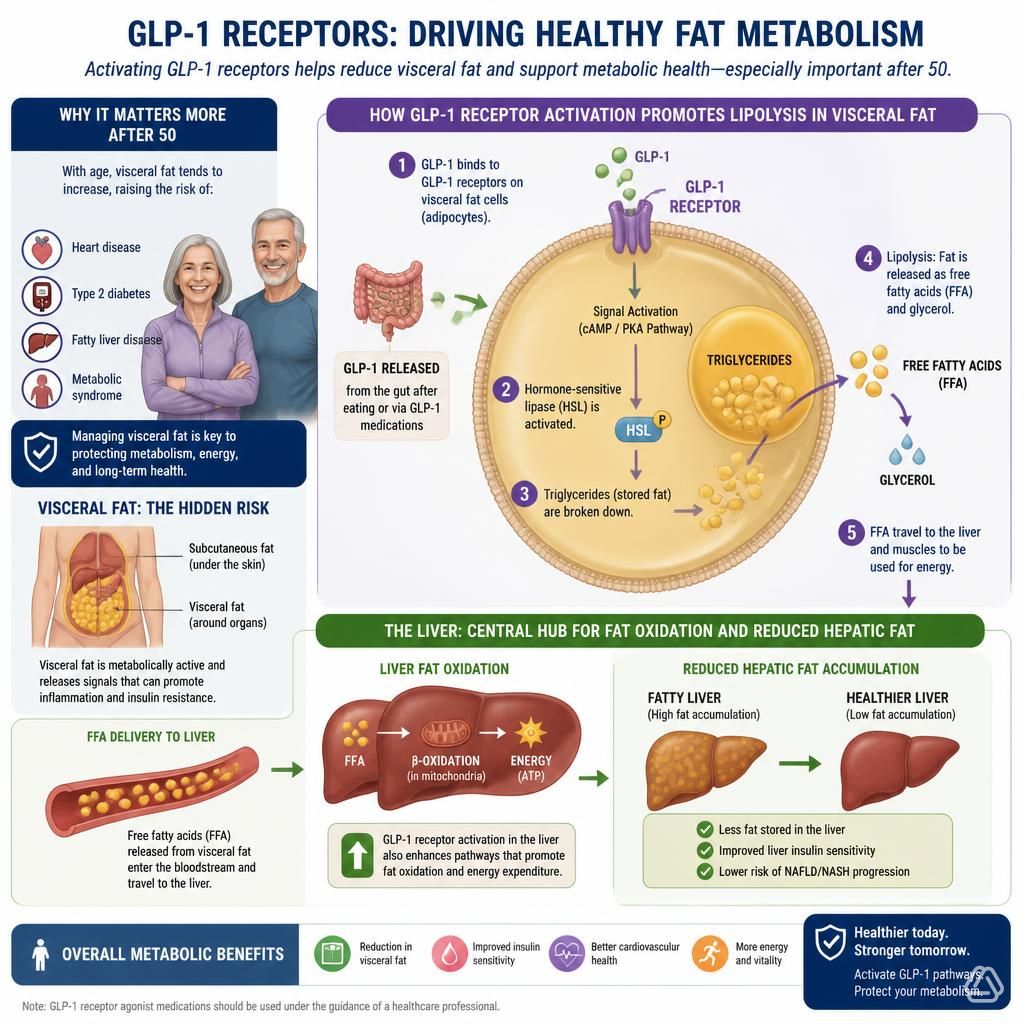
GLP-1 receptors are present in fat tissue — particularly visceral (organ-surrounding) fat — and their activation directly promotes lipolysis (the breakdown of stored fat for energy) in visceral fat depots.
This visceral fat-specific effect is particularly relevant for adults over 50, among whom visceral fat accumulation is the primary driver of metabolic risk. GLP-1’s direct action on visceral fat makes it one of the most targeted anti-obesity hormones identified in human physiology.
Additionally, GLP-1 acts on liver cells to promote fat oxidation and reduce hepatic fat accumulation — supporting the liver’s role as the body’s primary fat-metabolizing organ.
Why GLP-1 Declines After 50 — And Why This Matters
GLP-1 production and receptor sensitivity both decline with age — contributing to several of the metabolic changes that adults over 50 experience:
Reduced satiety signaling: The brain’s appetite regulation becomes less responsive to GLP-1, making it harder to recognize fullness at appropriate meal sizes — contributing to gradual caloric excess without any change in conscious behavior.
Impaired glucose regulation: With less effective GLP-1 activity, post-meal blood glucose spikes become higher and insulin response becomes less precise — accelerating the development of insulin resistance.
Reduced visceral fat mobilization: Less GLP-1 receptor activity in visceral fat means less natural stimulus for visceral fat breakdown — contributing to the characteristic abdominal fat accumulation of midlife.
Gut microbiome connection: GLP-1 is produced by L-cells in the gut — and L-cell function is directly influenced by the gut microbiome. The age-related decline in microbiome diversity is directly associated with reduced GLP-1 secretion in response to meals. Restoring microbiome diversity is therefore a meaningful strategy for supporting GLP-1 function.
Natural Ways to Support Your GLP-1 System
The research on natural GLP-1 support is increasingly robust. While pharmaceutical GLP-1 agonists work by introducing a synthetic compound that binds GLP-1 receptors, natural approaches work by supporting the body’s own GLP-1 production and receptor sensitivity.
1. High-Fiber Foods Dietary fiber — particularly soluble and fermentable fiber — is the most potent natural stimulus for GLP-1 secretion. Fiber reaches the L-cells of the lower small intestine and colon, directly triggering GLP-1 release. Foods highest in GLP-1-stimulating fiber include oats, legumes, Brussels sprouts, avocado, and flaxseed.
A 2017 review in Nutrients found that increased dietary fiber intake consistently produced measurable increases in postprandial GLP-1 secretion across multiple human studies.
2. Protein — Particularly Whey High-protein meals stimulate GLP-1 secretion — with whey protein being particularly effective. A study in the Journal of Clinical Endocrinology and Metabolism found that whey protein consumed before a meal significantly increased GLP-1 levels and reduced subsequent caloric intake compared to control.
3. Fermented Foods and Probiotic Support Because GLP-1 is produced by gut L-cells and L-cell function depends on a healthy microbiome, restoring gut microbiome diversity has been shown to measurably improve GLP-1 secretion. Regular consumption of fermented foods — yogurt, kefir, kimchi, sauerkraut — has been shown to improve GLP-1 response to meals within 4 to 8 weeks.
4. Regular Aerobic Exercise Exercise is a potent stimulus for GLP-1 secretion. Multiple studies have shown that acute aerobic exercise significantly increases circulating GLP-1 levels — with the effect lasting for several hours post-exercise. Regular exercise training also improves GLP-1 receptor sensitivity, meaning the GLP-1 your body produces has a stronger metabolic effect.
5. Specific Natural Compounds Research has identified several natural compounds with GLP-1-supporting properties:
- Berberine: Activates AMPK and has been shown to improve GLP-1 sensitivity and increase GLP-1 secretion in studies of adults with metabolic syndrome
- Curcumin (from turmeric): Shown to increase GLP-1 receptor expression in intestinal L-cells
- Fucoxanthin (from seaweed): Demonstrates GLP-1-sensitizing effects in metabolic research and is a primary ingredient in several natural weight management formulas
When Natural Support Is Not Enough — Telehealth and Medical Options
For adults whose metabolic challenges have not responded adequately to natural lifestyle interventions — or whose GLP-1 decline is severe enough to produce significant health consequences — medically supervised GLP-1 interventions through telehealth are increasingly accessible.
Telehealth platforms specializing in metabolic health and medically supervised weight management can assess your metabolic profile, determine whether pharmaceutical GLP-1 support is clinically appropriate for your situation, and monitor your response with professional oversight — all from the convenience of your home.
The combination of the lifestyle foundation covered in this guide — fiber, protein, exercise, sleep, gut health — with medically supervised metabolic support where appropriate represents the most comprehensive and evidence-based approach available for adult weight management in 2026.
[Explore medically supervised weight management options →]

Conclusion
GLP-1 is not a miracle drug or a magic molecule. It is one of your body’s most sophisticated metabolic regulators — and supporting its natural function is one of the most evidence-based things you can do for your long-term weight and metabolic health.
Understanding your own GLP-1 system — how it declines with age, what compromises it, and what supports it — gives you a fundamentally different and more effective framework for weight management than simple calorie counting.
Your metabolism is a conversation between dozens of hormones, hundreds of bacterial species, and trillions of cells. GLP-1 is one of the most important voices in that conversation. Learning to listen to it — and support it — changes everything.
Not sure what’s causing your brain fog? Take our free 3-minute Root Cause Quiz and get your personalized action plan! → [Take The Quiz]
[Read our complete Metabolism After 50 Guide →] | [Understand ceramides — the biological force working against your GLP-1 →] | [Explore our 5 Natural Ways to Boost Your Metabolism →]
Disclaimer: This article is for informational purposes only and does not constitute medical advice. Always consult a qualified healthcare professional before starting any weight management program, particularly medically supervised interventions.