
Ashwagandha for Brain Fog and Weight Gain — What the Research Actually Shows

Ashwagandha (Withania somnifera) has gone from ancient Ayurvedic staple to mainstream wellness phenomenon in the space of about five years. You’ll find it in everything from supplements to coffee to protein powders, and the claims range from “reduces stress” to “boosts testosterone” to “fights cancer.” But beyond the hype, what does the clinical research actually say about its effects on brain fog and stress-driven weight gain? Let’s look at the evidence — and only the evidence.
What Is Ashwagandha and How Does It Work?
Ashwagandha is classified as an adaptogen — a category of herbs defined by their ability to help the body regulate its response to physical, emotional, and environmental stressors without causing stimulation or sedation. Its key active compounds are withanolides, a class of steroidal lactones concentrated primarily in the root.
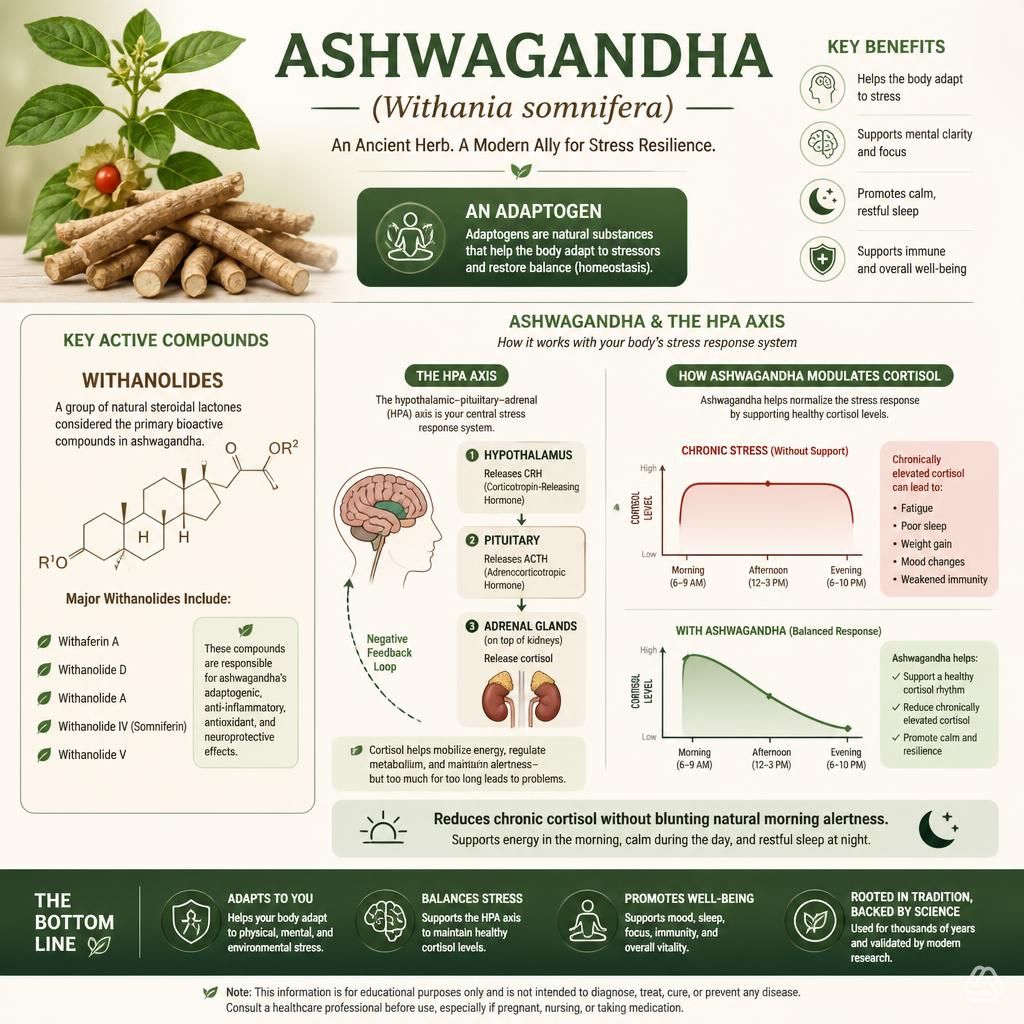
The primary mechanism of action is modulation of the HPA axis — the hypothalamic-pituitary-adrenal axis — which is the body’s central stress regulation system responsible for controlling cortisol output. By normalizing HPA axis activity, ashwagandha tends to reduce cortisol when it is chronically elevated, without suppressing the natural cortisol awakening response that provides morning alertness.
Ashwagandha and Brain Fog — What the Studies Show
Cortisol Reduction
The evidence for ashwagandha’s cortisol-lowering effects is among the most robust in the adaptogen literature. Multiple double-blind, placebo-controlled trials — considered the gold standard of clinical research — have demonstrated significant cortisol reductions, with some studies showing decreases of up to 30% compared to placebo groups using standardized root extract. This is directly relevant to brain fog because chronically elevated cortisol is one of the primary physiological drivers of cognitive impairment — it suppresses hippocampal neurogenesis, disrupts synaptic plasticity, and impairs the consolidation of new memories. [Internal Link: The Cortisol-Brain Fog Connection]

Cognitive Performance
A 2017 study published in the Journal of Dietary Supplements investigated the effects of ashwagandha root extract on cognitive function in healthy adults and found statistically significant improvements across multiple domains: immediate memory, general memory, executive function, sustained attention, and information processing speed. These are precisely the cognitive domains most commonly impaired by brain fog — the inability to hold information in working memory, the sluggish processing speed, the difficulty sustaining attention through complex tasks. The convergence between what ashwagandha improves and what brain fog disrupts makes it a particularly targeted intervention for stress-driven cognitive symptoms.
Neuroprotection
Emerging research suggests that withanolides — ashwagandha’s primary active compounds — may exert neuroprotective effects through multiple pathways, including the promotion of neurogenesis (the growth of new neurons) and protection against the accumulation of amyloid-beta plaques, a pathological hallmark of Alzheimer’s disease. While ashwagandha is decidedly not a treatment for any neurodegenerative condition, this neuroprotective activity may help explain the subjective brain clarity improvements reported by many users — and it positions ashwagandha as potentially relevant not just for symptom management but for long-term neural resilience.
Ashwagandha and Stress-Driven Weight Gain — The Connection
Cortisol and Visceral Fat
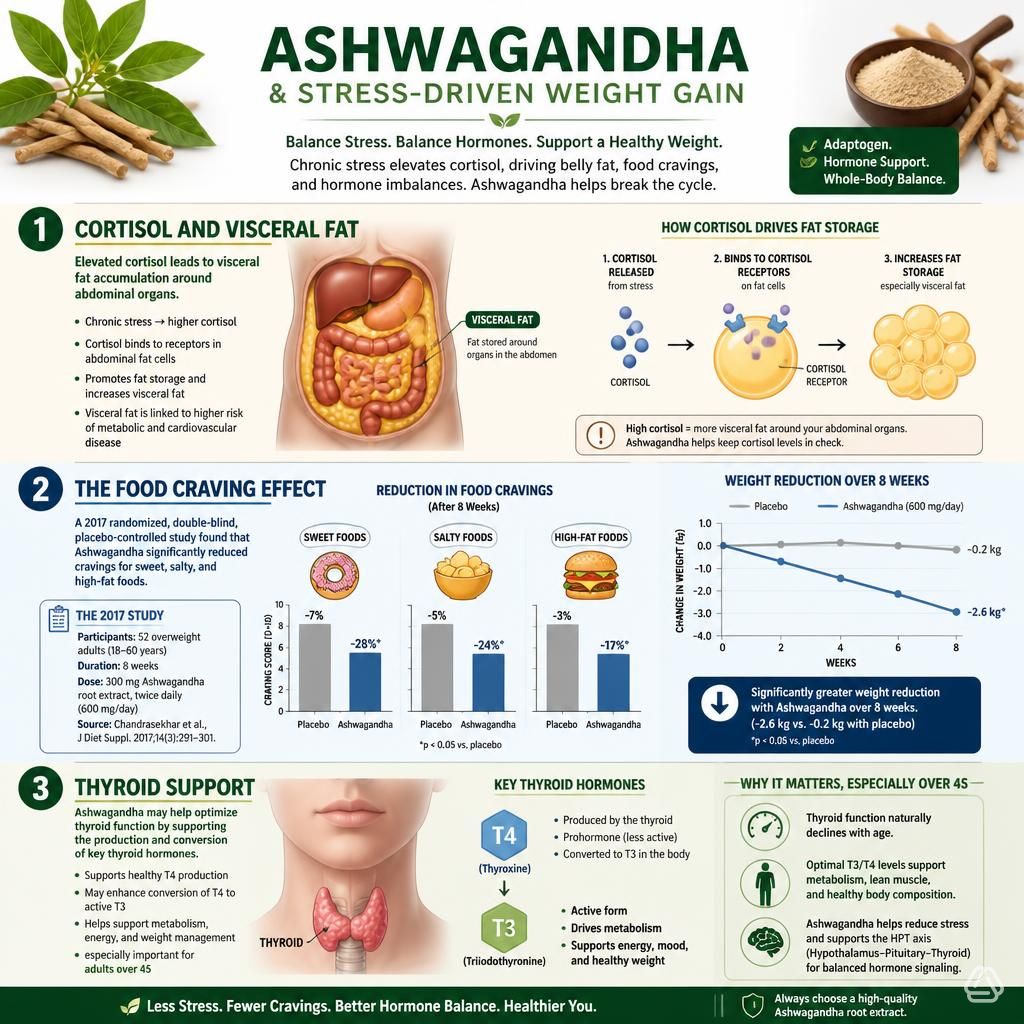
Chronically elevated cortisol drives the preferential storage of visceral fat — the metabolically dangerous fat that accumulates around the abdominal organs rather than under the skin. This occurs because visceral fat cells have a high density of cortisol receptors and are essentially programmed to respond to sustained cortisol exposure by expanding. By meaningfully reducing cortisol levels, ashwagandha may reduce one of the key hormonal inputs driving stress-related abdominal weight gain — addressing the root cause rather than just managing the symptom.
The Food Craving Effect
A 2017 study specifically examining ashwagandha’s effects in chronically stressed adults found that supplementation led to significant reductions in perceived stress around eating, food cravings — particularly for sweet, salty, and high-fat foods — and body weight compared to placebo. Participants receiving ashwagandha showed meaningful reductions in body weight over the 8-week study period, suggesting that cortisol-driven food behavior is a real and addressable mechanism. This is important context for any adult over 45 who feels their eating is driven more by stress than hunger.
Thyroid Support
Some research indicates ashwagandha may support healthy thyroid hormone levels, specifically helping to optimize T3 and T4 production in individuals with suboptimal thyroid function. This is clinically significant because subclinical hypothyroidism — thyroid function that is technically within the “normal” range but insufficient for optimal metabolic performance — is a common driver of both unexplained weight gain and brain fog in adults over 45, particularly women. While ashwagandha is not a thyroid treatment, its potential supportive effect adds another mechanism through which it may benefit this population.
What to Look For in an Ashwagandha Supplement
Not all ashwagandha products are equivalent — extract quality varies enormously. Look specifically for KSM-66 or Sensoril branded extracts, which are the most extensively studied and standardized forms; both should be standardized to at least 5% withanolides by content. The dose range used in most clinical research is 300–600mg of root extract daily, typically taken with food to improve absorption and minimize the mild gastrointestinal sensitivity some people experience. For long-term use, many practitioners recommend cycling — 8–12 weeks on, followed by 2–4 weeks off — though evidence on this practice is less definitive than evidence for efficacy. Always consult a healthcare provider before starting, particularly if you have a thyroid condition, are pregnant, or take immunosuppressive medications.
How Long Until You Feel a Difference?
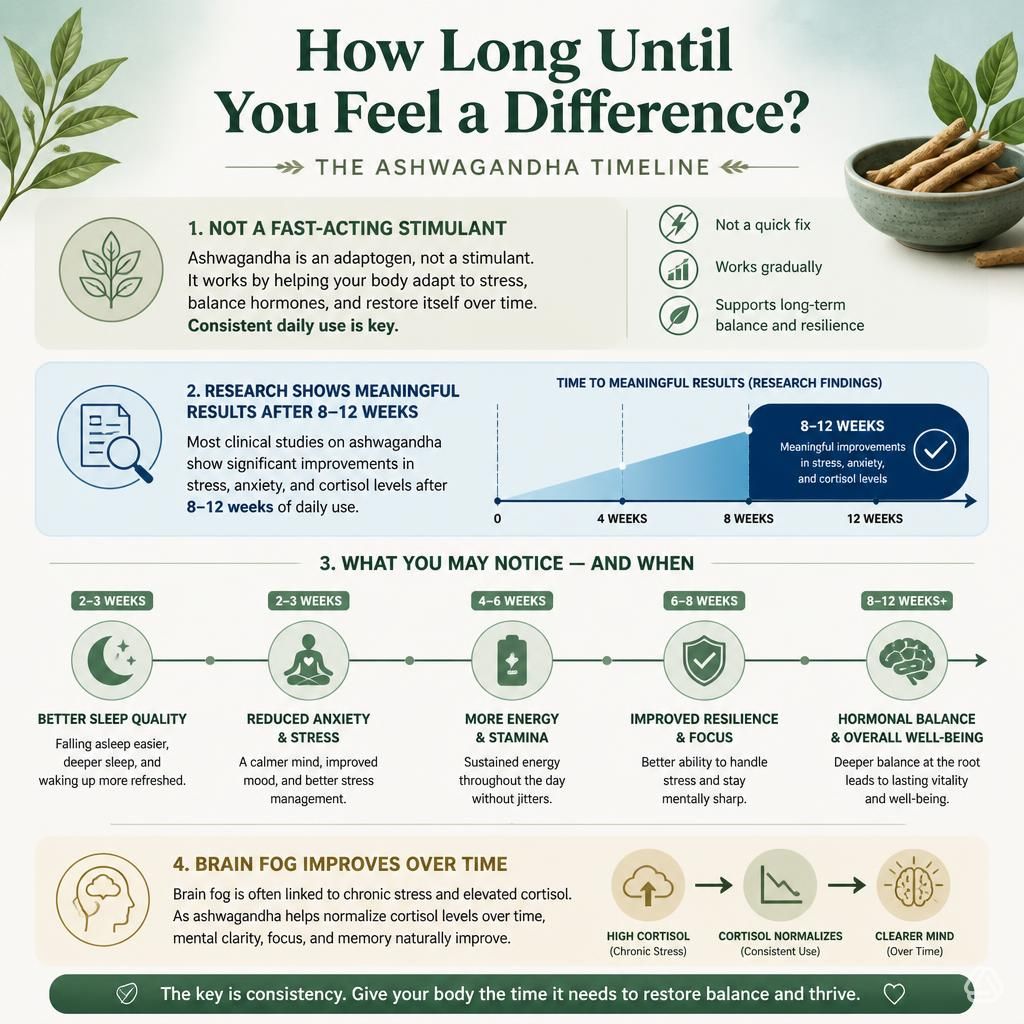
Honest expectation-setting matters here: ashwagandha is not a fast-acting stimulant, and people who try it for a week and notice nothing have simply not waited long enough. Most well-designed research studies show meaningful results after 8–12 weeks of consistent daily supplementation. That said, many people notice improvements in sleep quality and a subjective reduction in anxiety or emotional reactivity within the first 2–3 weeks — which makes sense given ashwagandha’s GABA-modulating effects. Brain fog improvements tend to follow as cortisol normalizes over weeks, not days. Consistency is the active ingredient.
🧠 Find Your Root Cause First
Ashwagandha works most powerfully for stress- and cortisol-driven brain fog — but if your brain fog has a different primary root cause, a different approach may serve you better and produce results faster. Take the free Brain Fog Root Cause Quiz to identify which of the 5 root cause categories applies to you before investing in a supplement protocol.
Medical Disclaimer: This article is for educational and informational purposes only and does not constitute medical advice. Always consult a qualified healthcare professional before making changes to your health routine.