
WellnessWays.net — Brain Health & Cognitive Performance
Published: Monday, 21 September 2026 | Category: Science Literacy | Reading Time: ~12 min
Reading supplement research critically is a skill anyone can learn — and it will change how you shop forever.
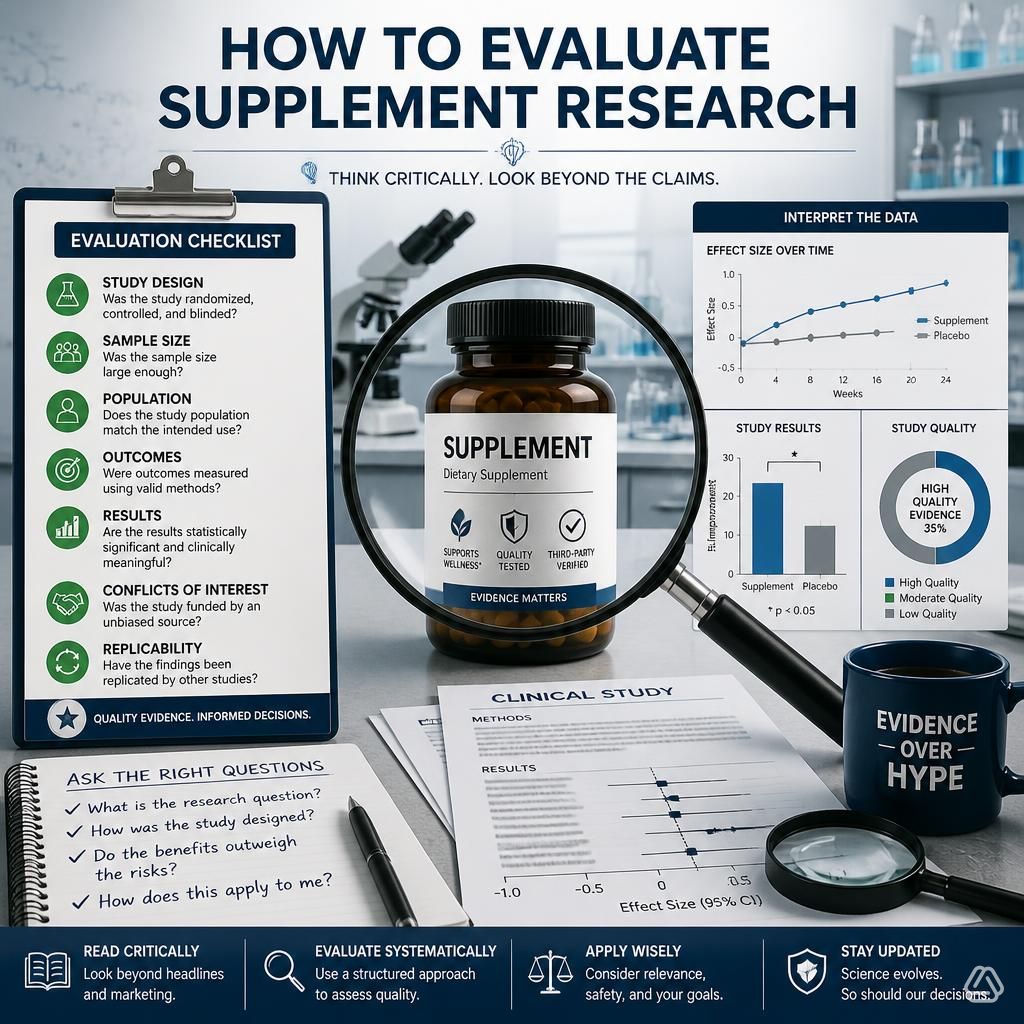
How to Evaluate Supplement Research – How to Read a Supplement Study (Without a PhD)
The global supplement industry generates over $50 billion annually — and marketing budgets dwarf research budgets by a staggering margin. Online, companies cite “studies” that, on closer examination, turn out to be tiny, industry-funded, poorly designed trials that wouldn’t survive peer review at any respectable journal. They use scientific-sounding language with surgical precision: phrases like “clinically proven,” “shown in studies,” and “research-backed formula” that signal credibility without actually delivering it. The result is a marketplace where the loudest claims and the most compelling packaging tend to win — not the best science.
You don’t need a PhD to tell the difference between compelling evidence and expensive noise. You need about 10 minutes and a framework — and that’s exactly what this guide gives you. By the time you reach the end, you’ll be able to pick up a supplement study, ask the right questions, and reach a far more accurate verdict about whether a product is backed by real evidence or just very good copywriting. Let’s build your framework.
Key Insight
“The most powerful question you can ask about any supplement claim: ‘Where’s the study?’ The second most powerful: ‘Is it a good study?’ This guide teaches you both.”
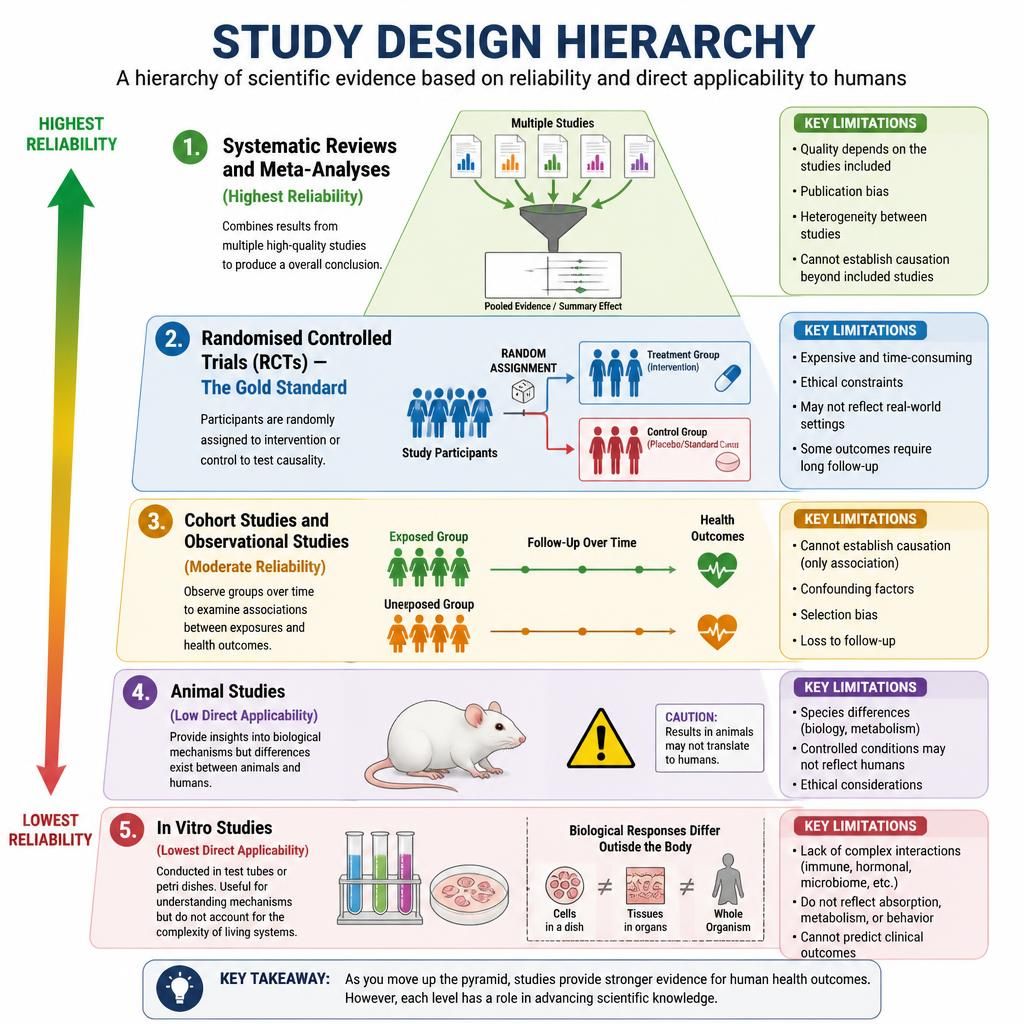
Step 1 — Understand the Study Design Hierarchy
Not all studies are created equal. The type of study determines how seriously you should take its conclusions. Think of research evidence as a pyramid: the higher the study design sits on the pyramid, the more reliably it tells you whether a supplement actually works. Here’s the hierarchy, from most to least reliable.
1. Systematic Reviews and Meta-Analyses (Highest Reliability)
A systematic review pools all available studies on a topic and analyses them as a group. A meta-analysis does the same but combines data statistically to generate larger-sample conclusions — effectively treating dozens of studies as one giant study. These are the most valuable type of evidence because they eliminate the bias of cherry-picking a single favourable result. They force you to look at the totality of evidence across all available research.
How to identify them: Look for “meta-analysis” or “systematic review” in the title. They’re often published in flagship journals like the Cochrane Database of Systematic Reviews, JAMA, or The Lancet. Limitation: If the underlying studies are all flawed, the meta-analysis compounds those flaws — the classic “garbage in, garbage out” problem.
2. Randomised Controlled Trials (RCTs) — The Gold Standard
In a randomised controlled trial (RCT), participants are randomly assigned to either the treatment group (supplement) or a control group (placebo). Neither group knows which they’re in — a design feature called blinding. This randomisation controls for confounding variables, which are the primary source of bias in lesser study designs. If done well, RCTs provide the strongest evidence that the supplement caused the observed effect, rather than simply correlating with it.
When both participants and researchers are kept unaware of group assignments until the study ends, it’s called a double-blind trial — the most rigorous standard. This prevents researcher bias from subtly influencing results. Limitation: RCTs are expensive to run well, and short-term RCTs may miss long-term effects of slow-acting compounds.
3. Cohort Studies and Observational Studies (Moderate Reliability)
Cohort and observational studies follow groups of people over time, observing who takes what and comparing health outcomes. There’s no randomisation. These designs are useful for identifying associations and generating hypotheses — but they cannot establish causation. The essential limitation: correlation does not equal causation. People who take supplements may already be healthier, exercise more, and eat better. The supplement might be riding that wave, not creating it.
Classic example: An observational study finds people who take omega-3s have better heart health — but those same people tend to eat more fish, exercise regularly, and smoke less. Was it the supplement? You can’t tell from an observational design.
4. Animal Studies (Low Direct Applicability)
Animal studies — typically conducted in mice or rats — are extraordinarily common in supplement marketing, and they are routinely misrepresented. The fundamental problem: countless compounds cure disease in mice and do absolutely nothing in humans. Mouse biology differs meaningfully from human biology in metabolism, receptor distribution, gut function, and dozens of other dimensions. Animal studies generate hypotheses — they do not confirm human efficacy. Red flag phrase to watch for: “Studies show…” with the only citation being a rodent study.
5. In Vitro Studies (Lowest Direct Applicability)
In vitro studies (the Latin term means “in glass”) are conducted in test tubes or petri dishes. Pouring a compound onto isolated cells is fundamentally different from what happens when a human swallows a capsule: the compound must survive digestion, be absorbed across the gut wall, survive first-pass liver metabolism, travel via the bloodstream, and reach target tissues — at whatever concentration is left after all that. Many substances that dramatically kill cancer cells in a dish are lethally toxic to living organisms. Red flag phrase: “Shown to destroy cancer cells in laboratory studies” — this almost invariably describes an in vitro study.
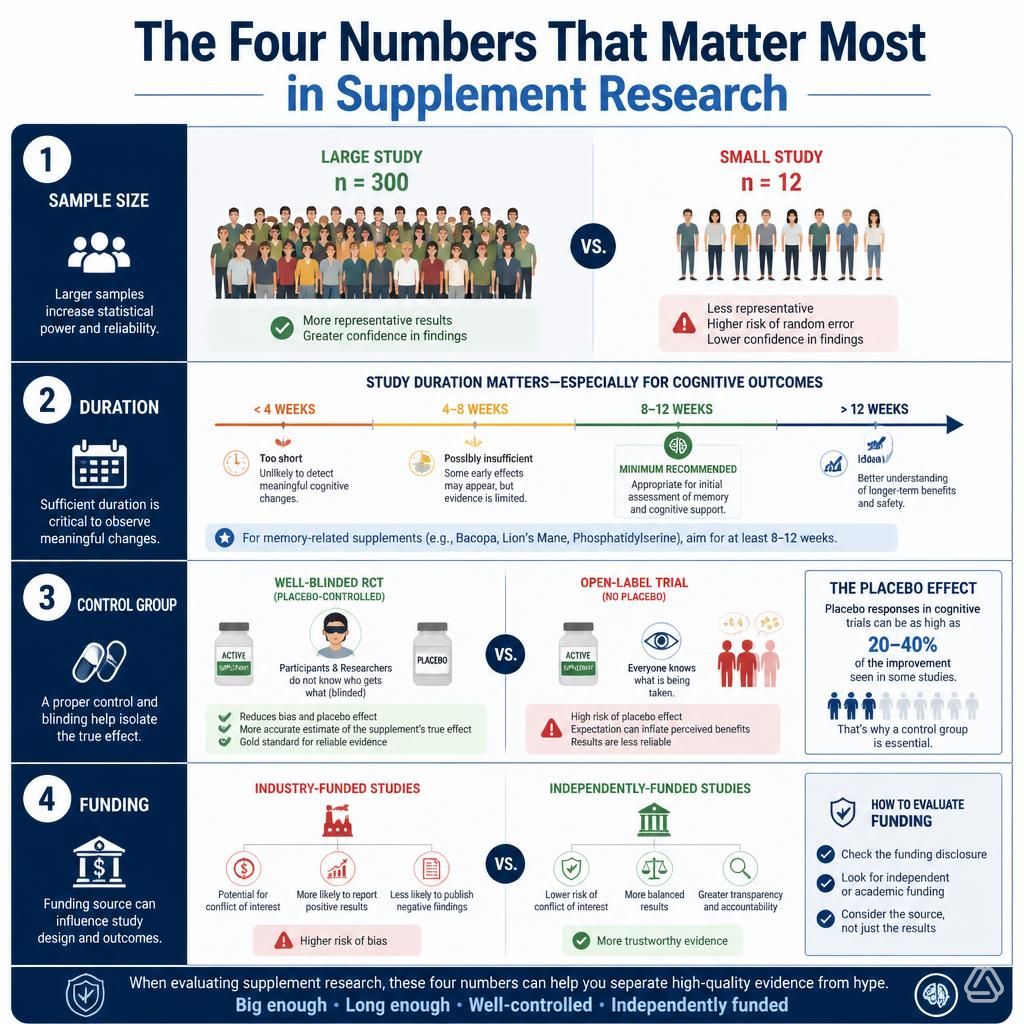
Step 2 — The Four Numbers That Matter Most
Once you’ve identified an RCT — congratulations, you’re already ahead of the vast majority of supplement shoppers — four specific numbers will tell you almost everything you need to know about whether to trust its conclusions.
1. Sample Size — “N = ?”
Sample size (written as n) is the number of participants in the study. Small studies are underpowered: they can produce positive results purely by chance, and those results often fail to replicate in larger trials. A trial where n=12 shows a positive result is far less convincing than n=300 showing the same effect. As a practical rule of thumb: for cognitive supplement trials, n=50+ is a minimum threshold for taking results seriously; n=100+ is strongly preferred.
The marketing trick: Companies frequently use the phrase “clinically proven” based on tiny internal studies — sometimes n=20 or fewer participants. Always track down the sample size before being impressed by any claim.
2. Duration — How Long Did the Study Run?
Study duration matters enormously because different compounds work on different timescales. Bacopa monnieri, for example, shows minimal cognitive effects at 4 weeks but significant, well-documented effects at 12 weeks. A 4-week Bacopa study showing “no effect” isn’t wrong — it simply didn’t run long enough to detect the effect that exists. Conversely, a 2-week energy supplement study showing dramatic results may be capturing a caffeine response, not genuine neuroplasticity.
Rule of thumb: For compounds targeting memory, learning, and neuroplasticity, look for a minimum of 8–12 weeks. For acute-action compounds like L-Theanine or caffeine combinations, shorter durations are appropriate and expected.
3. The Control Group — What Did the Placebo Group Do?
The placebo effect is real, powerful, and especially prominent in cognitive outcome research, where subjective assessments (“do you feel sharper?”) are inherently susceptible to expectation. A supplement that outperforms a real placebo in a well-blinded trial is genuinely interesting. A study showing improvement without any comparison to a placebo proves almost nothing about the supplement itself.
Watch for: Studies labelled as open-label trials, meaning participants knew they were taking the supplement. These tell you very little about whether the compound caused the observed effects, because the placebo effect is entirely uncontrolled.
4. Who Funded the Study?
Industry-funded studies are 2–4 times more likely to produce results favourable to the funder than independently funded studies — and this is not necessarily outright fraud. It manifests through subtle design choices: selecting outcome measures where the compound performs best, running the study in populations where effects are most pronounced, or stopping a trial early when interim results look good. These choices are individually defensible and collectively devastating to objectivity.
How to find it: Look in the “Funding” or “Acknowledgements” section of any published paper. Disclosure is required by all reputable journals. What to do: Industry-funded evidence isn’t worthless — treat it as a data point that requires independent replication before being accepted as settled science.
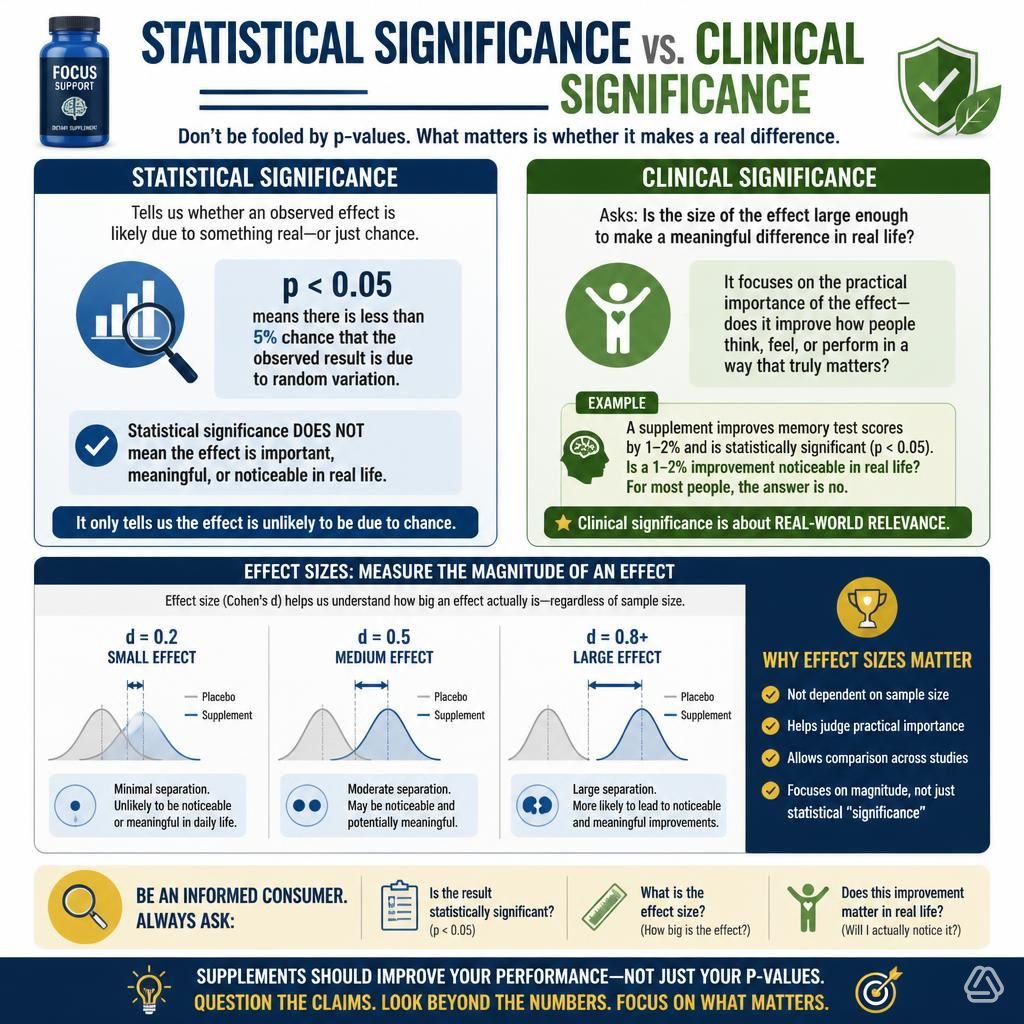
Step 3 — Statistical Significance vs. Clinical Significance
This is among the most misused and misunderstood concepts in supplement marketing — and understanding it will inoculate you against an enormous category of misleading claims.
What “Statistically Significant” Actually Means
A result is statistically significant (typically expressed as p < 0.05) when the probability of obtaining that result purely by chance is less than 5%. That’s the entirety of what it means. Statistical significance tells you: “This probably isn’t random noise.” It does not tell you the effect is large, meaningful, impressive, or relevant to your daily life. A study can be statistically significant and practically irrelevant at the same time — and this happens constantly in supplement research.
What “Clinical Significance” Means
Clinical significance asks a different and more important question: Is the effect size large enough to actually matter to a real person in real life? A supplement might produce a statistically significant improvement on a standardised memory test, but that improvement might be so small — 1–2% on a validated scale — as to be completely imperceptible in day-to-day functioning. Statistically real; clinically meaningless.
What to Look For — Effect Sizes
The key metric is effect size, most commonly reported as Cohen’s d. Effect size tells you how large the difference between the supplement group and the placebo group actually was, independent of sample size. Here’s the standard interpretation:
| Cohen’s d Value | Interpretation | Practical Meaning |
|---|---|---|
| d = 0.2 | Small effect | Likely imperceptible in daily life |
| d = 0.5 | Medium effect | Generally clinically meaningful |
| d = 0.8+ | Large effect | Robust, likely noticeable |
Supplements with genuinely strong evidence typically show d = 0.3–0.6 on cognitive outcome measures. If a study reports statistical significance but omits effect size entirely, that’s a yellow flag worth noting. Always ask: “Yes, but how much better did the supplement group actually perform?”
Step 4 — Common Manipulation Tactics in Supplement Marketing
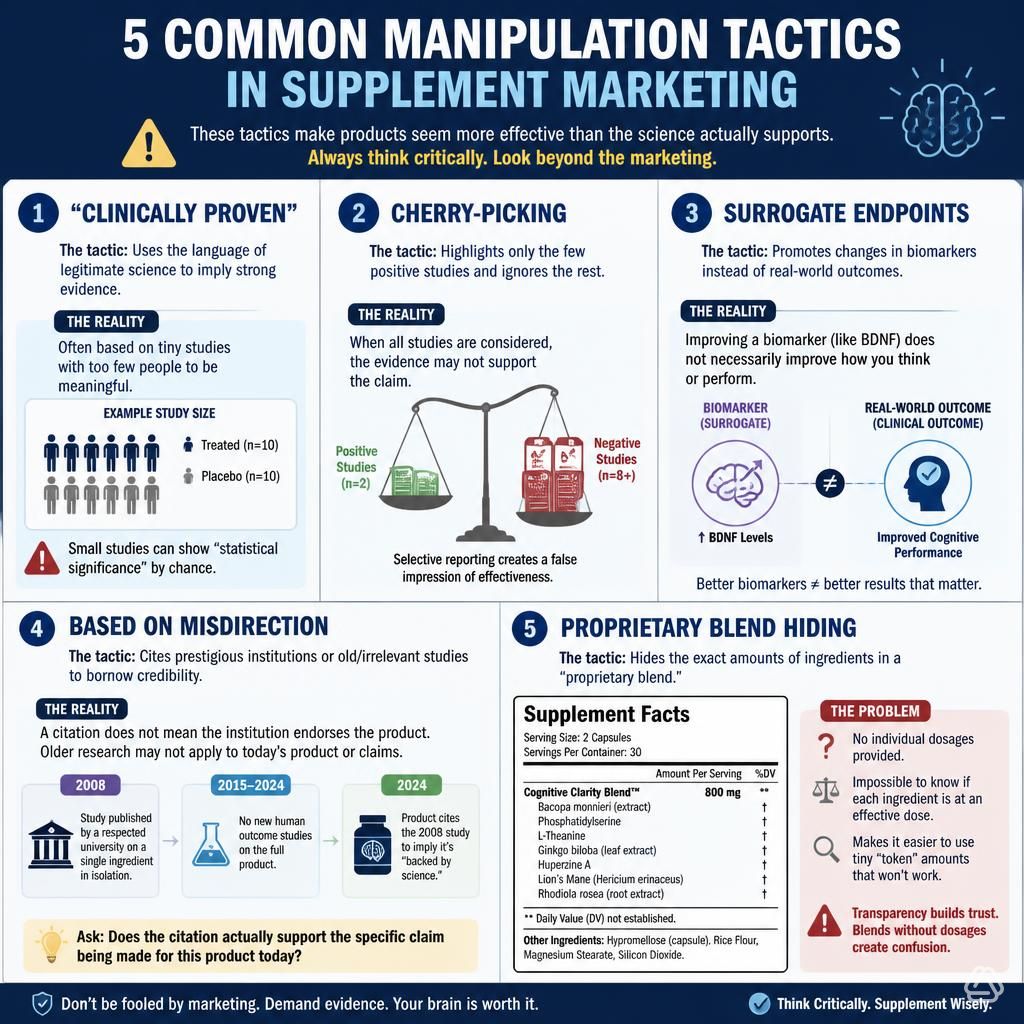
The supplement industry has developed a sophisticated vocabulary for deploying scientific-sounding language without the burden of scientific rigour. Recognising these tactics is half the battle.
“Clinically Proven” (Almost Always Meaningless)
There is no regulatory standard governing the use of the phrase “clinically proven.” It can be legally applied to describe a single, tiny, industry-funded, 2-week open-label trial conducted on 18 participants. It is a marketing term dressed in the clothing of science. Treat it as noise until you’ve seen the actual study it references.
Cherry-Picking
Cherry-picking means selecting only the favourable studies from a larger body of mixed evidence. “Studies show X improves memory” — if 3 of 12 published studies show improvement and 9 show no effect, that statement is technically accurate and profoundly misleading simultaneously. This is precisely why meta-analyses matter: they force the totality of evidence into view.
Surrogate Endpoints
Surrogate endpoints are measurable biological markers that are associated with an outcome of interest — but are not the outcome itself. “Shown to increase BDNF levels” is a classic example. BDNF (Brain-Derived Neurotrophic Factor) is associated with neuroplasticity and learning — but elevated BDNF in a blood sample does not prove the supplement improves cognition. BDNF is the surrogate; cognitive performance is the real endpoint. Always ask what the supplement actually did — not what it changed on a biomarker panel.
The “Based On” Misdirection
“Based on research from Harvard / Stanford / Columbia” — this framing can mean that a researcher affiliated with one of those institutions published a single tangentially related paper, possibly in 1997, possibly about something only loosely connected to the compound being sold. Prestige-laundering is widespread. Demand the actual citation before being impressed by institutional name-dropping.
Proprietary Blend Hiding
A supplement label reading “Cognitive Clarity Blend — 400mg” containing 12 ingredients with no individual doses listed is a proprietary blend. This format is legally permitted and widely used to conceal the fact that each individual ingredient may be present at a fraction of the dose used in the studies being cited. If bacopa monnieri requires 300mg to show effects and the entire blend is 400mg across 12 ingredients, the maths does not work in your favour.
Related Reading
Step 5 — How to Actually Find and Read a Study
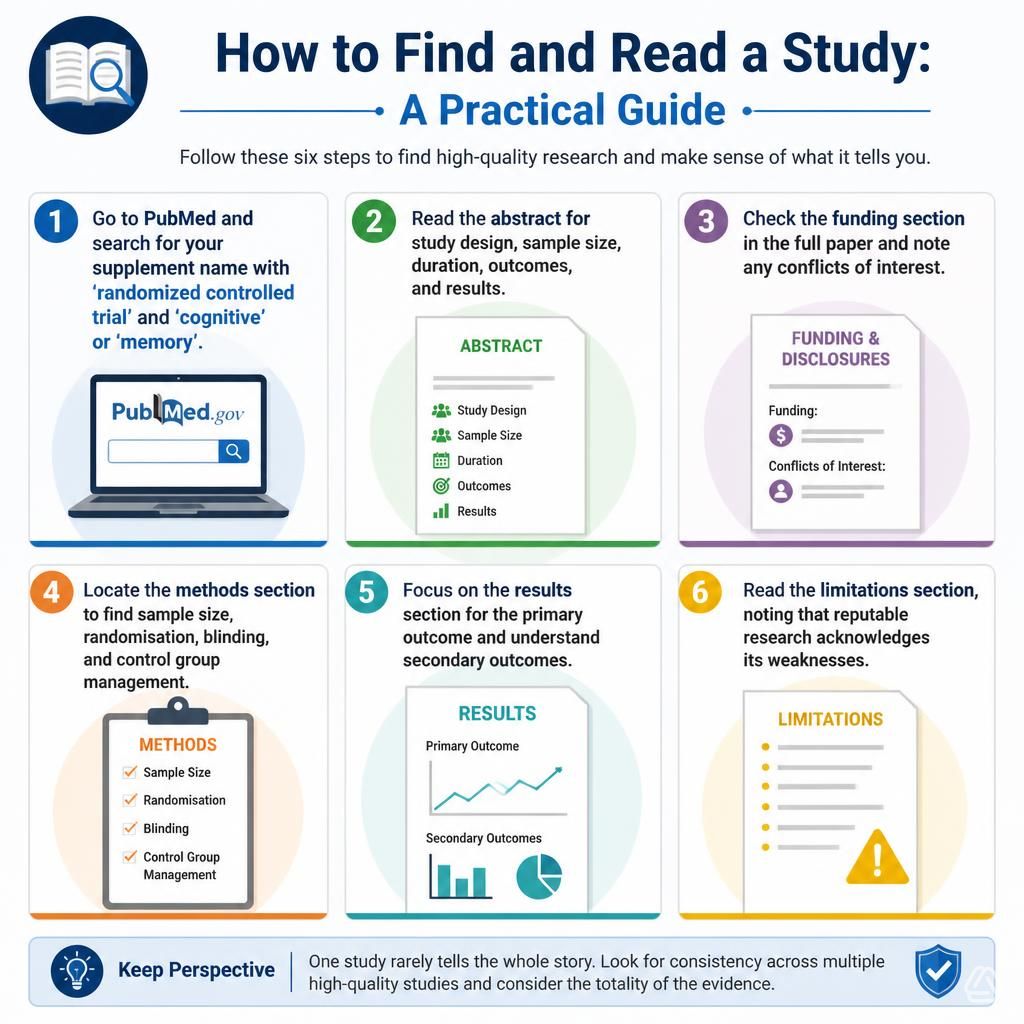
Theory is only useful if it’s actionable. Here’s a practical, step-by-step process for finding and evaluating supplement research — no institutional access required.
Step 1 — Go to PubMed (pubmed.ncbi.nlm.nih.gov) — the free, comprehensive database of published biomedical research maintained by the U.S. National Library of Medicine. In the search bar, type your supplement name followed by “randomized controlled trial” and “cognitive” or “memory.” Example: bacopa monnieri randomized controlled trial memory.
Step 2 — Click on a result and read the Abstract first. The abstract is a structured summary that typically contains: study design, sample size, duration, primary outcomes, and key results. In most cases, you can assess study quality from the abstract alone before deciding whether to pursue the full paper.
Step 3 — Check the Funding section in the full paper. Click “Full text links” to access the complete paper — many papers are open-access and free to read. Note who funded the research, and whether the researchers have disclosed any conflicts of interest.
Step 4 — Locate the Methods section. Find: n (sample size), the randomisation procedure, whether the study was blinded, how the control group was managed, and the study duration. This section is where trial quality is made or lost.
Step 5 — Jump to the Results section and look for the primary outcome — the main measure the study was specifically designed to test. Secondary outcomes are interesting supplementary data, but they are not the primary verdict. A study that fails its primary outcome but reports a positive secondary outcome has, in practical terms, failed.
Step 6 — Read the Limitations section. Reputable researchers always acknowledge what their study couldn’t control for, what its weaknesses are, and what questions remain open. Papers with no limitations section at all are a meaningful yellow flag — good science is always self-aware about its constraints.
Quick Reference — Red Flags vs. Green Flags
Use this comparison at a glance whenever you’re evaluating a supplement claim or scanning a study citation.
| ⚠ Red Flags — Approach With Scepticism | ✓ Green Flags — Evidence of Genuine Quality |
|---|---|
| “Based on” a prestigious institution without a direct citation | Multiple independent RCTs showing consistent results |
| Only animal or in vitro studies cited | Systematic review or meta-analysis available |
| No control group / open-label trial design | Sample size of 50+ participants |
| Industry-funded study with no independent replication | Duration appropriate to mechanism (8–12 weeks for slow-acting compounds) |
| “Clinically proven” without citing the actual study | Independently funded or replicated by independent labs |
| Sample size under 30 participants | Effect size reported alongside statistical significance |
| Study ran fewer than 4 weeks for neuroplasticity compounds | Limitations explicitly acknowledged by the researchers |
| Proprietary blend with no individual ingredient dosing disclosed | Open-access publication in a peer-reviewed journal |
| Surrogate endpoints presented as proof of real-world benefit | Results consistent across diverse populations and study settings |
Frequently Asked Questions
Q: Where can I find supplement studies for free?
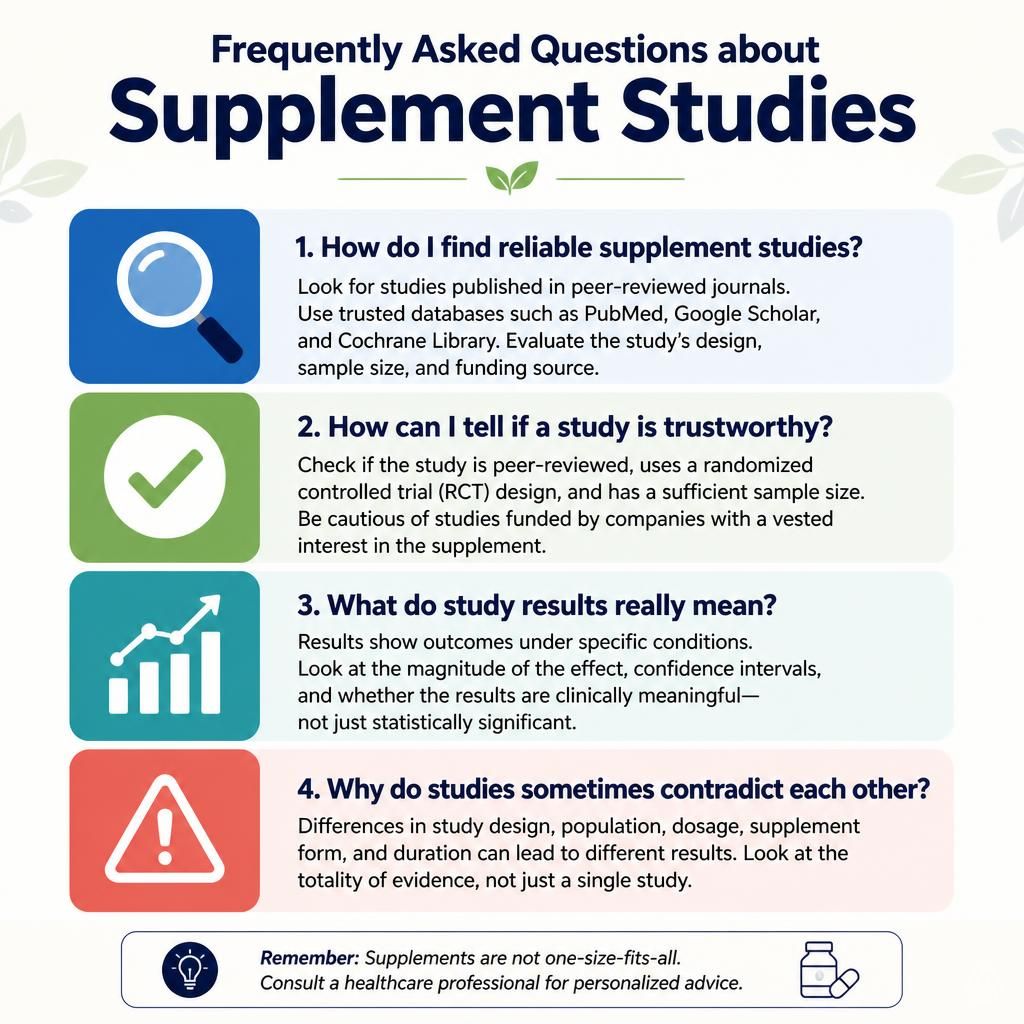
PubMed (pubmed.ncbi.nlm.nih.gov) is the gold standard — a free, comprehensive database maintained by the U.S. National Library of Medicine, offering access to millions of published papers, including full open-access texts. Examine.com is also an excellent supplement-specific resource that summarises and independently grades the human evidence base for specific compounds, making it ideal for fast, reliable overviews.
Q: If I can’t access the full paper, can I trust the abstract?
Abstracts are genuinely useful for initial screening — they typically contain sample size, study design, and primary results, which is enough to make a preliminary quality judgement. However, for decisions where it really matters, accessing the full paper to review funding disclosures, methodological detail, and the limitations section is worth the extra effort. Many papers are open-access and available in full at no cost.
Q: Does a single study “prove” a supplement works?
No. A single positive study — regardless of its quality or sample size — is a data point, not settled science. Genuine efficacy is established through consistent results across multiple independent studies conducted by separate research teams. Counterintuitively, one extremely well-funded RCT showing dramatic effects should increase your scepticism slightly, not reduce it — because it has not yet survived the test of independent replication.
Q: How do I know if Examine.com is trustworthy?
Examine.com operates as a non-profit research analysis organisation with no commercial supplement interests — they do not sell products, take advertising from supplement companies, or accept sponsored content. Their team summarises existing published evidence with explicit ratings of evidence quality for specific outcomes. They are a reliable and intellectually honest first stop for understanding what the overall research base says about any given compound, and they’re transparent about what the evidence doesn’t yet support.
Q: What if two studies contradict each other?
Contradictory studies are normal — science advances through disagreement and replication. When two studies conflict, look at the methodological differences: sample size, population characteristics, dosing, duration, and funding source. Often the discrepancy has a logical explanation. When contradictory evidence accumulates without resolution, that’s a sign the science is genuinely unsettled — and appropriate humility about the compound’s efficacy is warranted.
Continue Building Your Framework
- How to Read a Supplement Label — A Plain-English Guide
- The Complete Guide to Nootropic Stacking for Beginners
- The WellnessWays Brain Clarity Foundation Protocol
- Bacopa Monnieri — Memory, Dosage, and What the Research Actually Says
The Bottom Line
The goal of this guide isn’t to make you cynical about supplements — it’s to make you discerning. There is real, compelling, rigorously replicated science behind several natural cognitive enhancers. The problem is that genuinely compelling science gets packaged alongside nonsense, and without a framework to tell them apart, consumers consistently lose. They spend money on products that don’t work, develop trust in brands that don’t deserve it, and — perhaps most damagingly — become sceptical of compounds that have real, meaningful evidence behind them.
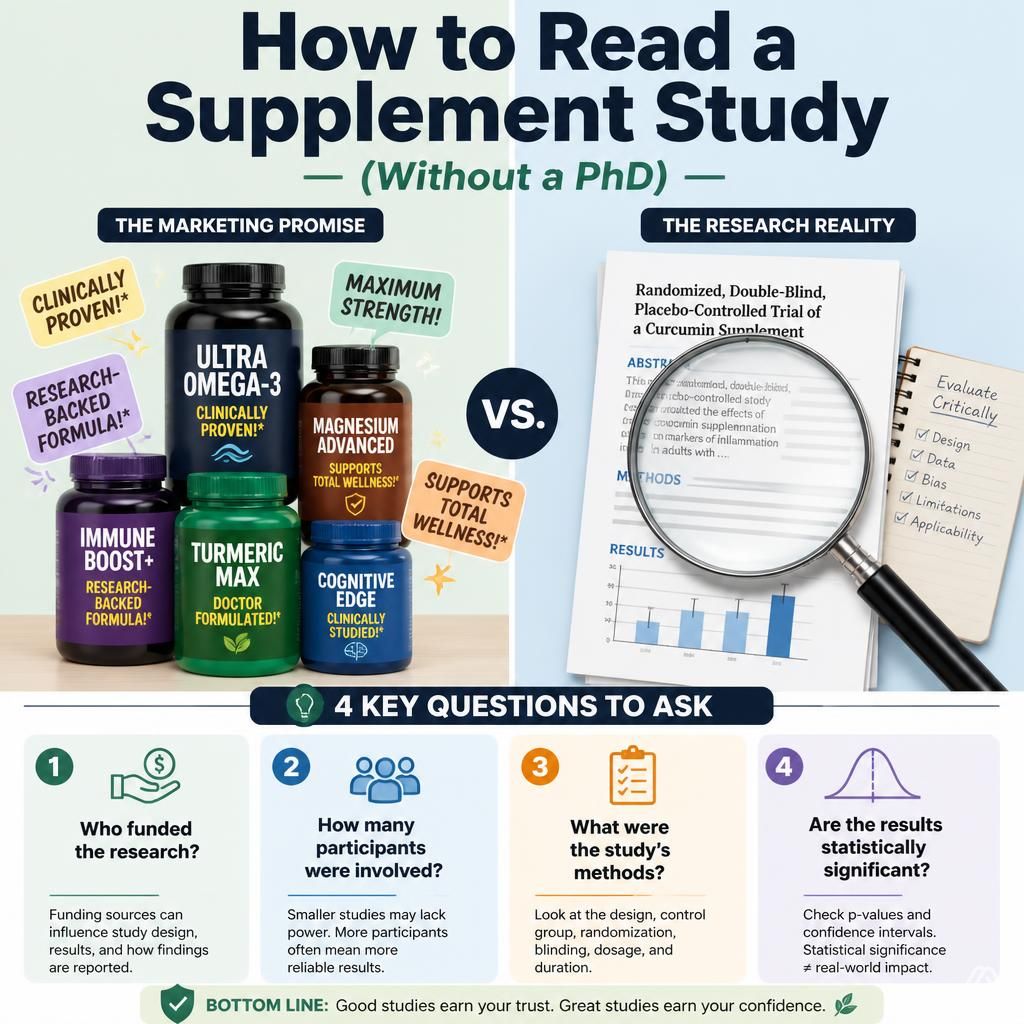
This guide is your framework. You now know the study design hierarchy. You know the four numbers that tell you whether to take an RCT seriously. You know the difference between statistical significance and clinical significance. You know the manipulation tactics, and you know where to look for independent evidence. Use this framework every time a supplement makes a claim that sounds almost too good to be true — and you’ll make better decisions than the majority of supplement shoppers. No PhD required.
© 2026 WellnessWays.net — All rights reserved. This article is for educational purposes only and does not constitute medical advice. Consult a qualified healthcare provider before beginning any supplement regimen.