
Published: September 21, 2026 | Estimated reading time: 14–17 minutes | Evidence level reviewed: Human RCTs, systematic reviews, preclinical studies
Bacopa Monnieri Memory Benefits: Memory, Dosage, and What the Research Actually Says
Bacopa monnieri — also called Brahmi, water hyssop, or herb of grace — has been used in Ayurvedic medicine for over 3,000 years, primarily for enhancing memory, learning, and cognitive function. It is one of the best-studied natural nootropics in existence, with a body of human clinical trial evidence that is genuinely impressive by supplement standards.
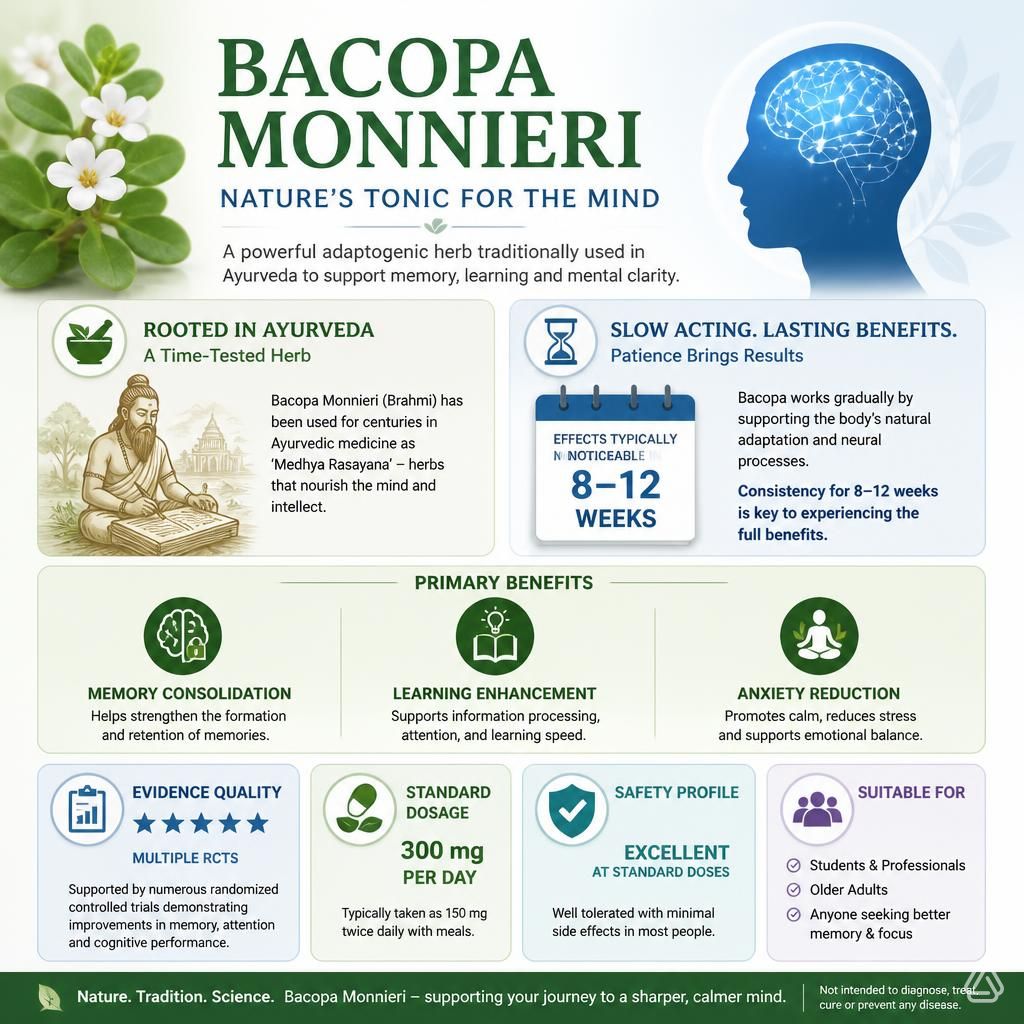
It is also one of the most frequently misrepresented: oversold as an immediate memory booster when it is actually a slow-acting, cumulative compound that requires 8–12 weeks of consistent use before its effects are fully apparent. This review covers everything — the mechanisms, the clinical trials, the honest limitations, the correct dosage, the safety profile, and how to choose a product that actually works. No hype. Real science, real talk.
⚑ The Most Important Thing To Know About Bacopa Before You Start
Bacopa monnieri is NOT a fast-acting supplement. It works through adaptogenic and neuroplasticity mechanisms that develop gradually over weeks. Studies consistently show peak effects at 8–12 weeks of daily use. If you’re looking for same-day cognitive results, this is not your compound. If you’re willing to invest 12 weeks of consistent daily dosing, the evidence suggests significant, meaningful memory and learning benefits that are among the best-documented of any natural supplement.
📋 Bacopa At A Glance
| Factor | Summary |
|---|---|
| Primary Benefits | Memory consolidation, learning, reduced forgetting rate, anxiety reduction |
| Evidence Quality | Multiple RCTs in healthy adults and older populations; strong for memory |
| Time to Effect | 8–12 weeks of daily use (non-negotiable) |
| Standard Dose | 300mg/day, extract standardised to 55% bacosides |
| Take With Food? | Yes — fat-soluble; always take with a meal for best absorption |
| Side Effects | GI discomfort (mild, transient); mild initial fatigue — both typically resolve |
| Safety Profile | Excellent at standard doses in healthy adults; caution in pregnancy |
| Best Stacked With | Citicoline / Alpha-GPC, Lion’s Mane, Omega-3 DHA |
| Verdict | One of the most evidence-supported natural cognitive enhancers available — if you’re patient enough to let it work |
What Is Bacopa Monnieri?
Bacopa monnieri (Herpestis monnieri) is a small, creeping, succulent herb that grows naturally in wetlands, marshes, and waterways across the Indian subcontinent, and has since spread to parts of Asia, Africa, Australia, and the Americas. It favours wet, muddy environments and has been harvested medicinally for thousands of years from these habitats.

In traditional Ayurvedic medicine, Bacopa is classified as a medhyarasayana — a category of herbs specifically used to sharpen intellect and support memory. Ancient Ayurvedic scholars reportedly used it to help students memorise lengthy Sanskrit texts, and it appears in foundational Ayurvedic texts including the Charaka Samhita and Sushruta Samhita. The name “Brahmi” links the plant to Brahma, the Hindu deity of creation and knowledge — reflecting the reverence in which it was historically held.
Bacopa entered Western scientific literature in the 1980s, and the pace of research has accelerated significantly since. It is now one of the most thoroughly studied natural cognitive enhancers in the world, with its active compounds isolated, its mechanisms largely characterised, and multiple controlled human trials completed.
The Active Compounds — Bacosides
Bacosides A and B
The primary active compounds in Bacopa monnieri are a family of triterpenoid saponins collectively known as bacosides. The most pharmacologically important grouping is bacoside A, which is itself a mixture of four compounds: bacoside A3, bacopaside I, bacopaside II, and bacopasaponin C. Bacoside B refers to related compounds in this same saponin family.
Bacosides are the primary drivers of Bacopa’s neurological effects — the compounds responsible for modulating synaptic function, providing antioxidant neuroprotection, and influencing neurotransmitter systems. Standardisation matters enormously here: quality supplements used in human clinical trials are standardised to 55% bacosides by weight. This is the concentration benchmark for therapeutic dosing. A product that does not state its bacoside percentage on the label cannot guarantee therapeutic levels of these active compounds, and should be avoided.
Additional Active Compounds
Bacopa’s chemistry is broader than bacosides alone. The plant also contains:
- Alkaloids: Brahmine, herpestine, and trace amounts of nicotine — which may contribute to cholinergic and neuroprotective activity.
- Flavonoids: Luteolin and apigenin — antioxidant and anti-inflammatory compounds with established neuroprotective profiles in their own right.
- Betulinic acid: A pentacyclic triterpenoid with anti-inflammatory properties that may contribute to Bacopa’s adaptogenic effects.
- Phenylethanoid glycosides: Including plantainoside B and scutellarein, which add antioxidant activity.
The combined action of these compounds — not bacosides in isolation — is likely responsible for Bacopa’s full effect profile, which is why whole-plant standardised extracts are generally preferred over isolated bacoside compounds.
How Bacopa Works — The Mechanisms
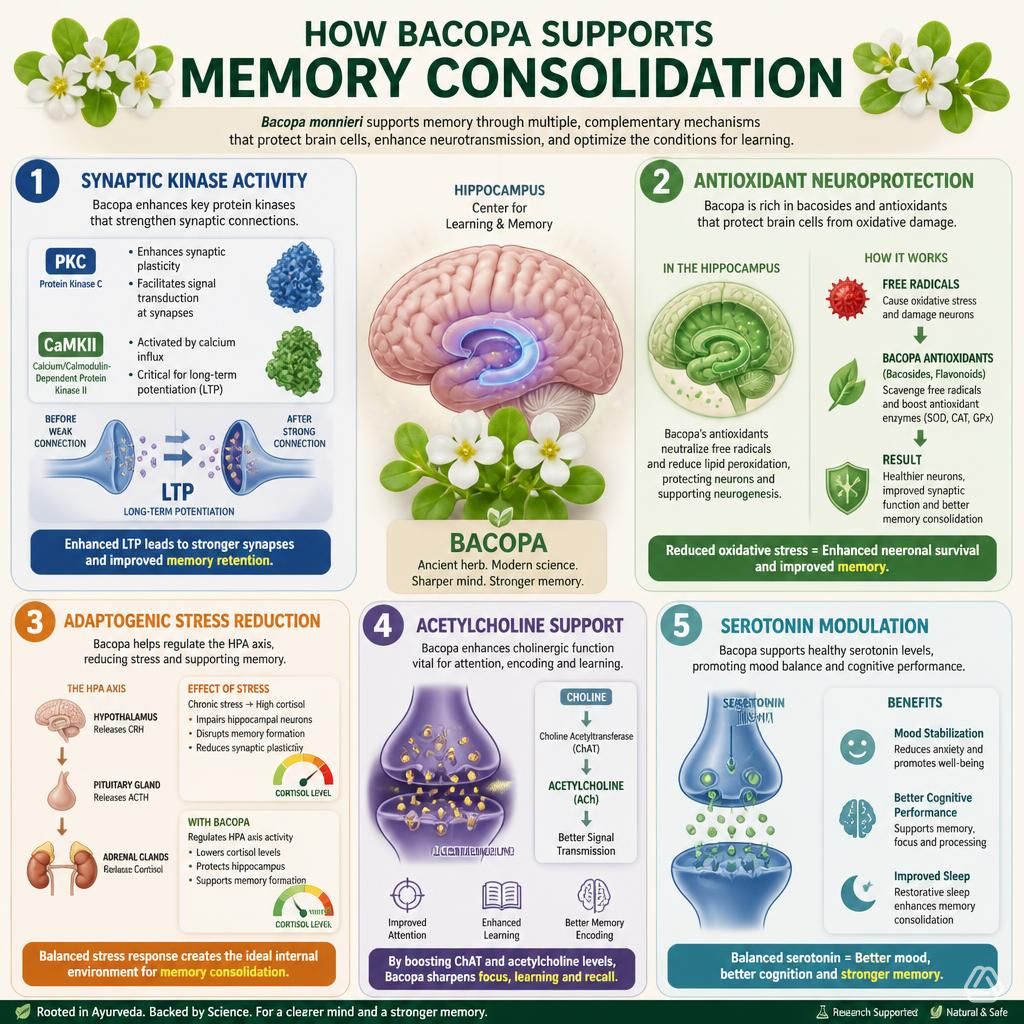
Understanding Bacopa’s mechanisms is the key to understanding why it works the way it does — gradually, cumulatively, and primarily for memory consolidation rather than acute stimulation. There are five primary mechanisms with meaningful scientific support:
1. Synaptic Kinase Activity and Memory Consolidation
This is Bacopa’s most studied and most important mechanism. Bacosides appear to modulate synaptic kinase activity — specifically protein kinase C (PKC) and calcium/calmodulin-dependent protein kinase II (CaMKII). These kinases are essential enzymes in the process of long-term potentiation (LTP) — the synaptic strengthening mechanism that underlies the formation and consolidation of long-term memories.
Think of LTP as the brain’s process of “stamping” new information into durable storage. When you learn something, synaptic connections between neurons are temporarily strengthened. LTP converts that temporary strengthening into a lasting structural change. Bacopa appears to enhance the efficiency of this stamping process, which is why its primary measurable benefit in clinical trials is a reduction in the rate of forgetting — rather than an acceleration of initial learning. It doesn’t necessarily help you acquire information faster; it helps you retain it more reliably.
This mechanism is also why the compound requires weeks to accumulate its effects. Bacoside concentrations must build in neural tissue, and meaningful synaptic kinase modulation takes time to translate into observable memory improvements.
2. Antioxidant Neuroprotection
Bacopa demonstrates potent antioxidant activity in the brain, with evidence for reducing oxidative stress specifically in the frontal cortex, striatum, and hippocampus — all regions critical to executive function, attention, and memory formation. The hippocampus in particular is highly vulnerable to oxidative damage, which is a primary driver of age-related memory decline.
Bacopa’s antioxidant activity operates through multiple pathways: direct free radical scavenging by flavonoids and bacosides, and upregulation of endogenous antioxidant enzymes including superoxide dismutase (SOD) and catalase. This mechanism contributes both to acute cognitive protection and to the long-term neuroprotective effects that make Bacopa particularly interesting for older populations.
3. Adaptogenic Stress Reduction
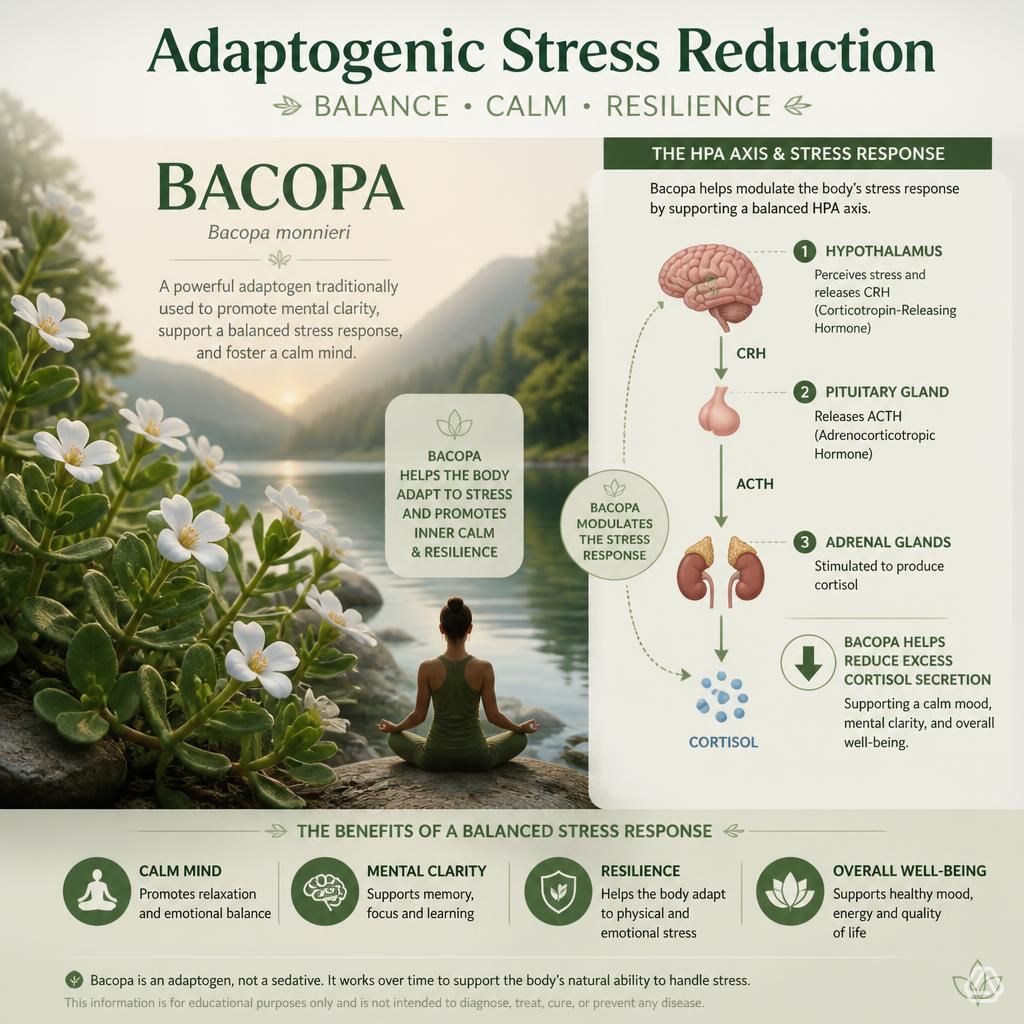
Bacopa is formally classified as an adaptogen — a substance that modulates the body’s stress response system without causing stimulation. Specifically, Bacopa appears to downregulate the hypothalamic-pituitary-adrenal (HPA) axis — the central stress response system — resulting in reduced cortisol secretion under stress conditions.
This mechanism has direct cognitive relevance. Chronic cortisol elevation is one of the most well-documented impairments to memory consolidation: cortisol damages hippocampal neurons, suppresses LTP, and disrupts sleep architecture. By reducing cortisol and blunting the stress response, Bacopa creates a more favourable neurochemical environment for memory formation. This mechanism likely accounts for a meaningful portion of the cognitive improvements observed in clinical trials — particularly in high-stress populations.
4. Acetylcholine Support
Some evidence supports Bacopa enhancing the activity of choline acetyltransferase (ChAT) — the enzyme responsible for synthesising acetylcholine from choline and acetyl-CoA. The cholinergic system, which uses acetylcholine as its primary neurotransmitter, is fundamental to attention, learning, and working memory. Impairment of this system is a hallmark of Alzheimer’s disease, and its support is a key target for cognitive enhancement interventions.
The evidence here is primarily preclinical, and the effect size in humans remains uncertain, but this mechanism is consistent with Bacopa’s observed benefits in attention and working memory domains.
5. Serotonin Modulation
Animal studies show Bacopa increases serotonin transporter expression in certain brain regions, potentially contributing to its mood-stabilising and anti-anxiety effects. The relationship between serotonin modulation and cognitive enhancement is complex, but the mood-stabilising effects observed in human trials are consistent with this mechanism — and emotional stability directly supports cognitive performance.
The Human Clinical Evidence — What Studies Actually Show
This is where Bacopa genuinely distinguishes itself from most natural supplements. The evidence base includes multiple randomised, double-blind, placebo-controlled trials (RCTs) — the gold standard for clinical evidence — in both healthy adults and older populations. Here is an honest assessment, domain by domain:
Memory and Learning — ★★★★★ Strong, consistent evidence
This is Bacopa’s strongest area, supported by convergent findings across multiple independent trials:
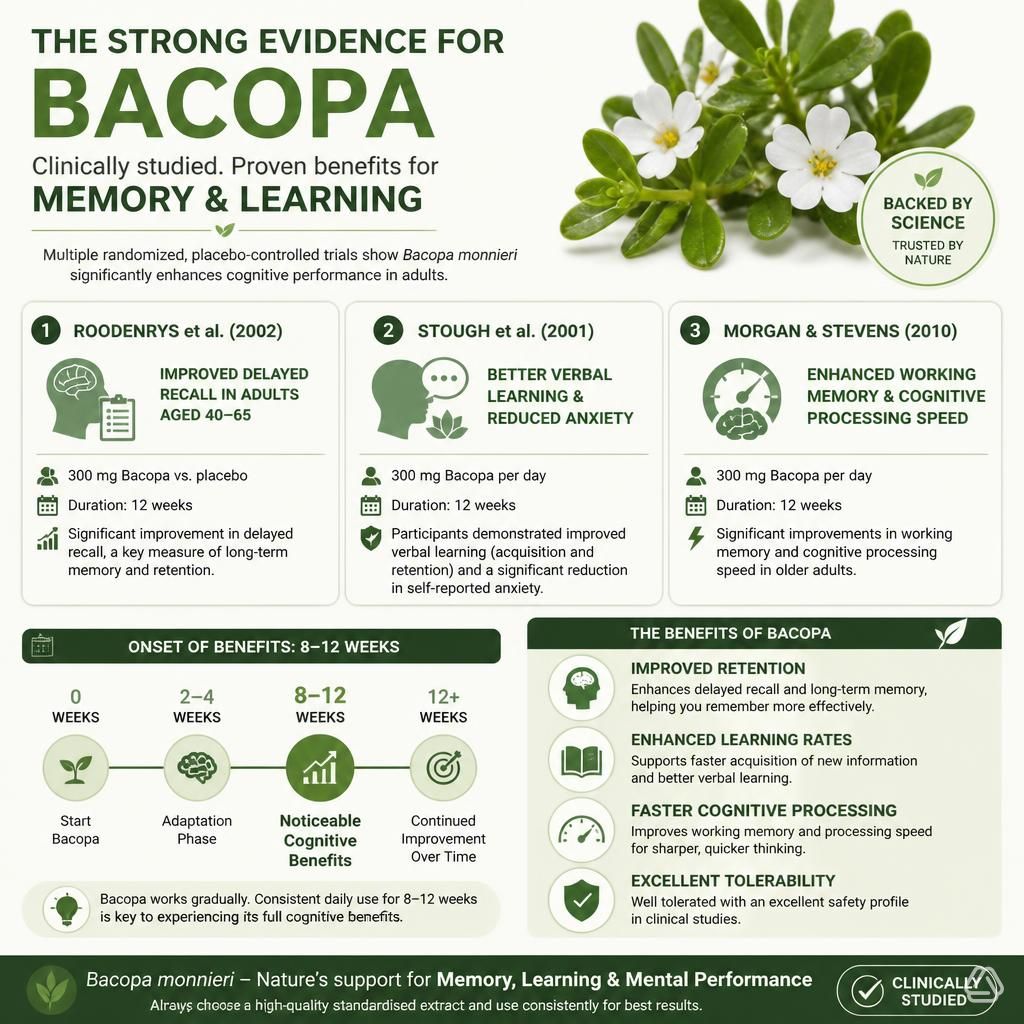
- Roodenrys et al. (2002, Neuropsychopharmacology): 76 adults aged 40–65 received either 300mg standardised Bacopa extract or placebo for 12 weeks. Bacopa produced significantly improved retention of new information (word pair recall) compared to placebo. Critically, the improvement was specific to delayed recall — confirming that Bacopa primarily reduces the rate of forgetting, rather than accelerating initial acquisition. This finding has been replicated across multiple subsequent studies.
- Stough et al. (2001, Psychopharmacology): 46 healthy adults, 12-week double-blind RCT, 300mg/day. Significant improvements in verbal learning rate, memory consolidation, and anxiety compared to placebo. No significant improvement at 5-week interim assessment — consistent with the 8–12 week onset pattern.
- Morgan & Stevens (2010, Journal of Alternative and Complementary Medicine): 54 adults aged 65 and over, 12 weeks, 300mg/day. Significant improvements in working memory, attention, and cognitive processing speed compared to placebo — with an excellent tolerability profile in older participants.
- Additional convergent trials: Improved word list delayed recall, enhanced paired-associate learning, enhanced spatial working memory, and reduced information decay across multiple independent research groups.
Research Note
The specificity of Bacopa’s memory effect — acting on delayed recall and forgetting rate rather than initial learning speed — is an important nuance. Do not expect to feel sharper or faster in the first few weeks. Expect to notice that you retain what you learn more durably over the course of several months of use.

Attention and Processing Speed — ★★★ Mixed; time-dependent results
Results in this domain are more mixed and require careful interpretation. Some trials show statistically significant improvements in attention and processing speed at 12 weeks; others do not reach significance. The most consistent finding across studies is counterintuitive and important: Bacopa may initially slow processing speed in the first 4–6 weeks, possibly due to its mild calming/sedative-adjacent effect on the nervous system, before improving it at 8–12 weeks.
This explains a frequently reported user experience: early Bacopa adopters sometimes describe feeling slightly “slower” or “foggier” in the first few weeks — and this is real, measurable, and documented. It is also transient. Do not interpret early-phase slowing as the supplement not working; interpret it as the adaptogenic phase preceding the cognitive enhancement phase.
Anxiety and Stress Reduction — ★★★★ Consistently strong evidence
Across multiple human trials, Bacopa has demonstrated consistent and significant anti-anxiety effects — reducing both state anxiety (situational, context-specific anxiety) and trait anxiety measures. Several studies also confirm cortisol-lowering effects under stress conditions. This is one of Bacopa’s most reliable and earliest-appearing benefits, often noticeable within weeks 2–4 of use — well before the full cognitive effects emerge.
Neuroprotection and Cognitive Aging — ★★★ Strong preclinical; growing human evidence
Preclinical evidence for Bacopa’s neuroprotective properties is robust — antioxidant activity, anti-inflammatory effects, and protection against amyloid toxicity have all been demonstrated in animal and cell studies. Human evidence in older adults is encouraging and growing, particularly in populations with mild cognitive impairment. This is one of the most compelling cases for long-term Bacopa use — not just for current cognitive function, but as an ongoing investment in cognitive health over years.
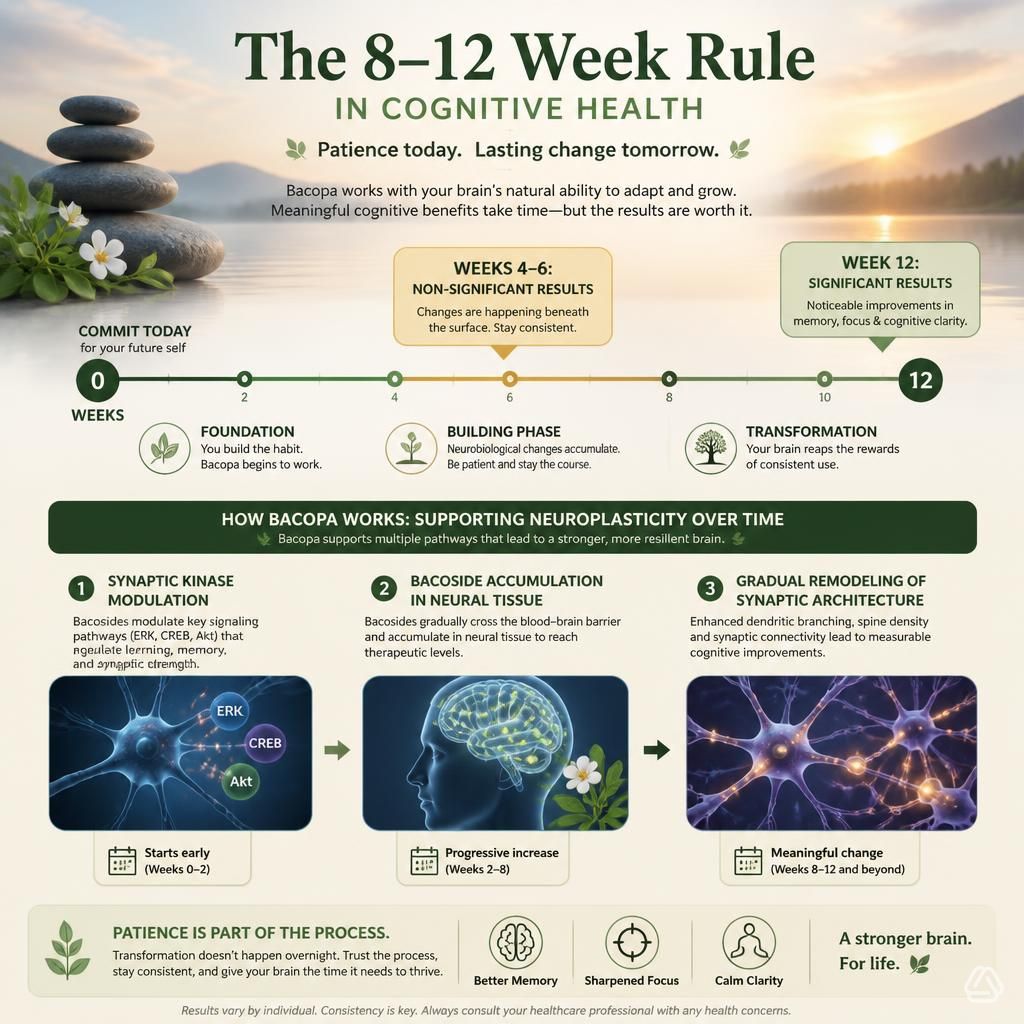
The 8–12 Week Rule — Why Patience Is Non-Negotiable
This deserves its own section because it is, without question, the most common reason people abandon Bacopa before experiencing its benefits. The compound simply does not work on a human attention-span timescale — and that is precisely what distinguishes it from stimulants and what makes it genuinely valuable for long-term cognitive health.
The published trials are explicit on this point: the Roodenrys and Stough studies both reported non-significant results at interim assessments (weeks 4–6) and significant results at week 12. The neuroplasticity mechanisms — synaptic kinase modulation, bacoside accumulation in neural tissue, gradual remodeling of synaptic architecture — require consistent daily dosing over extended periods to develop and express themselves behaviorally.
Below is a realistic, evidence-calibrated timeline of what to expect:
| Period | What’s Happening | What You May Notice |
|---|---|---|
| Weeks 1–4 | Bacosides accumulating in neural tissue; HPA axis modulation beginning; antioxidant activity commencing | Possible mild calming effect; slightly reduced stress reactivity; no clear cognitive change expected |
| Weeks 4–8 | Stress-response reduction consolidating; early synaptic kinase modulation; possible transient processing slowing | Noticeably reduced anxiety in some users; mood more stable; cognitive improvements minimal or absent |
| Weeks 8–12 | Primary cognitive mechanisms fully expressing; LTP enhancement measurable; delayed recall improving | Better retention of new information; improved recall of recent events; cleaner working memory |
| 12+ Weeks | Full benefit profile realised; ongoing neuroprotective and adaptogenic effects | Sustained cognitive improvement; reduced information decay; long-term neuroprotective benefits building |
This is not a design flaw — it is how genuine neuroplasticity compounds work. The brain changes that underlie durable memory improvement cannot be rushed any more than physical fitness can be compressed into a single workout. Commit to the timeline, or don’t start.
➜ Related: The Complete Guide to Nootropic Stacking for Beginners
Dosage — What the Research Uses
This is one of the few areas of supplement science where the research is clear and consistent enough to give a precise, evidence-based recommendation:
Evidence-Based Dosage Protocol
- Standard dose: 300mg/day of extract standardised to 55% bacosides — the dose used in the majority of published human RCTs
- Higher dose: Some studies use 450mg/day, which is generally well-tolerated; may offer modest additional benefit but is not well-differentiated from 300mg in current evidence
- Always take with food: Bacopa is fat-soluble; absorption is significantly improved when taken with a meal containing fat. The Roodenrys (2002) trial specifically instructed participants to take Bacopa with food — this is not an optional detail
- Timing: Morning with breakfast is the most practical and most studied approach; some users find late-day dosing mildly activating once the compound has been used for several weeks
- Consistency: Daily, uninterrupted use is essential — the cumulative mechanisms cannot develop with sporadic dosing
What About Cycling?
Some practitioners and experienced nootropics users recommend cycling Bacopa — typically 8–12 weeks on, followed by 4 weeks off — to prevent potential accumulation and maintain receptor sensitivity. This practice is not definitively supported or refuted by published research; no long-term cycling study exists. It represents reasonable precaution for ongoing, multi-year use, and has a long tradition in Ayurvedic practice as well. For a first 12-week protocol, cycling is not necessary.
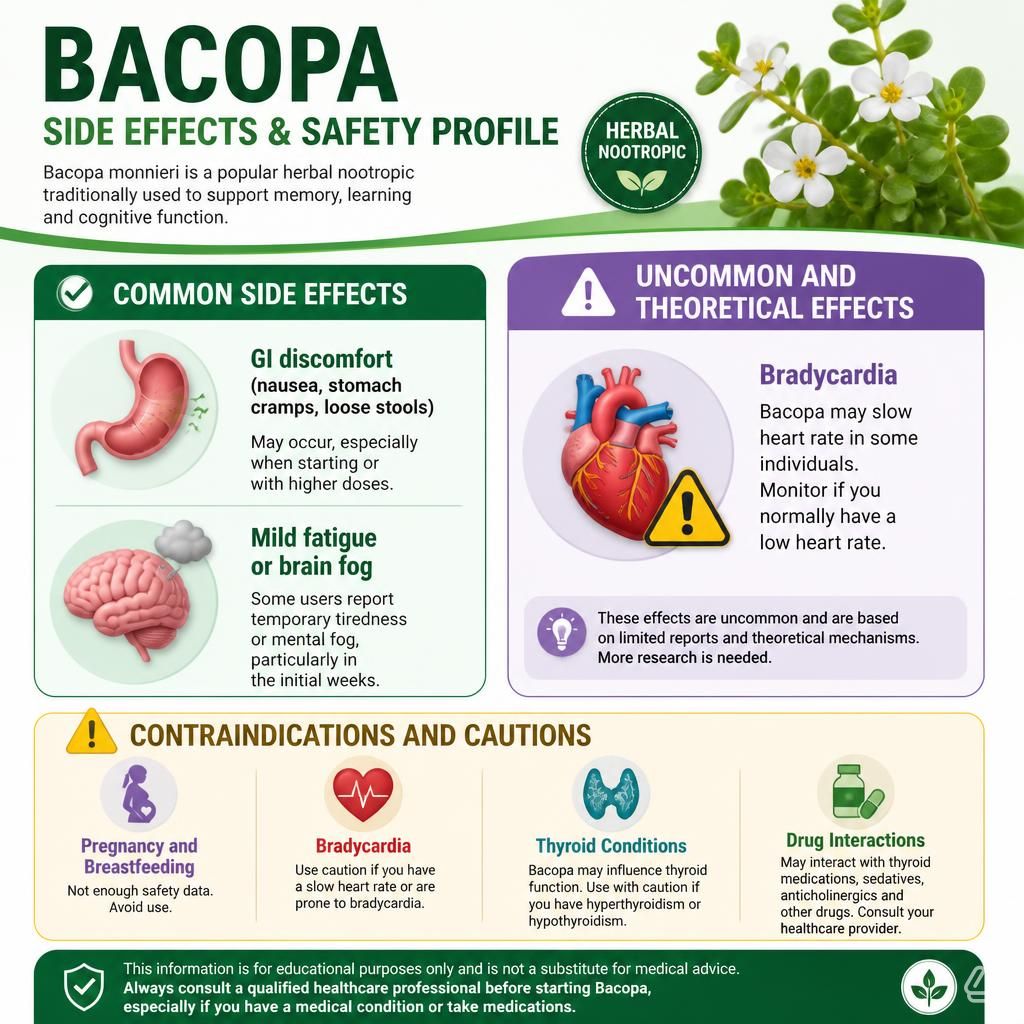
Side Effects and Safety
Bacopa has an excellent safety profile in healthy adults at standard doses. It is among the better-tolerated herbal nootropics, with most adverse effects being mild, transient, and manageable. Here is the honest picture:
Common — Mild and Typically Transient
- GI discomfort: Nausea, stomach cramps, and loose stools are the most commonly reported side effects, typically occurring in the first 1–2 weeks of use. Taking Bacopa with a full meal significantly reduces GI symptoms. For the majority of users, GI side effects resolve entirely within 2–3 weeks of continued use.
- Mild fatigue or “brain fog”: Some users report initial drowsiness or mental slowing in the first 2–4 weeks — consistent with the adaptogenic calming mechanism described above. This is typically transient and resolves as the compound’s cognitive benefits emerge.
Uncommon and Theoretical
- Bradycardia (slowed heart rate): A theoretical concern arising from Bacopa’s cholinergic activity. The cholinergic system can reduce heart rate, and this effect has been noted in preclinical data. It has not been documented as a clinical problem in human trials at standard doses, but warrants caution in individuals with pre-existing bradycardia or those taking medications that slow heart rate.
⚠ Contraindications and Cautions — Read Before Starting
- Pregnancy and breastfeeding: Insufficient safety data exists. Avoid during pregnancy and lactation — this is a firm recommendation, not a conservative precaution.
- Bradycardia or heart rate-related conditions: Consult a qualified healthcare professional before use. The cholinergic mechanism warrants individual assessment.
- Thyroid conditions: Older literature raised the possibility of thyroid effects; this has not been confirmed in well-designed human trials, but individuals with thyroid conditions or on thyroid medications should discuss with their prescriber before starting.
- Drug interactions — consult your prescriber if taking: Thyroid medications, anticholinesterase medications (used in Alzheimer’s treatment — Bacopa may potentiate effects unpredictably), sedatives or CNS depressants (additive calming effects), or calcium channel blockers.
For the large majority of healthy adults without the above conditions or medications, Bacopa at 300mg/day standardised extract is well-tolerated and carries a low adverse-event burden — consistent across published clinical trials.
Choosing a Quality Bacopa Supplement
The supplement market for Bacopa varies enormously in quality, and choosing incorrectly means you may spend 12 weeks consuming a product that never had a realistic chance of working. Here is what separates a therapeutic-grade product from the majority of commercial offerings:
| Factor | What to Look For | Red Flags |
|---|---|---|
| Standardisation | Explicitly states “standardised to 55% bacosides” — this is the non-negotiable benchmark | No percentage stated; vague “bacopa extract” without specification |
| Form | Standardised extract — consistent active compound levels | Raw Bacopa powder — unpredictable bacoside content |
| Dose per serving | 300mg of standardised extract per serving (not 300mg of powder) | 50–100mg in a multi-ingredient blend — typically sub-therapeutic |
| Third-party testing | NSF Certified, USP Verified, Informed Sport, or high Labdoor rating | No third-party verification; no certificate of analysis available |
| Heavy metal testing | Certificate of Analysis confirming absence of heavy metals (lead, arsenic, mercury, cadmium) | No CoA available; no mention of heavy metal testing for Indian-sourced botanicals |
⚠ Common Underdosing Warning
Many popular “nootropic blends” and cognitive supplement stacks include Bacopa at 50–100mg — a fraction of the 300mg therapeutic threshold established by human clinical trials. These doses are not backed by evidence of efficacy and are unlikely to produce meaningful results. Always check the per-ingredient dose in multi-ingredient products, not just the headline claims.
➜ Related: How to Read a Supplement Label — A Plain-English Guide
➜ Related: How to Read a Supplement Study (Without a PhD)
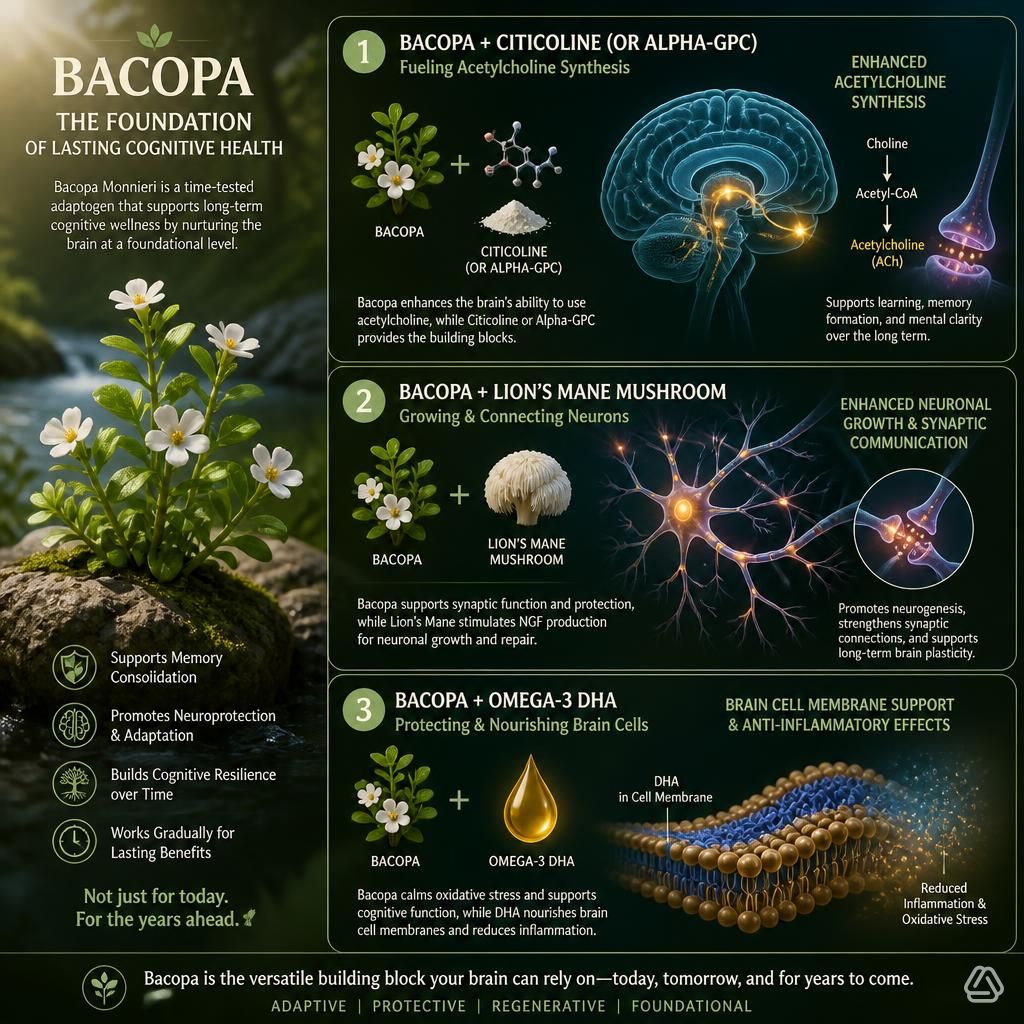
Bacopa In a Stack — How It Fits
Bacopa is best understood as a foundational, long-term element of a cognitive stack — not a short-term performance booster. Its mechanisms are complementary rather than overlapping with most other evidence-supported nootropics, making it a versatile building block. The most synergistic combinations:
Bacopa + Citicoline or Alpha-GPC
Citicoline and Alpha-GPC are direct precursors to acetylcholine. Given Bacopa’s support for choline acetyltransferase (the enzyme synthesising acetylcholine), adding a cholinergic precursor amplifies the cholinergic support available. This is one of the most logically coherent combinations for memory and attention, with both compounds acting on the same downstream system through complementary upstream pathways.
Bacopa + Lion’s Mane Mushroom
This is a particularly compelling long-term pairing. Lion’s Mane operates primarily through stimulation of Nerve Growth Factor (NGF) — supporting neurogenesis and neuronal maintenance. Bacopa operates primarily through synaptic kinase modulation and LTP enhancement. These are complementary neuroplasticity mechanisms: Lion’s Mane builds and maintains the neural architecture; Bacopa enhances the efficiency of synaptic communication within it. Together, they represent a strong foundation for long-term cognitive health.
Bacopa + Omega-3 DHA
DHA is the primary structural fatty acid of brain cell membranes and has well-established anti-inflammatory and neuroprotective effects. As a fat-soluble compound, Bacopa’s absorption is also enhanced when co-administered with fatty acids. Taking Bacopa with a fish oil or algal DHA supplement with breakfast achieves dual goals: improved Bacopa absorption and complementary anti-inflammatory neuroprotection.
➜ Related: Lion’s Mane Mushroom — Complete Evidence Review
➜ Related: The Complete Guide to Nootropic Stacking for Beginners
➜ Related: The WellnessWays Brain Clarity Foundation Protocol
Frequently Asked Questions
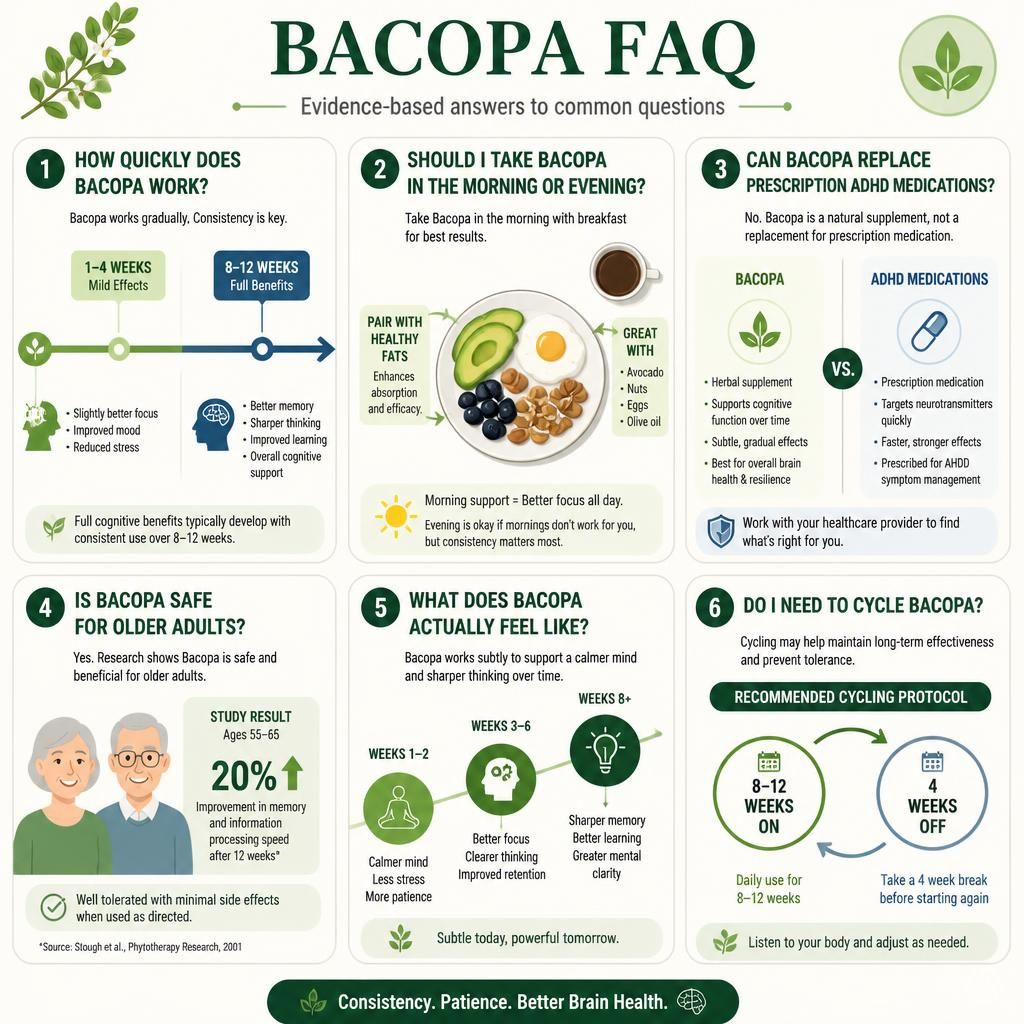
Q: How quickly does Bacopa work?
Bacopa requires 8–12 weeks of consistent daily use before its primary cognitive benefits are fully realised. Some users notice a mild anti-anxiety or calming effect within the first 1–4 weeks — this is real and is part of the compound’s mechanism — but meaningful memory improvements are a 12-week project. Expecting immediate cognitive results is the single most common reason people abandon Bacopa prematurely, before the compound has had any realistic chance to work.
Q: Should I take Bacopa in the morning or evening?
Morning with breakfast is the most studied and most practical approach. The critical rule is to always take Bacopa with food — it is fat-soluble, and taking it on an empty stomach both reduces absorption and increases the likelihood of GI discomfort. If your breakfast includes a healthy fat source (eggs, avocado, nut butter, full-fat yoghurt), absorption is optimised further.
Q: Can Bacopa replace prescription ADHD medications?
No. Bacopa has documented cognitive benefits for memory consolidation and anxiety reduction through adaptogenic and neuroplasticity mechanisms. These mechanisms are entirely different in nature and significantly lower in potency than the dopaminergic and noradrenergic mechanisms of prescription stimulants used for ADHD. Bacopa should never be used as a replacement for prescribed medications without the explicit involvement and approval of a qualified healthcare professional. These are not comparable interventions.
Q: Is Bacopa safe for older adults?
Yes — with the usual caveats around medications. Multiple clinical trials have been conducted specifically in adults aged 55–65 and older, showing Bacopa to be well-tolerated and cognitively beneficial in older populations. The Morgan & Stevens (2010) study in adults aged 65+ demonstrated significant improvements in working memory and attention without notable adverse events. For older adults on multiple medications, a brief conversation with a pharmacist or prescriber about interactions is always prudent.
Q: What does Bacopa actually feel like?
This is one of the most useful questions to answer honestly. In the first few weeks, most users describe a mild calming, slightly grounding quality — reduced stress reactivity, less mental noise, possibly slightly reduced mental speed. It does not feel like a stimulant, caffeine, or anything with an acute “on” sensation. By weeks 8–12, the characteristic experience reported by consistent users is more subtle but more meaningful: information learned seems to stick better, recall feels less effortful, and mental clarity has a “cleaner” quality. It is a background improvement rather than a foreground effect — which is both its most distinguishing feature and its most commonly misunderstood one.
Q: Do I need to cycle Bacopa?
Cycling is not definitively required by published evidence, but is a reasonable approach for long-term use. A common protocol is 8–12 weeks on, 4 weeks off. For your first protocol (a single 12-week course), cycling is not necessary. If you plan to use Bacopa as an ongoing, multi-year supplement, the cycling approach is a sensible precaution — and has historical precedent in Ayurvedic use of the plant.
The Bottom Line on Bacopa Monnieri
Bacopa monnieri is one of the most evidence-supported natural cognitive enhancers available — with genuine human clinical trial data, well-characterised mechanisms, and an excellent safety profile. In a supplement space that is saturated with overpromised and underdelivered products, Bacopa’s clinical track record stands out as legitimately impressive.
Its only real demand is patience. Invest 12 weeks, take it correctly — standardised 55% bacoside extract, 300mg daily, always with food — and the research consistently shows meaningful, measurable improvements in memory consolidation and learning retention. Expect the calming effects early, and the cognitive effects later. Stick with it through the weeks when it seems like nothing is happening, because for the majority of consistent users, something genuinely is.
That is the honest case for Bacopa. No hype required.
This article is for informational purposes only and does not constitute medical advice. Consult a qualified healthcare professional before beginning any supplement protocol, particularly if you are pregnant, have a medical condition, or take prescription medications.

Published on WellnessWays.net — Brain & Cognitive Health — September 21, 2026