
The MIND Diet Brain Health — Discover What to Eat, What to Avoid, and What the Science Says
Introduction
What if the most powerful thing you could do for your long-term brain health was as simple as what you put on your plate?
The MIND Diet — short for Mediterranean-DASH Intervention for Neurodegenerative Delay — is not a weight-loss diet or a wellness trend. It is a scientifically designed eating framework developed specifically to protect the brain from cognitive decline and Alzheimer’s disease.
And the research behind it is genuinely compelling.
A landmark 2015 study from Rush University Medical Center found that people who followed the MIND Diet strictly had brains that functioned as though they were 7.5 years younger than their actual age. And those who followed it even moderately — not perfectly — still reduced their Alzheimer’s risk by 35 percent.
Strict adherence? The risk reduction climbed to 53 percent.
This is not a supplement. This is not a pharmaceutical. This is food — and it may be the most powerful brain-protective intervention available to you right now.
What Is the MIND Diet?
The MIND Diet was developed by nutritional epidemiologist Dr. Martha Clare Morris and her colleagues at Rush University, and first published in the journal Alzheimer’s and Dementia in 2015.
It is a hybrid of two well-established heart-healthy eating patterns:
- The Mediterranean Diet — rich in olive oil, fish, whole grains, fruits, vegetables and nuts
- The DASH Diet (Dietary Approaches to Stop Hypertension) — focused on reducing blood pressure through diet
Dr. Morris identified the specific elements of both diets with the strongest neuroscientific evidence behind them and combined them into a targeted brain health eating framework.
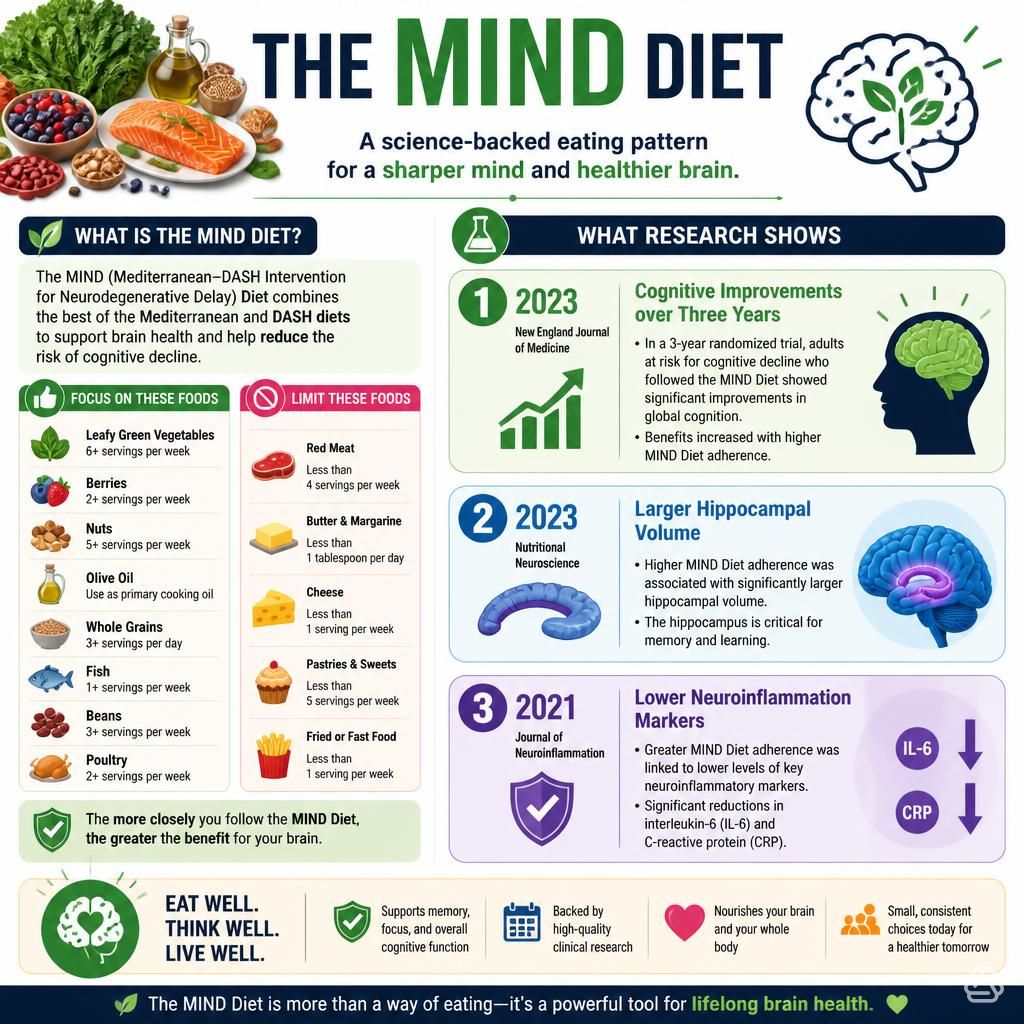
The result is 15 dietary components: 10 brain-healthy food groups to eat more of, and 5 food groups to limit.
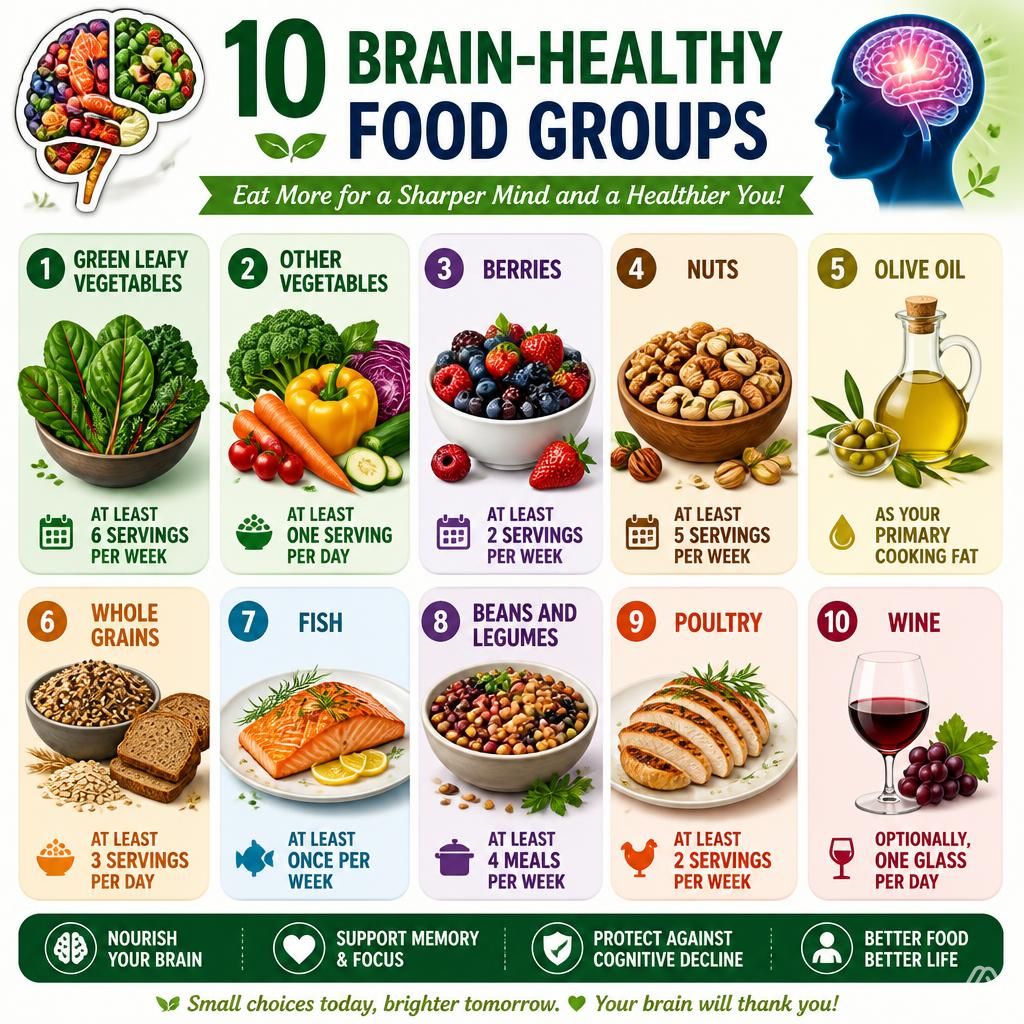
The 10 Brain-Healthy Food Groups — What to Eat MORE Of
1. Green Leafy Vegetables — At Least 6 Servings Per Week
The single most important food group in the MIND Diet. Spinach, kale, collard greens, Swiss chard, arugula, and romaine lettuce are all excellent choices.
Why? Green leafy vegetables are extraordinarily rich in folate, vitamin K, lutein, and beta-carotene — nutrients consistently associated with slower cognitive decline in population studies. A 2017 study in Neurology found that people who ate one serving of leafy greens per day had cognitive function equivalent to someone 11 years younger.
Practical target: One serving daily — a cup of raw greens or half a cup cooked.
2. Other Vegetables — At Least One Serving Per Day
Beyond leafy greens, any non-starchy vegetable counts: peppers, broccoli, carrots, tomatoes, cauliflower, onions, garlic, and more.
These vegetables deliver a broad spectrum of antioxidants and anti-inflammatory compounds that protect neurons from oxidative stress — one of the primary drivers of age-related cognitive decline.
3. Berries — At Least 2 Servings Per Week
Berries receive specific emphasis in the MIND Diet — particularly blueberries and strawberries — because of their exceptional concentration of flavonoids, a class of antioxidants with demonstrated neuroprotective effects.
A Harvard study published in the Annals of Neurology found that women who consumed two or more servings of blueberries or strawberries per week delayed cognitive aging by up to 2.5 years.
Blueberries are sometimes called “brain berries” in neuroscience circles. The nickname is earned.
4. Nuts — At Least 5 Servings Per Week
Nuts are calorie-dense but neurologically valuable. They provide healthy unsaturated fats, vitamin E, folate, and magnesium — all of which support brain function.
Walnuts deserve special mention: they are one of the richest plant-based sources of ALA omega-3 fatty acids and have been specifically linked to improved memory and cognitive flexibility. Research from UCLA found that walnut consumption was associated with significantly better memory and cognitive test scores across all age groups.
A handful per day — approximately one ounce — is all you need.
5. Olive Oil — As Your Primary Cooking Fat
Extra virgin olive oil is the cornerstone fat of the MIND Diet. It contains a compound called oleocanthal that mimics the anti-inflammatory action of ibuprofen in the brain — without the side effects.
Research published in the journal Aging Cell found that oleocanthal promotes the clearance of beta-amyloid proteins from the brain — the same toxic proteins that accumulate in Alzheimer’s disease.
Use it for sautéing, roasting, dressings, and dipping. Replace butter and vegetable oils wherever possible.
6. Whole Grains — At Least 3 Servings Per Day
Whole grains — oats, brown rice, quinoa, whole wheat bread, barley — provide steady, sustained glucose delivery to the brain. Unlike refined carbohydrates, they avoid the blood sugar spikes and crashes that contribute to brain fog and cognitive instability.
They also provide B vitamins essential for neurotransmitter synthesis and the metabolic processes that sustain neuronal energy.
7. Fish — At Least Once Per Week
Fatty fish — salmon, sardines, mackerel, tuna, herring — are the richest dietary source of long-chain omega-3 DHA, the most abundant fatty acid in the human brain.
DHA is a structural component of neuronal membranes. Adequate DHA intake supports membrane fluidity, synaptic function, and the production of neuroprotective compounds called resolvins.
The MIND Diet sets one serving per week as the minimum — more is better.
8. Beans and Legumes — At Least 4 Meals Per Week
Lentils, chickpeas, black beans, kidney beans and peas are exceptional brain foods: high in protein, fiber, folate, and low on the glycemic index.
The slow-digesting fiber in legumes supports a healthy gut microbiome — increasingly recognized as a critical regulator of brain chemistry through the gut-brain axis.
9. Poultry — At Least 2 Servings Per Week
Chicken and turkey provide lean protein and B vitamins — especially B6 and B12 — essential for neurological function. Adequate B12 is particularly critical for myelin synthesis: the protective sheath around nerve fibers that enables fast, efficient neuronal communication.
B12 deficiency is associated with memory problems, cognitive decline, and peripheral neuropathy — and it becomes increasingly common after age 50 as stomach acid production decreases.
10. Wine — Optionally, One Glass Per Day
Red wine is the most controversial element of the MIND Diet. Moderate consumption — one glass daily for women, up to two for men — is included based on evidence that resveratrol and other polyphenols in red wine may offer neuroprotective benefits.
However, the scientific community is divided on this point. If you do not currently drink alcohol, the MIND Diet’s creators explicitly state you should not start on the basis of this dietary pattern. The benefits of all other food groups substantially outweigh this optional component.
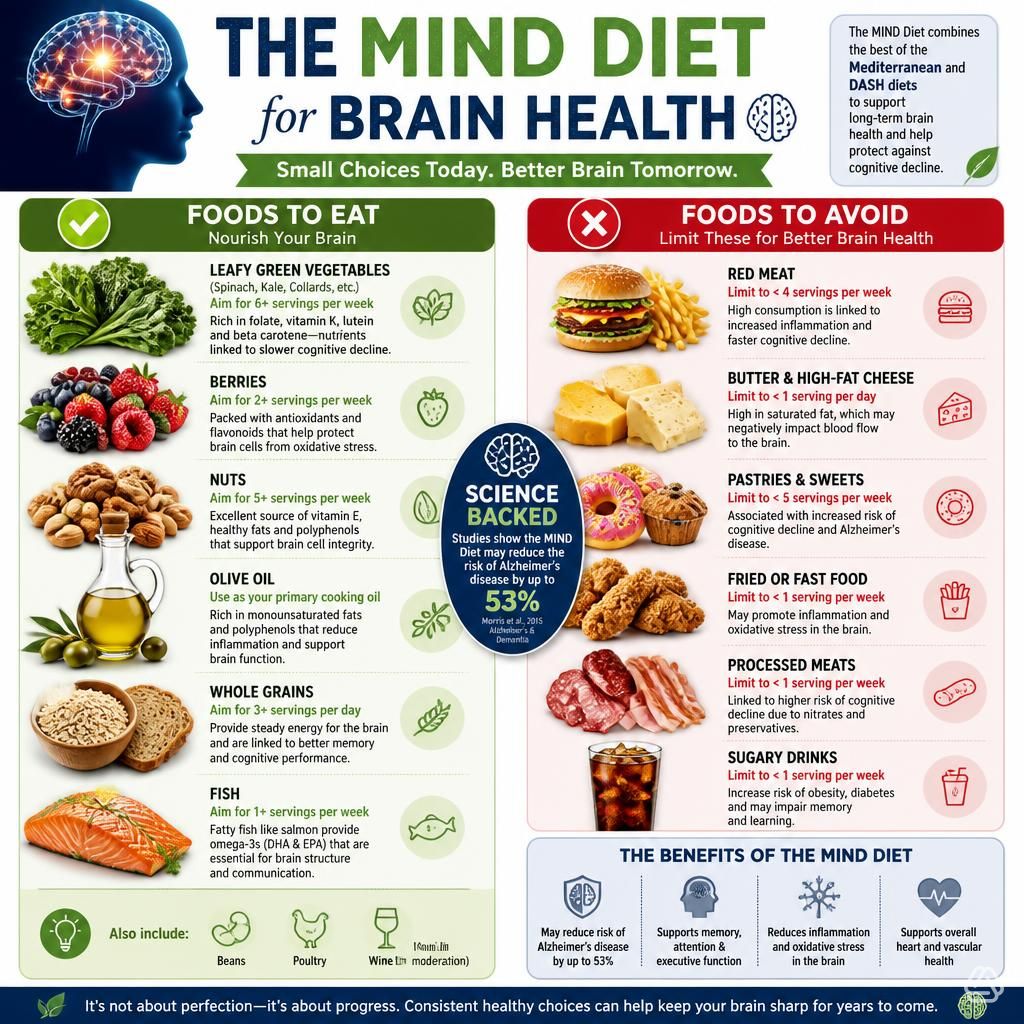
The 5 Food Groups to Limit
1. Red Meat — Fewer Than 4 Servings Per Week
Red meat is high in saturated fat, which promotes the same cardiovascular risk factors — inflammation, arterial stiffness, reduced cerebral blood flow — that elevate cognitive decline risk.
2. Butter and Margarine — Less Than 1 Tablespoon Per Day
These are the primary sources of saturated and trans fats in the typical Western diet. Research consistently links high saturated fat intake to accelerated cognitive aging.
Substitute olive oil wherever possible.
3. Cheese — Fewer Than 1 Serving Per Week
Full-fat cheese is high in saturated fat and sodium. Small amounts as flavor additions are fine — regular servings as a dietary staple are not consistent with MIND Diet principles.
4. Pastries and Sweets — Fewer Than 5 Servings Per Week
Refined sugar and refined flour cause rapid blood sugar spikes followed by crashes that destabilize neuronal energy supply and promote neuroinflammation. Ultra-processed baked goods are among the most consistently problematic foods in population studies of cognitive aging.
5. Fried or Fast Food — Less Than 1 Serving Per Week
Fried foods are typically cooked in seed oils high in omega-6 fatty acids, which — when consumed in excess relative to omega-3s — promote a systemic and neurological inflammatory state.
What Does the Research Actually Show?
Beyond the foundational 2015 Rush University study, subsequent research has continued to validate the MIND Diet:
- A 2023 study in the New England Journal of Medicine (MIND-ADMCI trial) involving 604 participants found that participants on the MIND Diet showed significantly better cognitive outcomes over a three-year follow-up
- Research published in Nutritional Neuroscience found MIND Diet adherence was associated with larger hippocampal volume — a direct measure of brain tissue preservation
- A 2021 study found MIND Diet adherence was associated with reduced neuroinflammatory markers, including lower levels of interleukin-6 and C-reactive protein
The evidence base is not perfect — nutrition science rarely is. But among dietary patterns studied for brain health, the MIND Diet has the most substantial and consistent evidence base of any eating framework currently available.
How to Get Started — Your First MIND Diet Week
You do not need to overhaul your diet overnight. The MIND Diet is designed for sustainable adoption:
Week 1 simple swaps:
- Replace cooking oil with extra virgin olive oil
- Add a handful of nuts to your afternoon snack
- Add a cup of spinach to one meal per day
- Replace one red meat meal with salmon or sardines
- Add blueberries to your morning breakfast
The 80/20 approach: Research shows that even moderate adherence — not perfection — meaningfully reduces cognitive risk. You do not need to follow the MIND Diet flawlessly to benefit from it. The researchers found statistically significant protective effects even in moderate adherers.
Start with the food groups you most enjoy and can most easily incorporate. Build consistency before you build perfection.
Conclusion
The MIND Diet is the most evidence-based dietary framework for long-term brain health currently available. It is not a trend — it is the product of serious neuroscience research and replicated findings across multiple large-scale studies.
The question is not whether the evidence supports it. The question is whether you will start.
Your brain is building its future today — in every meal, every snack, every choice. The MIND Diet is not about restriction. It is about giving your brain the specific nutrients it was designed to run on.
Want to go deeper? [Read our Mediterranean Diet for Brain Health guide →] | [Explore our Best Supplements for Mental Clarity guide for evidence-based add-ons to your MIND Diet →]
Disclaimer: This article is for informational purposes only and does not constitute medical advice. Always consult a qualified healthcare professional before making significant dietary changes
Not sure what’s causing your brain fog? Take our free 3-minute Root Cause Quiz and get your personalized action plan! → [Take The Quiz]