
GLP-1 Medications Explained: What They Are, How They Work, and Who They’re For
GLP-1 medications have dominated health headlines for the past two years — and with good reason. But most coverage sits at one of two unhelpful extremes: either breathless proclamations of a “miracle drug” that will solve the obesity crisis overnight, or dismissive warnings about dangerous shortcuts and side effects. Neither framing serves adults who are genuinely trying to make an informed decision about their metabolic health.
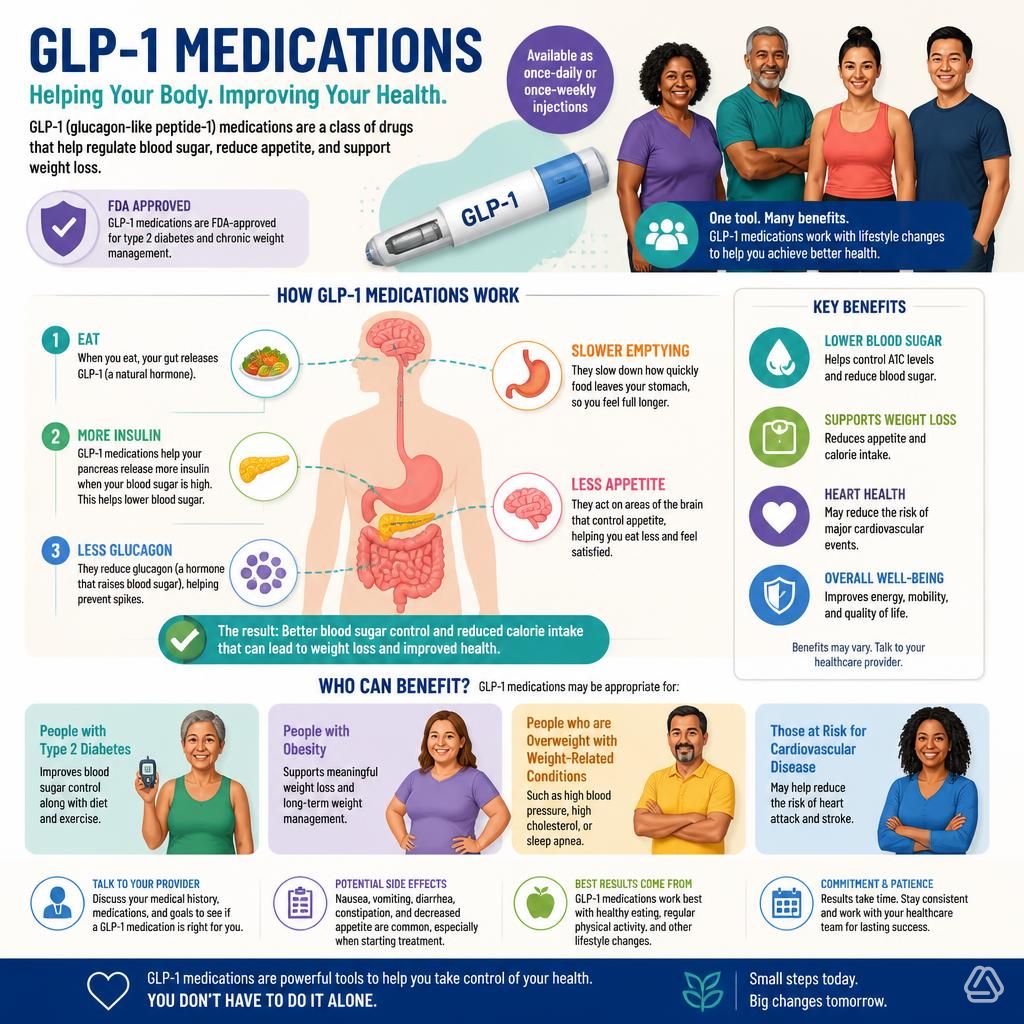
This article cuts through both extremes with a clear, evidence-based explanation of what GLP-1 medications are, exactly how they work, and who they are realistically designed to help.
What Is GLP-1?
GLP-1 stands for glucagon-like peptide-1, a hormone produced naturally by specialized cells in the small intestine in response to food consumption. When you eat, your gut releases GLP-1 into the bloodstream, where it performs several coordinated functions: it stimulates the pancreas to release insulin in proportion to blood glucose levels, it suppresses glucagon (a hormone that raises blood sugar), it signals the hypothalamus in the brain that you are full and satisfied, and it slows gastric emptying to prolong the sensation of fullness after a meal.
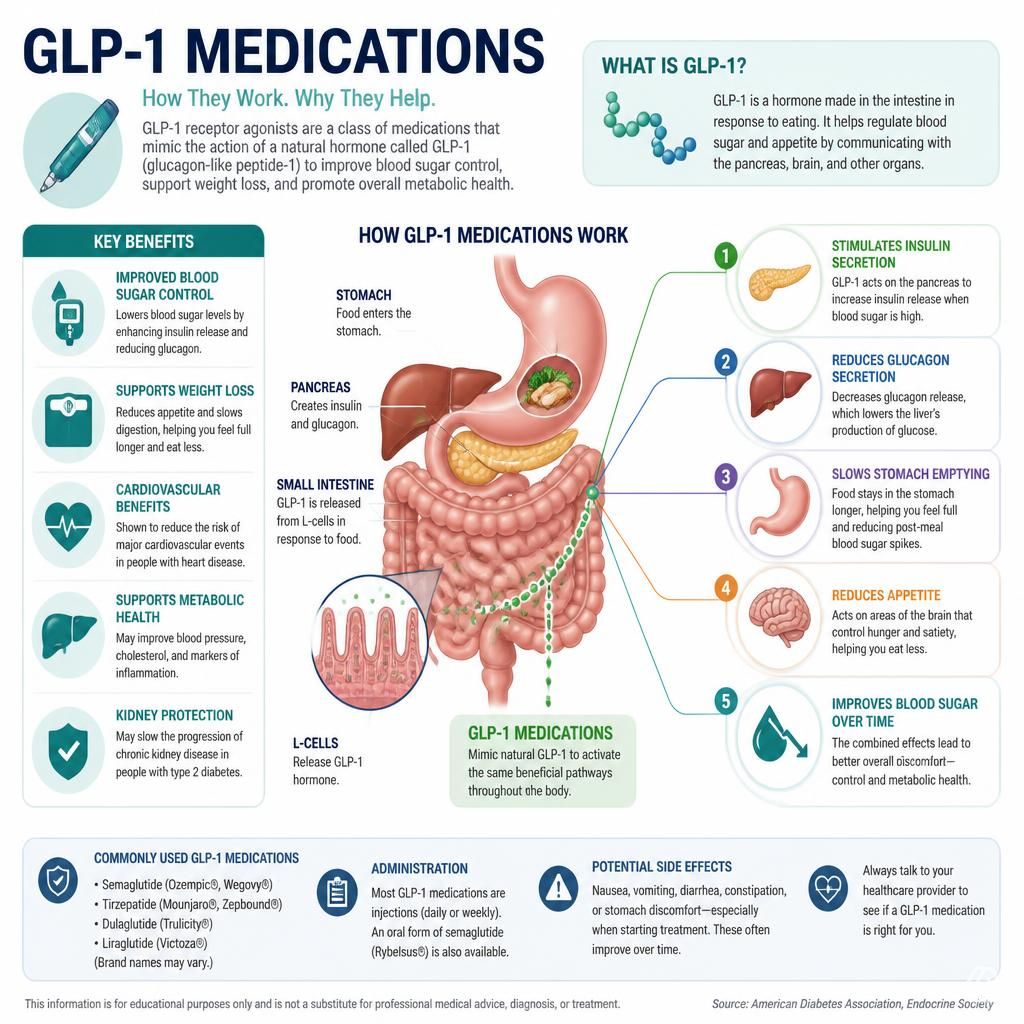
GLP-1 receptor agonist medications work by mimicking and amplifying these natural signals — binding to the same receptors your body’s own GLP-1 would activate, but at greater intensity and for longer duration than the naturally produced hormone achieves on its own.
The Major GLP-1 Medications Currently Available
The GLP-1 medication landscape has evolved rapidly. Below is a factual summary of the primary agents currently available in the United States. Brand names, approvals, and formulations are subject to change — always consult a licensed healthcare provider for current prescribing information.
| Active Ingredient | Diabetes Brand | Weight Loss Brand | Notes |
|---|---|---|---|
| Semaglutide | Ozempic (injectable) | Wegovy (injectable) | Also available as oral tablet (Rybelsus) for diabetes management |
| Tirzepatide | Mounjaro (injectable) | Zepbound (injectable) | Dual GIP/GLP-1 receptor agonist — activates two distinct hormone pathways for enhanced efficacy |
| Liraglutide | Victoza (injectable) | Saxenda (injectable) | Earlier-generation GLP-1 agonist; daily injection vs. weekly for semaglutide/tirzepatide |
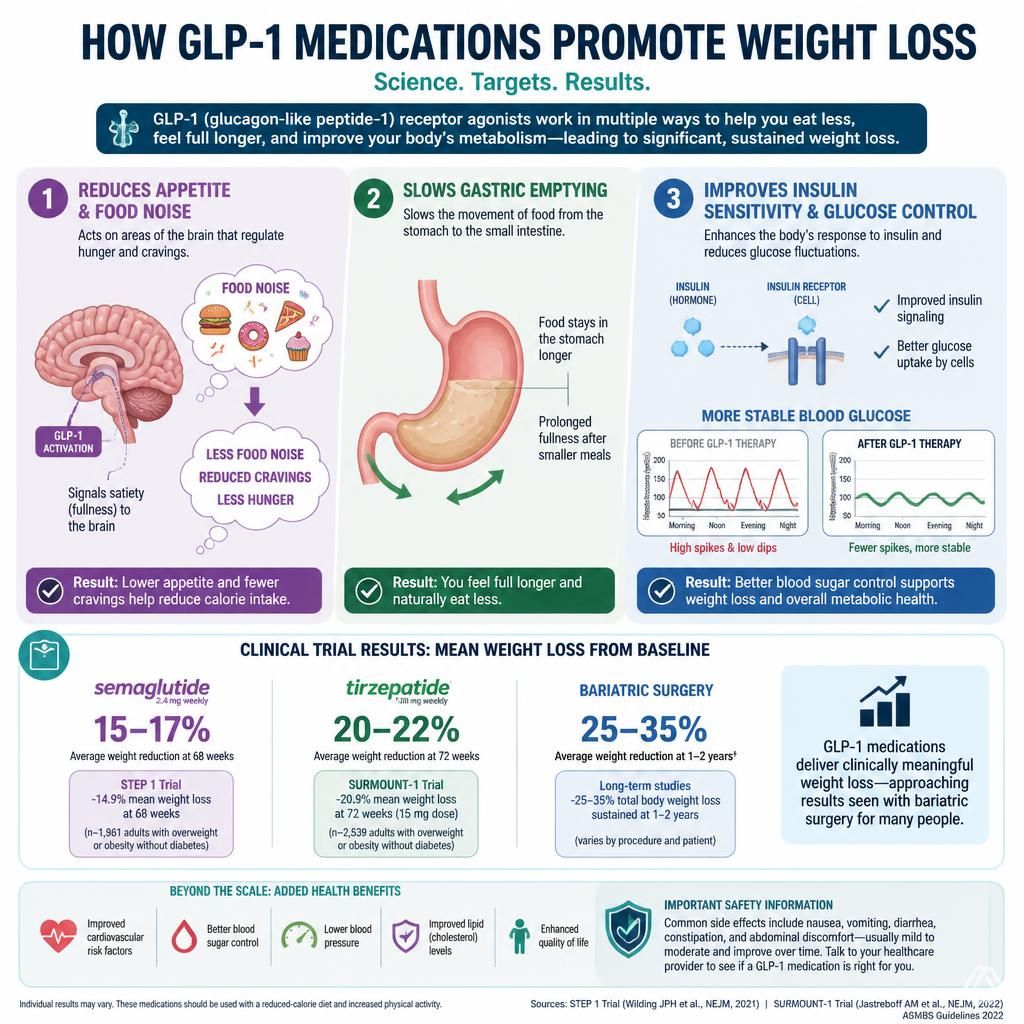
The weight loss produced by GLP-1 receptor agonists operates through three primary and synergistic mechanisms. First, they dramatically reduce appetite and what many patients describe as “food noise” — the persistent, intrusive mental preoccupation with food that many overweight adults have struggled with for decades. Second, by slowing gastric emptying, they prolong the physical sensation of fullness after smaller meals, making caloric reduction feel natural rather than like active deprivation. Third, they improve insulin sensitivity, reducing the blood glucose fluctuations and compensatory insulin spikes that drive fat storage and contribute to cravings. The cumulative effect is significant: clinical trials of semaglutide (the STEP program) reported mean body weight reductions of 15–17% in adults with obesity over 68 weeks, while tirzepatide trials (SURMOUNT program) demonstrated reductions in the range of 20–22% — outcomes that had previously been achievable only with bariatric surgery.
How GLP-1 Medications Drive Weight Loss
Beyond Weight Loss — The Emerging Benefits
For many patients and clinicians, the non-weight benefits of GLP-1 medications are becoming as compelling as the weight loss itself.
The landmark SELECT trial — a large-scale cardiovascular outcomes study of semaglutide in adults with obesity and pre-existing cardiovascular disease — demonstrated a 20% reduction in major adverse cardiovascular events (heart attack, stroke, cardiovascular death) compared to placebo, a result that has significantly expanded clinical interest in these medications beyond metabolic management alone. GLP-1 agonists also consistently improve blood sugar stabilization, reduce markers of fatty liver disease (NAFLD/NASH), and show promise for blood pressure reduction. Perhaps most intriguing for the WellnessWays audience: early research is revealing that GLP-1 receptors are expressed throughout the brain, and preliminary studies suggest GLP-1 receptor agonist therapy may reduce neuroinflammation, support dopaminergic signaling, and produce measurable improvements in cognitive function — a potential mechanism connecting these medications to the brain fog-weight relationship we explored in a recent article. [INTERNAL LINK: Could Your Weight Be Causing Your Brain Fog?]
Who Typically Qualifies for GLP-1 Therapy?
GLP-1 receptor agonists approved specifically for weight management (rather than just diabetes) are generally indicated for adults meeting specific clinical criteria. The following represents general guideline information — individual eligibility must be determined by a licensed healthcare provider based on your complete health history:
- BMI of 30 or greater (classified as obesity), or
- BMI of 27 or greater in the presence of at least one weight-related comorbidity (such as type 2 diabetes, hypertension, or dyslipidemia)
- Type 2 diabetes or prediabetes (for specific formulations approved for glycemic management)
- Adults who have not achieved clinically meaningful results from sustained diet and exercise efforts alone
It is worth noting that telehealth providers have significantly expanded access to GLP-1 consultations and prescriptions for qualifying adults, in many cases eliminating the need for an in-person physician visit and reducing both the logistical and cost barriers that previously limited access to metabolic medicine for many patients.
How to Find Out If You Qualify
The emergence of telehealth has genuinely transformed the path to GLP-1 evaluation. Qualifying adults can now connect with a licensed provider, complete a comprehensive health history review, and receive a determination of candidacy — all from home.

There is no waiting room, no referral required in most cases, and no need to justify your weight struggles to a provider who has five minutes for you. If you have been managing your weight conscientiously for years without the results your effort deserves, you owe it to yourself to at least understand whether a medically supervised GLP-1 program is appropriate for your situation. Exploring this option is not giving up — it is applying the best available tools to a problem that has a genuine biological component for many adults.
Brain Fog & Weight — More Connected Than You Think
If you are also experiencing brain fog alongside your weight concerns, the two may be more connected than you think. Find out your Brain Fog Root Cause here — a free 3-minute quiz that identifies your primary cognitive driver and gives you a personalized action plan.
Medical Disclaimer: This article is for educational and informational purposes only and does not constitute medical advice, diagnosis, or treatment recommendations. GLP-1 medications are prescription drugs that carry potential risks and side effects. Always consult a licensed healthcare professional to determine if any treatment is appropriate for your individual health situation. Do not start, stop, or modify any prescription medication without direct guidance from a qualified provider.