
Top 5 Natural Nootropics That Work, Actually (According to Science)
The supplement aisle is overwhelming — dozens of products promising sharper focus, better memory, and mental clarity. But which ones actually have science behind them? This article cuts through the noise and focuses on 5 natural nootropics with genuine research supporting their use in adults. If you’ve ever stared at a wall of brain-support supplements and had absolutely no idea where to start, this is your guide to the ones that have earned their place on the shelf.
What Is a Nootropic?
A nootropic is any substance that supports cognitive function — memory, focus, mental energy, processing speed — without causing significant side effects. “Natural nootropics” refers specifically to plant-based, fungal, or nutritional compounds as opposed to pharmaceutical cognitive enhancers like Adderall or Modafinil. The word itself comes from the Greek noos (mind) and trope (turning) — substances that literally turn the mind toward better performance.
The 5 Natural Nootropics With Real Science Behind Them
1. Lion’s Mane Mushroom (Hericium erinaceus)
Lion’s Mane is one of the most compelling natural nootropics for adults over 45 because of its unique mechanism: it stimulates the production of Nerve Growth Factor (NGF), a protein essential for the growth, maintenance, and repair of neurons, as well as the integrity of the myelin sheath that insulates nerve fibers.

A landmark 2009 double-blind, placebo-controlled study by Mori et al. showed significant improvements in cognitive scores in older adults taking Lion’s Mane extract over 16 weeks — with scores declining again after supplementation stopped, suggesting an active rather than placebo effect. This makes it particularly promising for age-related cognitive decline, where NGF production naturally decreases. Best applications: memory, mental clarity, and overall nerve health. Lion’s Mane is one of the few nootropics with a plausible mechanism that directly addresses the structural deterioration of aging neural tissue.
2. Bacopa Monnieri
Bacopa has been used in Ayurvedic medicine for centuries, and modern clinical science has largely vindicated its reputation as a memory herb. Its key mechanisms involve the modulation of acetylcholine — the neurotransmitter most directly associated with memory encoding and retrieval — and the reduction of cortisol, the stress hormone that actively impairs hippocampal function.

Multiple randomized controlled trials have shown Bacopa to improve memory consolidation, reduce anxiety-driven cognitive impairment, and support sustained attention. The most important thing to know before starting Bacopa: it takes 8–12 weeks of consistent use to show its full effect, and many people abandon it prematurely. Patience is not optional — it’s part of the protocol.
3. Rhodiola Rosea
Rhodiola is classified as an adaptogen — a category of herbs that help the body modulate its physiological response to stress — and it is arguably the most well-researched adaptogen for mental performance specifically.

Its primary mechanisms involve the regulation of cortisol and the optimization of dopamine and norepinephrine signaling, which together support mental energy and mood stability under pressure. Clinical studies show reduced mental fatigue, improved concentration under cognitively demanding conditions, and faster information processing speed with Rhodiola supplementation. It is particularly valuable for the stress-driven brain fog profile, where chronic cortisol elevation is the primary culprit. [Internal Link: The Cortisol-Brain Fog Connection]
4. Citicoline (CDP-Choline)
Citicoline is one of the most bioavailable forms of choline available — and choline is a precursor to acetylcholine, the brain’s primary neurotransmitter for attention, working memory, and learning.
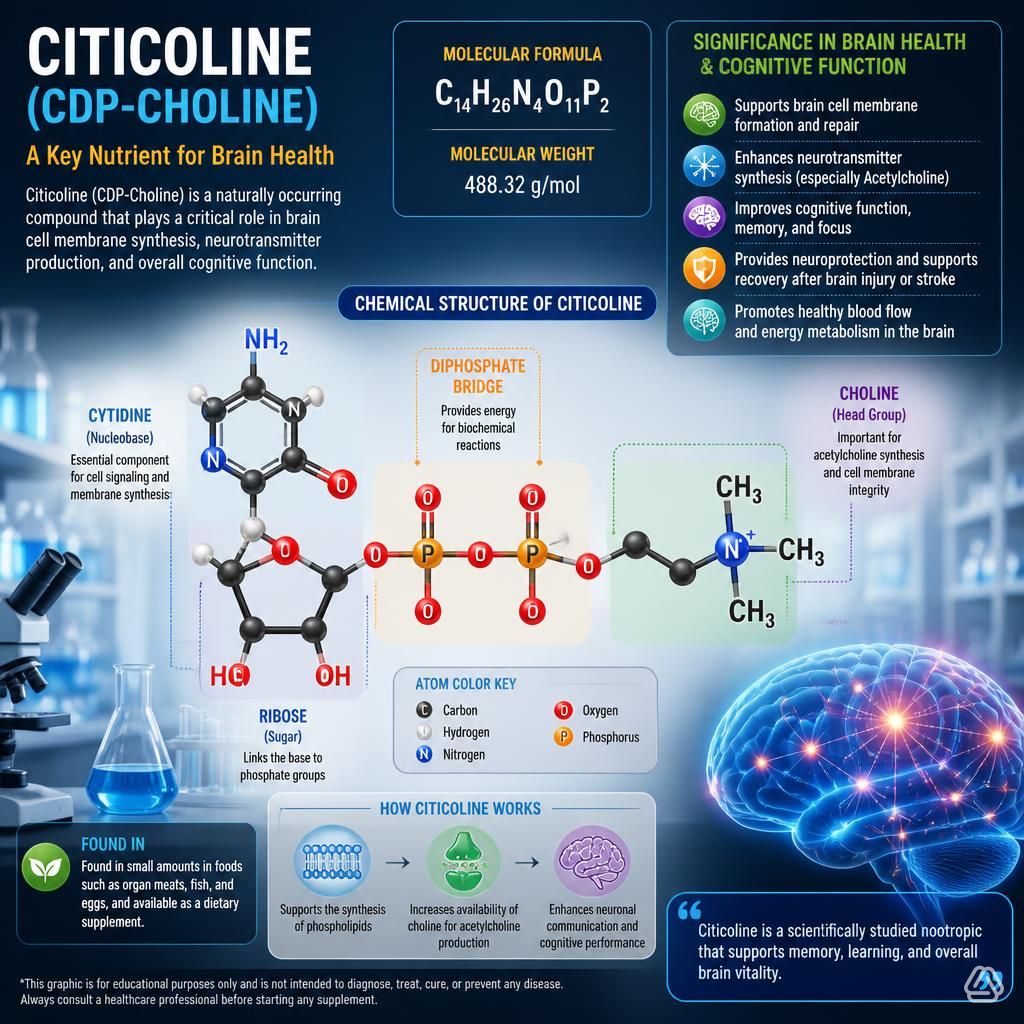
Research demonstrates that citicoline supplementation improves attention, working memory performance, and the integrity of neuronal cell membranes — the structural scaffolding of cognitive function. It has also shown early promise in supporting cognitive recovery after brain injury. The sobering reality is that most adults over 45 who do not regularly consume organ meats or large amounts of eggs are chronically under-supplied in dietary choline — making citicoline supplementation a high-value, low-risk intervention for many people.
5. Phosphatidylserine
Phosphatidylserine is a phospholipid — a type of fat — that forms a significant component of neuronal cell membranes, directly influencing their fluidity and signaling efficiency. It holds the remarkable distinction of being one of the only natural compounds to receive an FDA-qualified health claim status related to cognitive function, specifically for its potential to reduce the risk of cognitive dysfunction in older adults.
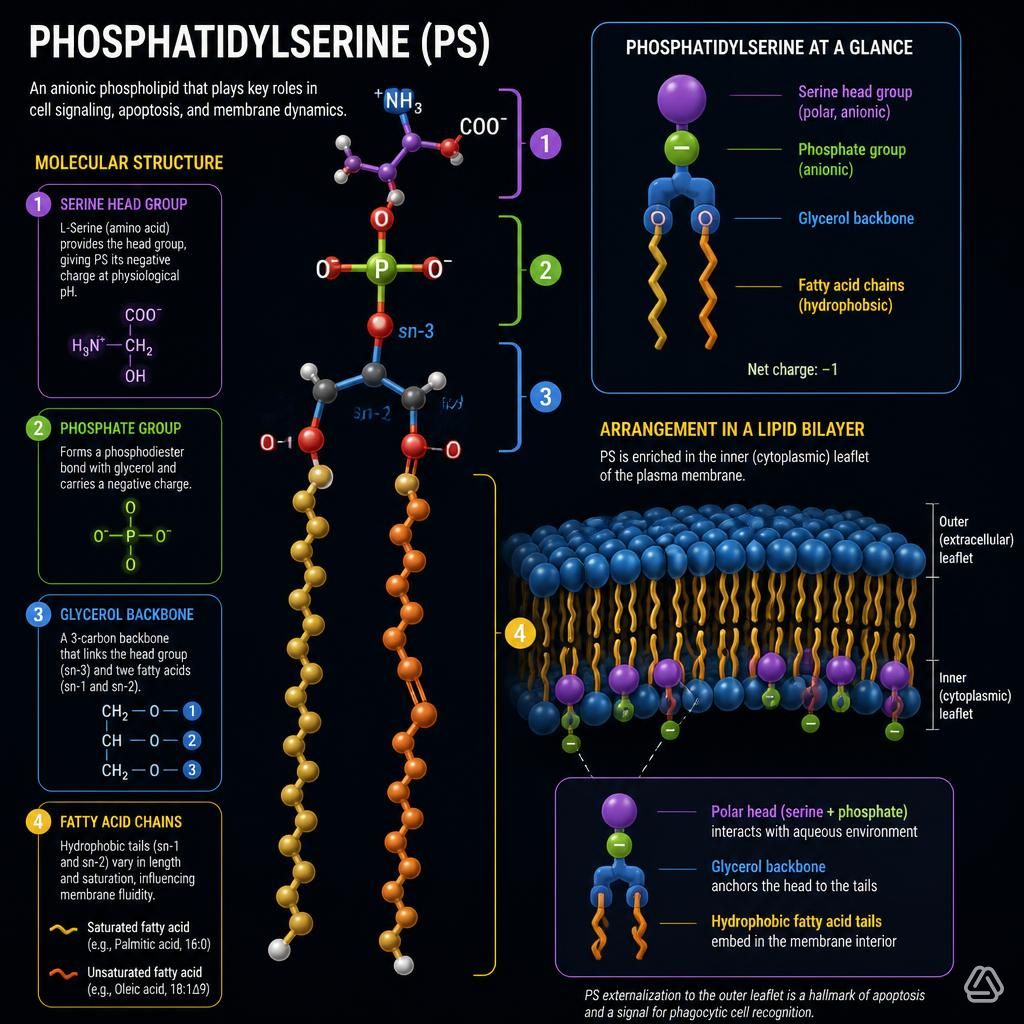
Multiple studies have demonstrated improvements in memory, attention span, and mental flexibility in aging populations taking phosphatidylserine. It appears particularly effective for the specific type of cognitive decline associated with normal aging rather than pathological neurodegenerative disease — which makes it well-suited for the 45–65 age group.
How to Choose the Right Nootropic for YOUR Brain Fog Type
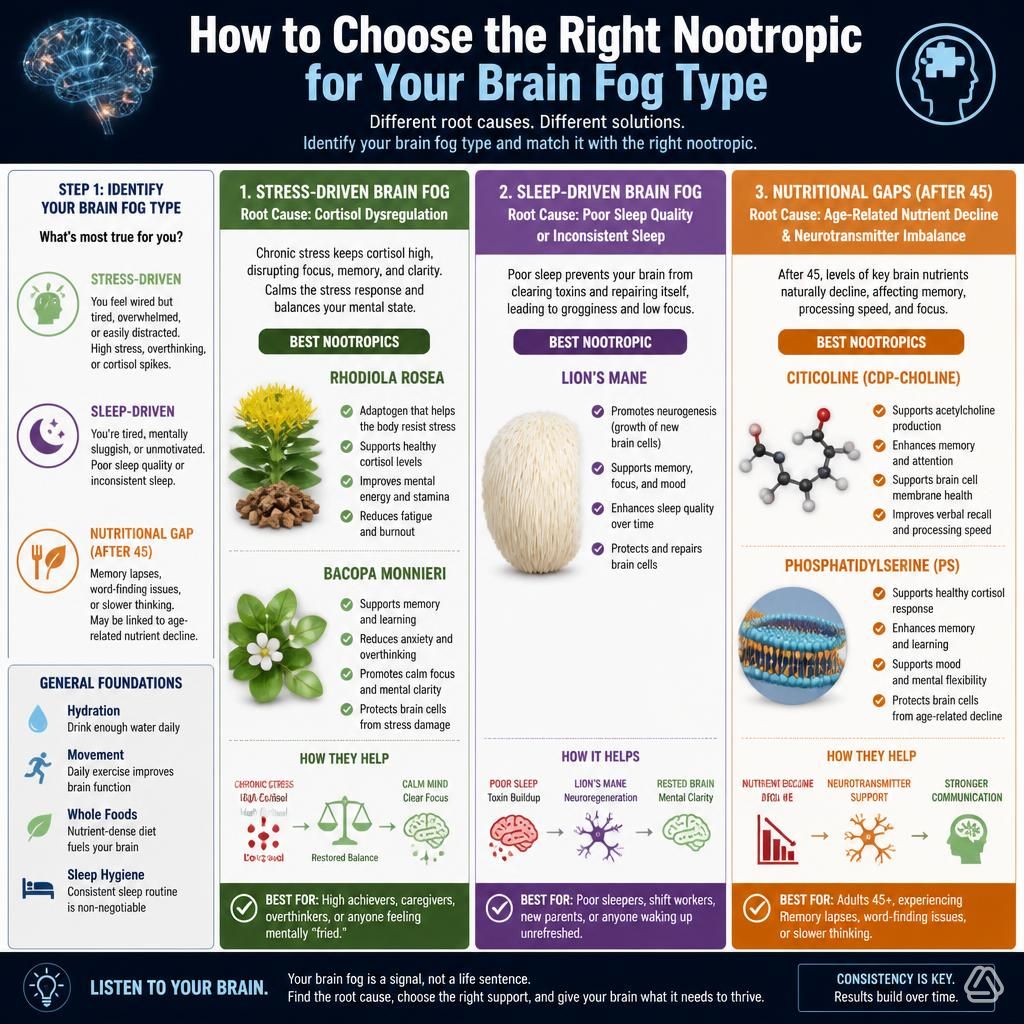
This is the piece of the puzzle that most supplement marketing ignores entirely: different root causes of brain fog respond meaningfully better to different nootropics, and choosing the wrong one can lead to disappointment that’s not about the supplement’s efficacy — it’s about the mismatch. Stress-driven brain fog — the kind that comes with anxiety, overwhelm, and chronic tension — responds best to Rhodiola Rosea or Bacopa Monnieri, both of which directly target cortisol dysregulation. Sleep-driven fog, where cognitive impairment is primarily a result of inadequate neural repair and glymphatic clearance during sleep, may benefit most from Lion’s Mane’s neuroregeneration support. If your brain fog stems from nutritional gaps — which is very common after 45 — Citicoline or Phosphatidylserine directly address the structural and neurotransmitter deficits most likely driving your symptoms. Identifying the root cause first isn’t just helpful — it’s the difference between a nootropic that changes your life and one that sits in your cabinet for six months.
🧠 What’s Driving YOUR Brain Fog?
The fastest path to the right nootropic is identifying your root cause first. Take the free Brain Fog Root Cause Quiz at WellnessWays — your result will point you toward the interventions most relevant to your specific brain fog profile, so you’re not guessing in the supplement aisle.
Be sure to also check out the Best Natural Nootropics for Focus and Memory
Medical Disclaimer: This article is for educational and informational purposes only and does not constitute medical advice. Always consult a qualified healthcare professional before making changes to your health routine.