
The Cortisol-Brain Fog Connection: How Chronic Stress Steals Your Clarity AND Packs On Weight
Most adults know, in a vague way, that stress isn’t good for them. They’ve heard the advice — meditate more, breathe deeply, unplug occasionally.
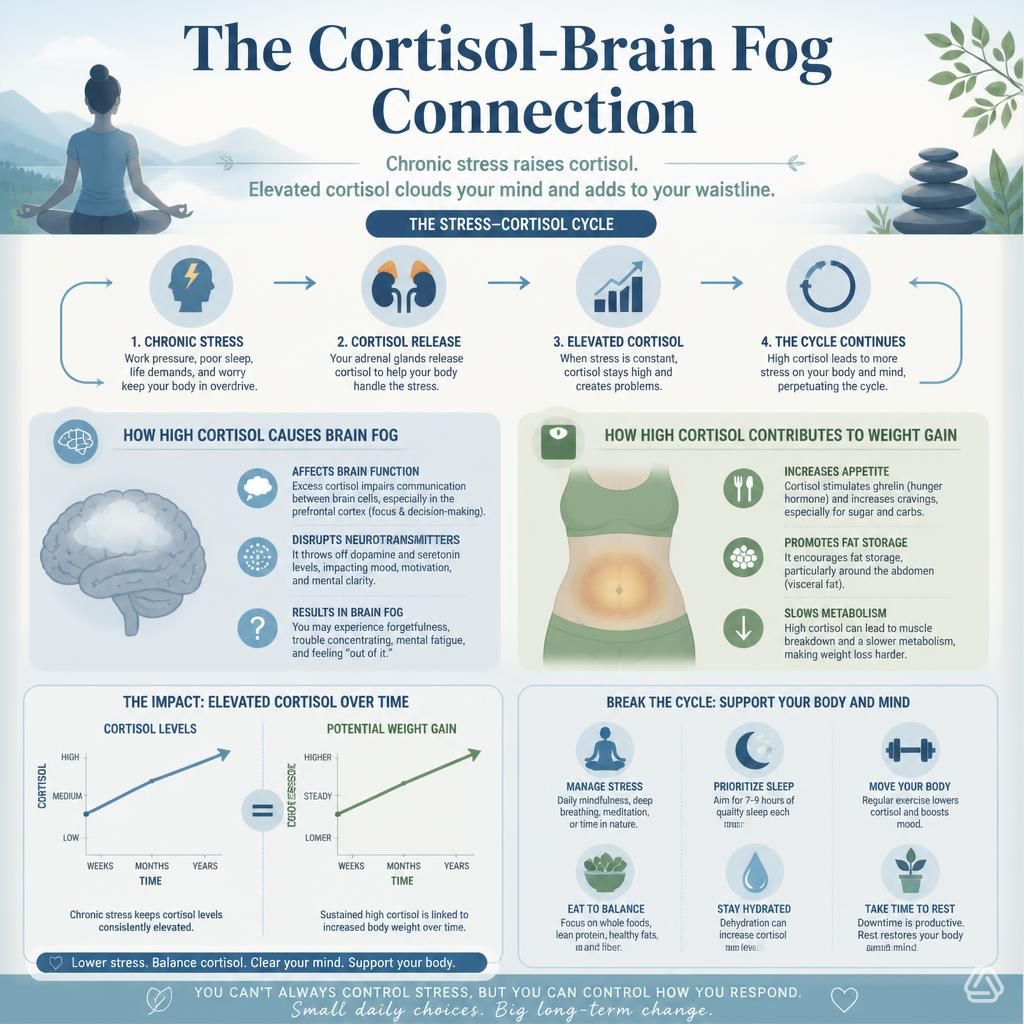
What very few people understand is the specific, measurable, physical damage that chronically elevated cortisol inflicts on the brain and the body simultaneously — changes that show up on brain scans, in bloodwork, and on the scale in ways that are entirely predictable once you know the mechanism. This article is the explanation most people never receive: a clear, science-grounded account of exactly what chronic stress is doing to your cognitive clarity and your metabolism, and why addressing it is not optional if you want either to improve.
Cortisol 101 — Your Body’s Built-In Alarm System
Cortisol is a glucocorticoid hormone produced by the adrenal glands in response to stress signals from the brain’s hypothalamic-pituitary-adrenal (HPA) axis. In its intended role, it is essential and even beneficial: it sharpens attention, mobilizes glucose for quick energy, suppresses non-essential functions, and prepares the body to respond to acute physical threats. The problem is not cortisol itself — the problem is cortisol that never turns off. In the context of modern chronic stress (work pressure, financial anxiety, relationship strain, digital overstimulation), the HPA axis fires repeatedly without the resolution that physical action provides, leaving cortisol chronically elevated in ways the human body was never designed to sustain.
What Chronic Cortisol Does to Your Brain
It Shrinks Your Prefrontal Cortex
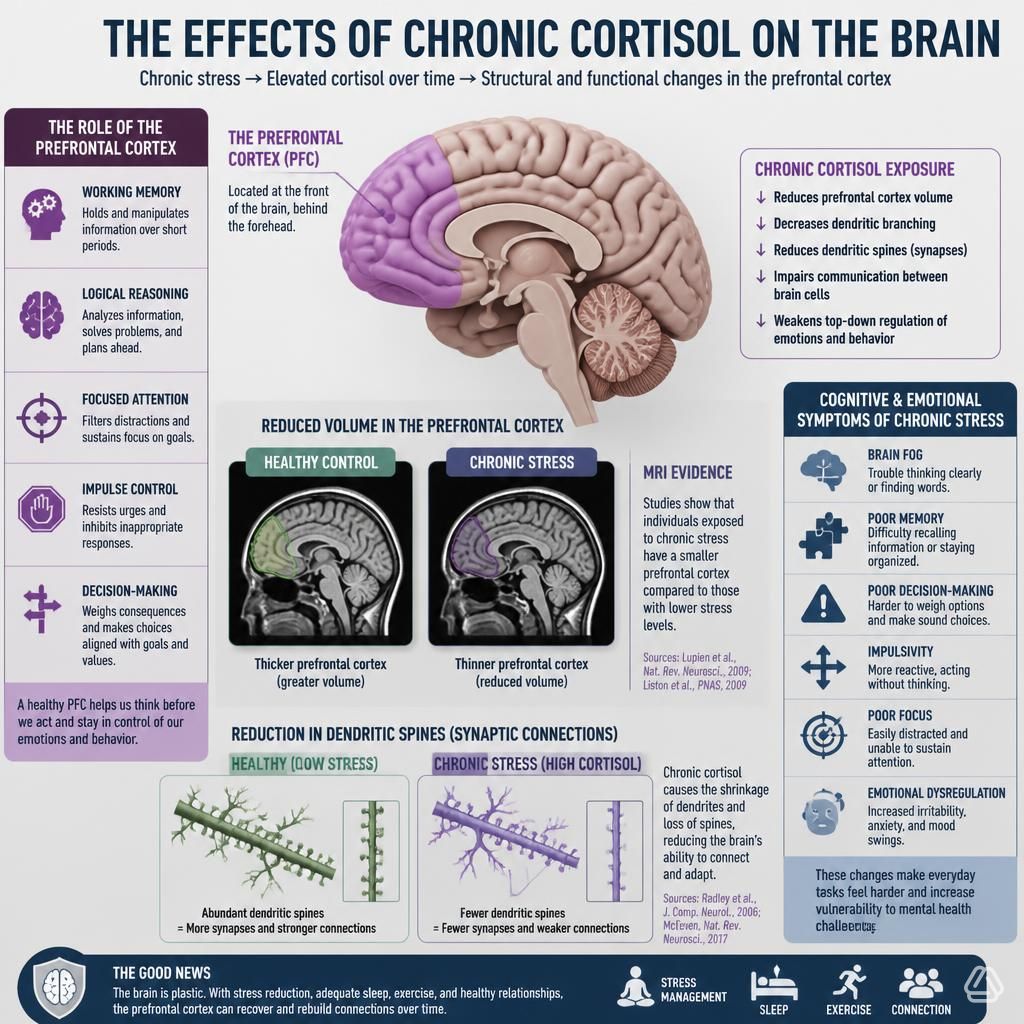
The prefrontal cortex is the brain’s executive command center — the region responsible for working memory, logical reasoning, focused attention, impulse control, and decision-making. Under sustained cortisol exposure, the neurons in this region lose dendritic spines (the connection points between brain cells), reducing both the volume and the functional capacity of the prefrontal cortex in measurable ways. MRI studies of chronically stressed populations consistently show prefrontal cortex structural reductions that correspond directly to the cognitive symptoms people report. This is the neurological reason why brain-fogged, chronically stressed adults describe feeling like they “can’t think straight” — because the brain region that enables straight thinking is, quite literally, being physically restructured by cortisol.
It Floods Your Brain With Glutamate
Cortisol doesn’t just remodel brain structure — it disrupts brain chemistry in real time. Elevated cortisol triggers excessive release of glutamate, the brain’s primary excitatory neurotransmitter. In appropriate amounts, glutamate is essential for learning and memory formation. At the elevated levels produced by chronic stress, however, glutamate becomes neurotoxic — overstimulating neurons, disrupting the delicate balance of excitatory and inhibitory signaling, and contributing to the degradation of neural connections. The lived experience of this biochemical disruption is exactly what people describe as mental static: thoughts that feel scrambled, inability to sequence tasks, and a pervasive sense of cognitive interference that no amount of effort can push through.
It Destroys Sleep Architecture
Cortisol and melatonin operate on an inverse relationship — they are designed to alternate across the 24-hour circadian cycle, with cortisol rising in the morning to promote alertness and melatonin rising in the evening to initiate sleep. When cortisol remains chronically elevated into the evening hours, melatonin production is suppressed and the transition to deep sleep is delayed or prevented. The consequence is not simply less sleep — it is the specific loss of slow-wave deep sleep, the stage during which the brain’s glymphatic system activates to flush out toxic metabolic waste products, including amyloid proteins. Chronic evening cortisol elevation means this nightly cleansing cycle is perpetually shortchanged, and brain fog compounds progressively, night after night. [INTERNAL LINK: The Ultimate Morning Routine for Brain Clarity]
What Chronic Cortisol Does to Your Weight
It Drives Visceral Fat Storage
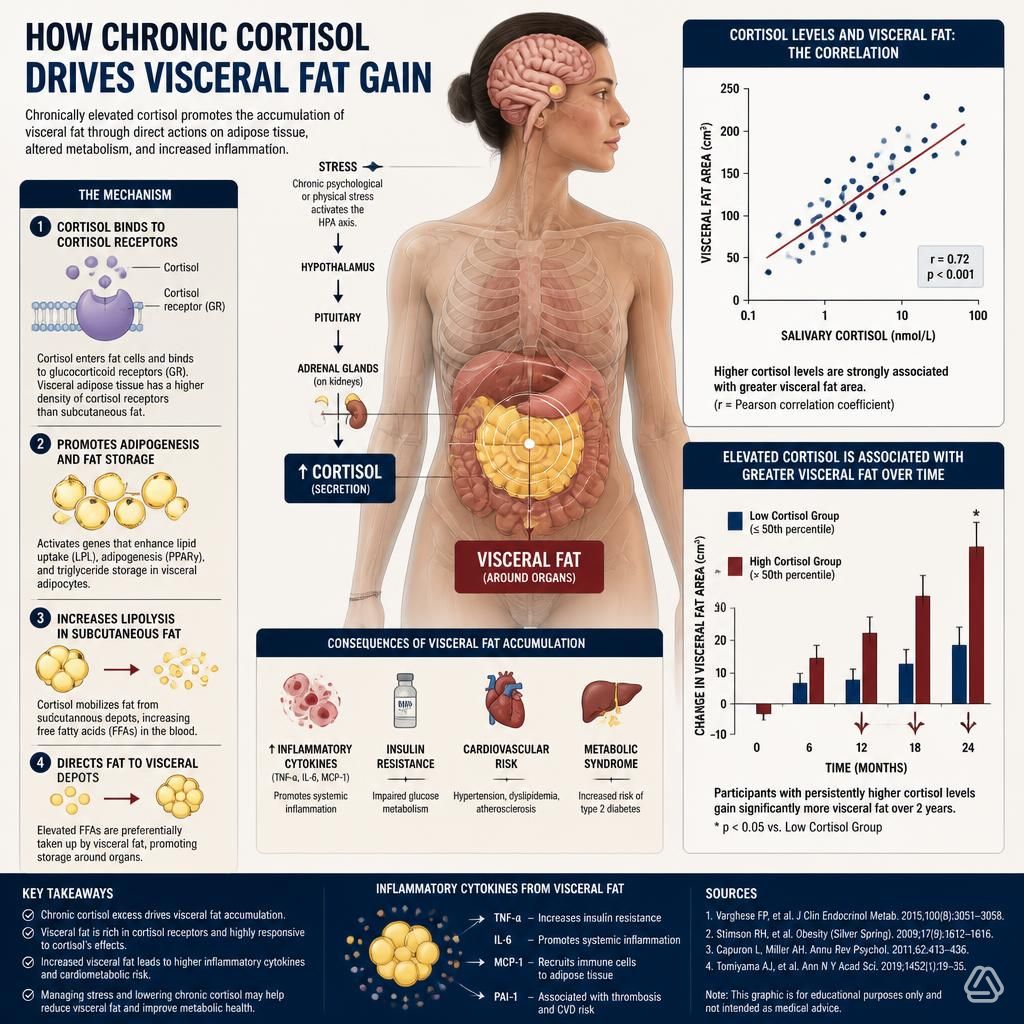
Cortisol doesn’t merely allow fat gain — it actively directs where that fat is stored. Visceral fat (the deep abdominal fat that wraps around internal organs) has a high density of cortisol receptors, making it preferentially responsive to cortisol’s fat-storage signals. When cortisol is chronically elevated, the body interprets the state as a sustained survival emergency and responds by stockpiling energy reserves in the most readily accessible location: the abdomen. Visceral fat is not just aesthetically problematic — it is the most metabolically destructive form of body fat, continuously releasing inflammatory cytokines that, as discussed elsewhere in this series, reach and impair the brain directly.
It Spikes Blood Sugar and Fuels Cravings
One of cortisol’s primary roles during a genuine stress response is to raise blood glucose rapidly, providing emergency fuel for muscles and the brain to fight or flee. In the context of chronic psychological stress, this mechanism fires repeatedly without the physical exertion that would burn off the mobilized glucose. The result is a persistent cycle of elevated blood sugar, compensatory insulin spikes, subsequent blood sugar crashes, and powerful neurologically driven cravings for sugar and refined carbohydrates. Every stress-induced craving for something sweet or starchy is, in part, your cortisol system attempting to execute a physiological script that simply does not match the modern threat environment.
It Suppresses Testosterone and Growth Hormone
Cortisol and anabolic hormones — testosterone, growth hormone, and DHEA — exist in direct physiological competition. Cortisol is catabolic by design (it breaks tissue down for fuel), while testosterone and growth hormone are anabolic (they build and maintain lean muscle). When cortisol is chronically elevated, anabolic hormone production is suppressed through multiple HPA-axis feedback mechanisms. The practical metabolic consequence for adults over 45 — who are already managing age-related hormonal decline — is a body that preferentially burns muscle tissue for fuel while directing excess calories into fat storage, progressively worsening body composition even in the absence of dietary changes.
The Vicious Cycle
What makes the cortisol-brain fog-weight connection particularly insidious is how efficiently it self-reinforces. Chronic stress elevates cortisol, which drives visceral fat accumulation. That visceral fat releases inflammatory cytokines that cross the blood-brain barrier, amplifying brain fog. The brain fog impairs executive function and decision-making, making it harder to manage stress effectively — and making every stressful situation feel more overwhelming than it would to a cognitively sharp brain. The resulting helplessness and frustration generate more stress, driving more cortisol, more fat storage, and deeper cognitive impairment. Recognizing this as a cycle — rather than a character flaw or an inevitable decline — is the first genuinely empowering step toward interrupting it.
Breaking the Cycle — Where to Start

The research on cortisol regulation converges on several practical, evidence-supported interventions that are accessible without a prescription. Prioritizing sleep quality is foundational — even small improvements in deep sleep duration begin to reset the cortisol-melatonin rhythm within days. Eliminating caffeine after noon removes a significant biochemical cortisol amplifier that many people underestimate. Breathwork practices such as box breathing (four counts in, four counts hold, four counts out, four counts hold) have been shown in controlled trials to produce measurable reductions in salivary cortisol within minutes. Adaptogens like ashwagandha (Withania somnifera) have accumulated a meaningful body of evidence for HPA-axis regulation — though as with any supplement, consultation with a healthcare provider before starting is important. Above all, identifying which root cause is most dominant for you — whether cortisol is your primary driver or one of several contributing factors — determines where your energy is best directed first.
Is Cortisol YOUR Primary Brain Fog Driver?
Find Out in 3 Minutes
Stress and cortisol overload is one of five root cause categories identified by the WellnessWays Brain Fog Root Cause Quiz. The quiz is free, takes three minutes, and will tell you whether cortisol is your dominant driver — or whether a different physiological mechanism is at the center of your brain fog. Your results include a personalized action plan built around your specific primary cause. Take it now and stop guessing.
Medical Disclaimer: This article is for educational and informational purposes only and does not constitute medical advice. Always consult a qualified healthcare professional before making changes to your health routine.