
Could Your Weight Be Causing Your Brain Fog? (The Answer May Surprise You)
Most people dealing with both excess weight and persistent brain fog treat them as entirely separate problems. They see a weight-loss specialist about the scale and a neurologist about the mental cloudiness — chasing two solutions to what they assume are two unrelated issues. But emerging research is painting a very different picture. For a significant number of adults over 45, that mental fog and that stubborn weight are not two problems. They are two symptoms of the same underlying physiological disruption — and understanding that connection changes everything about how to address both.

The Brain-Body Weight Connection
For decades, body fat was viewed as passive storage — inert tissue that simply accumulated when calorie intake exceeded expenditure. We now know this is fundamentally incorrect. Adipose tissue (body fat), particularly visceral fat concentrated around the abdomen, is metabolically active — it functions almost like an endocrine organ, continuously releasing inflammatory signaling proteins called cytokines, including TNF-alpha, IL-6, and CRP. These cytokines drive a state of chronic systemic inflammation that does not stay neatly contained in the body. Through multiple biological pathways, that inflammation reaches and disrupts the brain, producing a condition known as neuroinflammation — the same inflammatory state increasingly linked to cognitive impairment, brain fog, and even neurodegenerative disease risk.
4 Ways Excess Weight Directly Affects Brain Function
1. Chronic Inflammation Crosses the Blood-Brain Barrier
The blood-brain barrier is designed to protect the brain from pathogens and toxins, but it is not impermeable to the inflammatory molecules produced by excess adipose tissue. Circulating cytokines trigger microglial activation — the brain’s own immune cells shift into an inflammatory state that directly impairs neurotransmitter function, synaptic signaling, and cognitive processing speed. Research has consistently shown that individuals with higher levels of systemic inflammatory markers perform measurably worse on cognitive assessments involving memory, processing speed, and executive function. This is not a theoretical connection — it is a documented, measurable mechanism.
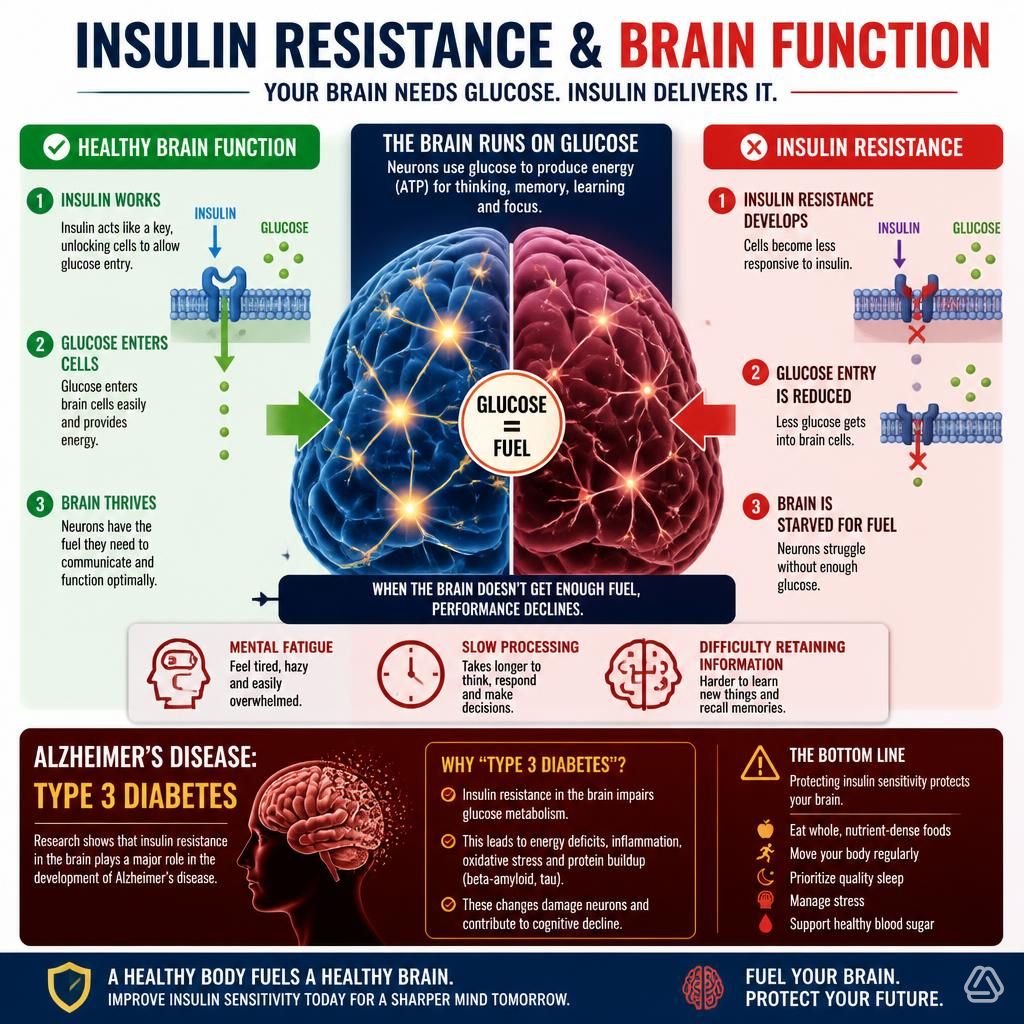
2. Insulin Resistance Starves the Brain of Fuel
The brain runs on glucose. It is the organ’s near-exclusive fuel source, and neurons are entirely dependent on a consistent, well-regulated glucose supply. Insulin resistance — a condition in which cells stop responding appropriately to insulin’s signals — means neurons increasingly struggle to absorb the fuel they need, even when blood glucose levels are technically adequate. The result is a state of cellular energy deprivation in the brain that manifests as mental fatigue, slow processing, and difficulty retaining information. The connection between insulin resistance and cognitive decline is significant enough that some researchers have begun referring to Alzheimer’s disease as “type 3 diabetes,” reflecting the degree to which impaired brain glucose metabolism appears to drive neurodegeneration.
3. Sleep Apnea — The Silent Brain Fog Multiplier
Excess weight is the single largest modifiable risk factor for obstructive sleep apnea, a condition in which the airways partially or fully collapse during sleep, causing repeated interruptions to breathing and oxygen delivery to the brain. Even mild, undiagnosed sleep apnea fragments the deep sleep stages during which the brain performs critical maintenance — including the glymphatic system’s nightly cleansing of toxic metabolic waste products, including amyloid proteins linked to cognitive decline. Night after night of fragmented deep sleep compounds brain fog progressively, creating a deficit that no amount of caffeine or willpower can compensate for. How to Sleep Better Naturally
4. Hormone Disruption From Excess Adipose Tissue
Fat tissue is enzymatically active in hormone conversion — specifically, it converts androgens into estrogen via a process called aromatization. In men over 45, excess adipose tissue can produce enough aromatase activity to create a state of relative estrogen dominance, suppressing testosterone and disrupting the hormonal balance that supports mood, energy, and cognitive sharpness. In post-menopausal women, the additional estrogen production from fat tissue adds a layer of hormonal chaos on top of an already complex transition. In both cases, the hormonal disruption produced by excess body fat directly impairs the neurotransmitter signaling and neuroplasticity that underpin clear, functional thinking.
The Good News — It Works Both Ways
The relationship between weight and brain fog is not a one-way street, and that is genuinely encouraging. Research consistently shows that even modest, sustained weight reduction produces measurable improvements in cognitive function, inflammatory markers, and mental clarity — often within weeks, not months. A 5–10% reduction in total body weight has been shown in multiple studies to improve processing speed, working memory, and executive function in overweight adults. The brain is remarkably responsive to reductions in systemic inflammation. Every pound of metabolically active visceral fat that is shed represents a reduction in the inflammatory load your brain is fighting against every single day. Getting the weight moving is, in a very real physiological sense, getting the brain fog moving.
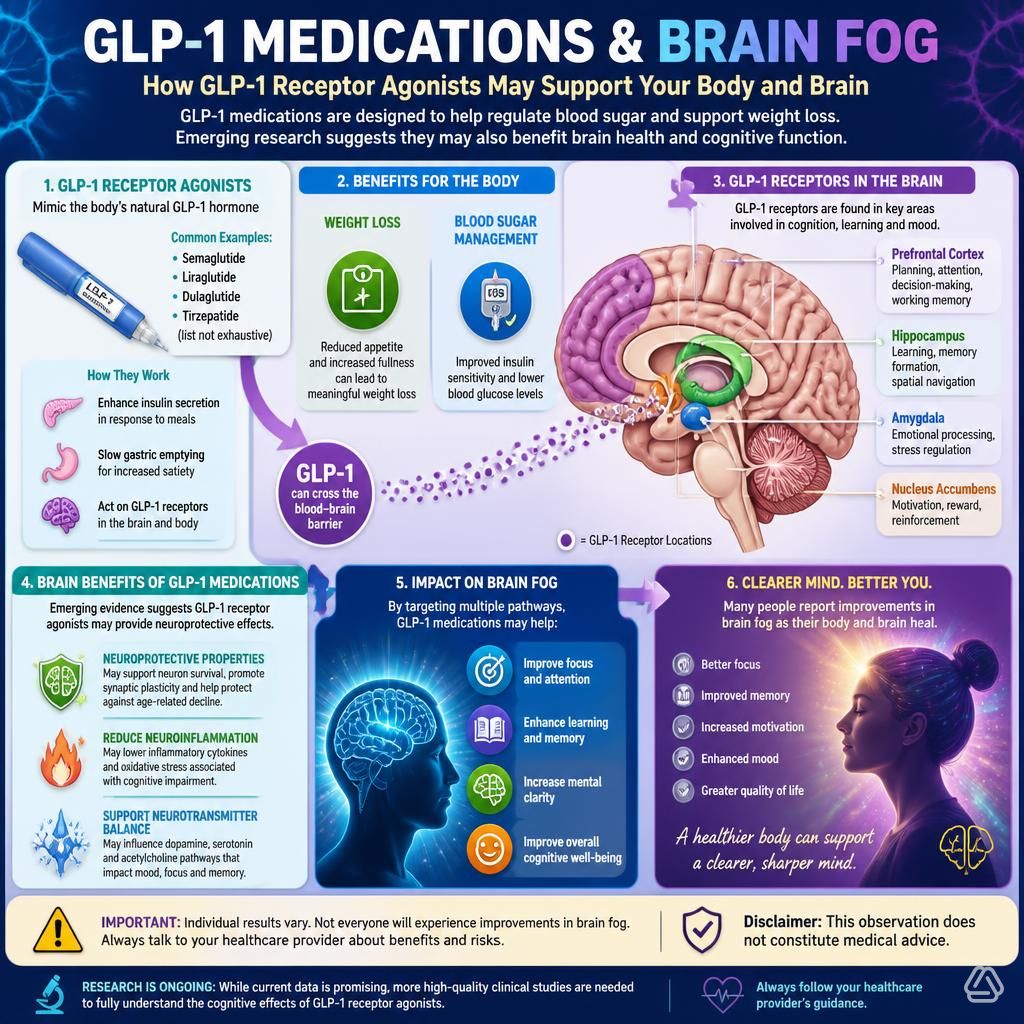
GLP-1 Medications and Brain Fog — An Emerging Frontier
One of the most exciting areas of current research involves GLP-1 receptor agonist medications — drugs originally developed for type 2 diabetes management and later approved for weight loss in individuals with obesity. Beyond their well-established effects on weight and blood sugar, early research is revealing that GLP-1 receptors are expressed throughout the brain, including in areas critical for learning, memory, and cognitive function. Some clinical researchers are investigating whether GLP-1 receptor agonists may have direct neuroprotective properties — reducing neuroinflammation and potentially improving the same cognitive markers that brain fog sufferers struggle with. Patients on these medications frequently report improvements in mental clarity alongside their physical changes — a dual benefit that is now the subject of active clinical investigation. This is an area worth exploring in conversation with your healthcare provider. This observation does not constitute medical advice.
Find Your Root Cause First
Before You Make Any Changes — Know Your Driver
Whether or not weight is a factor in your brain fog, identifying your specific root cause is the most important first step. Take the free Brain Fog Root Cause Quiz — it takes three minutes and gives you a personalized breakdown of which physiological drivers are most likely contributing to your symptoms, along with a targeted action plan to start addressing them.
Medical Disclaimer: This article is for educational and informational purposes only and does not constitute medical advice. Always consult a qualified healthcare professional before making changes to your health routine.