
Daily Habits To Improve Brain Health – The 5 Daily Vitality Habits That Actually Change Your Brain
Backed by Neuroscience. No Hype. Just What Works.
Published on WellnessWays.net | Last updated: September 2026 | 10-minute read
Most “brain health” advice falls into two camps: either blindingly obvious (“drink water!”) or impossibly ambitious (“meditate 45 minutes a day, cold plunge at dawn, eat 12 superfoods before 7am”). This post is neither.
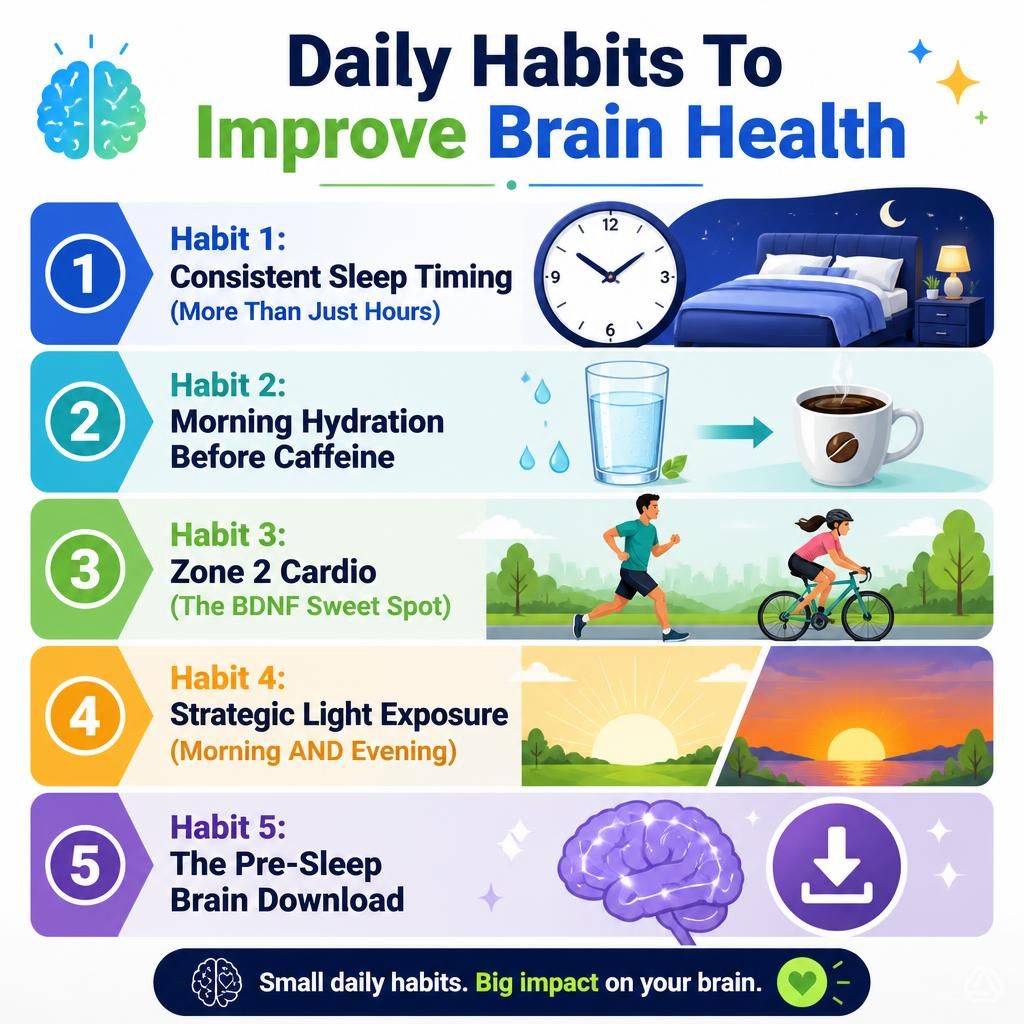
These 5 habits are specific, actionable, and backed by research showing they produce measurable, structural changes in the brain — not just a vague sense of feeling better. We’re talking increased BDNF production, improved hippocampal volume, better glymphatic clearance, and documented improvements in working memory and processing speed. Real outcomes. Real science.
And not one of them requires a supplement, a gym membership, or waking up before sunrise.
💡 What “Actually Change Your Brain” Means
This post only includes habits with published research showing neurological changes — increased BDNF, improved hippocampal volume, reduced neuroinflammation markers, and measurable cognitive performance improvements — not just self-reported “feeling better.” Every mechanism described below has a peer-reviewed citation. We’ve linked the key studies throughout.
Let’s get into it.
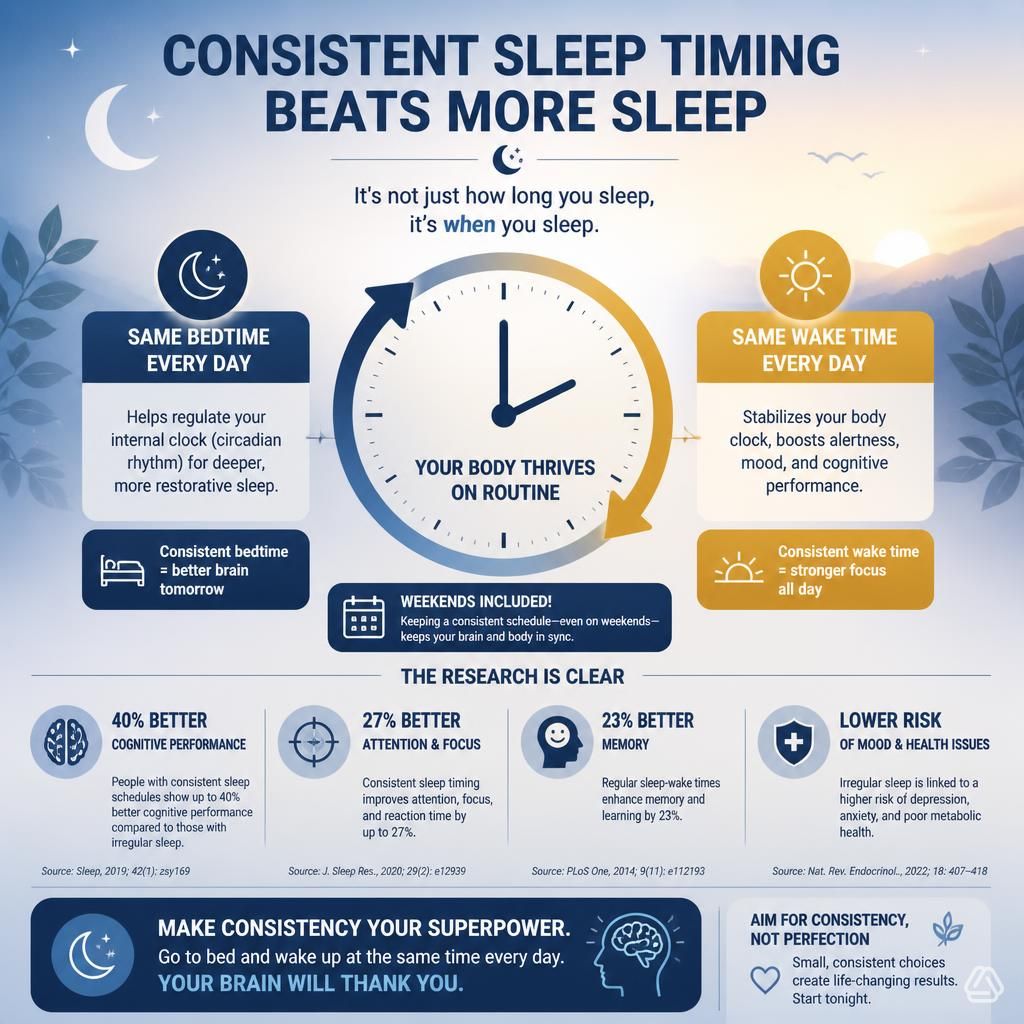
Habit 1 — Consistent Sleep Timing (More Than Just Hours)
The most underrated sleep upgrade isn’t going to bed earlier. It’s going to bed and waking at the same time — every single day.
Most people focus almost entirely on sleep duration — aiming for that magic 7–9 hours. But a growing body of research shows that sleep timing may be equally, if not more, important for cognitive performance.
Here’s the biology: your brain operates on a circadian rhythm — a roughly 24-hour internal clock governed by the suprachiasmatic nucleus (SCN). This clock coordinates the release of cortisol (alertness hormone, peaks 30–45 minutes after waking), adenosine clearance (the sleep-pressure chemical that accumulates during wakefulness), and crucially — the glymphatic system, your brain’s waste-clearance network.
The glymphatic system is most active during consistent deep sleep cycles. It flushes out metabolic waste products — including amyloid-beta and tau proteins linked to cognitive decline — using cerebrospinal fluid. This clearance process is estimated to be up to 60% more active during sleep than during wakefulness, and it is highly sensitive to disruptions in sleep timing.
Research from Harvard Medical School has demonstrated that irregular sleep schedules reduce cognitive performance even when total sleep hours are maintained. The brain isn’t just counting hours — it’s expecting rhythm. When that rhythm is broken (sleeping in on weekends, staying up late on Fridays), the circadian signal weakens, cortisol timing shifts, and cognitive performance suffers measurably the following days.
⚡ The One-Change Fix
Fix your wake time first. Choose a consistent time and maintain it 7 days a week — yes, including weekends. This single change begins restructuring your circadian biology within 3–5 days. Bedtime naturally adjusts once the wake anchor is set. Most people find their sleep quality noticeably improves before they’ve changed anything else.
The mechanism is elegant: a consistent wake time creates a strong, predictable cortisol awakening response. That sharp cortisol peak drives adenosine clearance, which deepens the homeostatic sleep pressure that builds through the day, which then drives deeper, more restorative sleep the following night. It’s a self-reinforcing cycle — and a consistent wake time is the single lever that starts it.
🔗 Dive deeper: Sleep Optimization — The Science of a Brain-Restoring Night

Habit 2 — Morning Hydration Before Caffeine
This isn’t “drink more water.” This is about timing, mechanism, and a compounding deficit most people create every single morning without realizing it.
Here’s what happens while you sleep: your body loses 400–500ml of fluid through respiration and perspiration over a typical 7–8 hour night. You wake up in a mild state of dehydration — every morning, without exception. Your brain, which is approximately 75% water by mass, is the organ most sensitive to this deficit.
A landmark study published in the Journal of Nutrition (2012) found that just 1–2% dehydration — a level most people cannot consciously perceive — produces measurable reductions in working memory, concentration, and psychomotor speed in healthy adults. This isn’t the dehydration of running a marathon. It’s the dehydration of a normal night’s sleep.
Now add caffeine. Most people reach for coffee within minutes of waking — before drinking anything else. The problem: caffeine is a diuretic. Consuming it before rehydrating compounds the overnight fluid deficit, suppresses adenosine receptors before the brain has fully transitioned into wakefulness, and can delay rather than accelerate cognitive clarity in the first 60–90 minutes of the day.
☕ The Non-Negotiable Morning Rule
One full glass of water (approximately 400–500ml) before your first coffee. Every morning. Research has documented measurable improvements in alertness and processing speed within 20 minutes of rehydration in mildly dehydrated subjects. This habit costs nothing, takes 30 seconds, and directly addresses a deficit that is affecting your cognition right now, every morning.
The ideal protocol: keep a full glass or bottle beside your bed. Drink it before your feet hit the floor. Then make your coffee. The caffeine will hit a hydrated, primed brain — and the difference in how you feel within 30–45 minutes of waking is often immediate and striking. This is the fastest-acting habit on this list.
Habit 3 — Zone 2 Cardio (The BDNF Sweet Spot)
If you only have time to implement one habit from this list for long-term brain health, make it this one. The evidence is overwhelming.
BDNF — Brain-Derived Neurotrophic Factor — is sometimes called “Miracle-Gro for the brain,” and while that’s a simplification, it isn’t far off. BDNF is the brain’s most powerful known driver of neurogenesis (the creation of new neurons), synaptic plasticity (the strengthening of neural connections), and neuroprotection. Higher BDNF levels are associated with better memory, faster learning, lower risk of depression, and reduced cognitive decline with age.
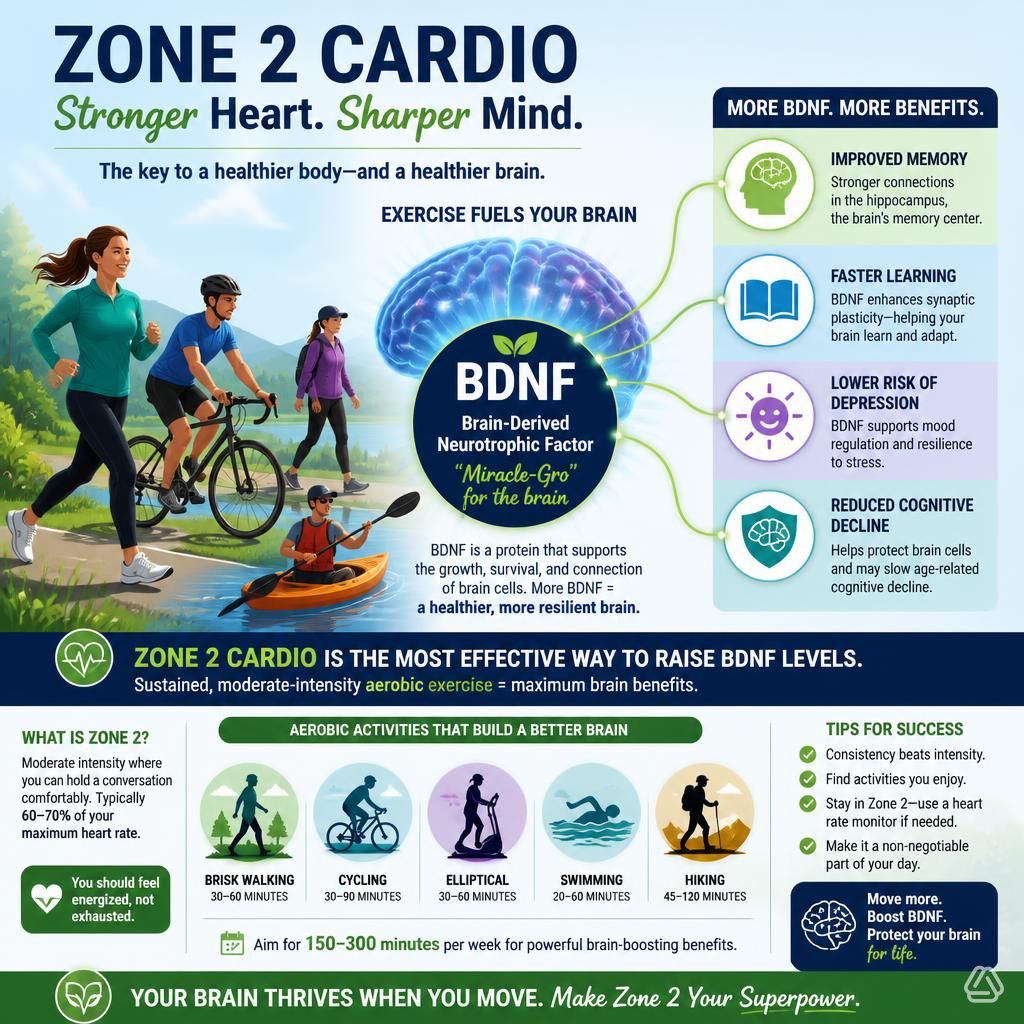
The most potent, reliable, and freely available way to raise BDNF is aerobic exercise. But the type of aerobic exercise matters more than most people realize.
Why Zone 2 Specifically?
Zone 2 cardio means exercise at a conversational pace — approximately 60–70% of your maximum heart rate — the intensity where you can hold a full sentence but wouldn’t want to sing. This intensity has emerged in research as the optimal BDNF stimulator for sustained elevation.
High-intensity interval training (HIIT) produces larger acute BDNF spikes — peak circulating levels can be 2–3x higher than Zone 2 immediately post-exercise. But HIIT-driven BDNF elevation is short-lived. Zone 2 cardio, sustained for 30–45 minutes, produces a larger total BDNF “area under the curve” — meaning more total BDNF exposure for the hippocampus over the session’s duration.
The landmark study here is Erickson et al. (2011), published in the Proceedings of the National Academy of Sciences: a randomized controlled trial in which adults who completed one year of moderate aerobic exercise demonstrated a 2% increase in hippocampal volume — effectively reversing 1–2 years of typical age-related hippocampal shrinkage. The control group (stretching only) showed a 1.4% decrease over the same period. BDNF was identified as the key mediator.
🏃 The Practical Protocol
20–40 minutes of brisk walking, cycling, or swimming at conversational pace, 3–5 days per week. Sessions under 20 minutes produce detectable BDNF elevation but insufficient sustained signaling to drive robust neurogenic effects. 30–45 minutes is the evidence-based target. You do not need a gym. A brisk walk where you’re slightly breathless but can still talk is Zone 2.
Dr. John Ratey of Harvard Medical School, author of Spark: The Revolutionary New Science of Exercise and the Brain, has called aerobic exercise “the single most powerful tool we have to optimize brain function.” The science behind that claim has only grown stronger since publication. This is the most evidence-supported cognitive enhancement intervention available to human beings — bar none.
Chronic Zone 2 training also increases mitochondrial density in brain cells and progressively enhances the sensitivity of the neurogenic response to subsequent exercise. The more consistently you practice it, the more BDNF your brain produces per session. This habit compounds.
🔗 Dive deeper: Exercise and the Brain — The Cognitive Case for Moving Your Body
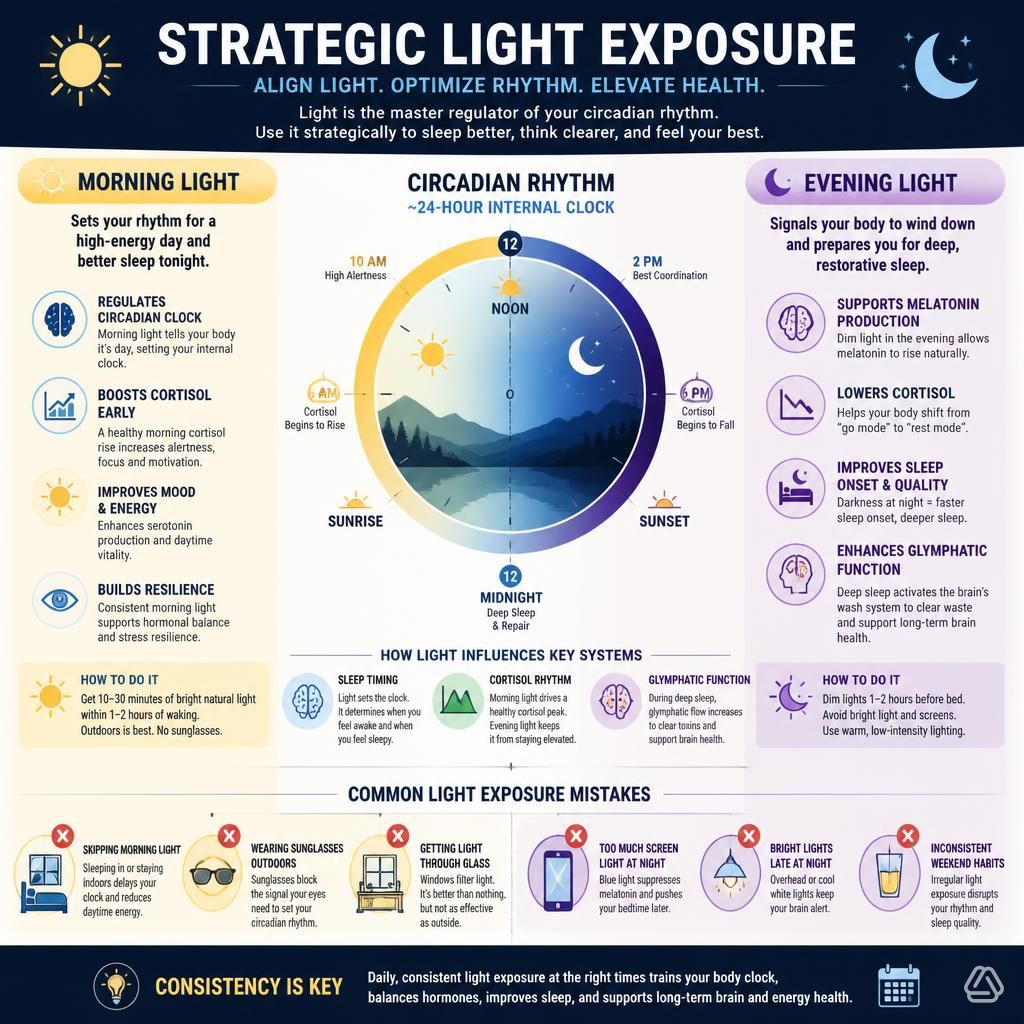
Habit 4 — Strategic Light Exposure (Morning AND Evening)
Light is the most powerful regulator of your brain’s daily cycle. Most people know half the story. Here’s the whole picture.
Your circadian rhythm — the same biological clock governing sleep timing, cortisol, and glymphatic function discussed above — is set and reset primarily by light. Not by your alarm clock. Not by your sleep schedule. By light. And most modern humans get this profoundly wrong at both ends of the day.
The Morning Side: Turning the Clock On
Specialized photoreceptors in your eyes called intrinsically photosensitive retinal ganglion cells (ipRGCs) detect the specific wavelength and intensity of natural morning light and transmit that signal directly to the suprachiasmatic nucleus (SCN) — your master circadian clock. This is not the same as simply “seeing” light. It is a direct biological clock-setting mechanism.
Research from Dr. Andrew Huberman’s lab at Stanford has shown that 5–10 minutes of outdoor light exposure within 30 minutes of waking produces a sharp, well-timed cortisol awakening response and drives a cascade of alertness and focus that is detectable for 4–6 hours post-exposure. This cannot be replicated by indoor lighting — even bright indoor light is typically 50–100 lux, compared to 10,000+ lux from outdoor morning light on a cloudy day.
☀ Morning Light Protocol
Step outside within 30 minutes of waking. Stay for 5–10 minutes (up to 20 minutes on overcast days). No sunglasses. You’re not looking at the sun — you’re simply being outdoors with eyes open. Even through cloud cover, outdoor light is 5–10x more intense than indoor light and sufficient to set the circadian signal.
The Evening Side: Turning the Clock Off
The other half of the story is equally important — and more commonly violated. Harvard Medical School research has demonstrated that blue-wavelength light from screens suppresses melatonin production by up to 85% and can delay melatonin onset by 90 minutes or more compared to dim light conditions.
Melatonin is not just a “sleep drug” — it is the brain’s primary signal that it is safe to initiate the deep, restorative sleep stages where memory consolidation, BDNF storage, and glymphatic clearance occur. Suppress melatonin, and you don’t just fall asleep later — you reduce the depth and restorative quality of the sleep you do get.
🌙 Evening Light Protocol
Screens down — or blue-light-blocking glasses on — at least 90 minutes before your target sleep time. Dim overhead lights in the evening. Use warm-toned lamps at low intensity. This allows the melatonin signal to rise naturally and on schedule, setting you up for the deep sleep where the benefits of all your other habits are consolidated.
The power of Habit 4 is in doing both — morning light on, evening light off. This creates the sharpest, clearest circadian signal your brain receives each day. The result is significantly improved sleep quality, better next-day cognitive performance, and a brain that is chemically primed for focus from the moment you open your eyes.
Habit 5 — The Pre-Sleep Brain Download
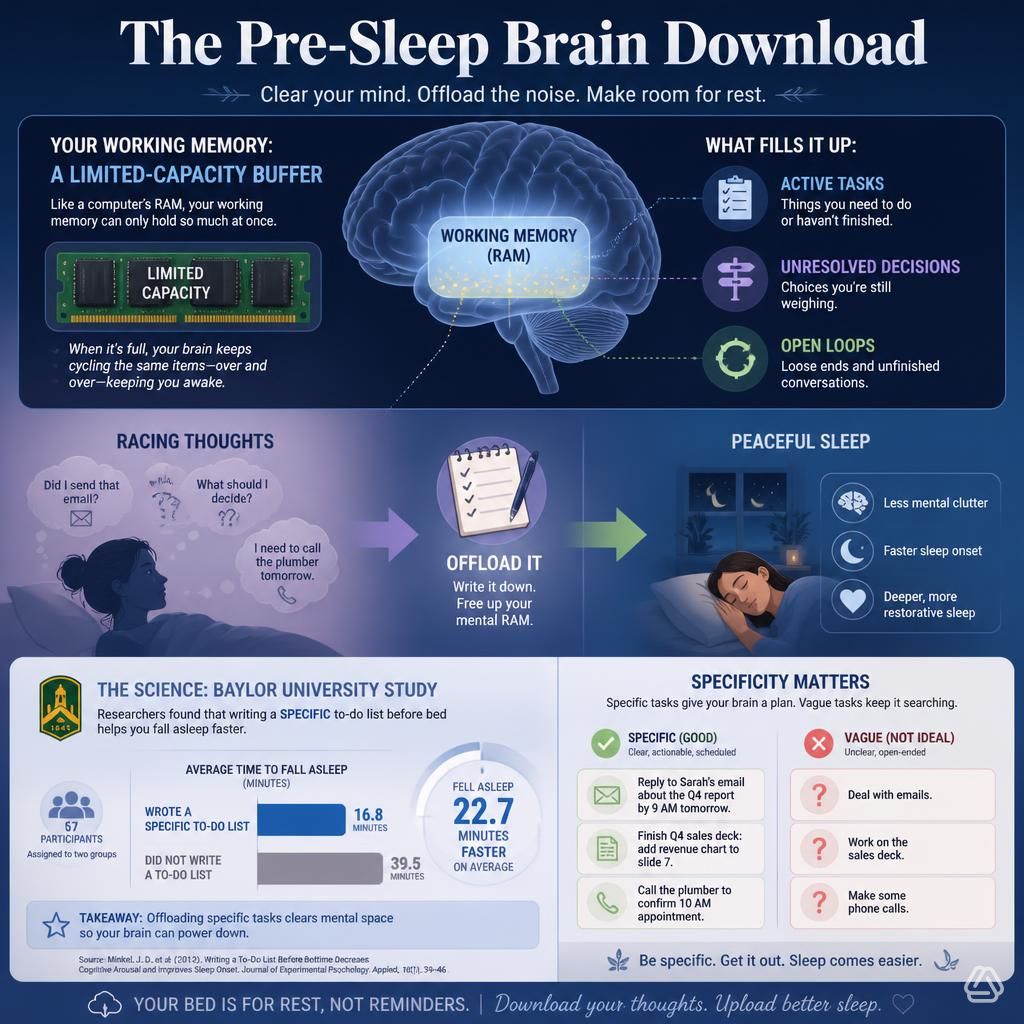
Working memory overload is one of the most common and least-discussed causes of poor sleep quality — and this 90-second habit directly fixes it.
Think of your working memory as your brain’s RAM — a limited-capacity buffer holding active tasks, unresolved decisions, and open loops. Unlike a computer, your brain doesn’t have a reliable mechanism to “park” these items when you go to sleep. Unresolved tasks keep your prefrontal cortex partially active during the early sleep stages, reducing time spent in deep, slow-wave sleep — the stage where memory consolidation and cognitive restoration occur.
This is the science behind “racing thoughts at bedtime.” It’s not anxiety — it’s unfinished cognitive business your brain refuses to set down.
A landmark study from Baylor University (Scullin et al., 2018) provided the clearest evidence of a simple solution: participants who spent five minutes before bed writing a specific to-do list for the following day fell asleep an average of 9 minutes faster than those who did not — a magnitude comparable to some sleep medications. Critically, the more specific the list, the greater the benefit. Vague intentions (“deal with emails”) produced smaller effects than specific tasks (“reply to Sarah’s email about the Q4 report”).
The mechanism is elegant: writing down tomorrow’s specific tasks performs an “offloading” function, signaling to the prefrontal cortex that these items are captured and do not require active monitoring. The cognitive tension resolves. Sleep onset accelerates. Deep sleep stage time increases.
📚 The Brain Download Protocol
Keep a paper notebook beside your bed. 15–30 minutes before sleep, write your 3 most important tomorrow tasks in specific, concrete terms. Paper only — phones introduce blue light and the pull of notifications. This costs 90 seconds and has research-backed sleep benefits that compound over weeks of consistent practice.
This habit is the most underrated on this list. It requires zero equipment beyond a notebook and pen, takes less than two minutes, and directly targets the neurological mechanism most responsible for the “tired but wired” feeling that keeps so many high-performing adults staring at the ceiling.
How These 5 Habits Work Together — The Compounding Effect
These habits are not five separate interventions. They are five components of a single, integrated neurological system — and each one amplifies the others.
| Habit | Primary Brain Mechanism | Amplified By |
|---|---|---|
| 1. Consistent Sleep Timing | Circadian entrainment, glymphatic clearance | Morning light exposure (Habit 4) |
| 2. Morning Hydration | Cognitive readiness, cortisol management | Consistent wake timing (Habit 1) |
| 3. Zone 2 Cardio | BDNF elevation, hippocampal neurogenesis | Deep sleep quality (Habits 1, 4, 5) |
| 4. Strategic Light Exposure | Circadian signal sharpness, melatonin timing | Consistent sleep timing (Habit 1) |
| 5. Pre-Sleep Brain Download | Working memory offload, deep sleep access | Reduces stress activation undermining all other habits |
Consistent sleep timing makes morning light exposure more biologically effective. Morning hydration before caffeine supports healthier cortisol management throughout the day. Zone 2 cardio increases sleep depth and slow-wave sleep quality at night — which is exactly when BDNF consolidation occurs. Evening screen discipline ensures the deep sleep stage that Zone 2 cardio earned is actually reached. The brain download eliminates the overnight stress activation that would otherwise compromise all of the above.
Practiced together consistently, these habits create a self-reinforcing cycle where each night’s sleep is deeper than the last, each morning’s clarity is sharper, and each week’s cognitive function measurably improves.
Your Week-One Starting Point
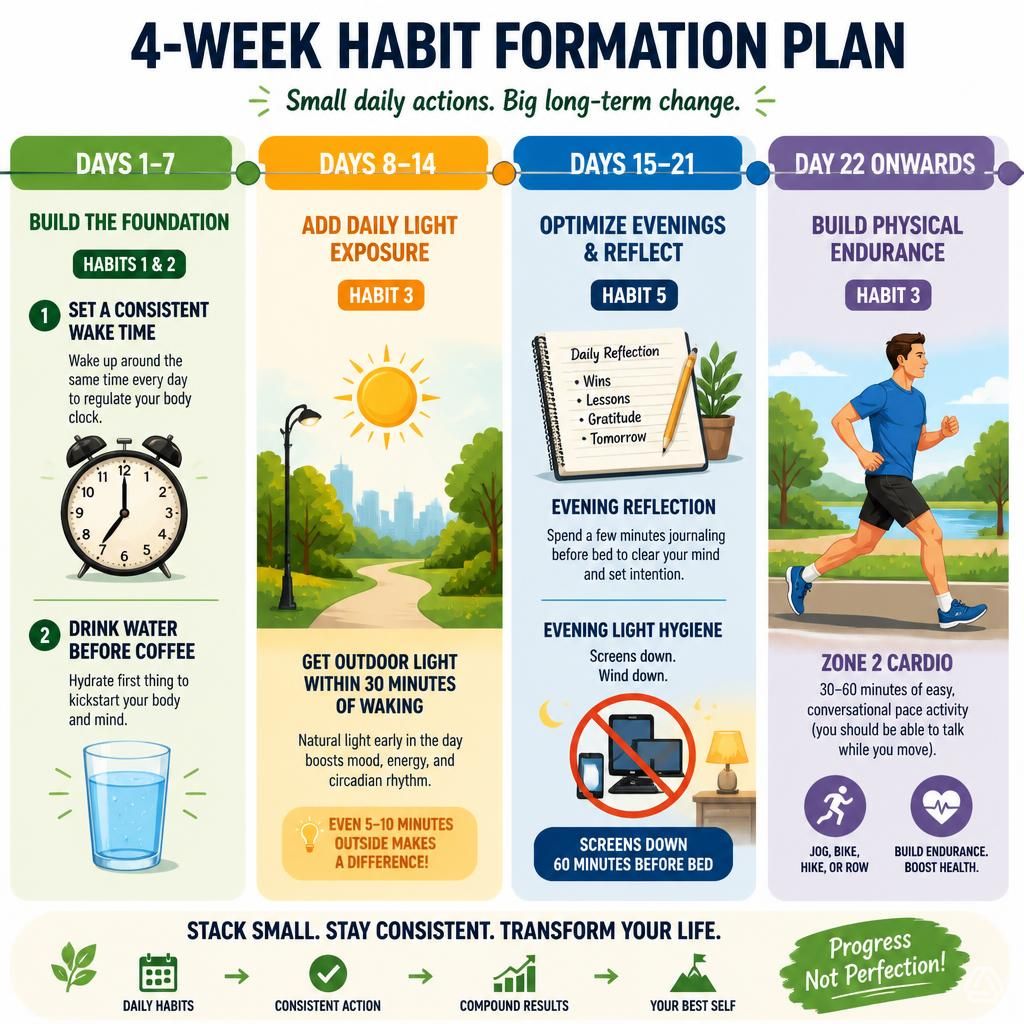
The research on habit formation is clear on one thing: trying to implement multiple new behaviors simultaneously dramatically reduces success rates for all of them. Progressive stacking — mastering one or two habits before adding the next — consistently outperforms comprehensive overhauls.
Here is the recommended implementation sequence:
- Days 1–7: Habits 1 and 2 only. Set your wake time. Drink water before coffee. These are the easiest to implement and the fastest to show results. Habit 2 produces noticeable improvement within 20 minutes of Day 1. Habit 1’s circadian benefits emerge within 3–5 days.
- Days 8–14: Add the morning component of Habit 4. Five to ten minutes of outdoor light within 30 minutes of your now-consistent wake time. You’re already awake at the same time — this simply means stepping outside before your coffee ritual.
- Days 15–21: Add Habit 5. Place a notebook beside your bed tonight. Write three specific tomorrow tasks before sleep. Combine with the evening light component of Habit 4 (screens down 90 minutes before bed).
- Day 22 onwards: Add Habit 3. Begin Zone 2 cardio sessions 3 times per week. By this point, your sleep quality has already improved, your mornings are anchored, and your brain is primed to respond maximally to the BDNF stimulus.
🎯 Why This Order?
Habits 1 and 2 create the neurological foundation — stable circadian rhythm and baseline hydration — that makes every subsequent habit more effective. You’re not just stacking behaviors; you’re building the biological context in which those behaviors work optimally.
Frequently Asked Questions
Q: How long until these habits produce noticeable changes?
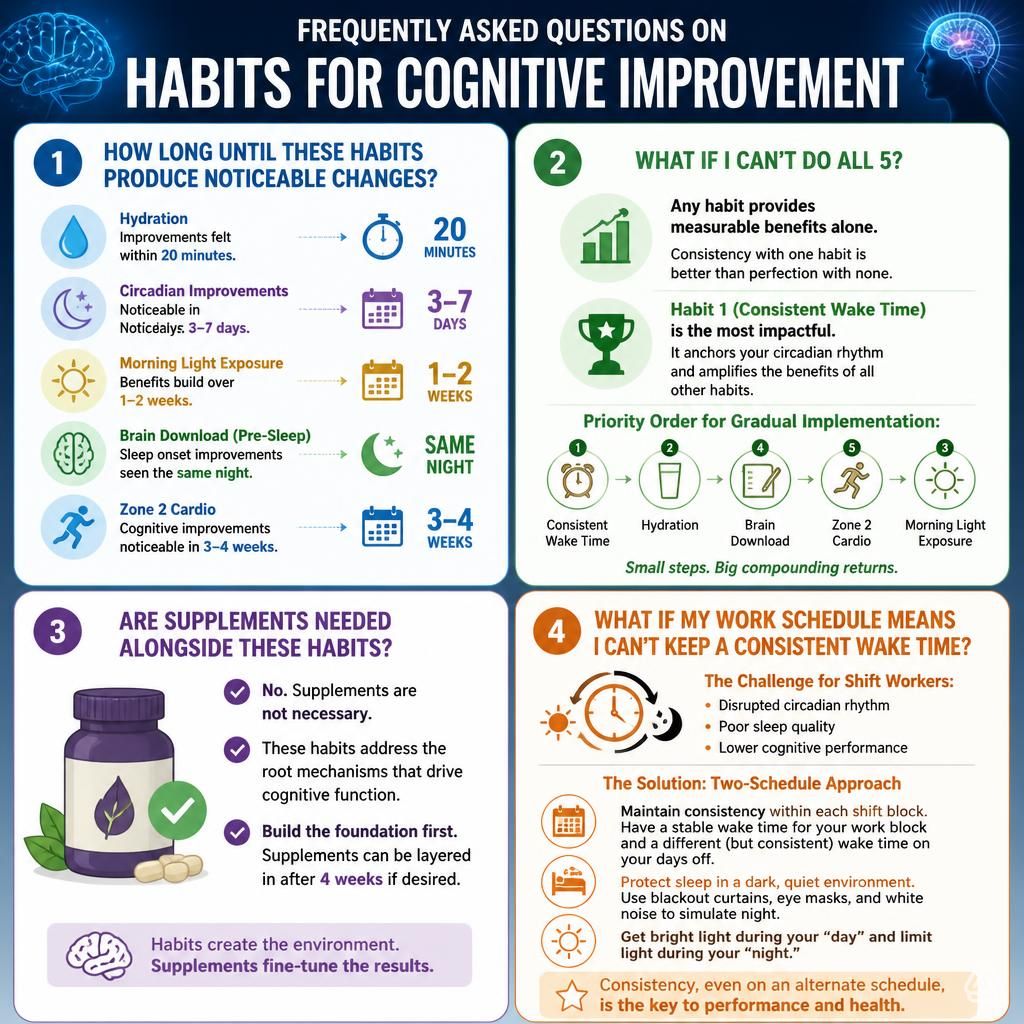
A: It depends on the habit. Hydration improvements (Habit 2) are often felt within 20 minutes of implementation on Day 1 — faster than any supplement. Circadian improvements from consistent sleep timing (Habit 1) typically emerge within 3–7 days. Morning light exposure benefits (Habit 4) compound over 1–2 weeks as the circadian signal sharpens. The brain download (Habit 5) shows sleep onset improvements in research within the same night for many people. BDNF-related cognitive improvements from Zone 2 cardio (Habit 3) typically become noticeable at 3–4 weeks of consistent practice, with structural hippocampal changes documented at the 3–6 month mark in clinical studies.
Q: What if I can’t do all 5?
A: Any of these habits produces measurable benefit in isolation — you do not need to do all five to see results. If forced to choose one: Habit 1 (consistent wake time). The circadian foundation it creates amplifies every other habit and produces the broadest range of downstream cognitive benefits. If choosing two: add Habit 2 (morning hydration). The recommended priority order if you’re building gradually: 1 → 2 → 4 → 5 → 3.
Q: Are supplements needed alongside these habits?
A: No. These five habits produce cognitive improvements that rival or exceed most commercially available supplements — and they address root mechanisms rather than attempting to patch downstream symptoms. Once consistently practiced for 4 or more weeks, targeted supplementation can be layered in to amplify results further. For a comprehensive starting framework, see: The WellnessWays Brain Clarity Foundation Protocol.
Q: What if my work schedule means I can’t keep a consistent wake time?
A: Shift workers and those with variable schedules face a genuine challenge here, as irregular schedules carry real cognitive costs. The best approach: anchor whatever consistent pattern you can — even a “two-schedule” approach (weekday anchor + weekend anchor within 60 minutes of each other) is meaningfully better than fully irregular timing. Light exposure becomes even more important in this scenario.
The Bottom Line
Brain fog, low energy, and poor focus are not fixed states. They are, in most cases, the downstream result of a handful of daily patterns that can be changed — starting tomorrow morning.
These five habits are free. They don’t require special equipment, expensive memberships, or significant time commitments. The most impactful one (consistent wake time) requires only a decision. The second most impactful (morning hydration) requires a glass of water. The most cognitively powerful (Zone 2 cardio) is a brisk walk in your neighborhood.
The gap between a foggy brain and a clear one is often found right here — in these five daily moments. Not in a supplement stack. Not in an optimization protocol that takes two hours per day. In the texture of ordinary mornings and evenings, applied consistently, backed by the best neuroscience available.
Pick one. Start today. Add the next one when the first feels effortless.
Your brain is more adaptable than you think.
✅ Quick Reference — The 5 Daily Vitality Habits
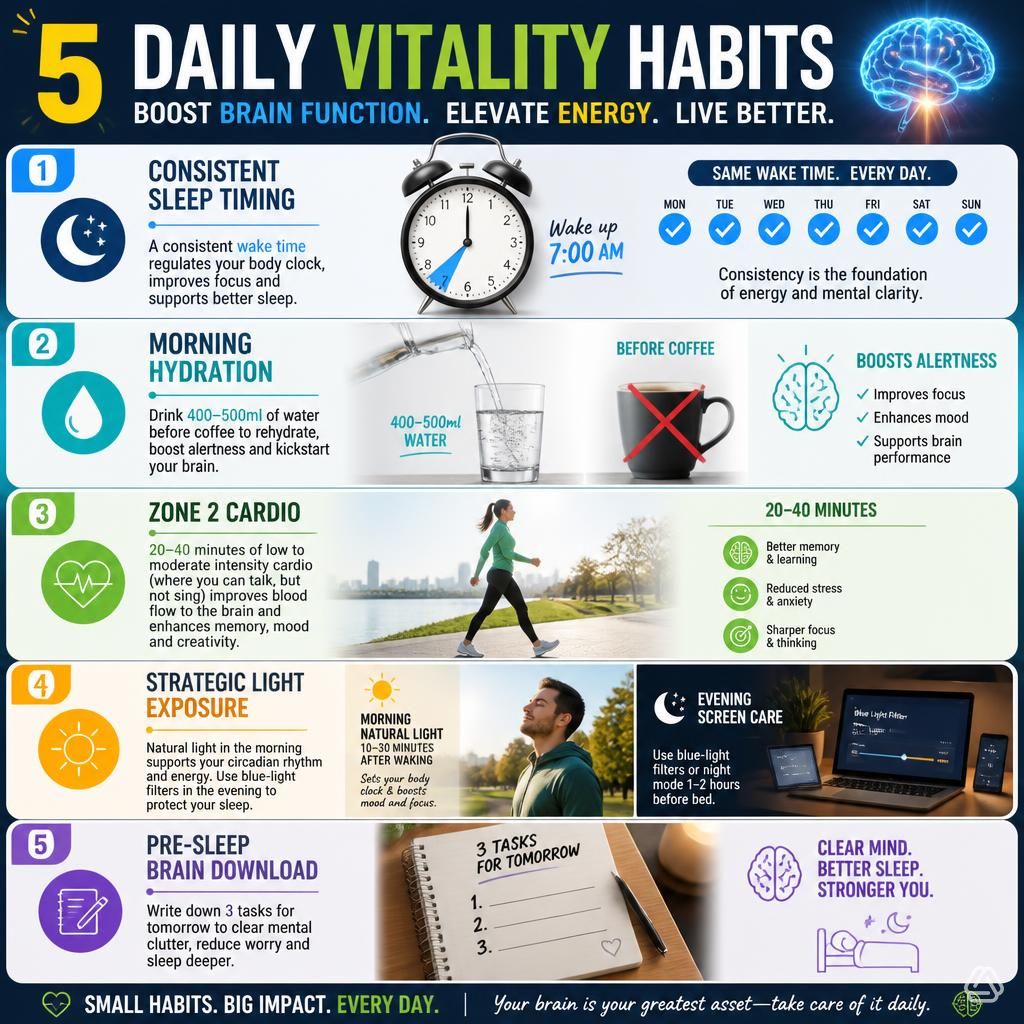
- Consistent Sleep Timing: Same wake time, 7 days a week. Fix the wake anchor first — bedtime follows. Benefits emerge in 3–5 days.
- Morning Hydration Before Caffeine: One full glass of water (400–500ml) before your first coffee, every morning. Measurable alertness improvement within 20 minutes.
- Zone 2 Cardio: 20–40 minutes at conversational pace (brisk walk, easy bike ride), 3–5x per week. The most evidence-supported cognitive enhancement intervention available.
- Strategic Light Exposure: 5–10 minutes of outdoor light within 30 minutes of waking and screens off (or blue-light glasses on) 90 minutes before bed.
- Pre-Sleep Brain Download: Write 3 specific tomorrow tasks in a paper notebook 15–30 minutes before sleep. Reduces sleep onset time and improves deep sleep quality.
References: Erickson KI et al. (2011), PNAS — hippocampal volume and aerobic exercise. Scullin MK et al. (2018), Journal of Experimental Psychology — pre-sleep to-do lists and sleep onset. Armstrong LE et al. (2012), Journal of Nutrition — mild dehydration and cognitive performance. Czeisler CA, Harvard Medical School — blue light and melatonin suppression. Ratey JJ, “Spark: The Revolutionary New Science of Exercise and the Brain” (2008). Huberman Lab, Stanford University — ipRGC photoreceptors and circadian entrainment.