
How to Do a Digital Detox — The WellnessWays 7-Day Digital Detox Plan
Introduction
Your phone is the first thing you reach for in the morning. It is the last thing you look at before sleep. And in the hours between, it competes constantly for the attention that your relationships, your work, and your own thoughts need.
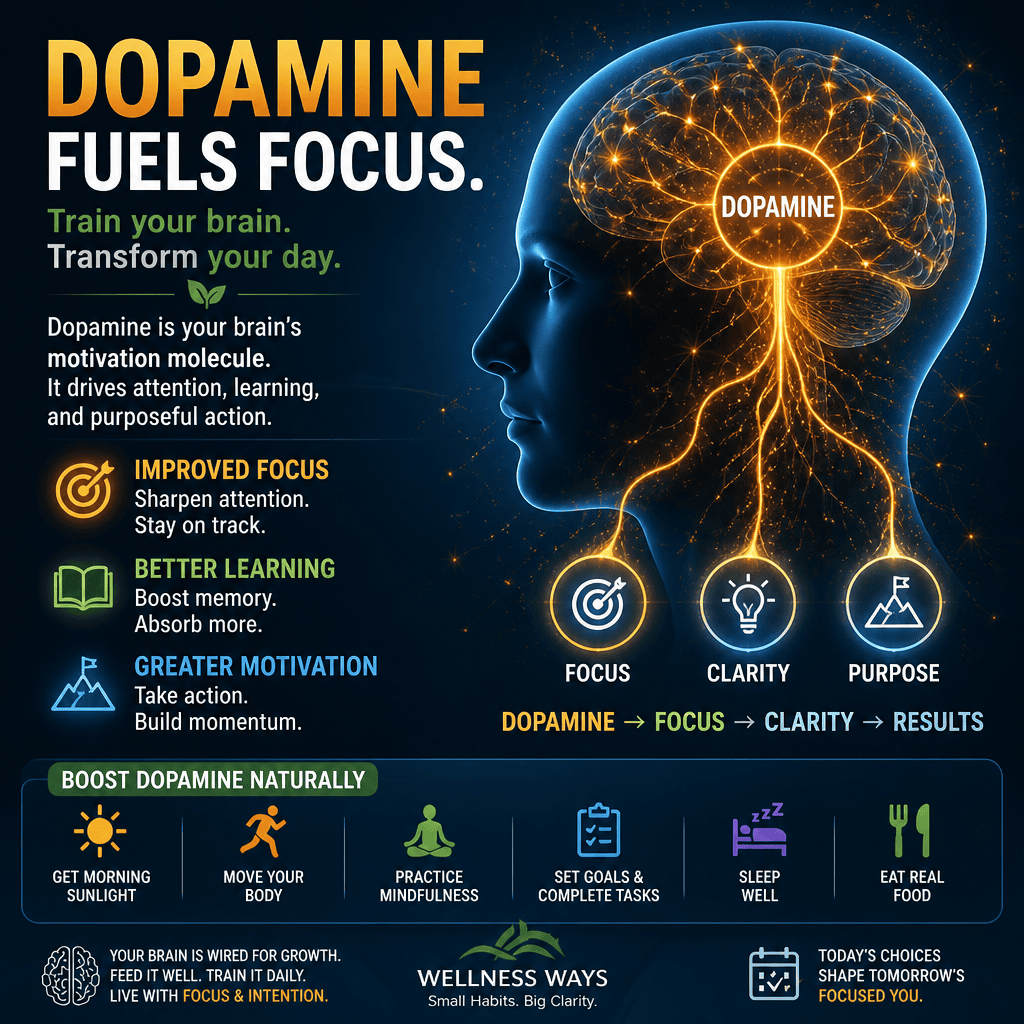
This is not a moral failing. It is neuroscience. The apps on your phone are designed by teams of engineers whose sole purpose is to make your device as attention-capturing as possible — using the same dopaminergic reward mechanisms that underlie addictive behavior.
A digital detox is not about hating technology. It is about reclaiming your relationship with it — breaking the habitual, automatic, reflexive use patterns and replacing them with intentional ones.
The WellnessWays 7-Day Digital Detox Plan is designed to be realistic, practical, and evidence-based. Not a cold-turkey shutdown — but a systematic, day-by-day recalibration of your relationship with screens.
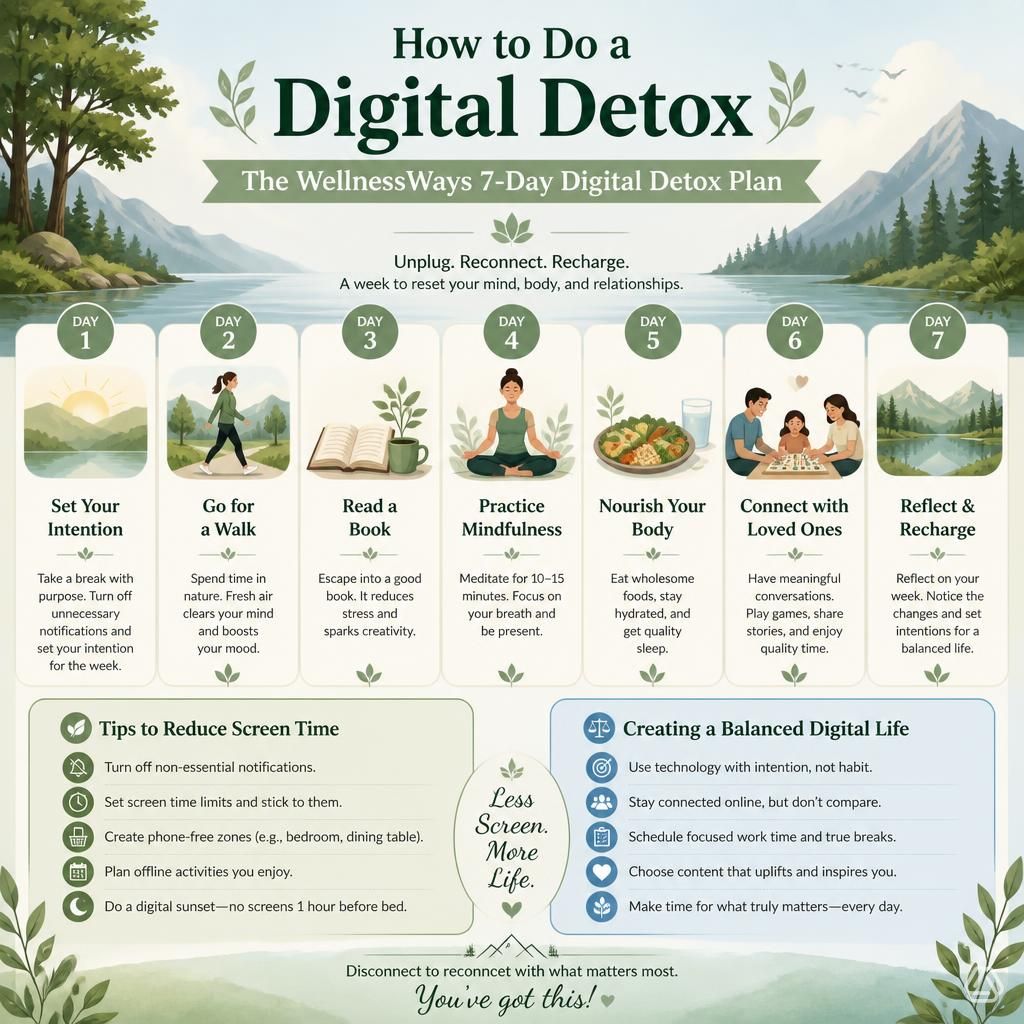
Here is exactly what to expect — and exactly what to do.
Before You Start — The Ground Rules
What counts as a “digital detox” for this plan:
- No social media on personal devices (all platforms)
- No recreational screen time — news scrolling, YouTube browsing, Netflix without intention
- Structured work screen use is acceptable — but with strict time-blocking
- Phone calls and text messaging remain available
What you will need:
- A physical notebook and pen
- An alarm clock (to replace your phone as an alarm)
- A list of three offline activities you enjoy or have wanted to try
- Your commitment — seven days is not a long time in the grand arc of your life
Day 1 — The First Wall
What to do: Remove all social media apps from your home screen. Do not delete them — just remove them from immediate view. Place your phone face-down during all meals and the first 30 minutes after waking.
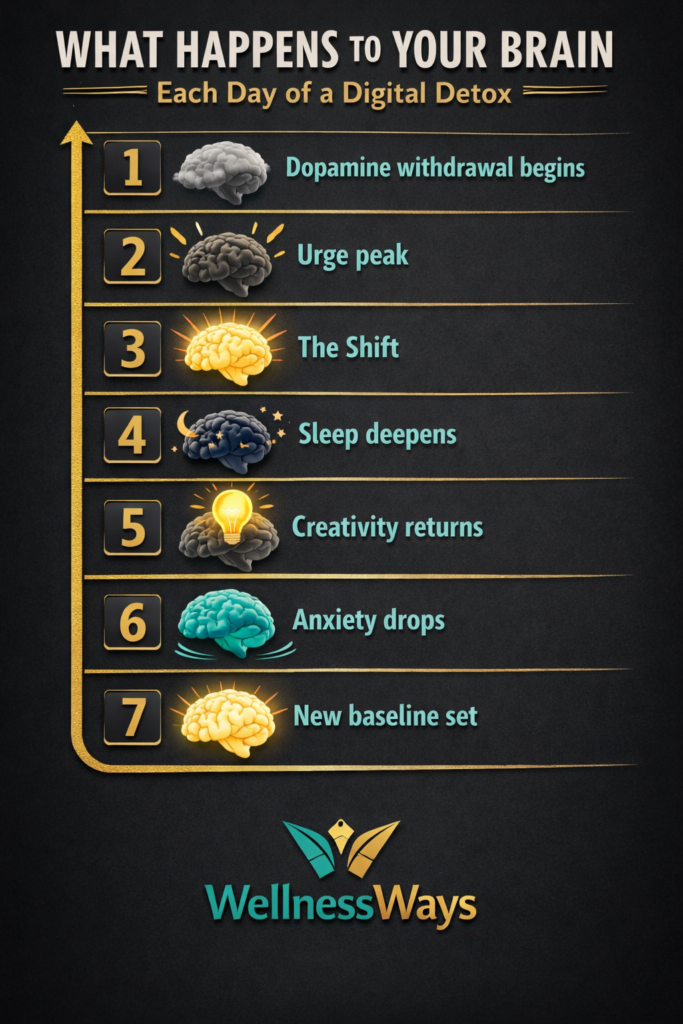
What your brain is doing: On Day 1, most people experience a low-grade restlessness and an impulse to check their device that occurs approximately every 8 to 12 minutes. This is your dopamine system expressing its conditioned expectation of a reward. The feeling is real — but it is not urgent.
What to expect: Mild anxiety. An unusual sense of quiet that may initially feel uncomfortable. This is normal and temporary.
Evening practice: Write down three things you noticed today that you might have missed while scrolling.
Day 2 — The Urge Peak
What to do: Set your phone to grayscale mode (Settings → Accessibility → Display). Color is one of the primary tools apps use to capture attention. Grayscale significantly reduces the psychological pull of the screen. Keep all meals completely phone-free.
What your brain is doing: Day 2 is typically the hardest day for most people. The habitual urge to check peaks. You may feel irrationally irritable, bored, or vaguely anxious without a clear reason. This is dopamine withdrawal — and it is a direct signal that the detox is working.
What to expect: Peak discomfort. This is the day most people give up — push through it.
Evening practice: Do something with your hands. Cook a meal from scratch, draw, write, organize something physical. Ten minutes of tactile, hands-on activity begins to restore the attentional nervous system.
Day 3 — The Shift
What to do: Implement a “no phone before 9 AM” rule. Use your physical alarm clock. Keep a notebook by your bed and write three things you are looking forward to before you look at any screen.
What your brain is doing: For most people, Day 3 is where something noticeably shifts. The dopamine system begins recalibrating. Focus starts returning in longer stretches. Thoughts that had been interrupted by constant checking begin to complete themselves.
What to expect: A surprising moment of mental clarity — often described as “my brain feeling quiet for the first time in years.” Creative thoughts and ideas may begin surfacing that had been crowded out.
Evening practice: Spend 20 minutes outside without your phone. Notice what you observe.
Day 4 — Deeper Sleep
What to do: Implement a hard phone curfew — all screens off at 9 PM. Read a physical book for at least 20 minutes before bed.
What your brain is doing: With blue light exposure eliminated in the evening, melatonin onset will occur earlier and more robustly. Most people notice a meaningful improvement in sleep quality beginning on Night 4 of the detox. The glymphatic system — your brain’s overnight cleaning mechanism — benefits directly.
What to expect: Waking on Day 5 feeling more rested than you have in some time. This is not placebo — it is the result of deeper, less-fragmented sleep.
Evening practice: Note your energy level when you wake up Day 5 versus Day 1. The difference is typically striking.
Day 5 — The Creativity Window
What to do: Spend a minimum of 30 minutes doing something creative — writing, drawing, playing music, gardening, building, cooking — anything that engages your mind without a screen.

What your brain is doing: By Day 5, the default mode network — the brain’s creative, introspective, daydreaming network — begins functioning at higher capacity. This network is suppressed by constant external stimulation. As that stimulation is removed, it reactivates. Ideas, solutions, memories, and insights begin emerging spontaneously.
What to expect: A creative or intellectual insight that surprises you. Many people report this as one of the most memorable experiences of the entire detox.
Day 6 — Relationship Quality
What to do: Have a minimum of two fully screen-free conversations today — with your partner, a friend, a family member, or a colleague. Complete presence, full eye contact.
What your brain is doing: The social engagement circuits — theory of mind, emotional attunement, language processing — are more fully activated when not competing with device interruptions. People consistently report that their conversations feel deeper, more meaningful, and more satisfying on Day 6.
What to expect: A noticeable difference in the quality of your connections. A reminder that presence is one of the most valuable things you can offer another person.
Day 7 — Designing Your Intentional Relationship With Technology
What to do: Write down your new rules for technology use going forward. Be specific: when will you check social media, for how long, and with what intention? What apps stay off your home screen permanently?
What your brain is doing: By Day 7, the automatic, reflexive checking behavior is significantly reduced. You are now in a position to make deliberate choices about technology rather than being driven by conditioned habit.
What to expect: Clarity about how you want technology to serve your life — rather than the other way around.
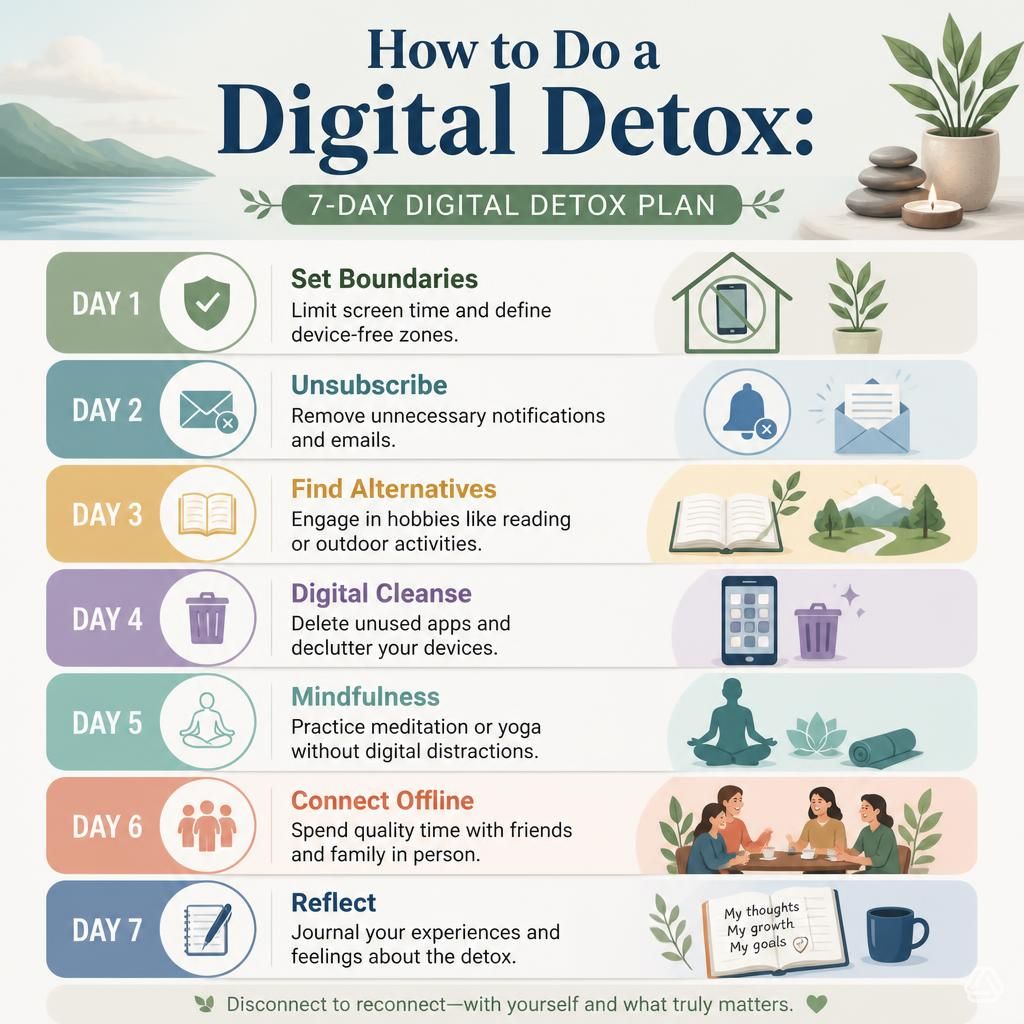
What Comes After Day 7 ?
A 7-day digital detox is a reset — not a permanent solution. The goal is not to eliminate technology. It is to establish a new baseline of intentional use.
Consider these sustainable practices going forward:
- Maintain the “no phone before 9 AM” rule permanently
- Keep all social media off your home screen
- Implement one fully screen-free day per week
- Maintain the 9 PM screen curfew on most evenings
- Do a 7-day reset every quarter
The difference between someone who controls their technology and someone controlled by it is not willpower. It is system design. Design your system, and the willpower takes care of itself.
Conclusion
Seven days. That is all. In seven days you can meaningfully reset your dopamine system, improve your sleep quality, restore your focus, and reclaim the quality of your attention for the things and people that matter most.
Your attention is finite. It is also your most valuable resource. Spend it intentionally.
Take our Brain Fog Root Cause Quiz to identify whether screen overuse is contributing to your cognitive symptoms →
Disclaimer: This article is for informational purposes only. Consult a healthcare professional if you experience significant anxiety or distress related to technology use.