
5 Foods That Are Secretly Wrecking Your Sleep (And What to Eat Instead)
You’re doing everything right. No screens before bed, a consistent sleep schedule, a cool and dark room — you’ve checked all the boxes. And yet you’re still waking up at 3am, staring at the ceiling, or dragging yourself out of bed feeling completely unrested. Here’s something most sleep guides don’t tell you: the culprit might be hiding in your kitchen. What you eat in the last four to six hours before bed has a profound effect on your sleep architecture, melatonin production, and core body temperature — three pillars of deep, restorative sleep. Let’s look at the five most common foods that ruin sleep, and the smart, science-backed swaps you can make starting tonight.

1. Alcohol — The Sleep Thief in Disguise
If you wind down with a glass of wine in the evening, you’re not alone — but you may be unknowingly sabotaging your sleep. Alcohol feels like a sedative, and physiologically, it is — at first. What it’s actually doing is flooding your brain with adenosine, creating that warm, drowsy sensation. But that initial sedation comes at a steep cost.
Alcohol is one of the most disruptive substances known to sleep science. A comprehensive meta-analysis of 27 studies found that even a low dose of alcohol — equivalent to just one or two standard drinks — meaningfully reduces REM sleep, the most cognitively restorative sleep stage. Research shows alcohol suppresses REM by 20–40% in the first half of the night, then triggers a rebound effect in the second half: more awakenings, lighter sleep, and vivid, disruptive dreams as the alcohol metabolizes. The result is that you might fall asleep faster, but the sleep you get is far less restorative than it should be.
✓ Better Swap
Try chamomile or passionflower herbal tea in the evening. Both have genuine, research-supported calming effects on the nervous system — without suppressing REM sleep. You’ll get the wind-down ritual without paying for it at 3am.
2. Caffeine After 2pm
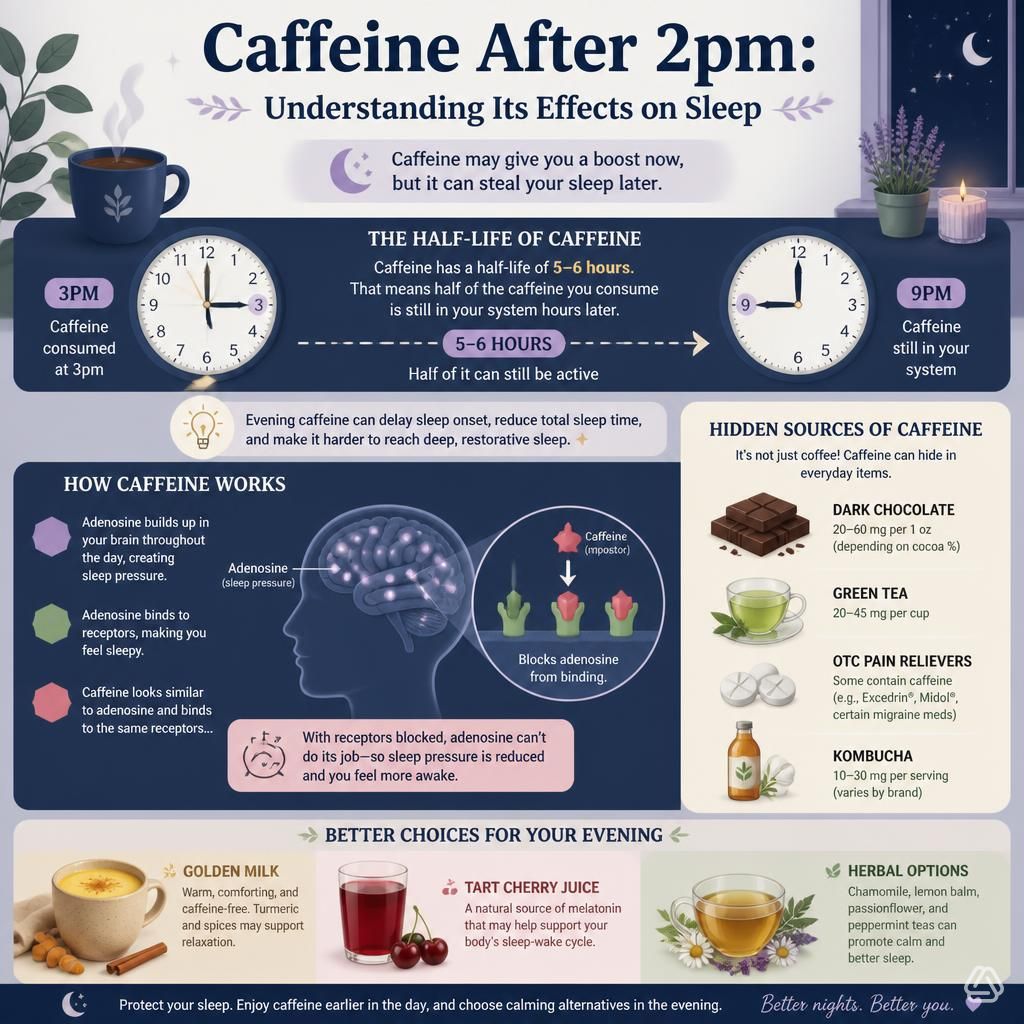
Most people know caffeine is a stimulant, but very few appreciate just how long it stays active in the body. Caffeine has a half-life of five to six hours — meaning that a coffee you enjoy at 3pm still has roughly half its caffeine circulating in your bloodstream at 9pm. That residual caffeine binds to adenosine receptors in your brain, actively blocking the natural build-up of sleep pressure that your body needs to initiate and maintain deep sleep.
What makes this trickier is that caffeine hides in places you might not expect. Dark chocolate, green tea, some over-the-counter pain relievers, and even kombucha all contain meaningful amounts of caffeine. If you’re sensitive — and many people are more caffeine-sensitive than they realize — these hidden sources can be enough to fragment your sleep without you ever connecting the dots.
✓ Better Swap
Make 2pm your firm caffeine cut-off. In the evenings, reach for golden milk (warm oat milk with turmeric and a touch of honey), tart cherry juice (a natural source of melatonin), or any caffeine-free herbal option. Your adenosine receptors will thank you.
3. High-Sugar Foods and Refined Carbs
This one surprises a lot of people. That bowl of cereal, the crackers and dip, or the handful of cookies you reach for in the evening might be one of the most common hidden drivers of the classic 2–3am wake-up. Here’s the mechanism: refined carbohydrates and sugary snacks cause a rapid blood sugar spike, followed by a reactive crash in the middle of the night. Your body responds to that crash by releasing cortisol to bring blood glucose back up — and cortisol is the last hormone you want surging at 2am. It pulls you out of deep sleep and into full alertness.
Beyond the blood sugar rollercoaster, high-glycemic foods have been shown to suppress slow-wave (deep) sleep — the stage responsible for physical repair, immune function, and memory consolidation. If you’re regularly eating refined carbs in the evening and waking up feeling unrefreshed, this connection is worth taking seriously.
✓ Better Swap

If you need an evening snack, pair protein and healthy fat to stabilize blood sugar: a few walnuts with a small banana (a powerful magnesium and tryptophan combination), or a spoonful of almond butter on a rice cake. Small, balanced, and sleep-friendly.
4. Spicy or Acidic Foods
Spicy foods do something specific and measurable: they raise your core body temperature. This matters enormously for sleep, because your body needs your core temperature to drop by one to two degrees Fahrenheit to initiate and sustain sleep. Eating something spicy close to bedtime works directly against that natural cooling process. Add to this that spicy and acidic foods — think tomato-based sauces, hot sauces, and citrus — can trigger or worsen acid reflux when you lie down, and you have a recipe for a very uncomfortable, interrupted night.
Not everyone is equally sensitive to these foods, but if you’re a light sleeper or prone to nighttime waking, it’s worth eliminating spicy and highly acidic foods after 7pm for two weeks and observing the difference. The results are often striking.
✓ Better Swap
Opt for soothing, easily digested evening meals: baked salmon with steamed greens and quinoa, a simple broth-based soup, or lightly seasoned roasted vegetables. Calm food for a calm night.
5. Large Portions Too Close to Bedtime
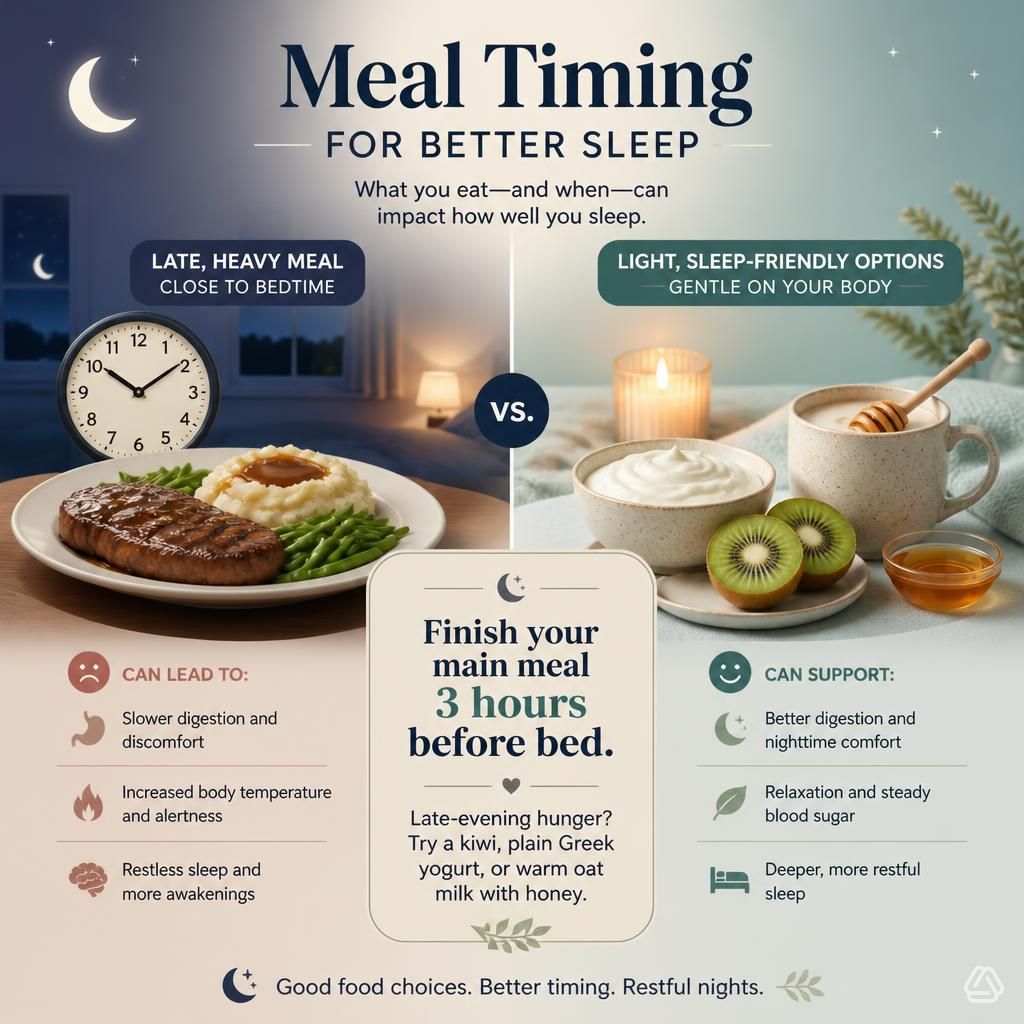
It’s not just what you eat — it’s also when and how much. Digestion is metabolically demanding work. When your body is processing a large meal, it generates heat, keeps organ systems active, and maintains an elevated metabolic rate — all of which are fundamentally at odds with the cooling, slowing-down process your body needs to enter deep sleep. Eating a heavy meal within two to three hours of bed keeps your digestive system running when it should be winding down.
The practical fix is simpler than you might think: aim to finish your last significant meal at least three hours before you go to bed. If hunger strikes close to bedtime, keep it light and sleep-friendly. A kiwi fruit — shown in Massey University research to improve sleep onset thanks to its serotonin content — is an excellent choice. So is a small bowl of plain Greek yogurt, or a warm mug of oat milk with a drizzle of honey.
✓ Better Swap
Finish your main meal 3 hours before bed. For late-evening hunger, try a kiwi, plain Greek yogurt, or warm oat milk with honey — all light, nourishing, and genuinely supportive of sleep.

The Best Sleep-Supporting Foods to Add Tonight
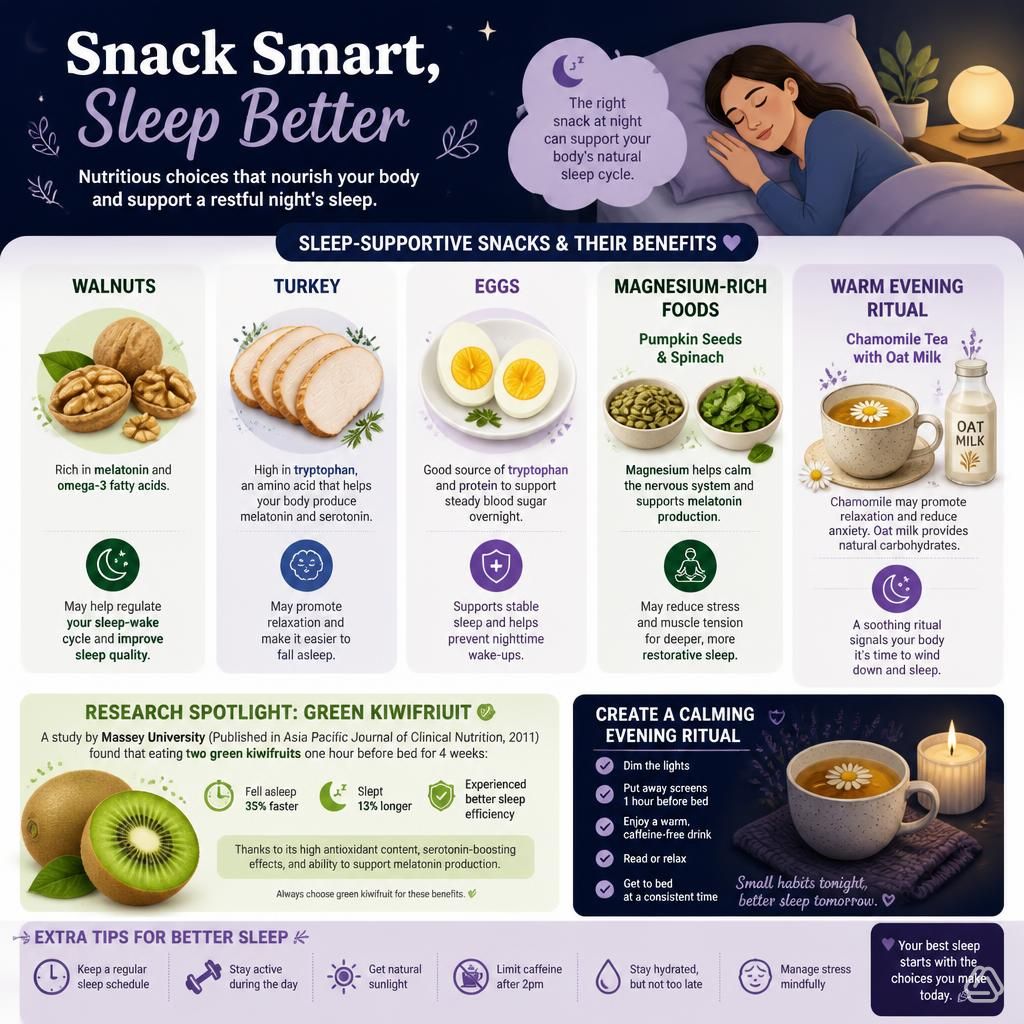
Now that you know what to pull back on, let’s talk about what to lean into. Tart cherry juice is one of the most well-studied natural sleep aids available — it’s a genuine dietary source of melatonin, and even a small glass in the evening can support your body’s natural sleep-wake signaling. Alongside it, kiwi fruit has earned serious scientific attention: Massey University researchers in New Zealand found that consuming two green kiwifruit in the evening produced an immediate positive effect on sleep quality and morning mood, thanks to their high serotonin content and serotonin metabolite activity.
Walnuts deserve a mention too — they contain both melatonin and omega-3 fatty acids, making them one of the most sleep-supportive snack choices you can make. If you eat animal protein, turkey and eggs are excellent sources of tryptophan, the amino acid precursor to both serotonin and melatonin. For minerals, prioritize magnesium-rich foods throughout your day: pumpkin seeds, spinach, and — in small amounts early in the day — dark chocolate. Magnesium plays a direct role in regulating the nervous system and supporting the transition into deep sleep. Finally, a warm evening ritual like chamomile tea or oat milk does double duty: the warmth helps initiate your body’s cooling response, and both contain compounds that genuinely calm nervous system activity.
◆ WellnessWays Science Note
Massey University research confirmed that eating two green kiwifruit before bed produced immediate improvements in sleep quality and elevated serotonin metabolite levels — even on the very first night. Small dietary choices can have fast, measurable effects on your sleep.
What you eat in the hours before bed has a profound impact on how well you sleep tonight.
Your Next Step: Start With One Change
You don’t need to overhaul your entire diet overnight. Sleep improvement doesn’t work that way — and frankly, it doesn’t need to. Pick just one food from this list to eliminate this week, and pay attention to how you feel after three or four nights. Sleep is the foundation that every other health goal — energy, mood, metabolism, cognitive clarity — is built on. When you protect it, everything else gets easier.
Want to go deeper? Food is just one piece of the puzzle. For the complete picture — sleep cycles, stress, light exposure, evening routines, and more — read our full guide:
→ How to Sleep Better Naturally — The WellnessWays Complete Guide to Restorative Sleep
And if stress is keeping you wired at night, don’t miss: How Chronic Stress Affects Your Brain — because your nervous system and your sleep quality are more connected than you might think.
Explore more brain health and daily vitality content at WellnessWays.net — your resource for living well, backed by science.
Not sure what’s causing your brain fog? Take our free 3-minute Root Cause Quiz and get your personalized action plan! → [Take The Quiz]