
Sleep Optimization For Brain Health: The Science of a Brain-Restoring Night
Every night, while you lie still, your brain runs the most sophisticated maintenance operation in the known universe. Miss it — even partially — and you pay a cognitive price you probably can’t feel but absolutely cannot afford.
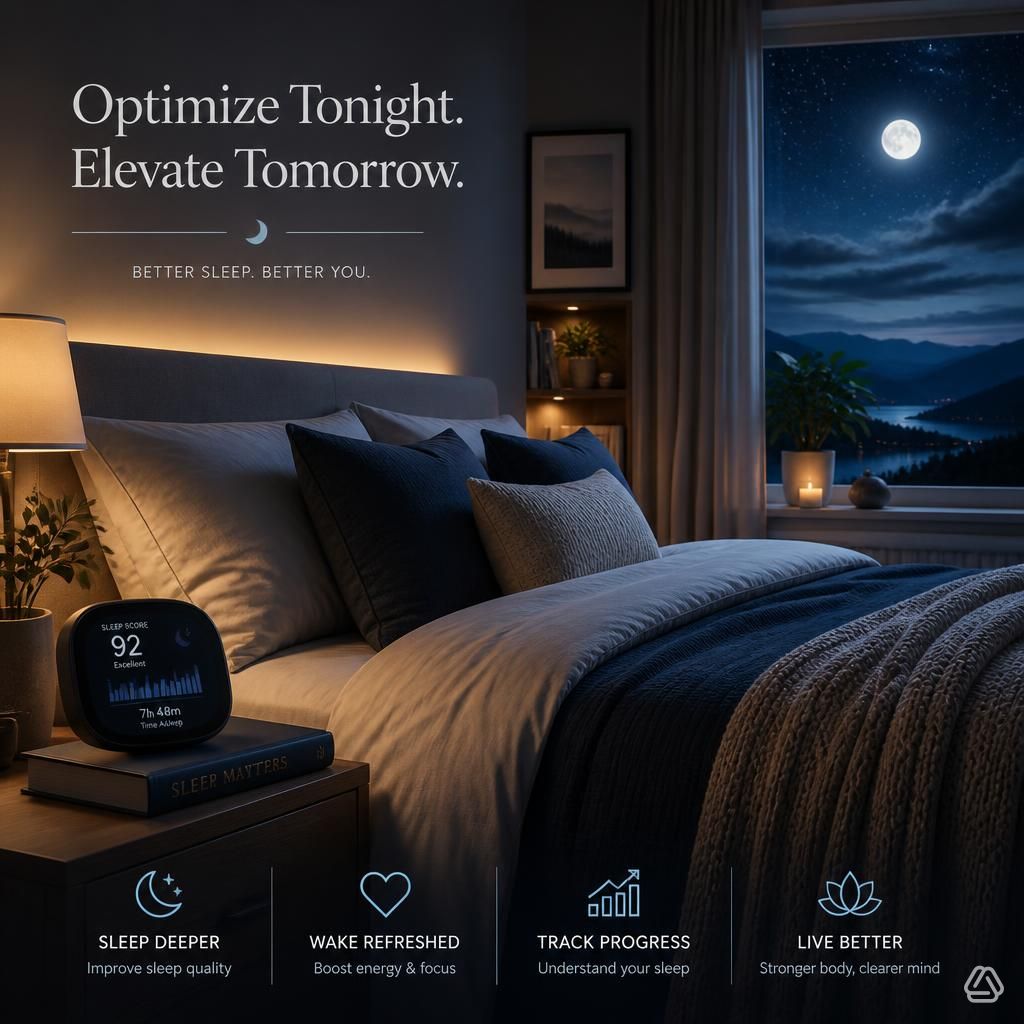
In 2013, a neuroscientist named Maiken Nedergaard at the University of Rochester made a discovery that quietly rewrote what we thought we knew about sleep. Working with mice, her team found that the brain has its own dedicated waste-clearance system — the glymphatic system — that had gone entirely undetected until then. And here’s the remarkable part: it is almost exclusively active during sleep.
During deep sleep, the brain’s support cells (glial cells) shrink by up to 60%, opening channels that allow cerebrospinal fluid to flow through brain tissue like a power wash — flushing out the toxic metabolic byproducts that accumulate during waking hours. Chief among the waste products being cleared? Amyloid beta — the protein that aggregates into the plaques most strongly associated with Alzheimer’s disease.
Let that sink in. Every night of quality sleep is a literal brain detox. Every night of poor or truncated sleep is another round of garbage accumulating in your neural tissue. Sleep is not passive recovery from the day. It is the most active, metabolically critical maintenance window your brain has — and nothing else can substitute for it.
⚠ Why This Matters For You
Poor sleep doesn’t just make you groggy. Research shows that even one week of sleeping fewer than 6 hours per night produces cognitive deficits equivalent to 24 hours of total sleep deprivation. The brain doesn’t just feel foggy — it measurably underperforms on memory consolidation, focused attention, processing speed, and emotional regulation. Critically, sleep-deprived individuals consistently underestimate their own impairment — they feel fine, while objectively performing at significantly reduced levels.
The Architecture of a Brain-Restoring Night — Sleep Stages
Sleep is not a single uniform state. A full night is a carefully orchestrated progression through distinct stages, each serving different biological functions. Understanding the structure helps you understand why what you do before bed matters so much — and which stages are most fragile.
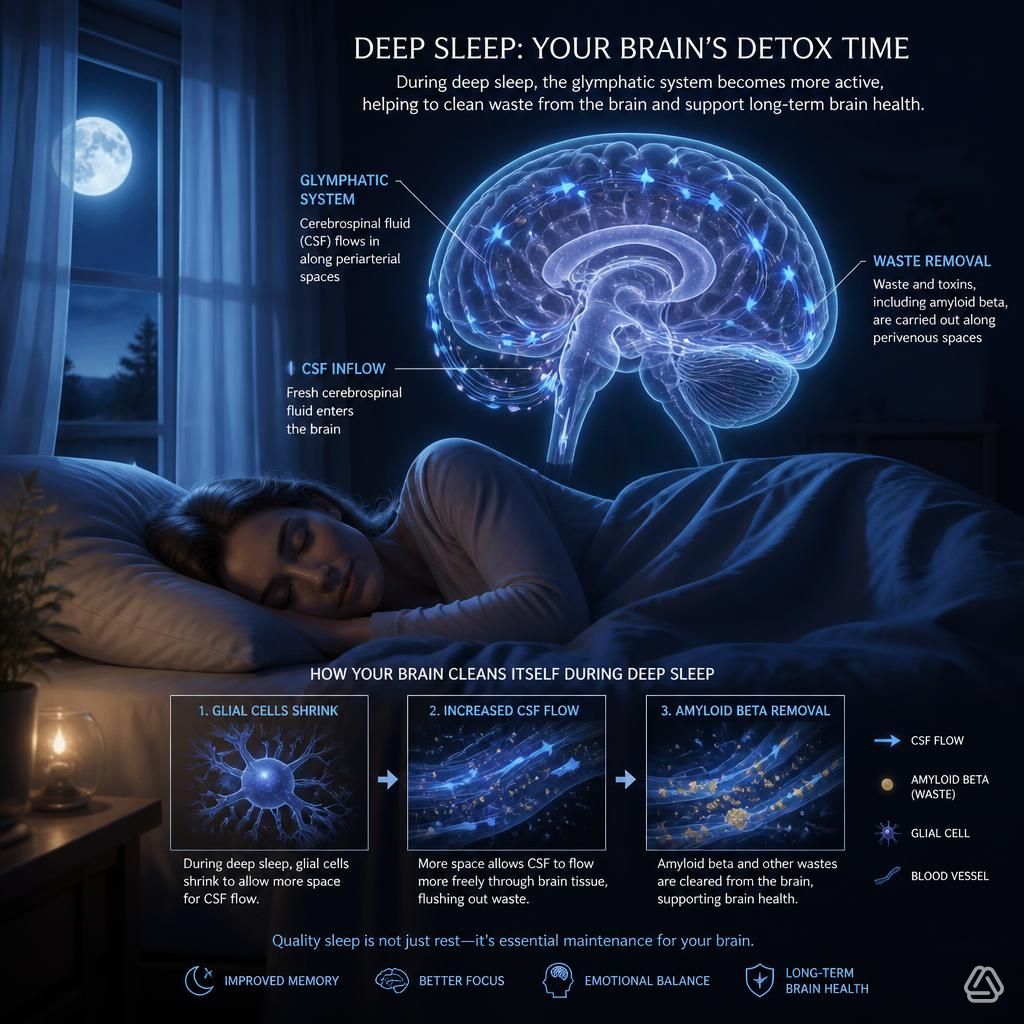
A healthy night moves through 4–6 complete sleep cycles, each roughly 90 minutes long. Within each cycle, you pass through a sequence of non-REM (NREM) stages and one period of REM sleep. The proportion of each stage shifts across the night — and that shift is one of the most important and least-known facts in sleep science.
Stage 1 — Light Sleep (N1)
N1 — Transition ~5% of total sleep | Duration: 1–7 minutes per cycle
N1 is the doorway between wakefulness and sleep. Muscle activity slows, eyes move slowly behind closed lids, and consciousness begins to recede. Brain waves shift from the fast-beta rhythms of active thought toward slower alpha and theta waves. This stage is extremely light — a sound, a light, even a slight temperature change is enough to pull you back to full wakefulness. It accounts for only about 5% of a healthy night’s sleep and is not where the restorative magic happens. Think of N1 as the anteroom: you have to pass through it, but you don’t want to linger.
Stage 2 — Core Sleep (N2)
N2 — Core Sleep ~45–55% of total sleep | The workhorse stage
N2 is where the majority of your night actually happens. Core body temperature drops, heart rate slows, and the brain produces two highly distinctive electrical signatures that researchers now recognize as key players in memory consolidation:
- Sleep spindles — rapid bursts of neural oscillation (12–15 Hz) that facilitate the transfer of information from the hippocampus (short-term storage) to the neocortex (long-term storage). Higher spindle density is associated with stronger learning and memory performance.
- K-complexes — large, sharp waveforms that appear to serve a dual role: protecting sleep from environmental disruption while simultaneously supporting memory consolidation processes.
Because N2 accounts for nearly half of all sleep, total sleep hours matter enormously. Shave an hour off your night and you almost certainly lose significant N2 time — along with its memory-processing benefits.
Stage 3 — Deep Sleep / Slow-Wave Sleep (N3)
N3 — Deep Sleep ~15–25% of total sleep | Concentrated in first half of the night
This is the stage. If sleep is the brain’s maintenance window, N3 is the primary maintenance shift. Slow, high-amplitude delta waves (0.5–4 Hz) dominate the EEG. The glymphatic system reaches peak clearance activity. Human growth hormone — responsible for physical cellular repair, muscle recovery, and immune regulation — is secreted almost entirely during this stage. You are hardest to wake from N3, and if roused, you’ll experience sleep inertia: the disoriented, heavy grogginess that can take 15–30 minutes to fully clear.
Here is the critical practical fact: N3 is disproportionately concentrated in the first half of the night. Go to bed at midnight instead of 10:30pm, and you lose far more deep sleep than the arithmetic suggests. And N3 is the stage most aggressively suppressed by two common behaviours: alcohol consumption and late-night eating. More on both shortly.
REM Sleep — The Memory and Emotion Processor
REM — Rapid Eye Movement ~20–25% of total sleep | Concentrated in second half of the night
REM sleep is neurologically extraordinary. The brain’s electrical activity during REM is nearly indistinguishable from full wakefulness — yet voluntary muscle movement is actively paralysed (a safeguard that prevents you from acting out your dreams). During REM, the brain is engaged in some of its most sophisticated work:
- Procedural and emotional memory consolidation — skills you practised, emotionally charged experiences, and complex pattern recognition are all integrated during REM.
- Emotional regulation — REM sleep appears to “re-process” emotionally difficult memories, stripping their emotional charge while retaining their factual content. Poor REM sleep is strongly associated with anxiety disorders and emotional dysregulation.
- Creative integration — the associative, non-linear brain activity during REM links disparate concepts in ways that waking thought rarely achieves. The “sleep on it” phenomenon is neurologically real.
As neuroscientist Matthew Walker of UC Berkeley emphasises in his landmark work Why We Sleep, REM is disproportionately concentrated in the second half of the night — meaning that cutting sleep short by even 60–90 minutes can eliminate the majority of your REM sleep. That 6.5-hour night instead of 8 hours doesn’t cost you 18.75% of your sleep. It costs you a far larger share of your most cognitively sophisticated sleep stage.
The Circadian Clock — Your Brain’s Sleep Conductor
Nested within the hypothalamus — a structure roughly the size of a grape — sits a cluster of about 20,000 neurons known as the suprachiasmatic nucleus (SCN). This is your master circadian clock: the internal timekeeper that orchestrates not just sleep and wakefulness, but hormone release, body temperature, immune function, metabolism, and dozens of other biological processes on a roughly 24-hour cycle.
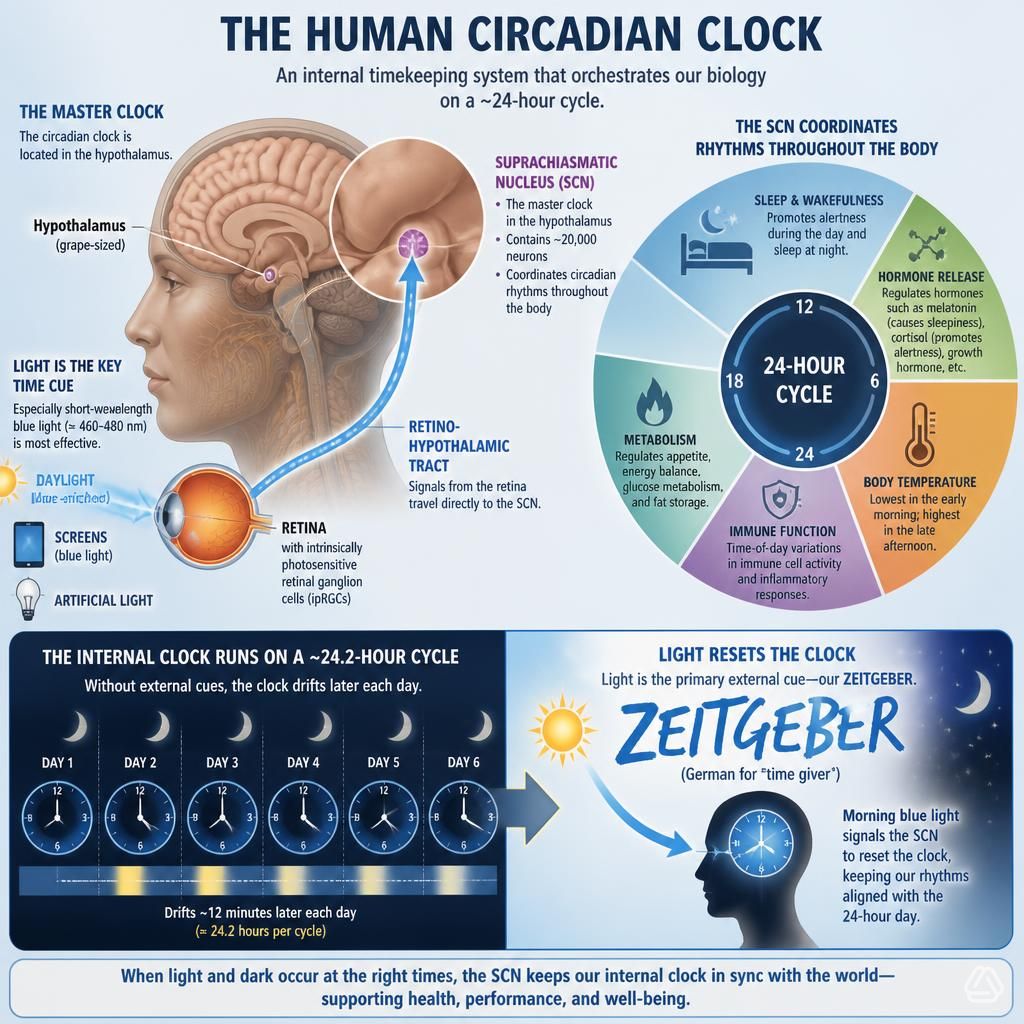
The operative word is “roughly.” The human circadian clock actually runs on a ~24.2-hour internal cycle. Without daily external cues to reset it, it drifts — and sleep quality degrades significantly as the internal clock falls out of sync with the external world. The primary cue that resets the clock each morning is light — specifically, short-wavelength blue light detected by specialised photoreceptors in the retina (intrinsically photosensitive retinal ganglion cells, or ipRGCs) that project directly to the SCN. Chronobiologists call this the primary zeitgeber — German for “time-giver.”
Two chemical systems work in concert to govern your sleepiness across the day:
| System | Mechanism | Key Insight |
|---|---|---|
| Adenosine (Sleep Pressure) | Adenosine is a metabolic byproduct that accumulates in the brain throughout waking hours. The longer you’re awake, the higher it builds — creating progressively stronger “sleep pressure.” | Caffeine works by blocking adenosine receptors — not by reducing adenosine itself. The adenosine keeps building while caffeine masks it. When caffeine clears, the accumulated adenosine floods back, causing the notorious afternoon crash. |
| Melatonin (Circadian Signal) | Melatonin is released by the pineal gland in response to darkness, signalling to the body that “biological night” has begun. It does not cause sleep — it broadcasts the timing signal that enables sleep. | Melatonin onset typically begins 2 hours before your natural sleep time. Light suppresses melatonin release — and screens after dark can delay onset by 1–3 hours, pushing the entire sleep window later. |
Your cortisol awakening response (CAR) — a natural surge of cortisol in the 30–45 minutes after waking — works in concert with the circadian clock to initiate alertness and suppress melatonin. Consistent wake times strengthen this response, producing sharper morning alertness. Erratic wake times blunt it, contributing to the foggy, unrefreshed mornings that many people normalise but shouldn’t.
“The circadian clock is not just a sleep timer — it is the master regulator of almost every system in your body. Disrupting it consistently doesn’t just impair sleep. It impairs everything downstream of sleep.”— Summary of circadian biology research, National Institute of General Medical Sciences
What’s Wrecking Your Sleep (That You Probably Don’t Know About)
Most people know they should “sleep better.” Far fewer understand the specific mechanisms by which common everyday habits are systematically dismantling the architecture of their sleep — often while they feel they’re sleeping just fine.
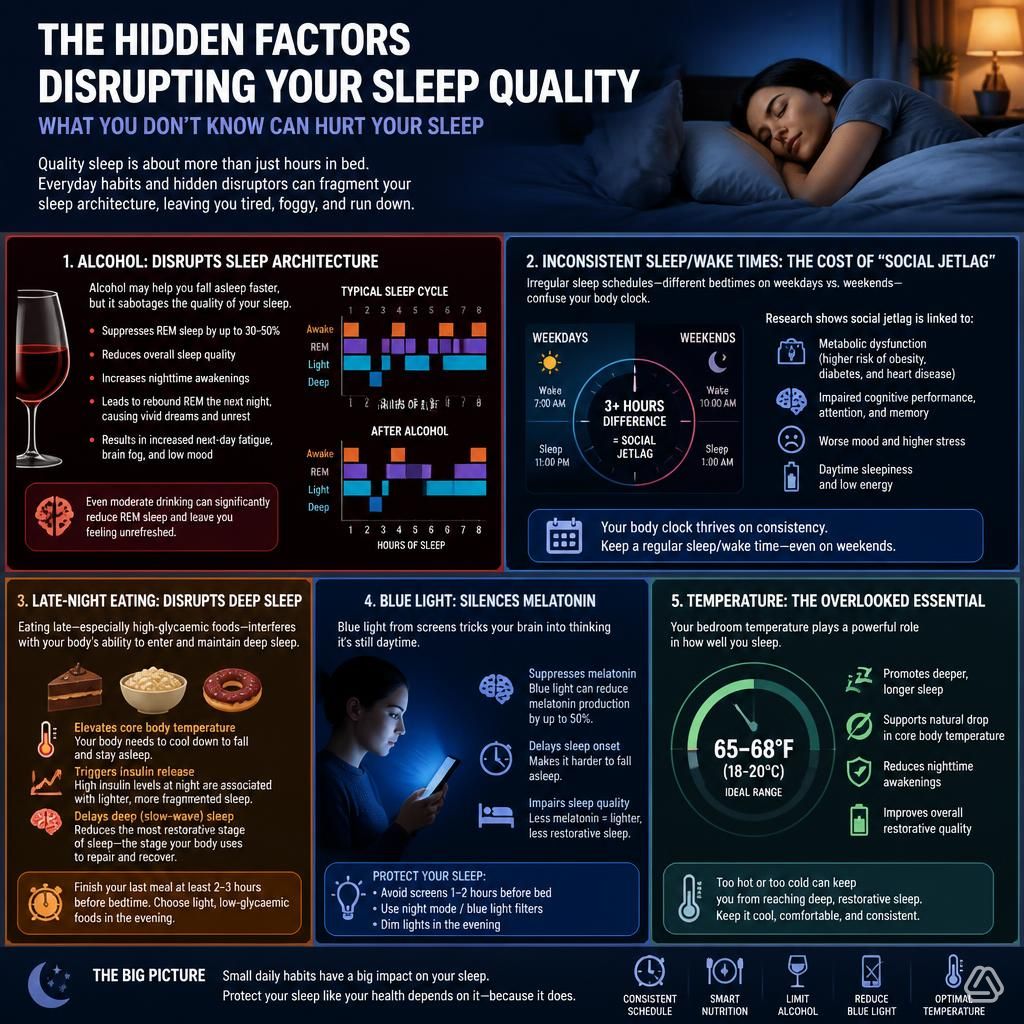
Alcohol — The Sleep Architecture Destroyer
This one requires a complete mindset reset for most people. Alcohol does not improve sleep. Alcohol is a sedative — and sedation is categorically not the same as sleep.
Here is what alcohol actually does to your sleep architecture:
- Suppresses REM sleep in the first half of the night, when sedation is strongest — producing a profoundly abnormal sleep profile.
- Fragments the second half of the night as the liver metabolises the alcohol and the sedative effect wears off, causing micro-arousals and lighter sleep.
- Reduces slow-wave (N3) sleep quality — the quality of delta waves is measurably degraded even when total N3 duration appears preserved.
- Increases next-day cortisol, blunting the cortisol awakening response and producing next-day fatigue, irritability, and reduced stress tolerance.
The feeling of “sleeping well” after a drink or two is the sedation. The brain is not sleeping — it is suppressed. Even moderate alcohol consumption (one to two drinks) within three hours of bedtime measurably degrades sleep quality by 24–40% on objective sleep architecture measures.
Inconsistent Sleep/Wake Times — Social Jetlag
Most people have two sleep schedules: their weekday schedule and their weekend schedule. Research from the University of Michigan has quantified the consequences of this pattern under the term “social jetlag” — the circadian misalignment produced by shifting sleep timing by as little as 1–2 hours across weekday and weekend schedules.
The circadian effects are remarkably similar to crossing one to two time zones. Associated consequences include increased metabolic disruption, elevated cardiovascular risk markers, impaired glucose regulation, and measurable cognitive performance deficits — all from a sleep pattern that millions of adults consider completely normal.
Late-Night Eating
Eating within 2–3 hours of bed creates several physiological conditions that directly oppose deep sleep:
- Core body temperature elevation — digestion is thermogenic. Deep sleep requires core body temperature to drop; late eating directly opposes this requirement.
- Insulin stimulation — post-meal insulin release can interfere with the hormonal environment needed for growth hormone secretion during N3.
- Cortisol spikes — particularly from high-glycaemic foods and large meals, which can fragment early-night sleep architecture.
The content of late-night food also matters. High-glycaemic carbohydrates produce the most disruptive metabolic response before bed. A small, protein-forward, low-glycaemic snack — if needed — is far less disruptive. See: The 7 Best Bedtime Snacks for Sleep Quality →
Blue Light After Dark
The mechanism is now well-established: short-wavelength blue light (peak ~480nm) from screens, LED lighting, and energy-efficient bulbs stimulates the ipRGC photoreceptors in the retina, suppressing melatonin production and signalling the SCN to delay sleep onset. Consequences include:
- Delayed melatonin onset — pushing the entire sleep window later.
- Reduced total REM sleep in the subsequent night.
- Impaired sleep quality even when sleep duration is maintained.
The practical threshold: screens off 60–90 minutes before bed, or blue-light-filtering glasses worn in the evening if screens are unavoidable. See: The 5 Daily Vitality Habits That Actually Change Your Brain →
Bedroom Temperature — The Overlooked Lever
One of the least-known and most impactful sleep optimisation variables is also one of the simplest: temperature. Your core body temperature must drop by 1–3°F (0.5–1.5°C) to initiate and sustain deep sleep. This is why you naturally curl into a ball when sleepy — the body is trying to radiate heat from its core.
☼ Optimal Bedroom Temperature
65–68°F (18–20°C) is the research-supported target range for most adults. A room that is even moderately too warm — 72°F or above — measurably reduces slow-wave sleep duration and quality. Too warm is one of the most common and easily correctable causes of non-restorative sleep.
The WellnessWays Sleep Optimization Protocol — What To Actually Do
Enough science. Here is the distilled action plan, structured by implementation timeline. Start at the top — these changes produce the fastest returns.
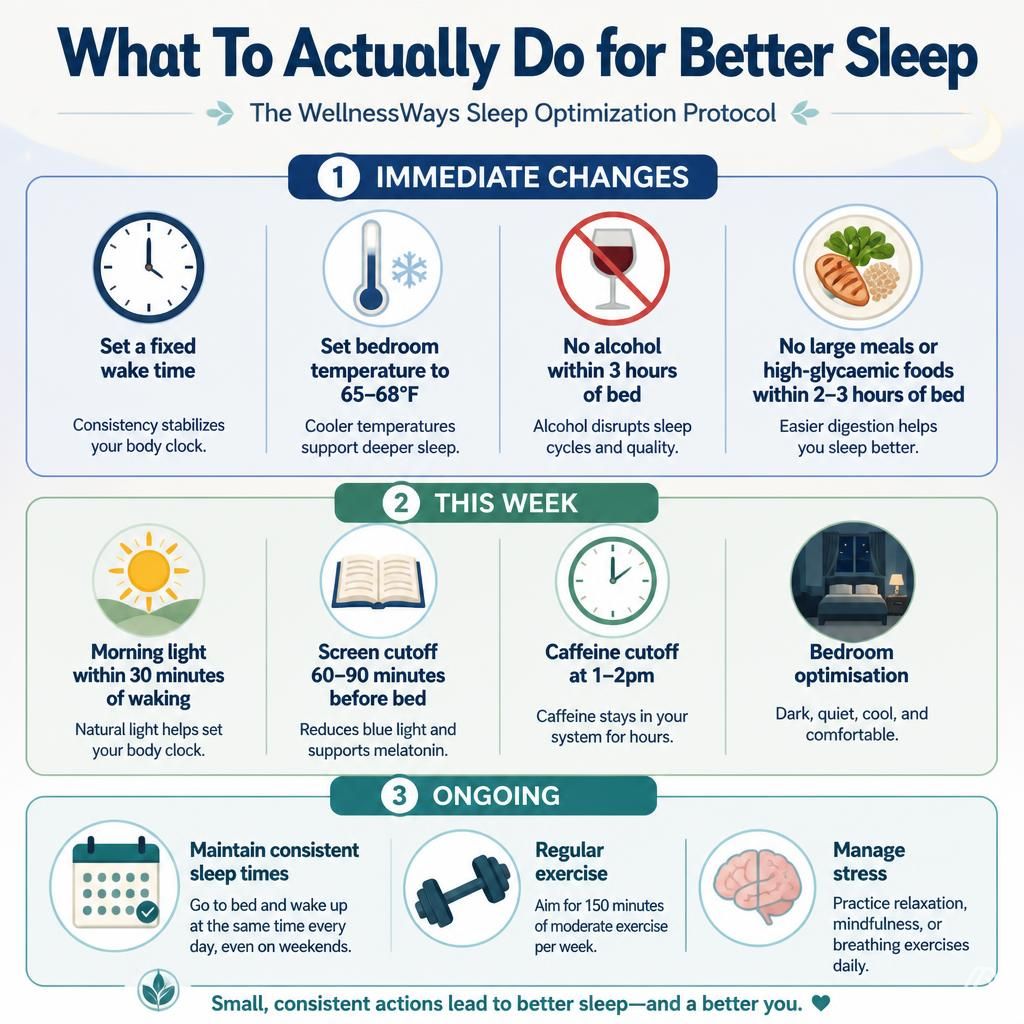
● IMMEDIATE CHANGES — Start Tonight
- Set a fixed wake time — same time, 7 days a week. This is the single highest-leverage change in sleep science. A consistent wake time anchors your circadian rhythm and strengthens the cortisol awakening response. Start here before anything else.
- Set bedroom temperature to 65–68°F (18–20°C). If you don’t control your thermostat, a fan directing air movement achieves similar thermoregulatory effect.
- No alcohol within 3 hours of bed. Not “only one drink” — any amount of alcohol within this window degrades sleep architecture.
- No large meals or high-glycaemic foods within 2–3 hours of bed. If genuinely hungry, small and protein-forward.
● THIS WEEK — Layer These In
- Morning light within 30 minutes of waking: 5–10 minutes of outdoor natural light (or a 10,000-lux light therapy lamp) sets your SCN clock, suppresses lingering melatonin, and sharpens the cortisol awakening response. This is one of the most powerful free interventions in sleep science.
- Screen cutoff 60–90 minutes before bed. Replace with reading physical print, light conversation, or a genuine wind-down routine. Blue light glasses are a workable compromise if screens are unavoidable.
- Caffeine cutoff at 1–2pm. Caffeine’s half-life is 5–7 hours — meaning a 3pm coffee still has half its caffeine active at 8–10pm, suppressing adenosine receptors during your critical sleep-initiation window.
- Bedroom optimisation: Dark (blackout curtains or a sleep mask), cool (see temperature above), quiet (consider a white noise machine or earplugs to buffer intermittent sounds, which cause micro-arousals even without fully waking you).
● ONGOING — Sustain These Habits
- Consistent sleep and wake times, including weekends. Eliminate social jetlag. The weekend lie-in feels luxurious — it is circadianly costly.
- Regular physical exercise significantly improves deep sleep quality — particularly slow-wave sleep duration and delta wave intensity. However, finish vigorous exercise at least 3 hours before bed; the post-exercise cortisol and core temperature elevation can delay sleep onset.
- Manage chronic psychological stress. Cortisol is the primary biochemical enemy of deep sleep — it suppresses slow-wave sleep architecture directly. Chronic elevated cortisol from unmanaged stress is one of the most underappreciated causes of persistently non-restorative sleep. See: The WellnessWays Brain Clarity Foundation Protocol →
Sleep and Brain Clarity — The Direct Connection
Circle back to where we started: the glymphatic system. Each night of quality sleep initiates a full-scale neural maintenance cycle. The brain’s support cells contract to open interstitial channels. Cerebrospinal fluid flows through brain tissue. Amyloid beta, tau proteins, and other neurotoxic metabolic byproducts are cleared. Synaptic pruning — the process by which the brain edits and refines its neural connections overnight, strengthening what matters and eliminating what doesn’t — occurs during N3 and REM.
The next-day cognitive consequences of a quality night versus a poor night are not subtle:
| Cognitive Domain | After Quality Sleep (7–9 hrs) | After Poor Sleep (<6 hrs) |
|---|---|---|
| Memory Consolidation | New learning integrated into long-term storage; emotionally charged memories processed | Hippocampal encoding impaired; new learning poorly retained |
| Focused Attention | Sustained attention maintained; fewer errors on vigilance tasks | Attention lapses increase significantly; performance degrades on sustained tasks |
| Processing Speed | Reaction time and decision-making speed within normal parameters | Measurably slower; equivalent to mild alcohol intoxication at severe restriction |
| Emotional Regulation | Amygdala reactivity modulated by prefrontal cortex; rational responses to stressors | Amygdala 60% more reactive; emotional volatility, irritability, threat-bias heightened |
| Creative Thinking | REM-supported cross-domain pattern recognition; novel problem-solving | Rigid, linear thinking; reduced ability to see non-obvious connections |
And over the long term, the stakes escalate further. Chronic poor sleep is among the most significant modifiable risk factors for cognitive decline. The glymphatic system’s nightly clearance of amyloid beta is not a trivial detail — it is a core mechanism of Alzheimer’s prevention. Every consistent, high-quality night of sleep is a deposit into long-term brain health. Every chronic shortfall is a measurable accumulation of risk.
🔗 Related WellnessWays Reading:
- The WellnessWays Brain Clarity Foundation Protocol
- The 5 Daily Vitality Habits That Actually Change Your Brain
- The 7 Best Bedtime Snacks for Sleep Quality
- Daily Vitality Habits That Protect Your Brain Long-Term
Frequently Asked Questions
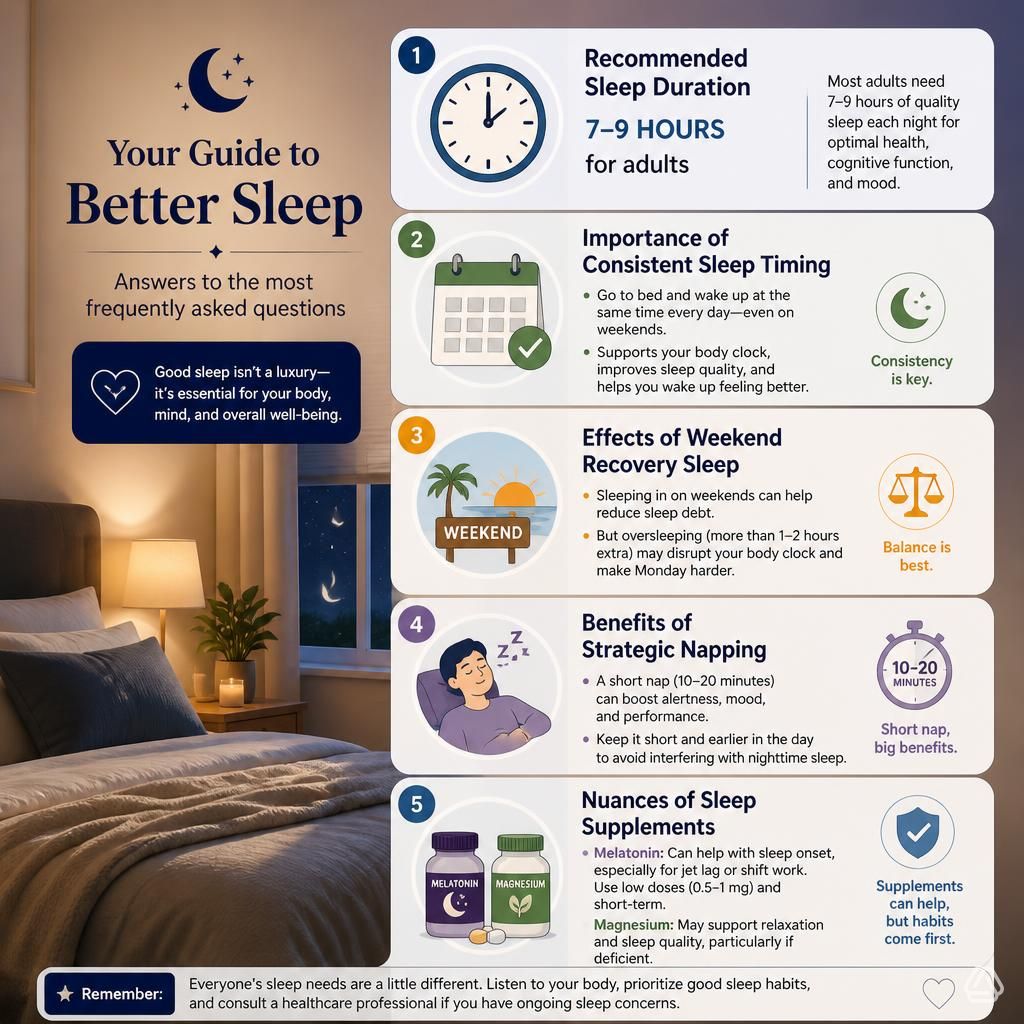
Q: How many hours of sleep do I actually need?
The National Sleep Foundation recommends 7–9 hours for adults aged 18–64. Fewer than 7 hours is associated with measurable cognitive impairment in population research. More than 9 hours regularly may indicate an underlying health issue worth discussing with your doctor — though occasional extended sleep during recovery from illness or high physical demand is normal. Quality matters as much as quantity: 8 hours of alcohol-disrupted sleep is cognitively inferior to 7 hours of clean, architecturally intact sleep.
Q: What’s more important — sleep duration or sleep timing?
Both matter significantly, but if forced to choose, consistency of timing produces more immediate circadian benefits. A consistent 7-hour sleep window aligned with your natural chronotype outperforms a variable 8-hour window in most circadian research. Irregular timing disrupts the SCN clock, impairs hormonal regulation, and degrades sleep architecture — even when total hours are nominally adequate.
Q: Can I catch up on lost sleep on weekends?
Partially — but not completely, and not without circadian cost. “Recovery sleep” can partially restore alertness and some performance metrics, but research consistently shows it does not fully reverse the metabolic and neurological consequences of chronic sleep restriction. Neuroscientist Matthew Walker’s research demonstrates that the cognitive deficits from consecutive nights of short sleep do not fully resolve with weekend recovery sleep. Consistency is categorically superior to the sleep-debt-and-catch-up cycle.
Q: Does napping help?
Strategic napping is genuinely beneficial when done correctly. The ideal nap: 10–20 minutes, completed before 3pm. Short naps restore alertness and executive function without causing significant sleep inertia or impairing nighttime sleep. Naps longer than 30 minutes enter deeper sleep stages, causing sleep inertia upon waking and potentially reducing nighttime sleep pressure. The famous “NASA nap” (26 minutes) — studied in military pilots — showed a 34% improvement in performance and 100% improvement in alertness. Napping is a tool, not a substitute for adequate nighttime sleep.
Q: What about sleep supplements like melatonin and magnesium?
These require nuance. Melatonin is most evidence-supported for shifting circadian timing — jet lag, shift work, or resetting a drifted sleep schedule — rather than improving sleep quality in otherwise healthy sleepers. Dose matters considerably: 0.5mg is often as effective as — and better tolerated than — 5–10mg doses (which frequently cause morning grogginess and can suppress the body’s own melatonin production with regular use). Magnesium glycinate has emerging evidence for improving sleep onset latency and subjective sleep quality, likely through its role in GABA receptor modulation and cortisol reduction. As with any supplement, consult a qualified healthcare professional before starting, particularly if you take other medications.
Sleep is not a lifestyle choice you optimise after handling everything else. It is the foundation that determines how well you handle everything else.
Nothing in the landscape of cognitive performance enhancement — no supplement, no nootropic stack, no biohacking protocol — comes close to producing the neurological and cognitive benefits of consistently good, architecturally intact sleep. The glymphatic system doesn’t wait. The adenosine accumulates. The amyloid builds. The emotional memories go unprocessed.
Start with sleep. Everything in wellness builds on this.
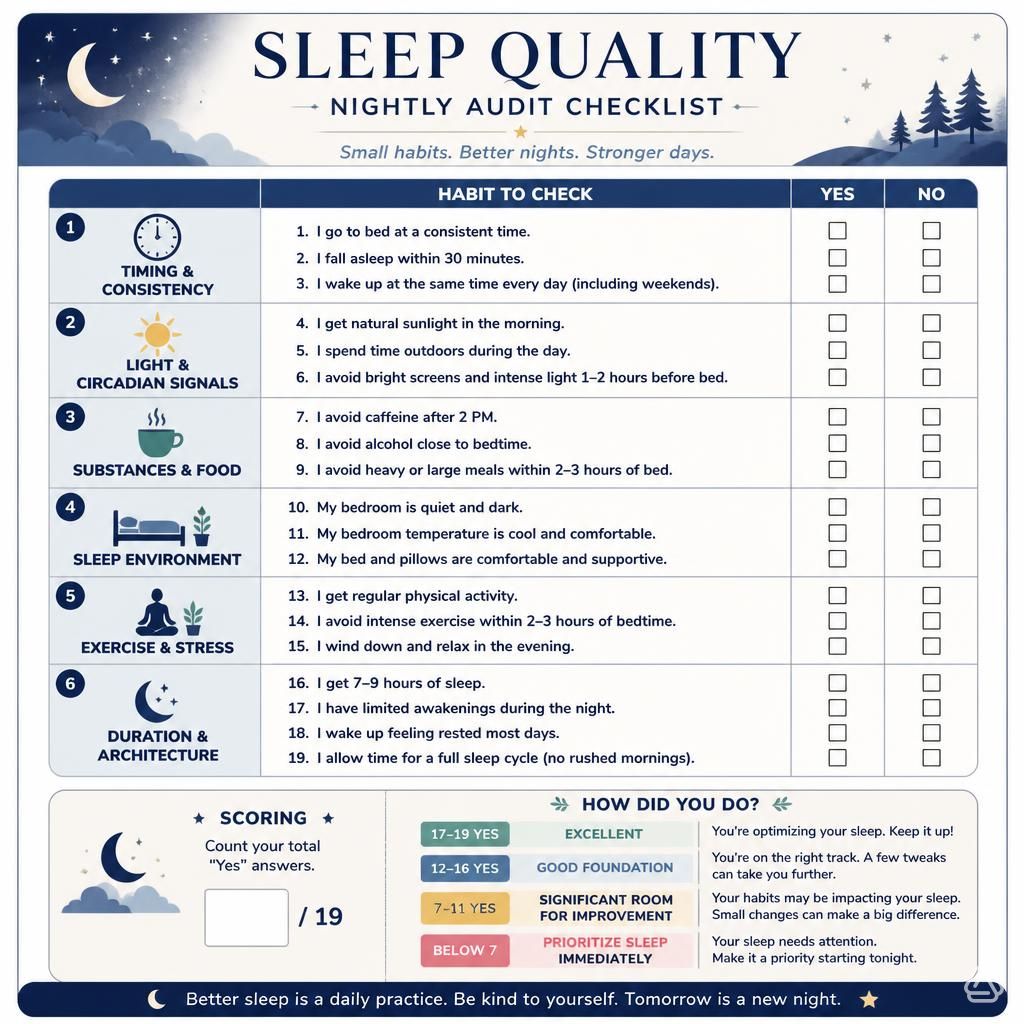
☑ Sleep Quality Checklist — Your Nightly Audit
Use this checklist (feel free to print) to score your current sleep habits. A “Yes” to every item represents an optimized sleep environment and routine. Every “No” is a specific, actionable target.
☑ Sleep Quality Checklist Your Nightly Brain Health Audit
Answer honestly — this takes 60 seconds and tells you exactly where your sleep is costing you cognitive performance.
WellnessWays.net — Sleep Quality Checklist
Your Nightly Brain Health Audit — Results
🌙 Your Sleep Schedule
📱 Your Evening Environment
🧠 Your Wind-Down Routine
⚡ Your Morning & Day Signals
Your Priority Actions
Focus on these high-impact changes first:
You’ve checked every item — outstanding sleep hygiene!
Want the complete sleep optimization protocol?
Read: Sleep Optimization — The Science of a Brain-Restoring Night → WellnessWays.net
Scoring: 17–19 Yes: Excellent sleep optimization. 12–16 Yes: Good foundation — target your No's systematically. 7–11 Yes: Significant room for improvement — start with Timing and Substances. Below 7: Sleep is likely a meaningful drag on your cognitive and physical performance — prioritize this immediately.
This article is for informational and educational purposes only and does not constitute medical advice. If you are experiencing persistent sleep difficulties, excessive daytime sleepiness, or suspect a sleep disorder such as sleep apnea, consult a qualified healthcare professional. WellnessWays.net, Published September 2026.