
WellnessWays.net
Evidence-Based Guidance for Smarter Health Decisions
Category: Supplement Education | Reading Time: Approx. 10 minutes | Last Updated: September 2026 | By: The WellnessWays Editorial Team
How to Read a Supplement Label — A Plain-English Guide (No PhD Required)
The Supplement Facts panel is the most information-dense — and most frequently misleading — part of any supplement label. Learning to read it correctly changes everything.
Walk into any health food store — or open any supplement website — and you’ll face a wall of confusing labels, impressive-sounding claims, and ingredient lists that read like a chemistry textbook. Most people do one of two things: they trust blindly because the packaging looks professional, or they give up entirely and grab whatever is cheapest or most prominently displayed. Neither approach serves you well.
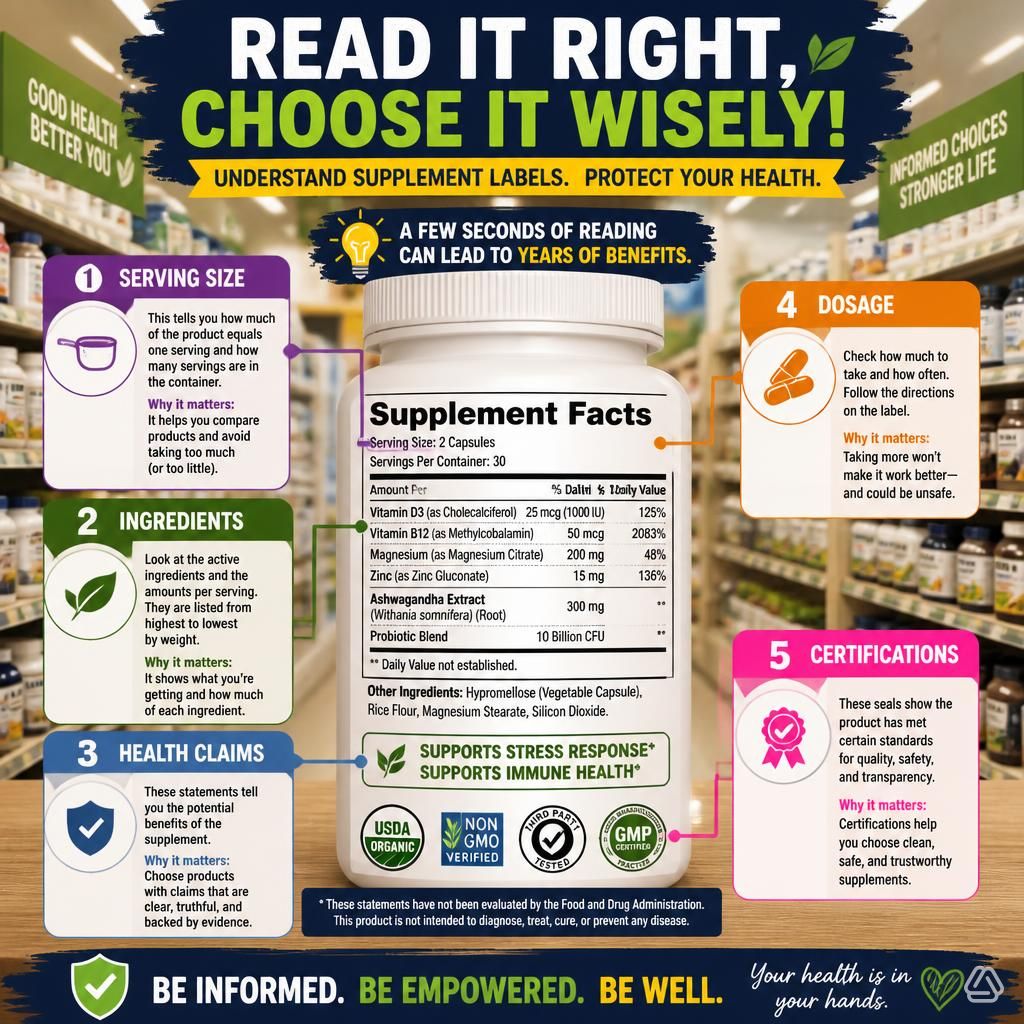
There is a third option. This guide teaches you to read supplement labels the way a knowledgeable pharmacist or nutrition researcher would — so you know exactly what you’re buying, whether it’s dosed effectively, and whether it’s actually worth your money. No advanced degree required. Just the right framework and the right questions.
⚠ The Supplement Industry Reality Check
In the US, dietary supplements are NOT required to prove safety or efficacy before going to market. The FDA regulates supplements differently from prescription drugs — manufacturers are responsible for ensuring their products are safe, but pre-market approval is not required. A supplement can be sold tomorrow with a compelling label and zero clinical evidence behind it.
This is why knowing how to read labels is not optional — it is essential consumer self-protection. The FDA can take action against unsafe products after the fact, but that does nothing for the money you already spent.
The Anatomy of a Supplement Label — What Every Section Means
Every regulated supplement sold in the US must follow a prescribed label format. Once you understand what each section is supposed to tell you — and the tricks manufacturers use to obscure that information — you’ll be able to evaluate any product in under two minutes.
1. The Supplement Facts Panel — The Most Important Part
The Supplement Facts panel is the regulated black-and-white box on every supplement label. It’s the equivalent of the Nutrition Facts panel on food. This is where you do most of your investigative work.
Serving Size: This tells you what constitutes one dose of the product. Here is where the first manipulation often happens. A serving size listed as “4 capsules” is a common tactic to make a bottle appear to contain more value than it does — and to allow a lower per-capsule dose to look more impressive on paper. Always check this first and ask: is this a realistic amount to take at once?
Servings Per Container: This tells you the total number of doses in the bottle. This is the number you use to calculate true cost per serving — not the sticker price. A $60 bottle with 30 servings costs $2.00 per day. A $35 bottle with 15 servings costs $2.33 per day. Always calculate cost per serving, not cost per bottle.
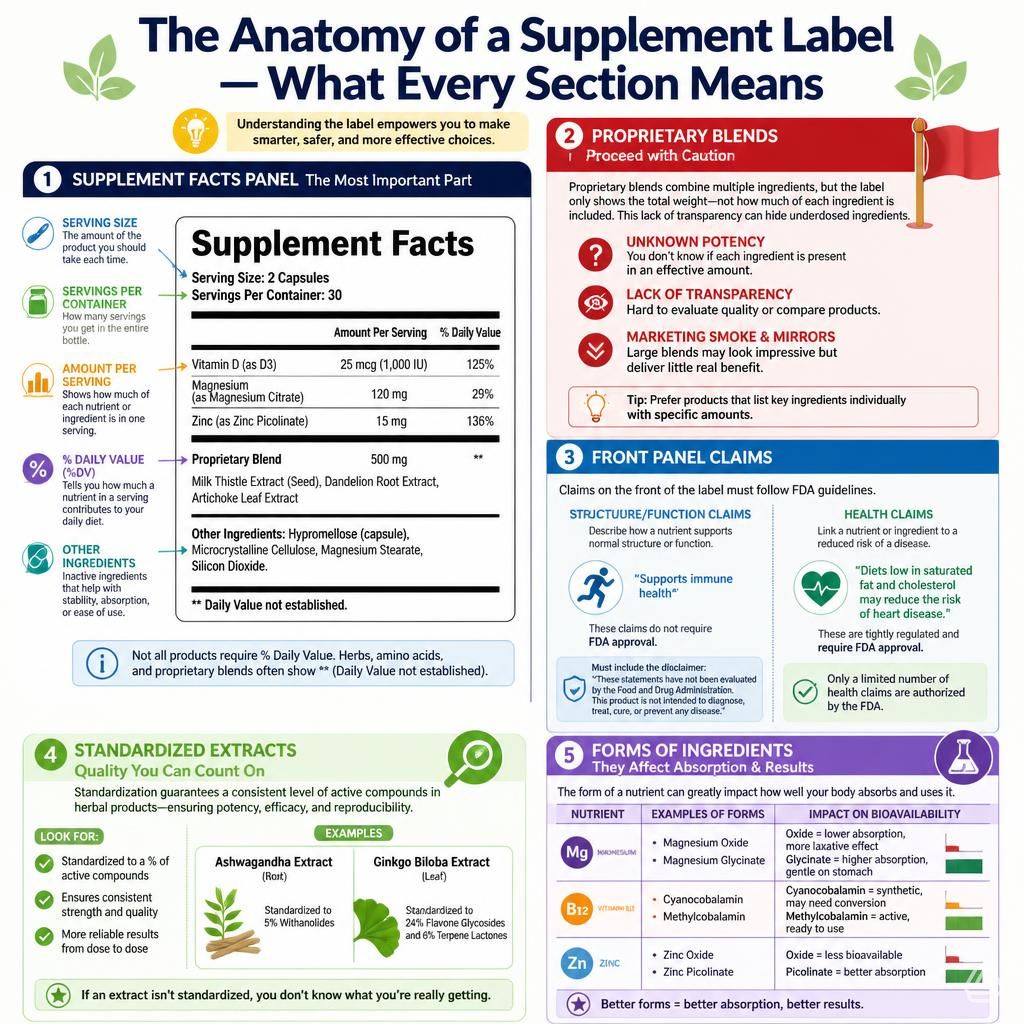
Amount Per Serving: This lists the actual dose of each ingredient per serving. This is where the most consequential label fraud hides. An ingredient can be listed on the label at a dose so far below the therapeutic range that it provides no measurable benefit — yet its presence on the label is technically truthful. We’ll cover how to verify effective doses later in this guide.
% Daily Value (%DV): This tells you what percentage of the recommended daily intake a serving provides. For vitamins and minerals with well-established reference values (like Vitamin D, Vitamin C, Iron, Magnesium), %DV is genuinely useful context. However, for herbs, nootropics, and specialty compounds, you will almost always see a † symbol, which means “Daily Value not established.” In those cases, %DV tells you nothing about whether the dose is effective. Don’t let a big number mislead you — and don’t be deterred by a †.
Other Ingredients: Listed below the main panel, this section discloses fillers, binders, capsule materials, flow agents, and coatings. Most of these — microcrystalline cellulose, magnesium stearate, silicon dioxide — are benign. However, this section matters if you have allergies or sensitivities. Watch for: soy lecithin, gluten-containing fillers, dairy derivatives, artificial colors (Red 40, Blue 1), hydrogenated vegetable oils, and high-fructose corn syrup (yes, occasionally found in gummy supplements).
2. Proprietary Blends — The Biggest Red Flag in Supplements
A proprietary blend (also called a “matrix,” “complex,” or “formula”) is one of the most consumer-unfriendly practices in the supplement industry, and it is entirely legal. Here is how it works:
Instead of disclosing how much of each ingredient is in the product, the manufacturer lists all ingredients together under a single combined weight. For example: “Cognitive Matrix — 750mg” followed by a list of six ingredients. You know the total is 750mg. You have no idea how it is distributed. The most expensive, research-backed ingredient in that list could be present at 5mg — a homeopathic trace — while the remaining 745mg is cheap filler. The manufacturer can still print that ingredient prominently on the front label.
This practice exists because it is genuinely cheaper to produce and because it allows companies to protect formulas from competitors. However, the primary victim is you: without knowing individual ingredient amounts, it is impossible to verify whether you are receiving a therapeutically effective dose of anything in the blend.
The WellnessWays Position
Avoid proprietary blends whenever possible. Full ingredient transparency is not just a preference — it is a signal of quality. Brands that are confident in their formulas disclose every dose. The willingness to hide individual ingredient amounts should always raise your suspicion about why they’re hiding them.
3. The Front Panel Claims — What They Mean (and Don’t Mean)
The front of a supplement bottle is pure marketing real estate. The FDA does regulate what categories of claims manufacturers can make, but within those categories, the latitude for impressive-sounding language is enormous.
Structure/Function Claims are by far the most common type you’ll encounter: “Supports healthy memory,” “Promotes cognitive function,” “Helps maintain a healthy immune response.” These claims do not require FDA pre-approval — manufacturers are only required to notify the FDA within 30 days of first using the claim. The manufacturer must have substantiation that the claim is truthful, but that substantiation is never reviewed before the product hits shelves. These claims cannot state that the product treats, cures, or prevents any disease — which is why you’ll see “supports” and “promotes” language rather than “treats” or “cures.”
Health Claims require FDA pre-authorization and must be backed by significant scientific agreement. They are rare on supplements precisely because the bar is high.
Qualified Health Claims are FDA-authorized but come with mandatory disclaimers such as “Some evidence suggests, but does not prove, that…” This language signals weaker or emerging evidence — manufacturers are allowed to make the claim, but only with the caveat clearly attached.
Key Lesson: Marketing Phrases to Ignore
“Clinically studied,” “doctor-formulated,” “scientifically backed,” “research-proven,” and “advanced formula” are marketing phrases with no regulatory definition whatsoever. They require no evidence, no study, and no approval to print. When you see these terms without a verifiable citation to peer-reviewed research, treat them as decoration — not evidence.
4. Standardised Extracts — What This Means and Why It Matters
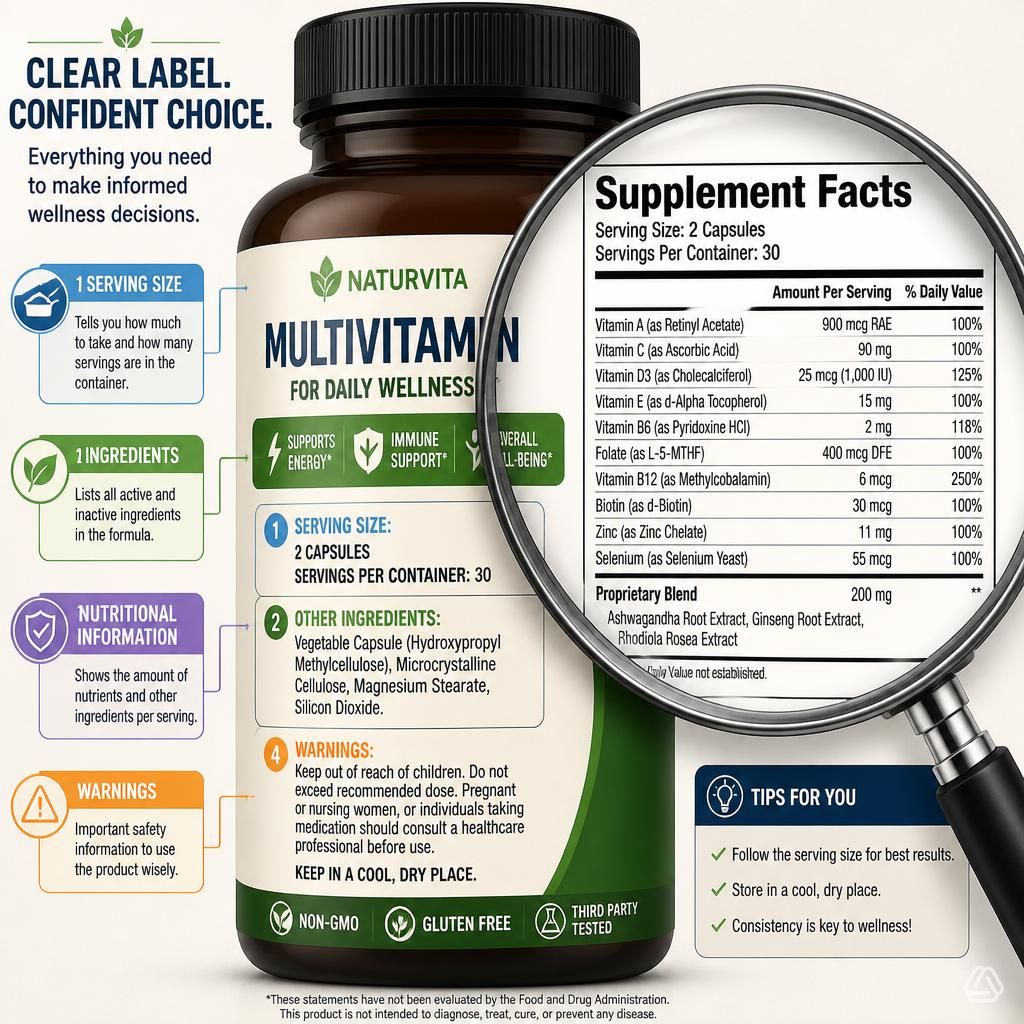
For herbal supplements, this is one of the most critically important — and most overlooked — pieces of information on a label. Standardisation means the extract has been manufactured to guarantee a specific percentage of the compound believed to be responsible for the herb’s effects.
Consider Bacopa monnieri, one of the most well-researched cognitive herbs. The active compounds in Bacopa are called bacosides. The majority of clinical trials showing cognitive benefits used Bacopa standardised to 45–55% bacosides. A raw, non-standardised Bacopa extract may contain very little bacosides — the concentration is inconsistent from batch to batch and harvest to harvest.
When you see “Bacopa monnieri standardised to 55% bacosides,” you know the product has been manufactured to guarantee that active compound content. When you see just “Bacopa monnieri extract” with no standardisation percentage, quality cannot be guaranteed. This is why two 300mg Bacopa products at similar price points can have dramatically different real-world effects.
Always look for standardisation percentages on herbal ingredients. If it’s not listed, ask the manufacturer directly — reputable brands will have this information readily available.
🔗 Further Reading on WellnessWays
5. Forms of Ingredients — Bioavailability Matters Enormously
Two supplements can list identical ingredients at identical doses and produce completely different results in your body. The reason is bioavailability — how much of a nutrient your body can actually absorb and use. Ingredient form is the primary driver of bioavailability, and it is routinely ignored by consumers focused only on the milligram count.
| Nutrient | Low-Quality Form | Higher-Quality Form | Why It Matters |
|---|---|---|---|
| Magnesium | Magnesium oxide | Magnesium glycinate or malate | Oxide is ~4% absorbed; glycinate/malate ~80% absorbed |
| Vitamin B12 | Cyanocobalamin | Methylcobalamin | Cyanocobalamin requires conversion in the body; methylcobalamin is the active form used directly |
| Curcumin | Standard curcumin extract | BCM-95, Longvida, or Meriva | Standard curcumin has very poor absorption; patented forms offer 5–29x better bioavailability |
| Omega-3 | Ethyl ester fish oil | Triglyceride-form fish oil | Triglyceride form is significantly better absorbed; ethyl ester is cheaper to produce |
| Folate | Folic acid | Methylfolate (L-5-MTHF) | Up to 40% of people carry MTHFR gene variants that impair folic acid conversion; methylfolate bypasses this entirely |
The key message: milligrams on a label are not the whole story. A 500mg dose of magnesium oxide delivers approximately 20mg of usable magnesium. A 300mg dose of magnesium glycinate delivers approximately 240mg. The label showing the higher number is not the better product.
Third-Party Testing — The Gold Standard of Quality Verification
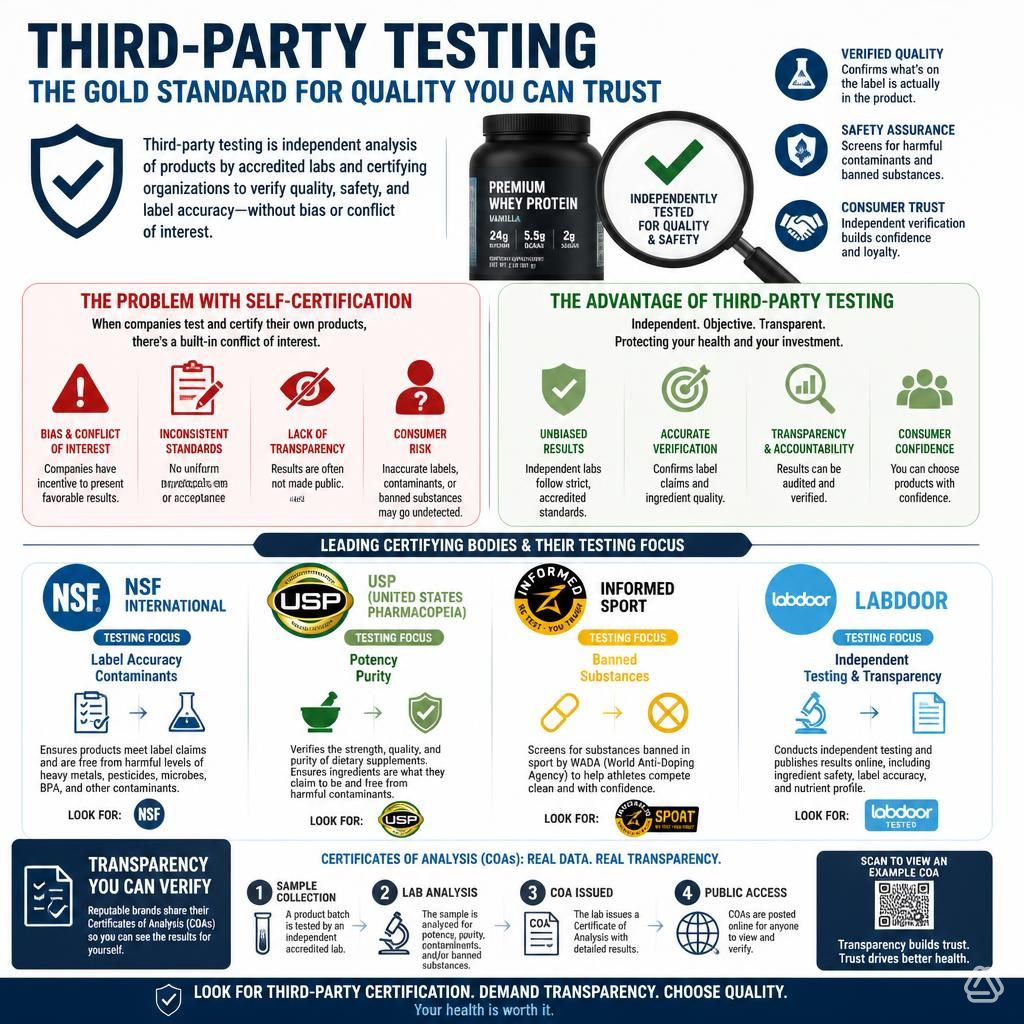
Manufacturers are legally permitted to test their own products and certify their own compliance. The obvious problem: there is no independent oversight of that self-certification. Third-party testing means an independent laboratory — with no financial relationship with the manufacturer — tests the product and verifies what is on the label.
Third-party certification is not required by law, which is precisely why it’s a meaningful quality signal when it exists. Look for these certifying bodies:
| Certifying Body | What They Test For | Primarily Used By |
|---|---|---|
| NSF International / NSF Certified for Sport | Label accuracy, contaminants, heavy metals, banned substances | General wellness and athletes |
| USP (United States Pharmacopeia) | Potency, purity, dissolution rate, manufacturing quality | General wellness supplements |
| Informed Sport / Informed Choice | Banned substance testing (WADA list) | Competitive athletes |
| Labdoor | Independent consumer testing; publishes rankings and letter grade scores | General consumers; useful starting point for research |
Look for certification seals on the product label — and verify them directly on the certifying body’s official website, since counterfeit seals exist. It’s also worth noting that certification is expensive. Many excellent smaller brands, particularly newer companies with high-quality formulas, cannot yet afford third-party certification. In those cases, look for brands that publish their Certificates of Analysis (COAs) from independent labs on their website. A COA made available publicly, from a named independent lab, is meaningful evidence of transparency even without a formal certification seal.
Dosage — How to Know If You’re Getting an Effective Amount
This may be the section that saves you the most money. A supplement can contain a legitimate, well-researched ingredient — and still be entirely ineffective because it’s included at a dose so far below the therapeutic range that it may as well not be there. This practice, sometimes called “fairy dusting,” allows manufacturers to list impressive ingredients on their labels while significantly reducing their cost of goods.
Use this evidence-based reference table as your benchmark when evaluating brain health and nootropic supplements:
| Ingredient | Evidence-Based Effective Dose Range | Common Under-Dosed Amount (Red Flag) | Notes |
|---|---|---|---|
| Omega-3 DHA | 1,000–2,000mg DHA specifically | Under 500mg DHA | Look for DHA content specifically — not just total “Omega-3” or “fish oil” weight |
| Lion’s Mane Mushroom | 500–1,000mg fruiting body extract | Under 150mg; or mycelium on grain | Fruiting body extract only; see dedicated section below |
| Bacopa Monnieri | 300mg standardised to 45–55% bacosides | Under 150mg; or non-standardised | Standardisation is mandatory for meaningful effect |
| Citicoline (CDP-Choline) | 250–500mg | Under 100mg | More cognitively active than Alpha-GPC at equivalent doses in some research |
| Magnesium Glycinate | 300–400mg elemental magnesium | Under 100mg elemental | Check elemental magnesium content, not the salt weight |
| L-Theanine | 100–200mg (typically paired with caffeine) | Under 50mg | The 2:1 theanine-to-caffeine ratio is the most commonly studied pairing |
| Phosphatidylserine | 100mg, three times daily (300mg total/day) | Under 100mg total daily | Dosing frequency matters as much as total amount |
The Uncomfortable Pattern
Walk through any pharmacy supplement aisle and check the Bacopa and Lion’s Mane doses in popular “brain health” blends. You will routinely find 50–100mg of Bacopa (research dose: 300mg) and 50mg of Lion’s Mane (research dose: 500–1,000mg of fruiting body). These amounts are legally listable on the label. They are not clinically meaningful.
🔗 Further Reading on WellnessWays
- The Complete Guide to Nootropic Stacking for Beginners
- The WellnessWays Brain Clarity Foundation Protocol
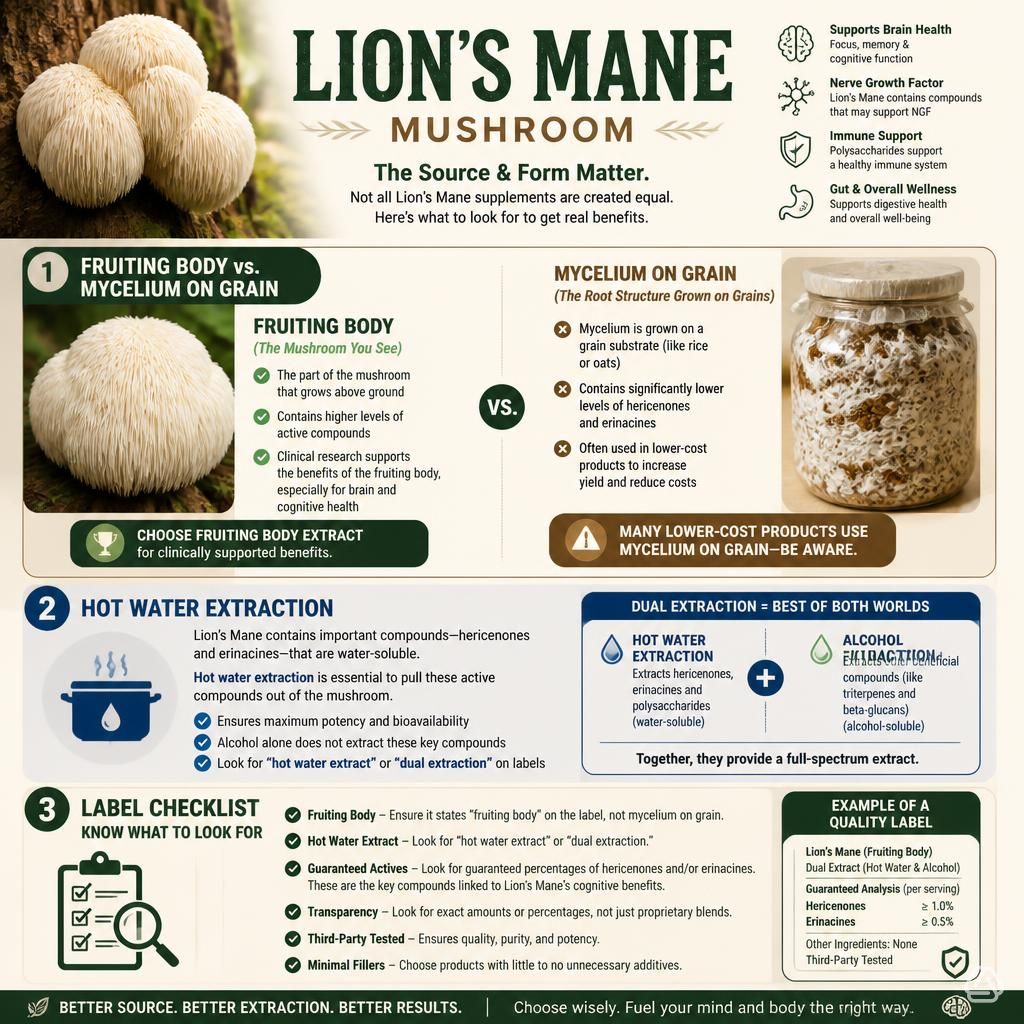
Lion’s Mane Mushroom — A Special Note on Source and Form
Lion’s Mane deserves its own section because it is currently one of the most misrepresented ingredients in the consumer supplement market. Its rise in popularity has been met with a flood of products that are genuinely misleading — and the label distinctions that separate high-quality from low-quality Lion’s Mane are easy to verify once you know what to look for.
Fruiting Body vs. Mycelium on Grain: The clinical research on Lion’s Mane — the studies showing nerve growth factor (NGF) stimulation, cognitive benefits, and neuroprotective effects — has been conducted primarily using extracts of the mushroom fruiting body (the actual mushroom). Many products sold in the US, particularly lower-cost options, use mycelium on grain — the root-like structure of the fungus, grown on a substrate of oats or rice and then dried and powdered. The result is largely grain starch with a relatively low concentration of the active compounds, hericenones and erinacines, compared to fruiting body extract.
Hot Water Extraction: The active compounds in Lion’s Mane are water-soluble polysaccharides and beta-glucans. They require hot water extraction to be made bioavailable. Look for “hot water extract” or “dual extraction” on the label. A product that simply grinds dried mushroom (or mycelium) into powder without extraction is delivering a fraction of the bioactive content.
What to look for on the label: The word “fruiting body” explicitly stated, a guaranteed percentage of hericenones and/or erinacines, and confirmation of hot water or dual extraction. If none of these appear, assume the product is mycelium on grain unless the brand can provide documentation otherwise.
🔗 Further Reading on WellnessWays
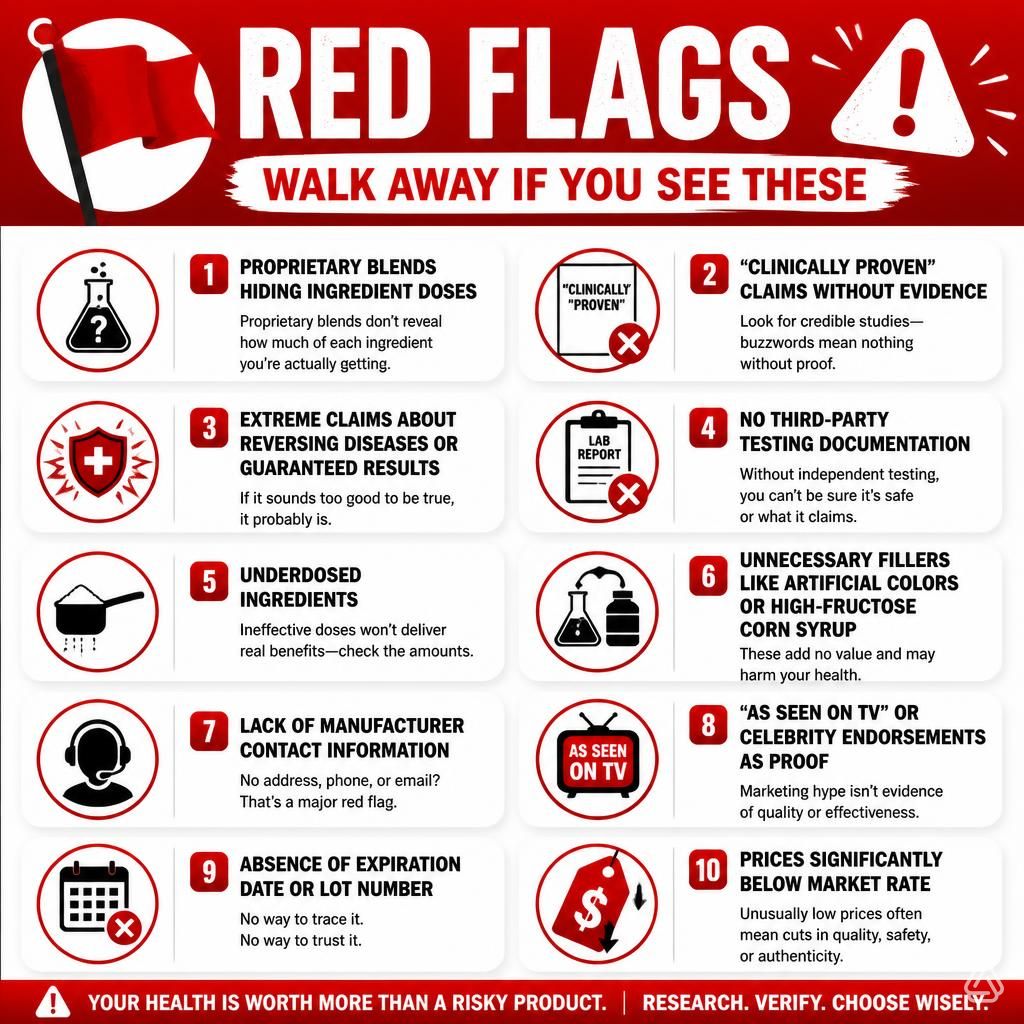
Red Flags — Walk Away If You See These
Consider this your quick-reference warning list. Any one of these alone warrants extra scrutiny. Multiple red flags on the same product should be disqualifying.
- 🚨 Proprietary blends that hide individual ingredient doses under a combined weight
- 🚨 “Clinically proven” with no citation, no study reference, and no verifiable evidence
- 🚨 Extreme claims — any language suggesting the product reverses neurological disease, doubles cognitive performance, or produces dramatic guaranteed results
- 🚨 No third-party testing documentation of any kind — no certifications, no published COAs
- 🚨 Underdosed ingredients — verifiable by comparing label amounts to the evidence-based ranges in the table above
- 🚨 Unnecessary fillers — artificial colors, hydrogenated oils, or high-fructose corn syrup in a health supplement
- 🚨 No physical address or direct contact information for the manufacturer on the label or website
- 🚨 “As Seen on TV” or celebrity endorsements presented as evidence of efficacy — popularity is not evidence
- 🚨 No expiration date or lot number — these are required and their absence is a quality signal
- 🚨 Prices dramatically below market rate for the ingredients listed — premium ingredients cost money; if it seems impossible, something is being cut
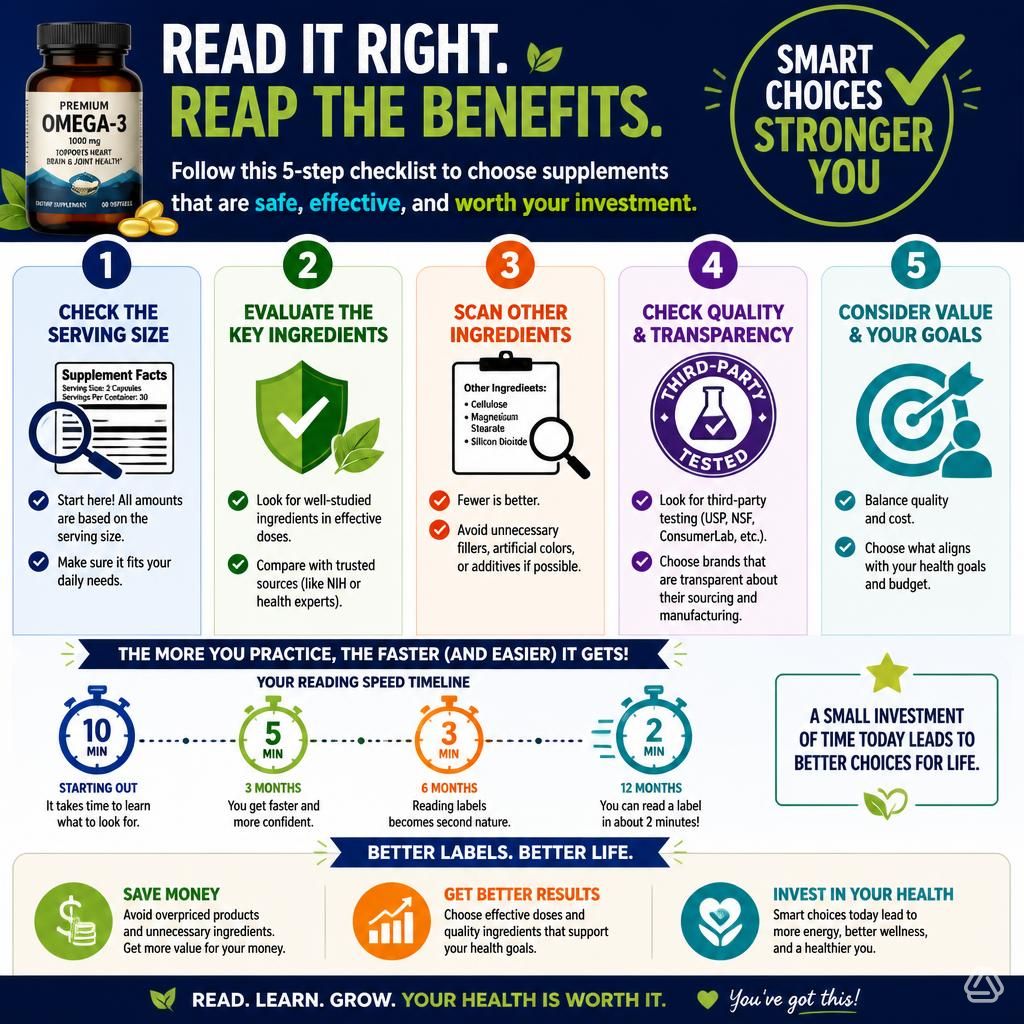
A 5-Step Label-Reading Checklist — Use This Before Every Purchase
Print this out. Save it on your phone. Run through it in the store or on a product page before you add anything to your cart.
✅ The WellnessWays Label-Reading Checklist
- 1Check the Supplement Facts panel for full transparency. Is the dosage of each key ingredient listed individually — not hidden inside a proprietary blend? If you can’t see individual ingredient amounts, stop here.
- 2Verify doses against the evidence-based therapeutic range. Use the dosage reference table in this guide (or Examine.com) to confirm that the listed amounts are within the range used in actual clinical research. If key ingredients are significantly underdosed, move on.
- 3Check ingredient form for bioavailability. Are you getting magnesium glycinate or magnesium oxide? Methylcobalamin or cyanocobalamin? BCM-95 curcumin or plain curcumin? The form determines how much reaches your bloodstream.
- 4Check for standardisation on all herbal ingredients. Is there a percentage listed next to each herb (e.g., “standardised to 55% bacosides”)? If not, quality and potency cannot be verified.
- 5Verify third-party testing. Look for NSF, USP, Informed Sport, or Labdoor verification. If none of these apply, check the brand’s website for published Certificates of Analysis from named independent labs.
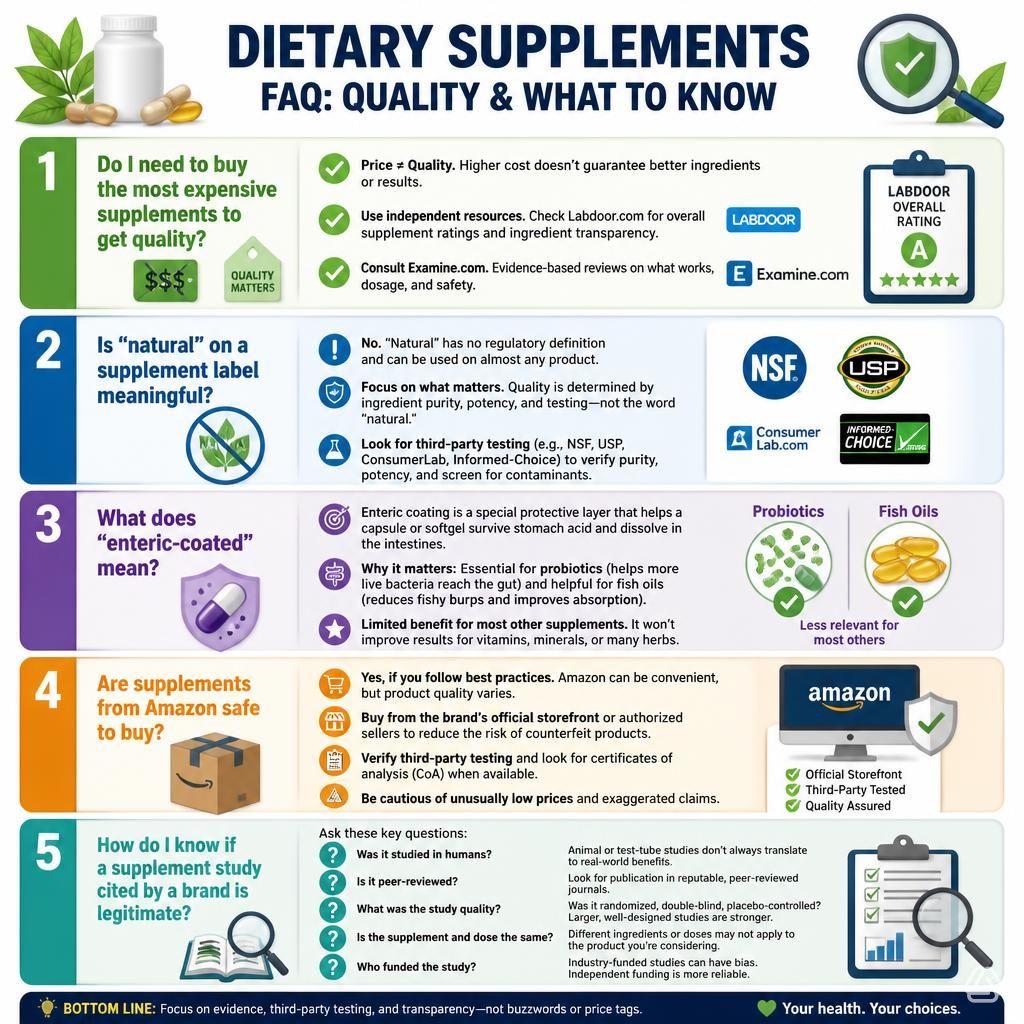
Frequently Asked Questions
Q: Do I need to buy the most expensive supplements to get quality?
Not necessarily — and this is one of the most common misconceptions in the supplement market. Price is a poor proxy for quality. Some very affordable supplements pass rigorous third-party testing, while expensive premium brands with sophisticated marketing may not. The variables that determine quality — ingredient form, dose transparency, standardisation, and independent testing — have no consistent relationship with retail price. Use Labdoor ratings and Examine.com for objective, price-independent quality information before making purchasing decisions.
Q: Is “natural” on a supplement label meaningful?
No. “Natural” has no regulatory definition in the supplement industry. The FDA has not established a formal definition for the term, and it carries no legal requirement for any specific ingredient sourcing or manufacturing standard. Arsenic is natural. Mercury is natural. The term is pure marketing. Focus on third-party testing results and ingredient transparency — those are measurable and meaningful. “Natural” is not.
Q: What does “enteric-coated” mean?
Enteric coating is a specialized capsule or tablet coating designed to prevent dissolution in the stomach’s acidic environment, instead releasing the contents in the more neutral small intestine. This is genuinely useful for probiotics (where survival through stomach acid is a real concern) and some fish oils (to prevent the unpleasant “fishy burp” reflux effect). For most nootropics, vitamins, and mineral supplements intended for upper digestive absorption, enteric coating offers no meaningful benefit and is sometimes a marketing feature rather than a functional one.
Q: Are supplements from Amazon safe to buy?
This requires a nuanced answer. Amazon operates a marketplace model that allows third-party sellers, and counterfeit supplements are a documented, ongoing problem on the platform — including products that fail label accuracy testing or contain undisclosed ingredients. That said, Amazon is a legitimate purchasing channel when used carefully. Best practices: buy only from the brand’s official Amazon storefront (not third-party resellers listing the same product at lower prices), verify that third-party testing applies to the batch you’re purchasing, and consider purchasing high-value or high-dose supplements directly from the manufacturer’s own website where chain of custody is unambiguous.
Q: How do I know if a supplement study cited by a brand is legitimate?
Several questions help here. Was the study conducted on humans (not animals or cell cultures)? Was it randomized and placebo-controlled? Was it published in a peer-reviewed journal? Was it conducted on the specific ingredient form and dose in this product — or on a different form entirely? And critically: was it funded by the manufacturer? Industry-funded studies are not automatically invalid, but they carry a known publication bias. Look for independent replications of the findings. Tools like PubMed and Examine.com make this research accessible to non-specialists.
🔗 Further Reading on WellnessWays
The Bottom Line
Reading a supplement label is a skill — and like all skills, it gets noticeably easier with practice. The first time you run through the five-step checklist, it might take ten minutes. The twentieth time, it’ll take two. And over the course of a year of smart shopping, that skill will save you money, protect you from ineffective products, and help you direct your health dollars toward what actually works.
Remember the framework: full dose transparency first, bioavailable forms second, standardised herbs third, verified third-party testing fourth, everything else last. A product that clears all five checkpoints at a competitive per-serving price is a product worth considering. One that fails any of the first three rarely merits a second look regardless of how the front panel reads.
Buy smart, dose correctly, and always build the lifestyle foundation first — sleep, nutrition, movement, and stress management remain the most evidence-based “supplements” available. Everything else is supporting cast.
This guide is for educational purposes only and does not constitute medical advice. Consult a qualified healthcare provider before beginning any new supplement regimen, particularly if you take prescription medications or have underlying health conditions.
🔗 Explore More on WellnessWays