
Here we’ll Look Into why metabolism slows after 50, and What You Can Do About It
Introduction
You did not change. Your discipline did not change. Your motivation did not change. But somewhere in your late 40s or early 50s, your body quietly rewrote the rules — and nobody handed you the new manual.
Weight that used to come off with two weeks of clean eating now barely budges after two months. Belly fat appeared that was not there before. The energy that used to fuel your workouts seems harder to access.
This is not in your head. It is in your biology. And understanding exactly what is happening is the first step to doing something effective about it.
The Numbers Are Real
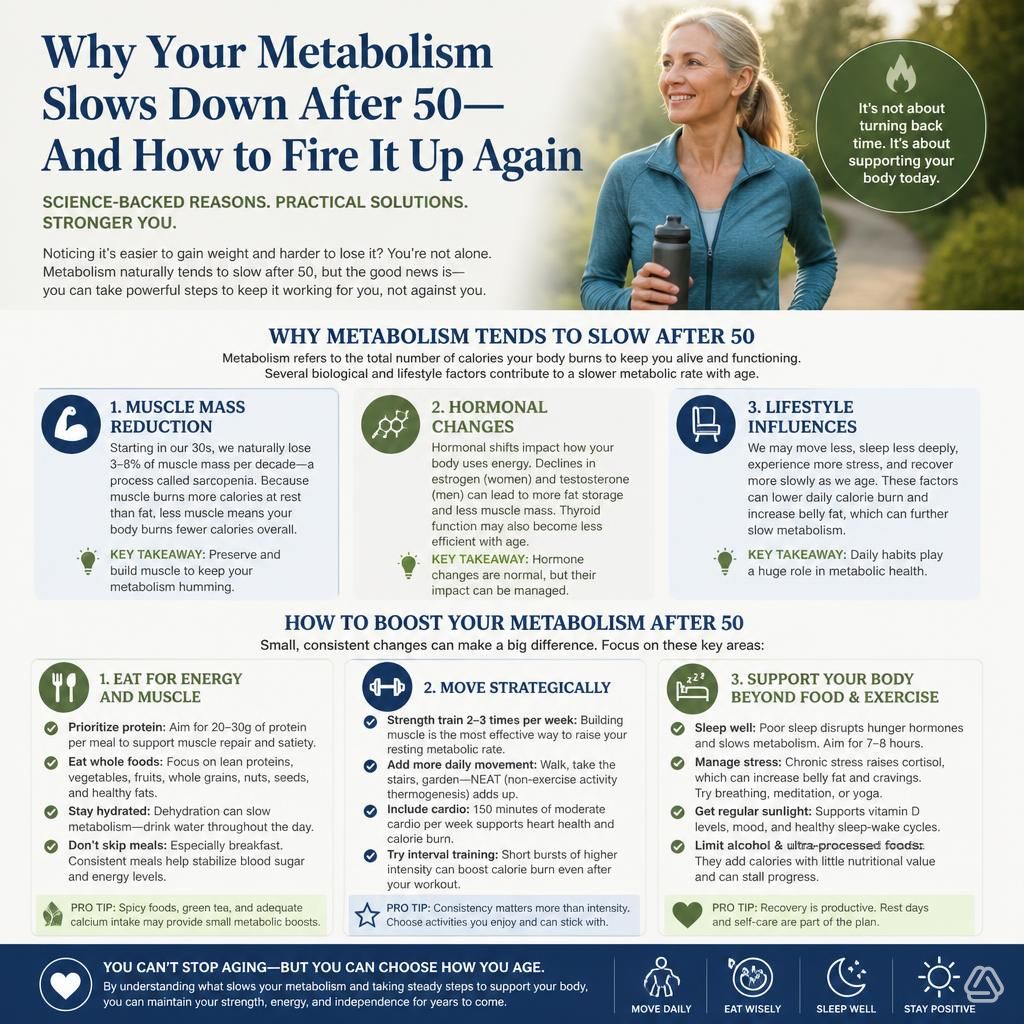
Before diving into the causes, it helps to appreciate the scale of the change.
A comprehensive study published in Science in 2021 — analyzing data from 6,500 people across 29 countries aged 8 to 95 — found that metabolic rate remains remarkably stable from age 20 to 60, after which it begins declining at approximately 0.7 percent per year.
However, this figure masks significant individual variation. Adults who lose substantial muscle mass, experience significant hormonal changes, become more sedentary, or develop gut dysbiosis can experience metabolic declines far steeper than the average.
The practical consequence: an adult at 55 may require 300 to 500 fewer daily calories than they did at 35 to maintain the same weight — even with similar activity levels. Without any awareness of this shift, the result is slow, steady, seemingly inexplicable weight gain.
The 5 Science-Backed Reasons Your Metabolism Slows After 50
Reason 1 — You Are Losing Muscle Mass Every Year
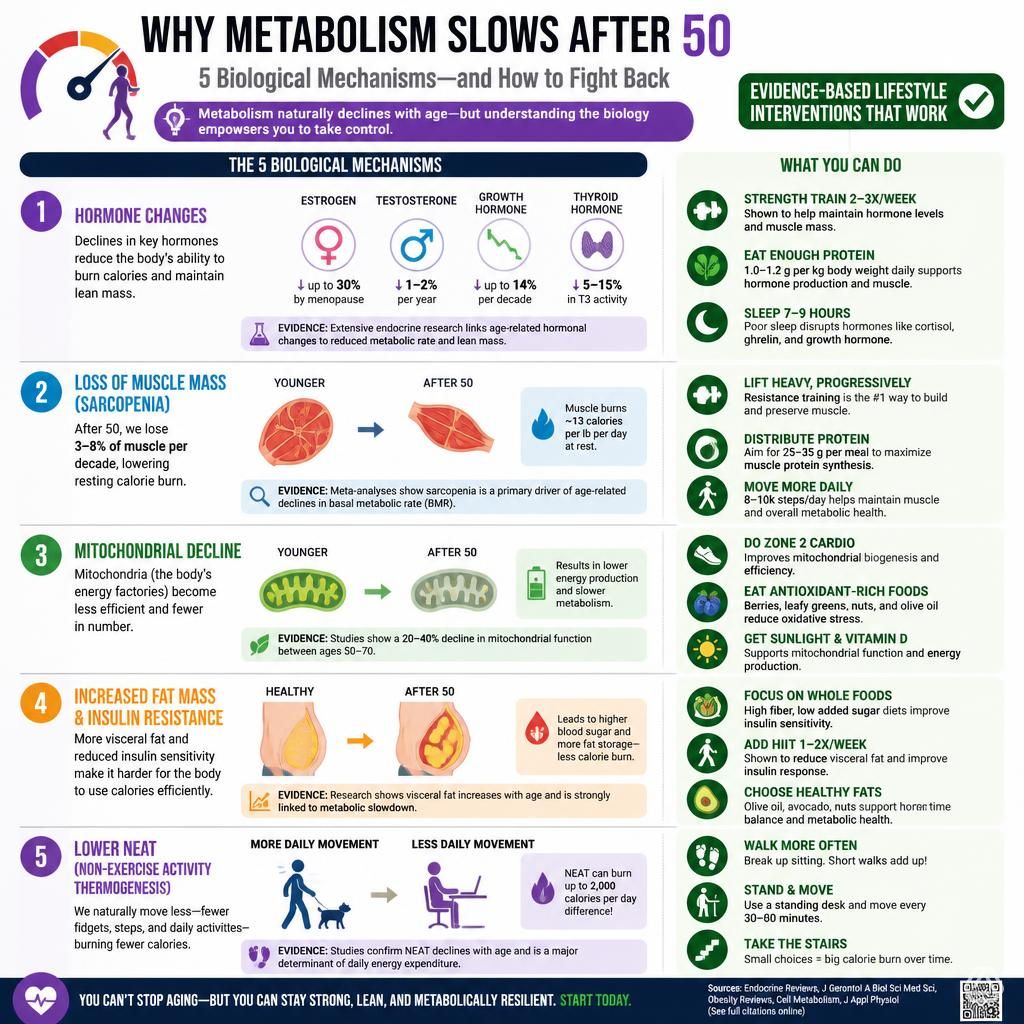
Muscle is your metabolic engine. It is the primary tissue responsible for burning calories at rest — and you are losing it every year whether you exercise or not.
The process is called sarcopenia, and it begins in your late 30s, accelerating through your 50s and 60s. Without specific countermeasures, the average adult loses three to five percent of muscle mass per decade — and this rate accelerates significantly after 60.
Every pound of muscle you lose reduces your resting metabolic rate by approximately six calories per day. Lose twenty pounds of muscle over twenty years — which is entirely possible without resistance training — and your resting metabolism has dropped by 120 calories per day. That is an extra twelve and a half pounds of fat per year from doing absolutely nothing differently.
What to do: Resistance training three times per week with progressive overload is the only intervention proven to directly reverse sarcopenia. You cannot eat or supplement your way out of this one — you must move weight.
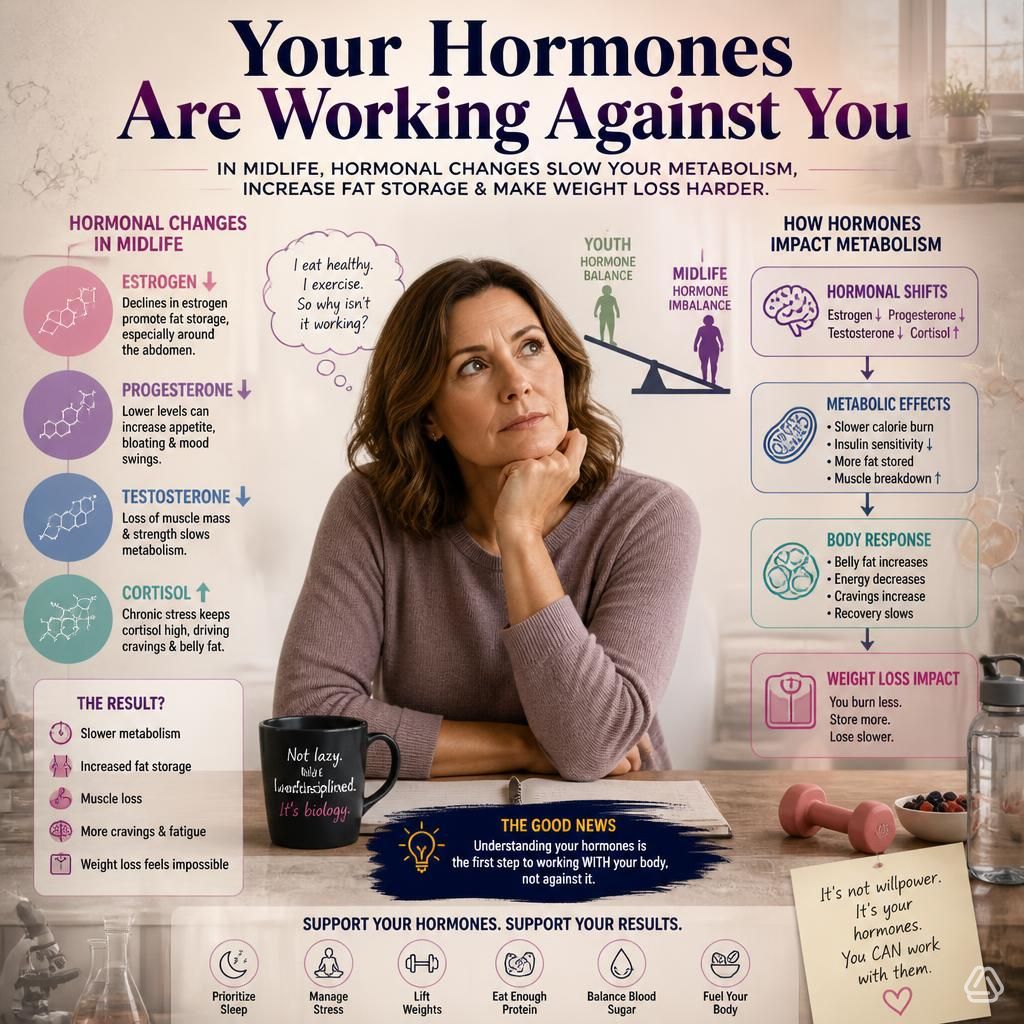
Reason 2 — Your Hormones Are Working Against You
The hormonal changes of midlife have profound metabolic consequences that are still underappreciated in conventional weight loss advice.
In women, the decline of estrogen through perimenopause and menopause fundamentally changes fat distribution — shifting from peripheral (hips and thighs) to central (abdomen) — and reduces insulin sensitivity. Women gain an average of four to eight pounds during the menopause transition, with research showing this is largely driven by hormonal rather than behavioral changes.
In men, declining testosterone directly impairs muscle protein synthesis — the biological process of building and maintaining muscle tissue. Lower testosterone accelerates sarcopenia, reduces BMR, and shifts body composition toward higher fat mass.
In both sexes, growth hormone declines with age, reducing the body’s overnight fat-burning capacity. And thyroid function — the master regulator of metabolic rate — becomes more likely to underperform, with subclinical hypothyroidism affecting up to 10 percent of adults over 60.
What to do: Prioritize deep sleep (growth hormone is primarily secreted during slow-wave sleep), support testosterone through resistance training and adequate zinc intake, and ask your doctor for a full thyroid panel if unexplained weight gain persists despite lifestyle interventions.

Reason 3 — Your Cellular Energy Factories Are Aging
Your mitochondria — the organelles that convert food into usable cellular energy — decline in both number and efficiency with age. This mitochondrial aging means your body becomes less capable of completely metabolizing the fuel you consume, with more energy diverted toward storage rather than burning.
Research has shown that mitochondrial dysfunction in aging skeletal muscle is directly correlated with reduced metabolic rate and increased susceptibility to obesity-related metabolic disease.
What to do: Aerobic exercise — particularly zone 2 cardio (sustained moderate intensity, approximately 60 to 70 percent of maximum heart rate) — is the most potent stimulus for mitochondrial biogenesis. Aim for 150 minutes per week.
Reason 4 — Your Gut Microbiome Has Changed
The gut microbiome — the trillion-organism ecosystem in your digestive tract — plays a far more direct role in metabolism than was appreciated even a decade ago. Specific bacterial species influence how efficiently you extract energy from food, how your body stores fat, and how sensitive your tissues are to insulin.
With age, the diversity of the gut microbiome typically declines, and the balance shifts away from the metabolically beneficial species. This shift alone can meaningfully reduce metabolic efficiency and increase fat storage tendency.
What to do: Add fermented foods daily — yogurt, kefir, kimchi, sauerkraut. Increase prebiotic fiber intake from onions, garlic, leeks, and asparagus. These interventions have been shown to restore microbiome diversity within 4 to 8 weeks.
Reason 5 — Your Brain Is Misreading Your Body’s Signals
The hypothalamus — your brain’s metabolic command center — integrates hormonal signals from throughout the body to regulate appetite, energy expenditure, and fat storage. After 50, hypothalamic sensitivity to key signals — particularly leptin, the satiety hormone released by fat cells — declines.
When the brain cannot properly read leptin signals, it interprets the body as being in an energy-deficient state even when fat stores are abundant. The response: increased hunger and reduced metabolic rate — a frustrating survival mechanism that makes weight management progressively more difficult with age.
What to do: Intermittent fasting patterns (specifically 16:8) have been shown to restore leptin sensitivity over 8 to 12 weeks by periodically depleting insulin and giving the hypothalamic signaling system a metabolic reset.
The Most Common Mistake — Cutting Calories Further
When weight loss stalls, the instinctive response is to eat less. For adults over 50, this is often the worst possible strategy.
Severe calorie restriction in older adults triggers a survival response that further reduces metabolic rate — sometimes dramatically. It also accelerates muscle loss, worsening sarcopenia and further reducing BMR. The result is a lower metabolic rate that makes future weight management even harder.
The metabolic research is clear: for adults over 50, the priority should be increasing metabolic capacity — through resistance training, sleep optimization, gut health, and protein adequacy — rather than further reducing calorie intake.
Eat to support your muscle. Move to support your metabolism. Sleep to support your hormones. This is the correct sequence.
Conclusion
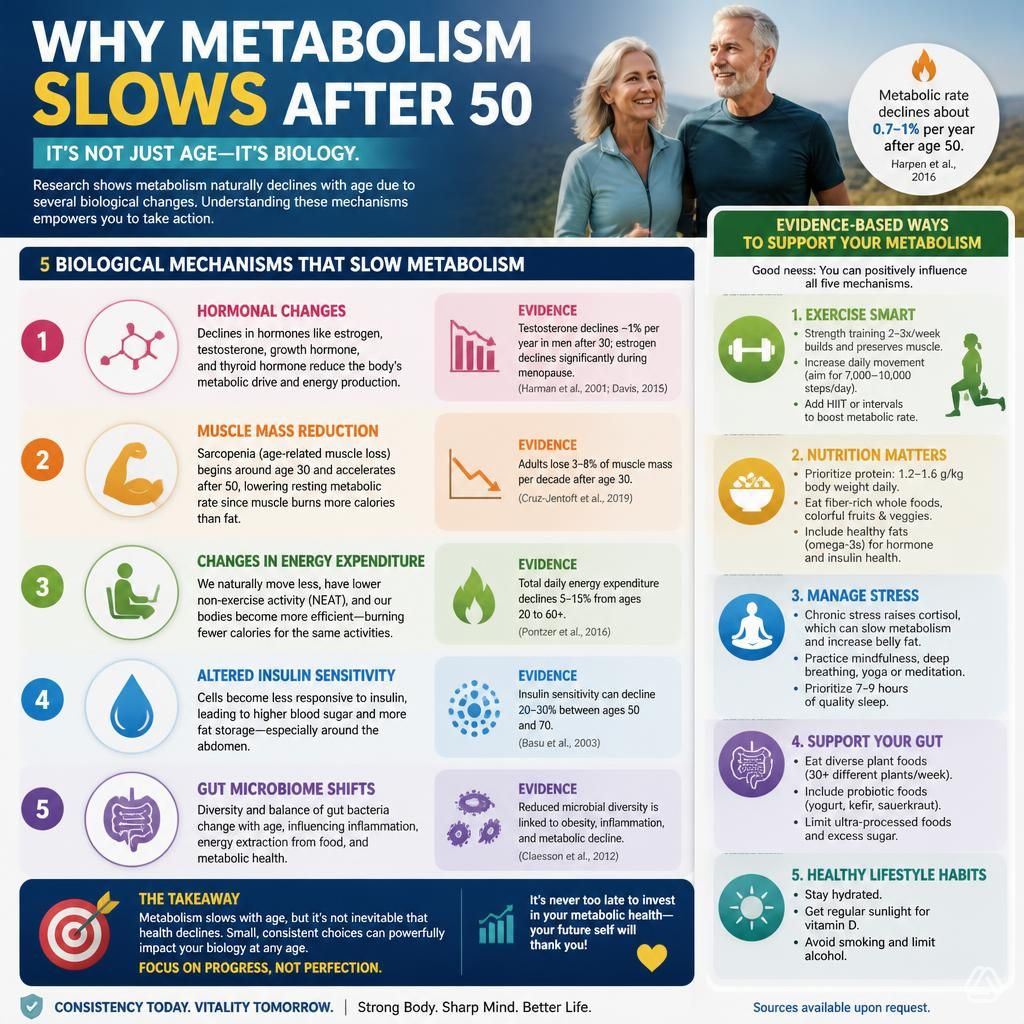
Your metabolism slowing after 50 is real, measurable, and driven by five specific biological mechanisms — none of which respond well to simple calorie restriction. The good news is that every one of these mechanisms responds to evidence-based lifestyle intervention.
Understanding the reason is not just academic — it changes the strategy entirely. And the right strategy makes all the difference.
Not sure what’s causing your brain fog? Take our free 3-minute Root Cause Quiz and get your personalized action plan! → [Take The Quiz]
[Read the Complete Metabolism After 50 Guide →] | [Learn about ceramides — the hidden belly fat driver →]
Disclaimer: This article is for informational purposes only. Consult a healthcare professional before making changes to your health routine.