
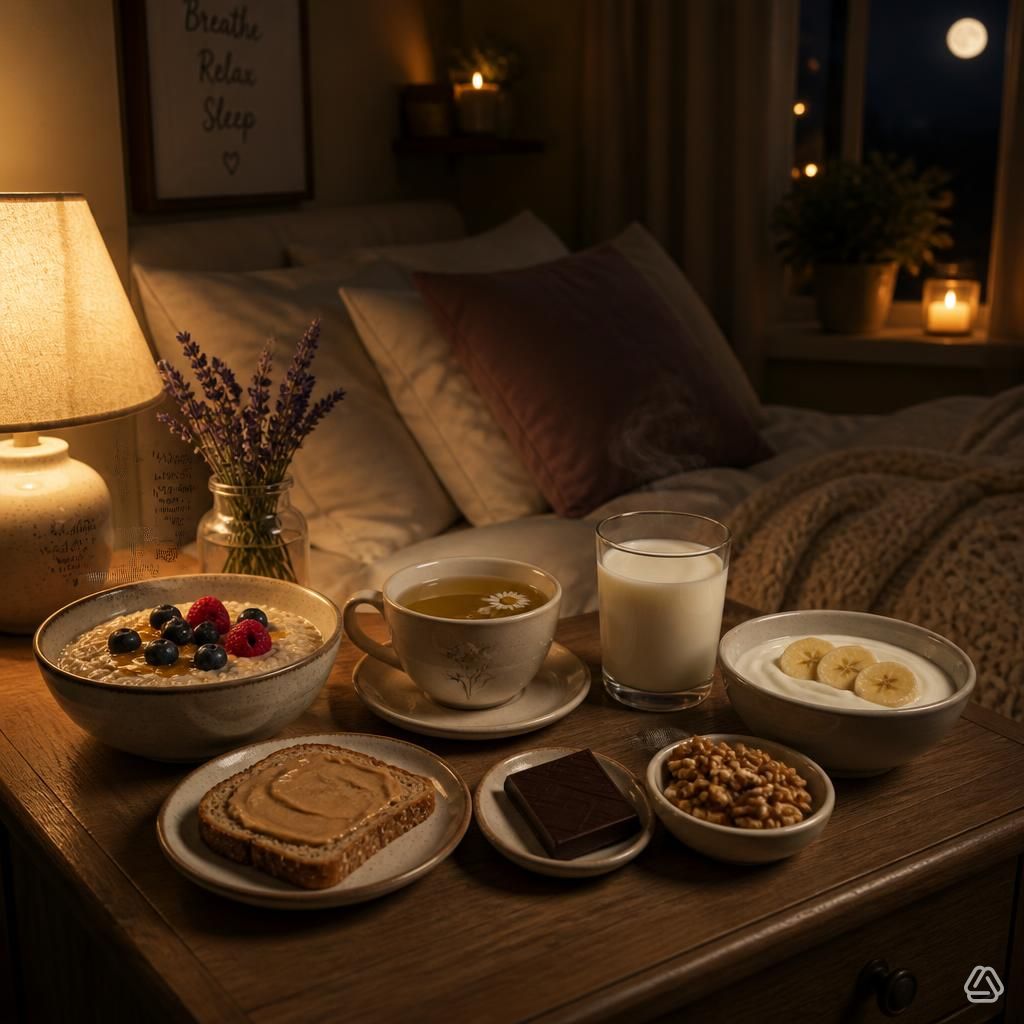
The 7 Best Bedtime Snacks for Deeper, More Restorative Sleep
WellnessWays Sleep Series
Most people assume that eating before bed is a bad idea — something to feel guilty about rather than intentional about. But the truth is more nuanced than that. The right small snack, eaten 60–90 minutes before you turn in, can actively support melatonin production, stabilize your blood sugar through the night, and significantly reduce the chance of that dreaded 2–3am wake-up. The key isn’t whether you eat — it’s knowing what to eat. Here are the 7 best bedtime snacks backed by nutritional science, plus a simple 3-rule framework for evaluating any snack you already reach for at night.
Why What You Eat Before Bed Actually Matters
Your body doesn’t simply shut down when you sleep — it runs a complex series of repair and regulation processes, all of which depend on a steady internal environment. What you eat in the hour or two before bed has a real, measurable effect on how well that environment holds.
Three mechanisms are at work here. First, blood sugar stability: a small snack with protein or healthy fat can prevent nocturnal hypoglycemia — the blood sugar crash that triggers a cortisol release in the early morning hours, pulling you out of deep sleep before you’re ready. Second, the tryptophan-serotonin-melatonin pathway: certain foods are rich in tryptophan, an amino acid your body converts first into serotonin and then into melatonin, the primary hormone that signals your brain it’s time to sleep. Third, magnesium: this critical mineral activates GABA receptors in the brain, quieting neural activity and promoting the kind of physical and mental relaxation that sleep requires. The majority of adults are deficient in magnesium, and the evening is one of the best times to start addressing that — through food.
The 7 Best Bedtime Snacks for Sleep
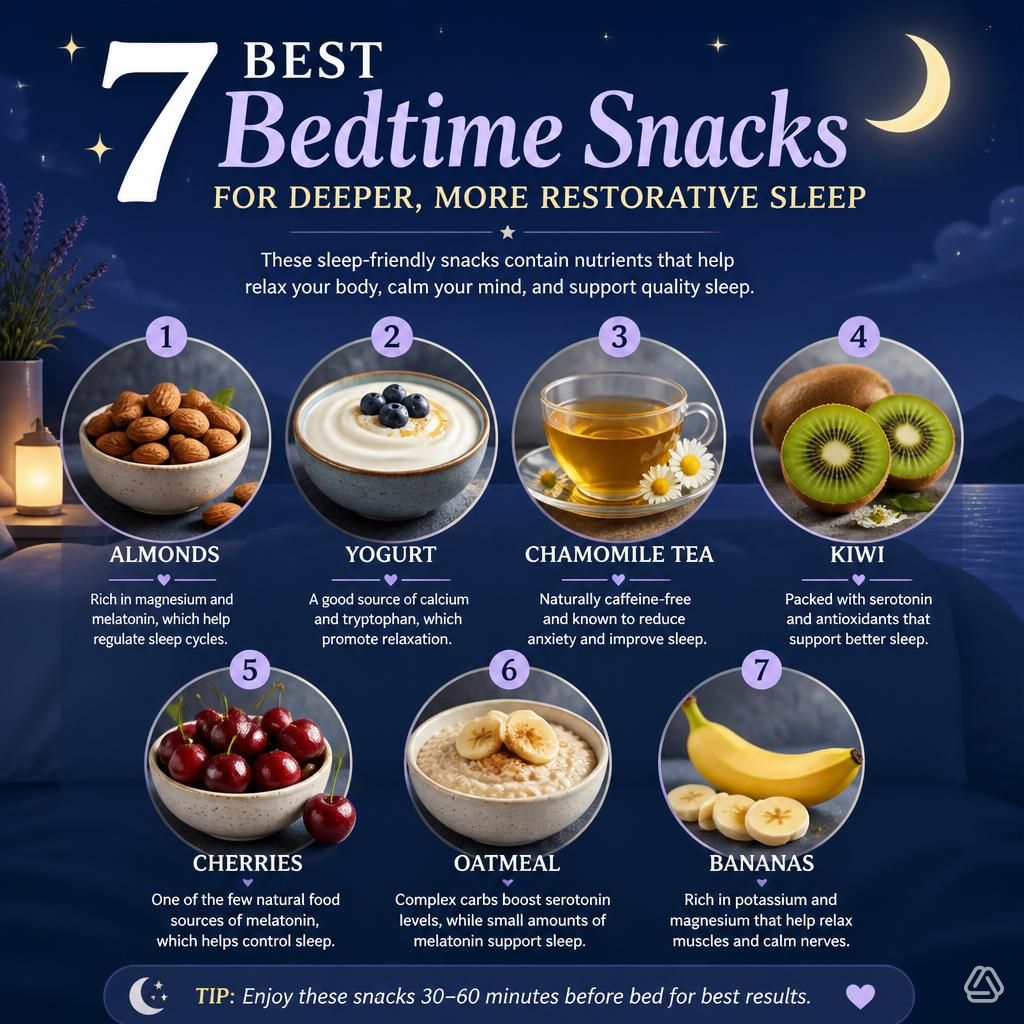
1. Tart Cherry Juice — Nature’s Melatonin in a Glass
Tart cherry juice is one of the only natural food sources of melatonin you can find in a grocery store. A landmark 2012 study published in the European Journal of Nutrition found that adults with insomnia who drank tart cherry juice experienced significant improvements in both sleep time and sleep efficiency. Pour yourself 8oz about 60 minutes before bed — and opt for unsweetened to avoid a late sugar spike.
2. Kiwi — The Underrated Sleep Superfood
Don’t sleep on the humble kiwi — or rather, do. A study published in the Asia Pacific Journal of Clinical Nutrition found that eating two kiwis one hour before bed each night for four weeks significantly improved sleep onset, sleep duration, and overall sleep quality in adults. Kiwis are rich in serotonin precursors and powerful antioxidants that reduce oxidative stress in the brain during the nighttime recovery cycle.
3. Greek Yogurt with Walnuts — The Sleep Trifecta
A small bowl of Greek yogurt topped with a few walnuts is one of the most well-rounded sleep snacks you can make. Greek yogurt delivers a combination of tryptophan and slow-digesting protein that stabilizes blood sugar through the night. Walnuts are one of the very few whole foods that contain melatonin directly, plus omega-3 fatty acids that support serotonin production. Together, these two ingredients address sleep onset, sleep maintenance, and overnight blood sugar — all in one bowl.
4. Banana with Almond Butter — Magnesium, Potassium, and B6
A small banana with a light smear of almond butter is one of the most nutrient-dense sleep snacks available. Bananas deliver magnesium, potassium (a natural muscle relaxant), and vitamin B6 — a cofactor your body needs to convert tryptophan into serotonin. Almond butter adds protein and healthy fats to anchor your blood sugar. Keep the portion modest; one small banana is genuinely enough to get the benefit without loading your digestive system before sleep.
5. Pumpkin Seeds — A Quiet, Powerful Sleep Ally
Don’t underestimate a small handful of pumpkin seeds. Ounce for ounce, they are one of the richest whole-food sources of magnesium available, and they also deliver meaningful amounts of tryptophan and zinc — a mineral that plays a key supporting role in converting tryptophan into serotonin. About one ounce (a small handful) before bed gives you a quiet but powerful nudge toward deeper sleep, with no prep required.
6. Chamomile or Passionflower Tea with a Teaspoon of Honey
Chamomile contains a flavonoid called apigenin, which binds directly to GABA receptors in the brain, producing a gentle, natural sedative effect. Passionflower tea takes this further — research shows it actively increases GABA levels in the brain and measurably reduces anxiety before sleep. The small teaspoon of honey is not just for sweetness: it produces a mild insulin response that helps tryptophan cross the blood-brain barrier more efficiently, giving your melatonin pathway a subtle but meaningful boost.
7. Whole Grain Toast with Cottage Cheese — For Nighttime Hunger
If you often wake in the middle of the night feeling genuinely hungry, this one is for you. Cottage cheese is exceptionally high in casein protein, a slow-digesting form that maintains a steady release of amino acids — including tryptophan — across several hours of sleep. A thin slice of whole grain toast provides just enough complex carbohydrate to create a gentle insulin response that facilitates tryptophan uptake into the brain. It sounds unglamorous, but it is one of the most effective options for people who struggle with nighttime waking.
The 3-Rule Framework for Choosing Any Sleep Snack
Your Simple Evening Snack Checklist
Rule 1 — Keep it small. Target 150–200 calories maximum. You want a gentle metabolic nudge, not a full digestive event. A large snack before bed elevates your core body temperature and keeps your digestive system working overtime — both of which disrupt sleep architecture rather than support it.
Rule 2 — Include at least one of the big three. Your snack should deliver tryptophan, magnesium, or melatonin — or, ideally, a combination of more than one. If you can’t identify which of these your snack contains, it’s likely not doing much for your sleep beyond simply filling the gap.
Rule 3 — Manage the carbohydrate carefully. A small amount of complex carbohydrate can actually help — it produces the insulin response that shuttles tryptophan into the brain. But refined sugar and processed carbs before bed are a near-guaranteed blood sugar crash at 2 or 3am, and a cortisol spike right behind it. If your snack is already protein and fat (like a handful of pumpkin seeds), you don’t necessarily need a carb at all. If you want to add one, make it whole grain, and keep it small.
Run any snack you currently reach for at night through these three rules. You’ll quickly see whether it’s supporting your sleep — or quietly working against it.
The goal here isn’t to eat more in the evening — it’s to eat smarter. One small, well-chosen snack, timed right and built around the right nutrients, can meaningfully shift the quality of your sleep when your other evening habits are already working in your favor. Small changes in the right direction compound quickly.
Ready to go deeper? For the full WellnessWays sleep optimization system, read “How to Sleep Better Naturally“ — our complete pillar guide to building a sleep routine that actually works. And if you’re curious which foods may be quietly undermining your nights, don’t miss “5 Foods That Are Secretly Wrecking Your Sleep.“ Both are linked below.